

7 Signs Your Club Has Outgrown Its Current Management Software
Seven practical warning signs that your club management software is creating staff workarounds, member friction, slow reporting, and extra admin work.

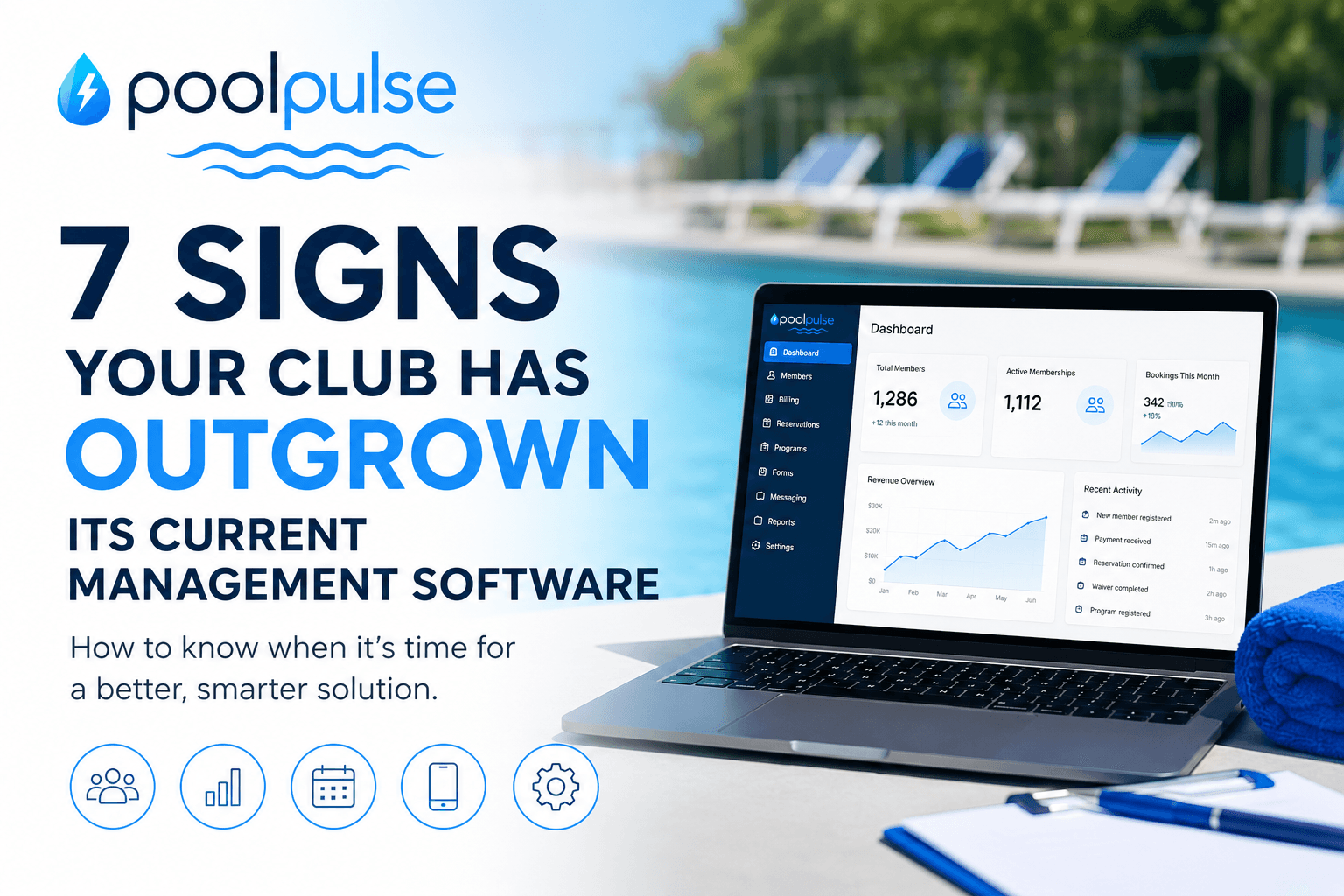
Most clubs do not replace their software because they want something new.
They replace it because the old system slowly starts creating problems.
The challenge is that these problems often appear gradually. They are easy to overlook until they begin affecting staff, members, reporting, and day-to-day operations.
Here are seven signs your club may have outgrown its current management software.
1. Staff are constantly working around the software
When your team spends more time creating workarounds than using the software itself, that is a warning sign.
If staff are relying on spreadsheets, sticky notes, separate email lists, shared folders, or manual processes to fill gaps in the system, the software is no longer supporting your operations.
Those workarounds might feel small at first. Over time, they become the unofficial operating system of the club.
That creates risk because important information starts living outside the platform:
- member exceptions
- balance notes
- guest tracking
- waiver follow-up
- reservation issues
- staff reminders
Modern club management software should reduce side systems, not force your team to invent more of them.
2. Members frequently need assistance
Members expect a simple experience.
If your staff regularly receives calls about payments, registrations, account access, reservations, waivers, forms, or membership status, your software may be creating friction instead of reducing it.
Some support questions are normal. The problem is repetition.
If members keep asking the same questions, that usually means the system is not making the next step clear enough. A better platform should help members complete common tasks without needing staff to walk them through every detail.
For clubs, that can mean:
- easier online payments
- clearer household account access
- simpler registration forms
- mobile-friendly reservation flows
- visible waiver or document status
- fewer "where do I go?" moments
The member experience is part of operations. When it is confusing, staff feel it immediately.
3. Reporting takes too long
Club leaders need quick access to information.
If generating reports requires exporting data, combining spreadsheets, manually calculating numbers, or asking one person who "knows where everything is," valuable time is being lost.
Modern platforms should make reporting fast and accessible.
At a minimum, your team should be able to answer questions like:
- How many active memberships do we have?
- What revenue is outstanding?
- Which registrations are incomplete?
- Which waivers still need attention?
- How are reservations, check-ins, or programs trending?
- Where are staff spending the most time?
When reporting takes too long, decisions slow down. Boards, managers, and operators end up reacting late instead of seeing issues early.
4. New staff require extensive training
Technology should make onboarding easier.
If new employees need lengthy training sessions just to complete routine tasks, your system may be overly complex, outdated, or disconnected from how the club actually works.
This matters even more for seasonal clubs and swim clubs because staff turnover is normal. A platform that only one or two experienced people understand creates operational fragility.
Routine workflows should feel clear:
- look up a member
- check account status
- process a payment
- confirm a waiver
- manage a reservation
- record a guest
- find a report
Training should focus on club policies and service expectations, not on memorizing awkward software steps.
5. You are paying for multiple tools
Many clubs find themselves using separate systems for:
- membership management
- billing
- reservations
- forms and waivers
- communication
- reporting
- staff notes
- guest tracking
Managing multiple vendors often increases costs and creates unnecessary complexity.
The bigger issue is not just the monthly bill. It is the gap between systems.
When billing does not connect to access, staff have to verify status manually. When waivers live somewhere else, the front desk has to guess or ask. When reporting depends on exports from multiple tools, leadership loses visibility.
Separate tools can work for a while. Eventually, the handoffs become the problem.
6. Mobile access feels like an afterthought
Club managers are not always sitting at a desk.
Modern software should work well on a phone or tablet, not just on a desktop computer in the office. If mobile access is difficult, limited, or clunky, productivity suffers.
Mobile-friendly access matters for:
- checking information while walking the facility
- helping members away from the front desk
- reviewing reservations or events
- handling quick staff questions
- monitoring operations during busy hours
If the mobile experience feels like a stripped-down version of the real system, your team may avoid using it when they need it most.
7. Growth creates more problems instead of more opportunities
As membership grows, operations should become more efficient.
If every new member creates additional administrative work, your software may be limiting your club's ability to scale.
Growth should not automatically mean:
- more manual data entry
- more payment follow-up
- more waiver chasing
- more spreadsheet updates
- more reporting cleanup
- more staff interruptions
The right platform should help your team handle more activity with more clarity. It should make growth easier to manage, not harder to survive.
Final thoughts
The best club management software is not just a database.
It helps your team save time, improve member experiences, reduce administrative work, and focus on what matters most: serving your community.
If several of these signs sound familiar, it may be time to evaluate whether your current platform is still meeting your club's needs.
The good news is that modern club management software has come a long way. Clubs no longer have to accept disconnected tools, slow reporting, difficult member experiences, or workflows held together by spreadsheets.
If you are starting that evaluation, look at the work your staff does every week. The right system should make those workflows easier, clearer, and more connected.
PoolPulse was built for clubs that want membership management, billing, check-ins, reservations, waivers, reporting, and day-to-day operations to work together instead of living in separate places.
You can explore the PoolPulse platform, compare pricing, or schedule a walkthrough to see what a more connected club management system can look like.

The Demo-to-Opening-Day Gap: Nine Questions That Reveal Whether a Vendor Can Actually Get You Live
A polished demo shows what a club platform can do. These nine questions reveal whether the vendor can migrate your records, rebuild your workflows, prepare your team and get you safely through opening day.

New Swim and Sports Club Management Software Startup 2026: Meet PoolPulse™
Meet PoolPulse, a new swim and sports club management software startup helping modern clubs simplify operations, connect daily workflows and improve the member experience.

Switching Swim Club Software Doesn't Have to Be a Headache
Thinking about replacing your swim club software? Learn how to make the transition easier, avoid common mistakes, and move your club to a modern platform without disrupting members or staff.
Want to see if PoolPulse is a good fit for your club?
Book a walkthrough and we'll show you exactly how PoolPulse can help based on your club's needs, goals, and current processes.