How AI Can Transform Club Operations Without Adding Complexity
How swim clubs use AI signals for staffing gaps, retention risk, and revenue leakage — without creating another dashboard to manage.

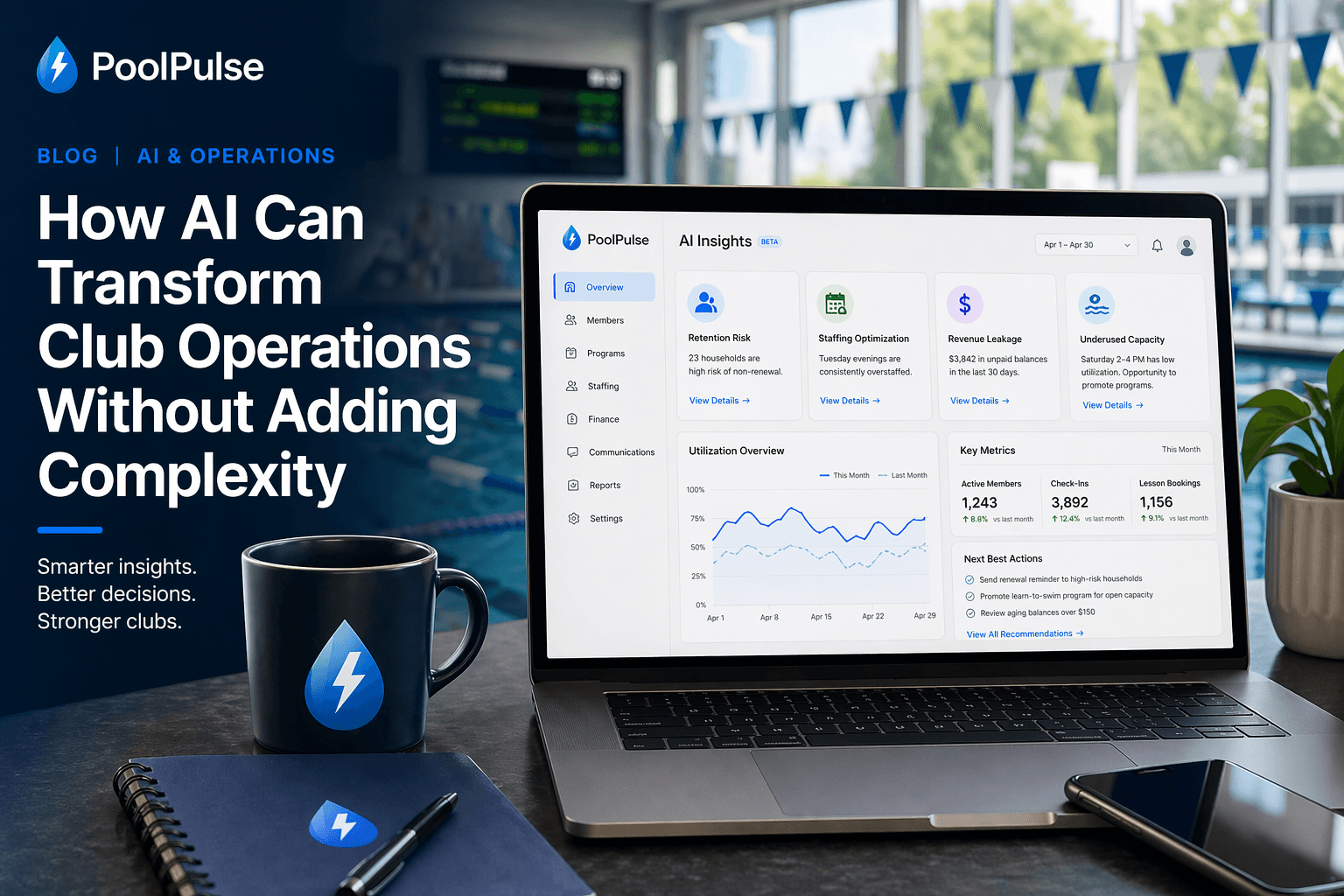
Most swim clubs do not need artificial intelligence because it sounds impressive.
They need better visibility into what is already happening:
- which families are drifting toward non-renewal
- which hours are consistently underused
- where staffing and demand no longer line up
- which balance or POS patterns deserve attention before they become messy
That is the real promise of AI in club operations. Not replacing your staff. Not creating a futuristic control center no one trusts. Just helping the club see what matters sooner and act with less guesswork.
The wrong way to add AI
Clubs get skeptical about AI for good reason. Too many tools position it like an extra platform layer that creates more work instead of removing it.
That usually looks like:
- a separate analytics dashboard that only one person opens
- alerts with no recommended next action
- generic summaries that are not tied to real member or billing context
- predictions that staff cannot validate in their actual workflow
If AI lives outside the operating system your team already uses, it becomes one more thing to remember rather than one more thing that helps.
The better question: where does your club already feel blind?
Before a club adopts any AI feature, it helps to name the decisions that still feel slower, noisier, or more manual than they should.
For many swim clubs, those pain points show up in four places:
1. Retention risk
You usually know renewals are soft after the problem is already visible in registrations, unpaid balances, or disengaged communication.
AI becomes useful when it can highlight:
- households with declining engagement
- families who opened reminders but did not complete renewal
- members with combinations of risk signals, like low usage plus unpaid balances
- segments that deserve a different follow-up sequence
That does not replace a renewal plan. It improves the timing and precision of the plan you already need to run.
2. Staffing mismatches
Most clubs have rush periods that feel predictable in hindsight but still create weekly friction in practice.
The question is not only how many people worked. It is:
- were we overstaffed during quiet windows?
- did we miss a rush we could have prepared for?
- are lessons, check-ins, or snack bar demand shifting faster than our schedule assumptions?
AI can help surface those patterns earlier, especially when attendance, programs, and front-desk activity are connected instead of scattered across multiple tools.
3. Revenue leaks
Boards do not lose confidence because one metric dips one week. They lose confidence when the club cannot explain why.
Useful AI can point to operational leakage such as:
- unpaid balances that are growing in specific member segments
- POS or snack bar trends that suggest avoidable stock or timing issues
- weak response to promotions tied to underused facility windows
- anomalies that deserve human follow-up before they snowball
That gives operators a clearer story than "we think something is off."
4. Underused capacity
Many clubs have programs, lanes, or time blocks that could be marketed more effectively, but the opportunity stays hidden because no one has time to compare attendance, scheduling, and family behavior manually.
AI can help identify:
- recurring low-utilization windows
- the member segments most likely to respond to a targeted offer
- combinations of program demand and available capacity
- next-best actions that match the club calendar
This is where AI starts becoming a growth tool rather than just a reporting feature.
What practical AI looks like inside club operations
For most clubs, the best AI is not flashy. It is embedded, contextual, and specific.
That means:
- the signal appears where staff already work
- the recommendation is tied to real club data
- the next action is obvious
- the operator can confirm whether the signal makes sense
A useful alert is not "engagement is down."
A useful alert is closer to:
Tuesday evening family swim usage is soft for the third week in a row. Consider a targeted family lesson or guest-credit campaign to households that used that window last season.
That is the difference between novelty and action.
Three ways clubs can start without overwhelming the team
You do not need to roll out AI everywhere at once. A focused start usually works better.
Start with one retention use case
Pick a single question the club already cares about, such as:
- who is most likely to lapse this month?
- which incomplete renewals need follow-up first?
- which member segments should receive a different reminder sequence?
If the AI can help one board member or operator save time on that question, you have a realistic proof point.
Add one operations use case next
Once the club trusts the first signal, expand into staffing, program demand, or underused hours.
This works well because operators can compare the recommendation against what they already observe on deck or at the front desk. That makes adoption feel grounded.
Keep the output visible and reviewable
The more opaque an AI feature feels, the less likely staff are to rely on it.
Good AI should make it easy to say:
- why the signal appeared
- what action it suggests
- what data it considered
- whether the recommendation was helpful after the fact
That feedback loop is what turns AI into an operational tool instead of a marketing promise.
What not to promise your board
Even if the technology is strong, clubs should avoid overpromising.
AI will not:
- fix weak data hygiene by itself
- replace consistent staffing and member communication
- eliminate the need for operator judgment
- make every demand pattern perfectly predictable
It should make your existing team more informed, more proactive, and less reactive. That is plenty valuable on its own.
How to tell if AI is helping or just making noise
After a few weeks, ask whether the new signals are changing behavior in useful ways.
Good signs include:
- fewer "we noticed too late" conversations
- faster follow-up on renewal or balance risk
- more confidence in staffing changes
- clearer weekly board discussions about what happened and why
Bad signs include:
- alerts no one acts on
- too many vague recommendations
- another reporting screen that only one person checks
- staff saying the signals sound smart but do not match reality
That is why rollout matters more than hype.
Where PoolPulse fits
PoolPulse is strongest when AI is treated as part of the operating system, not an extra analytics toy. The goal is to connect:
- member behavior
- renewals and balances
- check-ins and underused hours
- staffing patterns
- POS and revenue signals
If that is the kind of AI your club wants to evaluate, start with the AI Insights Demo and then see how it fits inside Pulse Signal. If you want to tie the signals back to the board conversation, pair it with Does It Pay Off?.
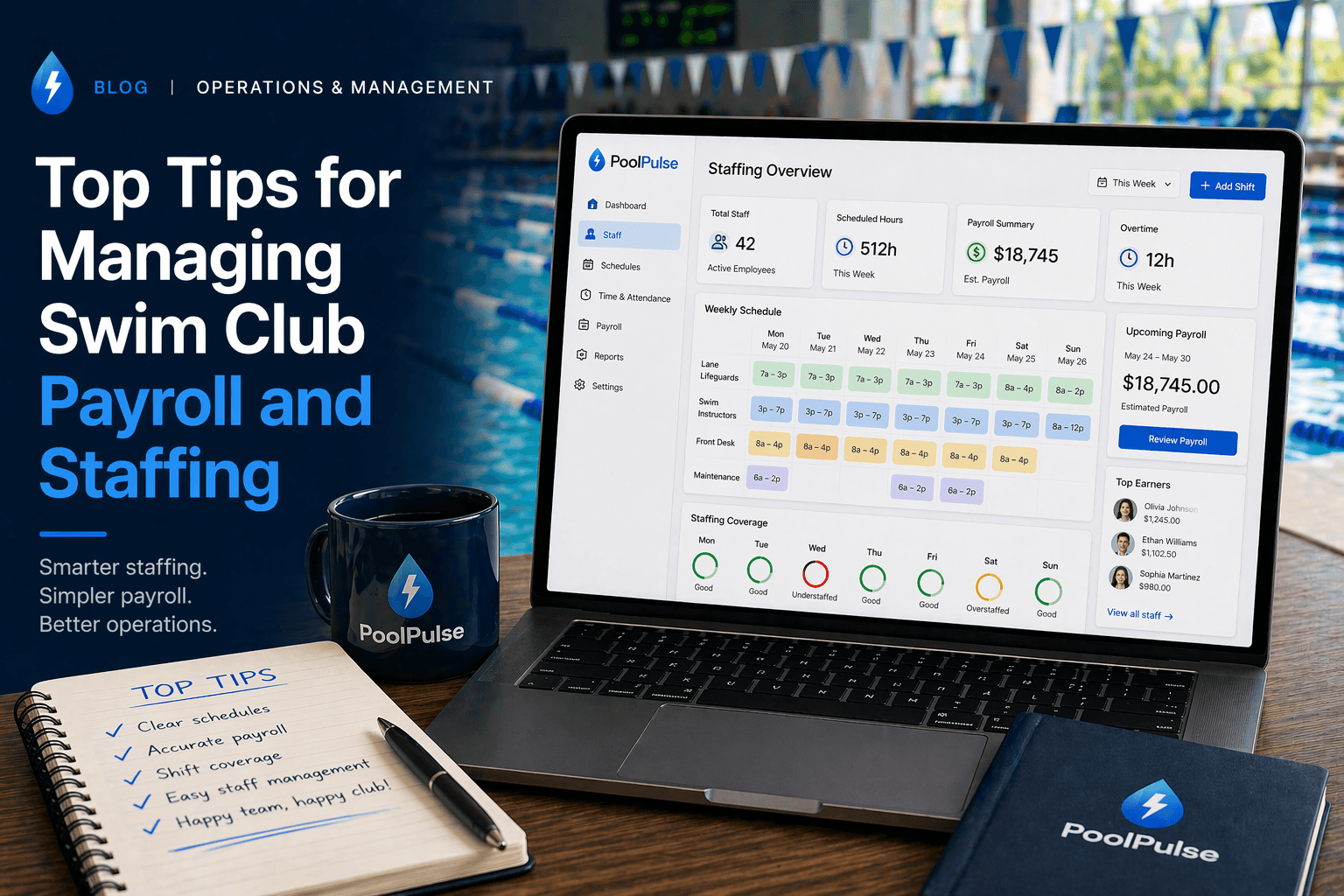
Top Tips for Managing Swim Club Payroll and Staffing
How swim clubs reduce payroll cleanup and scheduling confusion — covering shift coverage, time-sheet accuracy, and smarter staffing workflows.

Five Front-Desk Tasks Your Swim POS Should Handle
Your front desk shouldn't need three systems to check in a swimmer. Here's how modern swim POS systems save time and reduce errors.

When Your Check-In Line Proves Software Is Too Slow
Discover how software timing affects your swim club's daily operations, from check-ins to billing, and why faster response times mean happier members.
Want to see if PoolPulse is a good fit for your club?
Book a walkthrough and we'll show you exactly how PoolPulse can help based on your club's needs, goals, and current processes.