

How to Reconcile Club Payments Without Spending Hours in Spreadsheets
A practical guide for clubs that want cleaner payment records, faster reconciliation, and fewer financial reporting headaches.

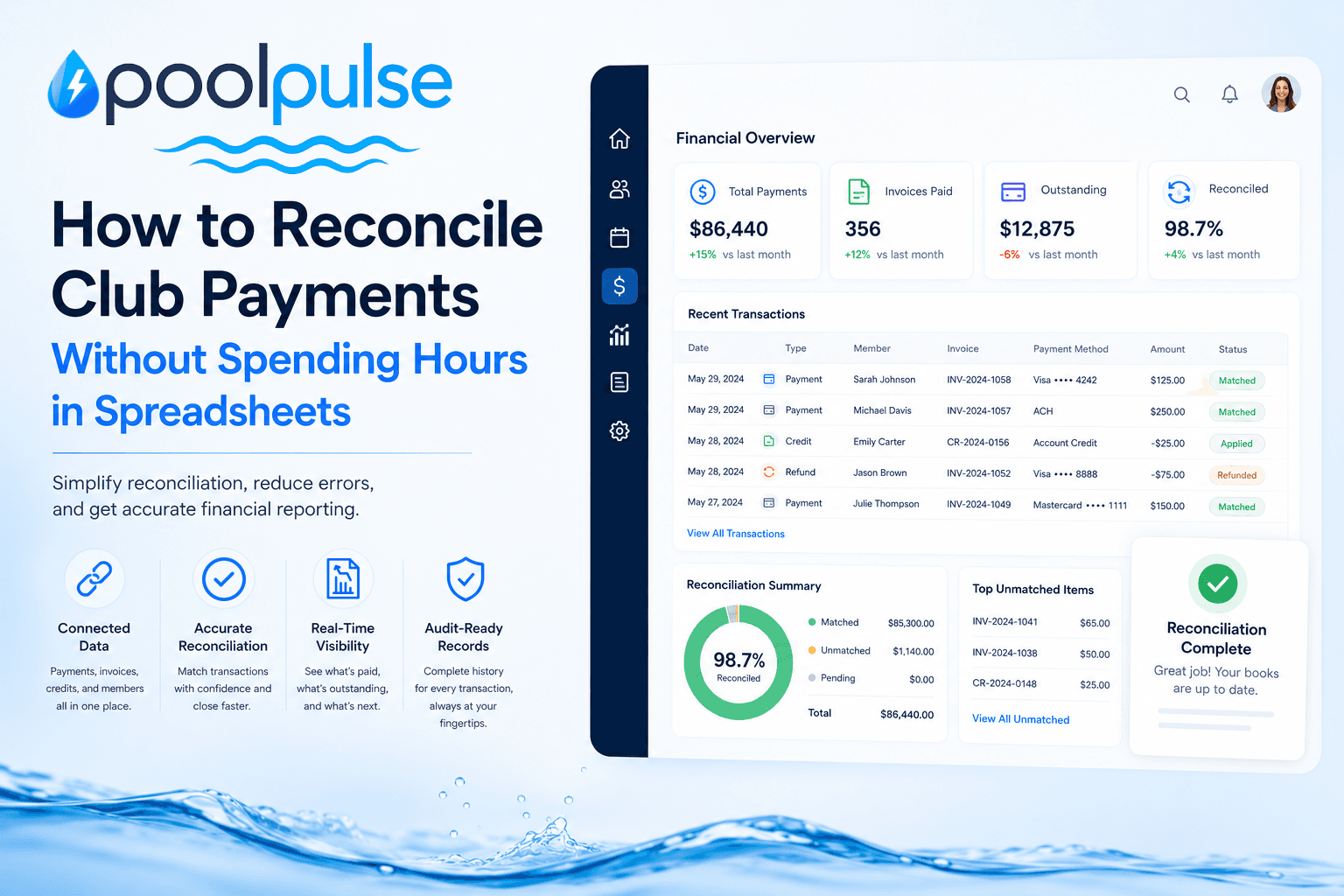
For many clubs, collecting payments isn't the difficult part.
Understanding them is.
A member pays an invoice. A registration fee is processed. A guest pass is purchased. A refund is issued. A chargeback appears. An accountant begins preparing monthly reports.
Suddenly, what should have been a simple financial process becomes a frustrating investigation.
Staff start asking questions:
- Which invoice was this payment applied to?
- Why doesn't this amount match our records?
- Has this member actually paid?
- Why doesn't the accounting report match the club records?
Many clubs spend hours every month manually reconciling payments because financial information exists across multiple systems that do not communicate clearly with one another.
Why Reconciliation Becomes So Time Consuming
Most clubs do not struggle because payments are missing. They struggle because context is missing.
A payment by itself only tells part of the story. Staff need to know who made the payment, what the payment was for, which invoice it satisfied, whether credits were applied, whether refunds were issued, and how the transaction affects the member's account balance.
When this information is spread across different systems, reconciliation becomes a manual process of connecting the dots.
The Hidden Cost of Spreadsheet-Based Reconciliation
Spreadsheets can be useful, but they were never designed to be the primary financial management system for a growing club.
Manual reconciliation often leads to duplicate work, missed transactions, incorrect balances, delayed reporting, frustrated staff, and confused members.
What Efficient Reconciliation Looks Like
Modern reconciliation should answer questions quickly. When viewing a transaction, staff should immediately understand the member involved, the associated invoice, the payment method, transaction history, credits applied, outstanding balances, and accounting impact.
Instead of investigating transactions, staff should be reviewing them.
Building a Better Financial Workflow
Centralize Financial Data
Membership records, invoices, payments, credits, refunds, and account balances should be connected.
Maintain Complete Transaction Histories
Every financial action should create an audit trail.
Automate Invoice Tracking
Manual invoice tracking creates unnecessary opportunities for errors.
Reduce Duplicate Data Entry
The same transaction should not need to be entered into multiple systems.
Improve Reporting Visibility
Financial reports should provide answers, not generate more questions.
Reconciliation Shouldn't Feel Like Detective Work
Club staff should not need to open five different systems just to answer a member's billing question.
Financial records should tell a complete story.
When payments, invoices, member accounts, credits, and reporting are connected, reconciliation becomes faster and more accurate.
The Future of Club Financial Management
As clubs grow, financial complexity grows with them.
Modern club management is not just about collecting payments. It is about understanding them.
Ready for accurate reporting and effortless billing?
Schedule a walkthrough with our team to see how PoolPulse helps clubs simplify billing, reconciliation, and financial management.
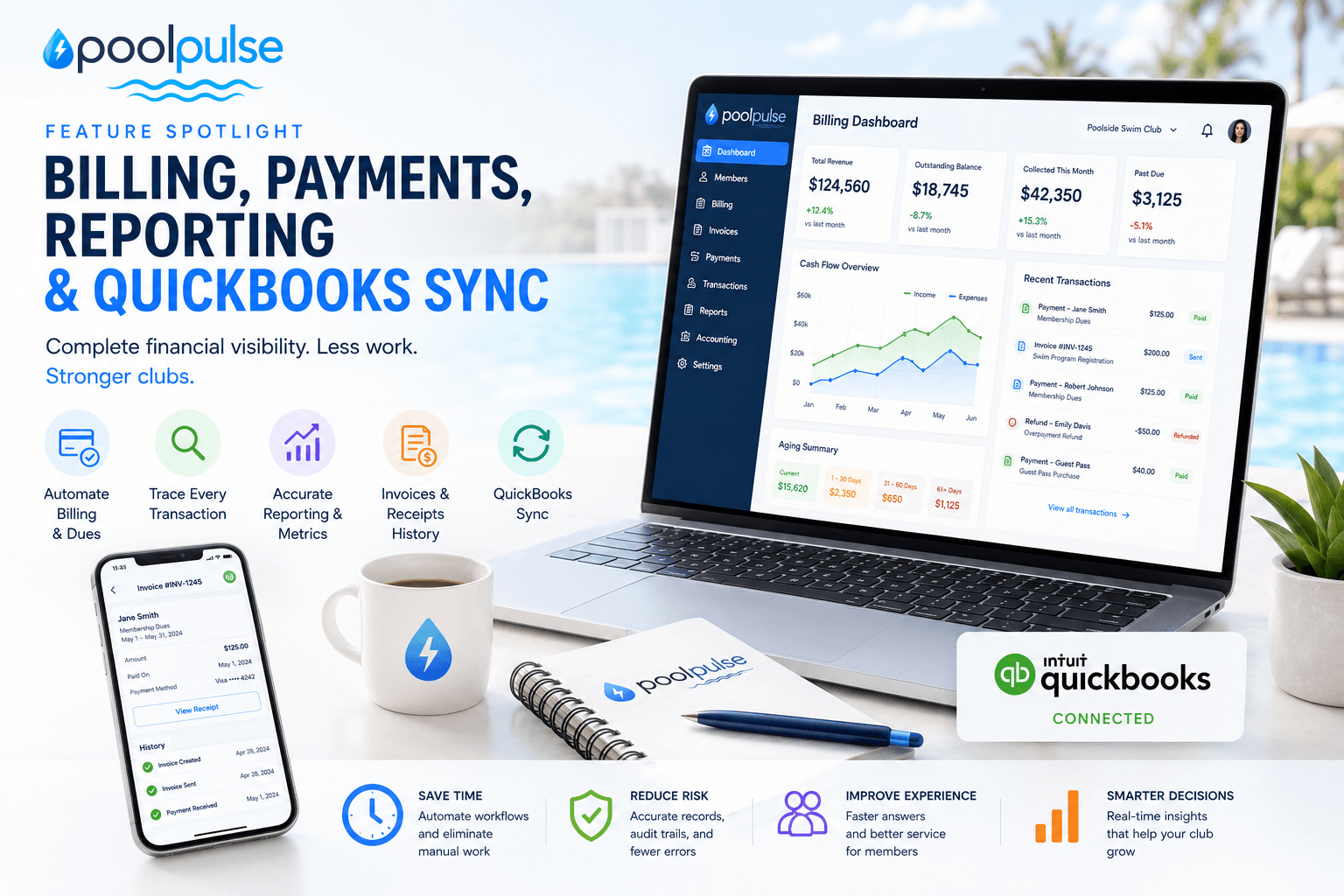
PoolPulse Feature Spotlight: Billing, Payments, Reporting & QuickBooks Sync
Stop chasing payments, invoices, and accounting records. Discover how PoolPulse helps clubs simplify billing, improve reporting, and gain confidence in their financial operations.

Before You Publish Next Season’s Prices, Build a Fee Catalog Your Staff Can Explain
A practical framework for converting approved prices into billing rules, member language, staff answers, and clean reporting.

Stop Chasing Payments: Modernizing Club Billing, Dues Collection, and Financial Reconciliation
Most clubs don't struggle with collecting payments. They struggle with understanding them. Discover why connected financial operations are transforming club billing, reconciliation, and member service.
Want to see if PoolPulse is a good fit for your club?
Book a walkthrough and we'll show you exactly how PoolPulse can help based on your club's needs, goals, and current processes.