

All Features You Need in Swim Club Management Software
Discover all features essential for running a modern swim club. From member check-ins to AI insights, learn what truly matters in 2026.


Running a swim club in 2026 means juggling dozens of tasks every single day. You're tracking memberships, processing payments, managing check-ins, handling renewals, and somehow trying to keep everyone happy while staying on budget. The right software should make all of this easier, not harder. But when you're evaluating different platforms, how do you know which features actually matter? Let's walk through what you really need, based on what works in the real world of club administration.
The Foundation: Member Management That Actually Works
Every swim club software starts with member management, but not all systems handle it the same way. You need more than just a database with names and email addresses.
Think about what happens when a family joins your club. You're collecting information about multiple people, tracking which programs each kid is enrolled in, noting allergies or special needs, and setting up their billing preferences. Then multiply that by hundreds of families.
Individual and Family Accounts
Good member management handles both individual members and family groups. When the Rodriguez family signs up, you should see Mom, Dad, and three kids all linked together. Change the family's address once, and it updates everywhere. Send one invoice to the parents, but track attendance separately for each child.
This seems basic, but you'd be surprised how many systems make you enter the same address five times or can't figure out which kids belong to which parents.
Custom Fields and Flexibility
Your club isn't identical to every other swim club out there. Maybe you track T-shirt sizes for team members. Maybe you need to know which elementary school each kid attends. Perhaps you have specific waiver requirements for diving board access.
The software should let you add custom fields without calling tech support or paying extra fees. Need to track something new next season? Add the field yourself and move on with your day.

Billing and Payment Processing Without the Headaches
Let's be honest: billing is where most club administrators spend way too much time. You're chasing down late payments, processing refunds, handling membership upgrades, and trying to reconcile everything at month-end.
Modern platforms should handle all of this automatically. Set up your membership tiers, payment schedules, and late fees once. Then let the system do the work.
Automated Recurring Billing
Monthly memberships should bill automatically. No manual invoices. No spreadsheets tracking who paid and who didn't. The system charges cards on file, sends receipts, and flags any failures.
When a payment fails, you need automatic retry logic and email notifications. The member gets reminded, the card gets charged again a few days later, and you only get involved if it fails multiple times.
Flexible Payment Options
Some families want to pay annually and get it over with. Others need monthly payments to fit their budget. Your software should handle both without making you set up separate membership types.
You also need options for payment methods. Credit cards are standard, but what about ACH transfers for families who prefer bank payments? Some clubs even accept checks or cash for older members who aren't comfortable with online payments.
| Payment Feature | Why It Matters |
|---|---|
| Automatic retry | Reduces failed payment follow-up by 70% |
| Payment plans | Increases accessibility for budget-conscious families |
| Multiple payment methods | Accommodates member preferences |
| Automated receipts | Eliminates manual bookkeeping time |
| Late fee automation | Enforces policies consistently |
Check-In Systems That Keep Your Pool Secure
You need to know who's at your facility at all times. For safety reasons, for capacity management, and frankly, to make sure only actual members are using your pool.
Self-Service Check-In Kiosks
Members should be able to check themselves in quickly. A tablet at the entrance, a kiosk in the lobby, or even their own phones. They scan a code or tap their membership card, and they're in.
This speeds up entry during busy times and reduces the need for front desk staff. But here's the key: the system needs to verify their membership is actually active. Expired memberships get flagged immediately.
Some swim club management platforms include photo verification to prevent card sharing. When someone checks in, their photo pops up on the screen. Simple security that actually works.
Real-Time Capacity Tracking
In 2026, you still need to watch capacity limits. Whether it's for safety regulations, pool chemistry, or just member comfort, you need to know how many people are currently in your facility.
Good check-in systems track this automatically. Members check in, the count goes up. They check out (or after a set time period), the count goes down. You can set maximum capacity alerts so staff knows when you're approaching limits.
Communication Tools You'll Actually Use
Email blasts to your entire membership list are fine for major announcements. But most of the time, you need more targeted communication.
Segmented Messaging
Send different messages to different groups. Competitive team families need practice schedule updates. Recreational swimmers want open swim hours. Board members need financial reports.
Your software should let you create these groups and message them separately. Some systems even let members opt into specific communication channels based on their interests.
Automated Notifications
When someone's membership is about to expire, the system should email them automatically. When a payment fails, they get notified. When you're closing early for maintenance, everyone who usually visits that day gets a heads up.
These automated messages save you hours every week and keep members informed without you lifting a finger.
- Renewal reminders (30, 14, and 7 days before expiration)
- Payment confirmation and failure notices
- Schedule changes and facility closures
- Waitlist openings and class availability
- Event registrations and updates
Revenue Tracking and Financial Reporting
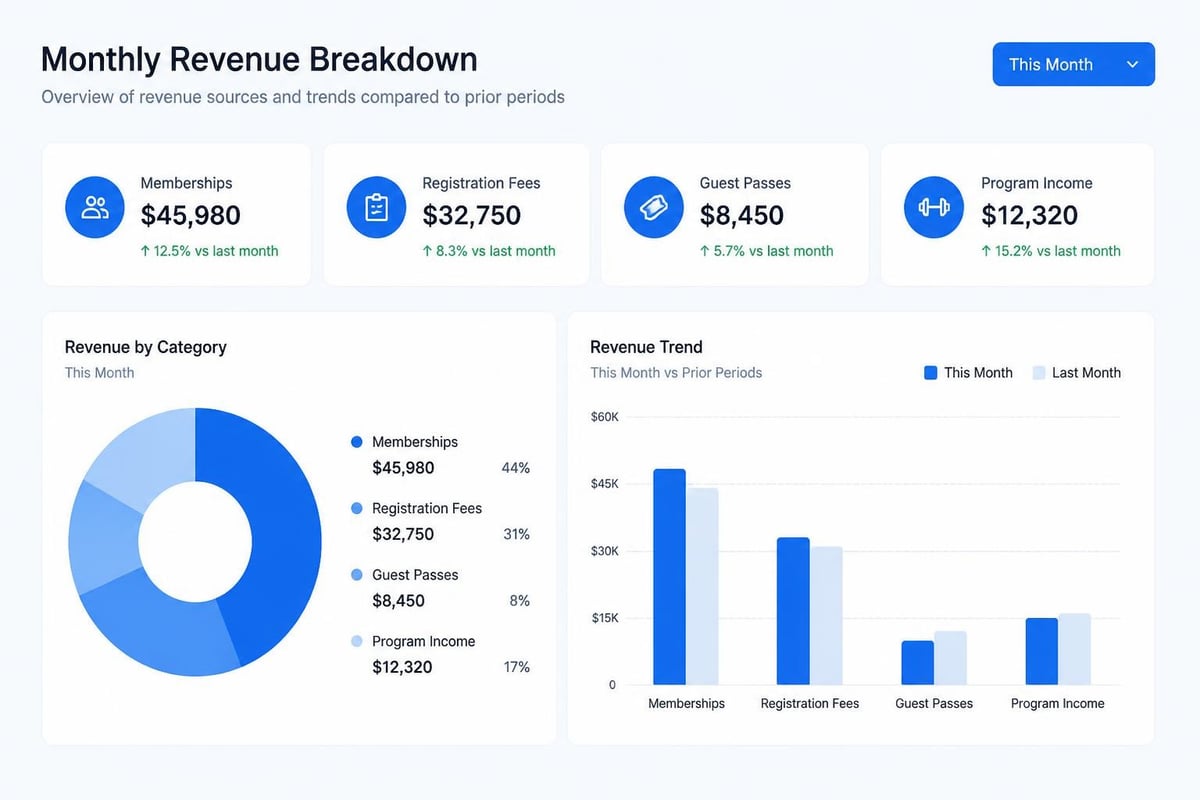
You need to see where money is coming from and where it's going. Not just for your accountant at tax time, but for making decisions throughout the year.
Real-Time Financial Dashboards
How much did you bring in this month compared to last month? Which membership tier generates the most revenue? What's your renewal rate looking like?
These answers should be available anytime you need them, not just when you export data and build spreadsheets. AI-powered insights can even highlight trends you might miss, like a drop in registrations from a specific zip code or a spike in cancellations after a rate change.
Budget Forecasting
When you're planning next year's budget, you need historical data and projections. What did summers look like the past three years? How many members typically renew versus cancel?
Software that tracks all features over time gives you this information automatically. You can spot seasonal patterns, predict revenue, and make informed decisions about staffing, maintenance, and programming.
Registration and Program Management
Beyond basic memberships, most clubs offer programs: swim lessons, team practices, special events, guest passes. Managing all of this shouldn't require separate systems.
Online Registration
Parents should be able to register their kids for swim lessons from their couch at 10 PM. Your staff shouldn't be taking phone calls during dinner to sign people up for classes.
Online registration needs to show available spots, handle waitlists when classes fill up, and collect payment immediately. It should integrate with your member database so families don't have to re-enter their information every time.
Class and Schedule Management
Creating class schedules, assigning instructors, managing rosters, and tracking attendance should all happen in one place. When Coach Sarah calls in sick, you can reassign her classes and notify affected families in minutes, not hours.
The flexibility to customize these features for your specific programs matters more than you might think. Your competitive team operates differently than your parent-tot classes, and your software should accommodate both.
Integration With Your Website
Your swim club probably has a website. That website should talk to your management software, not sit there as a separate, outdated brochure.
Member Portal
Members log into your website and see their account. They can update credit cards, register for programs, check their billing history, and update emergency contacts.
This cuts down on phone calls and emails to your office. People can handle routine tasks themselves, whenever it's convenient for them. Learn more about website integration options that make this seamless.
Real-Time Data Sync
When someone registers for a program on your website, it should immediately appear in your admin system. No manual data entry. No syncing overnight. Real-time means both systems always show the same information.
Reporting That Gives You Answers
Reports aren't just about satisfying board requirements or preparing for audits. They help you run your club better.
Membership Analytics
Which membership types are growing? Which ones are shrinking? Where do most of your members live? What's your average member lifetime value?
These metrics tell you whether your marketing is working, whether your pricing makes sense, and where to focus your growth efforts.
Attendance Patterns
When's your pool busiest? Which days and times see the lightest traffic? Are certain programs underutilized?
Attendance data helps you schedule staff appropriately, plan maintenance windows, and identify opportunities for new programming during slow periods.
| Report Type | Key Insights | Action Items |
|---|---|---|
| Revenue by source | Which programs make money | Double down on profitable offerings |
| Renewal rates | Member satisfaction trends | Address retention issues early |
| Attendance patterns | Peak and off-peak times | Optimize staffing and schedules |
| Demographics | Member composition | Target marketing to gaps |
| Payment failures | Billing issues | Proactive outreach reduces churn |
Security and Access Control
Not everyone on your staff needs access to all features. Your front desk staff needs check-in capabilities, but they shouldn't be able to change billing rates or download member financial data.
Role-Based Permissions
Set up different permission levels for different staff roles. Board members see financial reports but can't edit member accounts. Instructors can mark attendance for their classes but can't access billing information. Front desk can check people in but can't run financial reports.
This protects sensitive information and prevents accidental changes by well-meaning staff who are just trying to help.
Data Security and Backup
Your member data includes credit card information, addresses, phone numbers, and in some cases, health information about children. This needs serious protection.
Look for platforms that handle data privacy seriously, with encryption, regular security audits, and compliance with relevant regulations. Automatic backups mean you won't lose everything if something goes wrong.
Mobile Access for On-the-Go Management
You're not always sitting at your desk. Sometimes you need to check something from home, approve a refund from your phone, or look up a member's account while you're at the pool.
Mobile-Responsive Design
The admin interface should work on phones and tablets, not just desktop computers. You shouldn't need to squint at tiny text or constantly zoom in and out.
Some clubs find that modern, AI-powered platforms work better on mobile devices because they're designed from the ground up for 2026 technology, not adapted from decade-old desktop software.
Guest and Non-Member Management
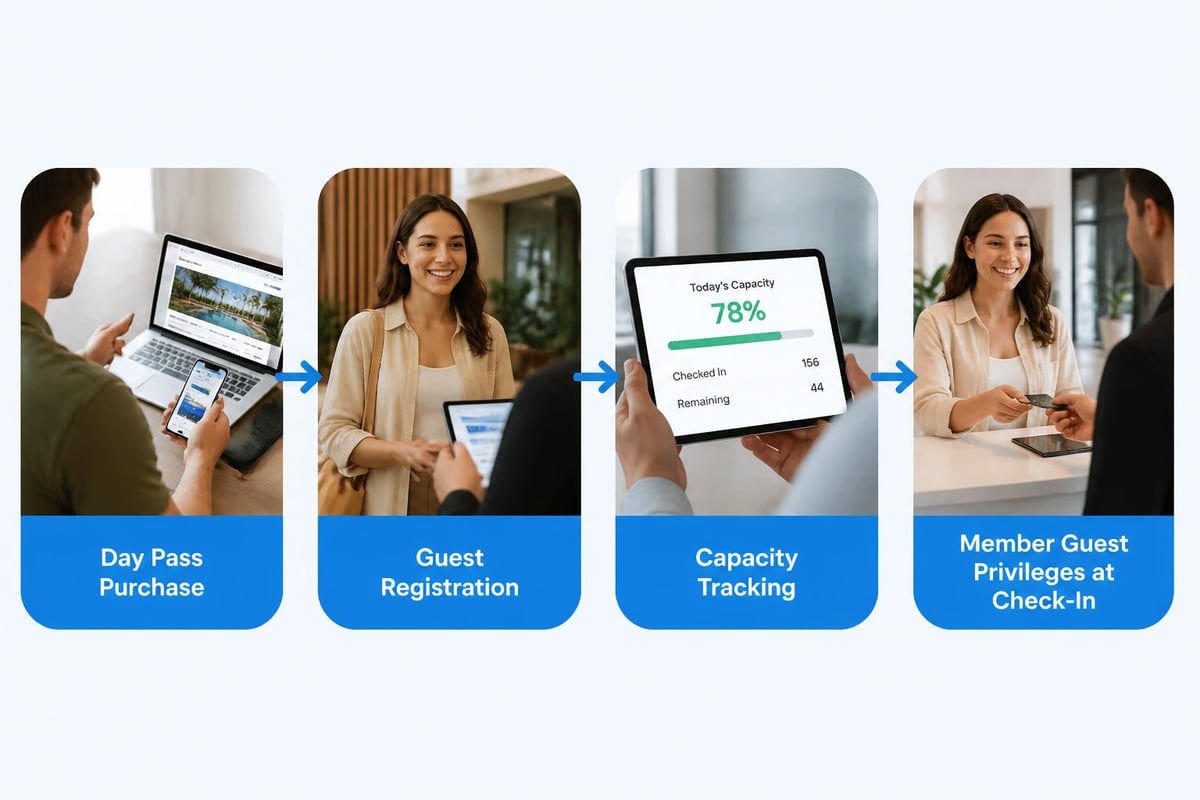
Not everyone at your pool is a member. You might have day passes, punch cards, guest privileges, or special event attendees.
Guest Pass System
Sell day passes online or at the door. Track how many times someone uses a punch card. Let members bring guests and track it against their guest privileges.
This should integrate with your check-in system so guests get counted toward capacity and you have records of who was on-site when.
Non-Member Programs
Maybe you offer swim lessons to non-members at a higher rate. Or you rent pool lanes to a local school team. Your software should handle these relationships separately from your regular membership without creating extra complexity.
Waitlist Management
Popular programs fill up fast. When that happens, you need organized waitlists that automatically notify people when spots open up.
Automatic Notifications
Someone cancels their spot in Saturday morning swim lessons. The first person on the waitlist immediately gets an email with a link to claim the spot. If they don't respond within 24 hours, it goes to the next person.
No manual tracking. No spreadsheets. No trying to remember who asked about the class three weeks ago.
Event Management
Summer swim meets, annual banquets, pool parties, fundraisers. These events need registration, payment processing, and attendance tracking just like your regular programs.
Flexible Event Setup
Create one-time events with custom pricing, registration forms, and capacity limits. Collect additional information like T-shirt sizes or meal preferences. Process payments and track who's actually attended.
All of this should work within the same system you use for everything else, not force you to use a separate event management platform.
Renewal Management
Member renewals are critical to your club's financial health. Making renewals easy keeps people coming back year after year.
Automated Renewal Campaigns
Start sending renewal reminders well before memberships expire. Make it easy to renew with a single click if nothing has changed, or update information if needed.
Track renewal rates in real-time so you can spot problems early. If renewals are down compared to last year, you need to know now, not after half your members have lapsed.
According to retention research , proactive communication and easy renewal processes significantly improve retention rates.
Point of Sale for Additional Revenue
Your front desk probably sells things: swim caps, goggles, sunscreen, pool toys, snacks. A built-in point of sale system means you don't need a separate cash register and reconciliation process.
Inventory Tracking
Track what you have in stock, what's selling well, and what needs reordering. Connect sales to member accounts so families can charge items to their monthly bill instead of paying separately.
This creates additional revenue opportunities while providing convenience for members.
Multi-Location Support
Some organizations manage multiple pools or facilities. You might have a main pool plus satellite locations, or you might be a management company serving several clubs.
Centralized Administration
Manage all locations from one system while maintaining separate financials, memberships, and reporting for each facility. See consolidated reports across all locations or dive into individual site performance.
This level of flexibility becomes essential as organizations grow beyond single-site operations. Explore multi-community management approaches that scale efficiently.
Training and Support
Even the best software is useless if your staff can't figure out how to use it. You need good training resources and responsive support when things go wrong.
Onboarding Process
When you first set up your system, you should get guided help walking through configuration, importing existing data, and training your staff. The onboarding experience sets the tone for everything that follows.
Ongoing Support
When you have a question at 3 PM on a Friday, you need answers. Look for platforms with multiple support channels: email, phone, chat, help documentation, and video tutorials.
Customization and Configuration
Your club has specific needs. The software should adapt to you, not force you to change how you operate just to fit into rigid templates.
Configurable Workflows
Set up your membership types, billing cycles, late fee policies, guest privileges, and operational rules to match how your club actually works. Change them when needed without breaking everything.
White-Label Options
Your member-facing pages should look like they belong to your club, not some generic software company. Custom branding, logos, and colors make the experience feel professional and cohesive.
Migration and Data Import
If you're switching from another system, you need to bring your existing data with you. Member accounts, billing history, program enrollments, all of it.
Clean Data Migration
A good platform will help you migrate your data cleanly, mapping fields correctly and validating everything before going live. You shouldn't lose historical information or spend weeks manually re-entering data.
Historical Records
Maintain access to historical billing, attendance, and membership records even after switching systems. This matters for tax purposes, legal requirements, and institutional knowledge.
AI and Automation Capabilities
In 2026, AI isn't just a buzzword. It's a practical tool that can save you serious time and help you make better decisions.
Intelligent Insights
AI can spot patterns you'd never notice manually. Unusual cancellation rates from specific zip codes. Billing patterns that predict churn risk. Seasonal trends that should inform next year's programming.
Platforms like ClubLogic are moving toward unified solutions that reduce administrative burden through smart automation.
Automated Communication
AI can help draft emails, suggest optimal send times, and personalize messages based on member behavior. Not to replace human judgment, but to make communication more efficient and effective.
Competitive Team Features
If you run a competitive swim team, you need specialized features beyond basic club management.
Meet Management
Track meet registrations, entry times, results, and team records. Some systems integrate with meet management software to streamline the entire process.
Performance Tracking
Record practice attendance, time trials, and progression over seasons. Coaches and parents want to see improvement, and good data makes that visible.
The All Features Package
When you're evaluating swim club software, don't just look at the feature list. Think about how all features work together to make your job easier.
Does the billing system talk to the check-in system? Can the reporting tools pull data from programs and membership simultaneously? When someone updates their address, does it change everywhere, or do you need to update it in multiple places?
Integration between all features matters more than any single capability. A platform designed as a unified system works better than one cobbled together from separate modules that don't quite sync properly.
Consider how comprehensive platforms handle the complete picture of club administration, from initial member signup through years of renewals, program registrations, and daily operations.
Pricing Models That Make Sense
All features in the world don't help if you can't afford the software. Look for transparent pricing that scales with your club's size.
Some platforms charge per member. Others have flat fees. Some have hidden charges for support, training, or premium features. Make sure you understand the total cost, not just the base price.
Compare pricing structures across platforms to find what works for your budget. Sometimes paying a bit more upfront saves money in reduced staff time and fewer billing headaches.
What Actually Matters
After reviewing all features available in modern swim club software, here's what really matters: Does it save you time? Does it reduce errors? Does it make members happier?
Everything else is secondary to those three questions. Fancy dashboards are nice, but if you're still spending hours on manual tasks, the software isn't doing its job.
The best platforms in 2026 combine powerful capabilities with genuine ease of use. They don't require tech expertise to set up or operate. They work the way you think, not the way programmers think.
When you're comparing options, focus on solving your specific pain points. If billing is your biggest headache, prioritize platforms with strong automated billing. If member communication takes too much time, look for sophisticated messaging tools.
Your swim club deserves software that makes administration easier, not harder. All features should work together smoothly, creating a system that handles the routine stuff automatically so you can focus on what really matters: creating a great experience for your members.
Managing a swim club shouldn't feel like you need a computer science degree and unlimited patience. The right platform brings all features together in a way that just makes sense. PoolPulse was built by people who understand club operations because we've lived them. If you're tired of wrestling with outdated software or juggling multiple systems that don't talk to each other, PoolPulse might be exactly what you need. Book a demo and see how much easier club administration can be.

The Monthly Billing Chaos Test for Swim Clubs
Running monthly billing at your swim club shouldn't feel like chaos. Take this test to find billing mistakes before they cost you time and money.

The True Cost of Messy Billing: What Your Club Loses
Manual billing costs more than you think. Learn how swim clubs lose revenue, waste staff time, and frustrate members with outdated systems.

Guest Check-In Without the Saturday Morning Chaos
Learn how to check in guest visitors at your swim club without slowing down member access or creating bottlenecks during peak hours.
Want to see if PoolPulse is a good fit for your club?
Book a walkthrough and we'll show you exactly how PoolPulse can help based on your club's needs, goals, and current processes.