

Check Out Check In: A Swim Club Manager's Guide
Master check out check in processes for your swim club. Learn how to track members, prevent overcrowding, and streamline daily operations.


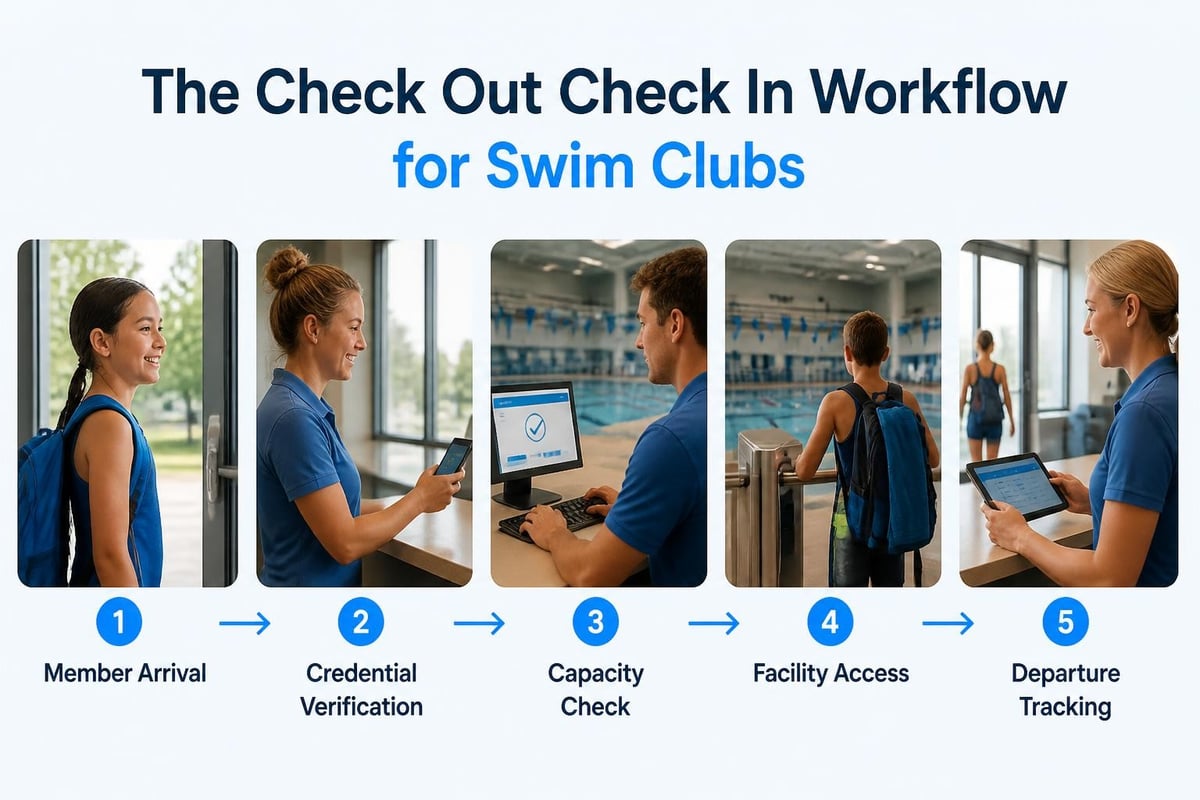
Managing a swim club means juggling a lot of moving parts, and one of the most important things you'll deal with every single day is knowing who's in your facility and when they leave. The check out check in process might sound simple, but when you're running a busy club with hundreds of members, families coming and going, and safety regulations to follow, it becomes something you need to get right. Whether you're dealing with daily swim sessions, competitive team practices, or open recreational swim times, having a solid system for tracking member arrivals and departures makes everything run smoother and keeps everyone safer.
Why Check Out Check In Matters for Your Swim Club
You've probably experienced the chaos of not knowing exactly how many people are in your facility. Parents ask if there's room for one more guest. Your lifeguards are trying to count heads in the pool. Someone's wondering if their teenager already left or is still in the locker room.
Sound familiar?
The check out check in process solves all of these problems and more. When you track who enters and exits your facility, you're not just collecting data for the sake of it. You're creating a safer environment, staying compliant with capacity limits, and getting valuable information about how your club actually gets used.
Safety and Capacity Management
Your insurance company and local regulations probably have specific rules about how many people can be in your pool area at once. Without a proper check out check in system, you're basically guessing. That's not just risky from a safety standpoint; it's a liability waiting to happen.
When you know exactly who's checked in at any moment, you can:
- Enforce capacity limits without arguments
- Know who to account for in an emergency
- Track which members are actually using the facility
- Identify patterns in your busiest times
Think about it this way: if you had to evacuate the pool area right now, could you confidently tell emergency responders exactly how many people should be accounted for? A good check-in system gives you that answer immediately.
Different Types of Check Out Check In Systems
Not every swim club needs the same approach. Your setup depends on your facility size, member count, staffing levels, and honestly, what your members will actually use consistently.
Manual Sign-In Sheets
Some smaller clubs still use the old clipboard method. Members write their name and time when they arrive, then again when they leave. It's simple and cheap, but it has problems.
The biggest issue? People forget to sign out. Always. You end up with a list showing 50 people checked in, but only 10 are actually still there. Effective visitor management processes require consistent execution at both entry and exit points, which is hard to enforce with paper systems.
Pros:
- No equipment costs
- Easy to understand
- Works during power outages
Cons:
- People forget to check out
- Handwriting can be illegible
- No real-time capacity tracking
- Hard to analyze usage patterns
Key Card or Fob Systems
Physical access cards or key fobs are popular at many swim clubs. Members tap their card when they arrive and ideally tap again when they leave. These systems connect to your membership database and can enforce rules automatically.
You can set up the system to deny access if someone's membership has lapsed or if you've hit capacity. That takes the awkward conversation away from your front desk staff.
Mobile App Check-Ins
Modern swim club management software often includes mobile check-in capabilities. Members use their phones to check in when they arrive and check out when they leave. Some systems even use geofencing to automatically check people out after they leave the facility area.
This approach works well for clubs with tech-savvy members, but you'll always have some people who forget their phone or don't want to use an app. That's why most clubs that go this route still offer alternative check-in methods.
| System Type | Setup Cost | Ongoing Cost | Member Compliance | Data Quality |
|---|---|---|---|---|
| Manual Sign-In | Very Low | None | Poor | Low |
| Key Card/Fob | Medium | Low | Good | High |
| Mobile App | Low | Medium | Fair | High |
| Hybrid Approach | Medium-High | Medium | Very Good | Very High |
Setting Up Your Check Out Check In Process
Getting this right isn't just about buying equipment or software. You need to think through how the process actually works in your day-to-day operations.
Start by mapping out your member journey. Someone drives up to your facility. Where do they park? Where do they enter? Is there always staff at the entrance, or do members sometimes arrive when the office is closed?
Placement and Hardware Considerations
If you're using physical check-in stations, location matters more than you think. Put them too far from the entrance, and people will skip checking in. Place them where there's no staff supervision, and you might get members checking in their friends who aren't there.
The best setup usually puts your check-in point right at the entrance, ideally where staff can see it. This creates a natural bottleneck that reminds everyone to check in and lets you verify that people actually belong there.
For outdoor facilities, you'll need weather-resistant equipment. Nothing's more frustrating than your check-in system going down because it rained.
Training Your Staff and Members
Here's something nobody talks about enough: your check out check in system is only as good as the people using it. You can have the fanciest technology in the world, but if your staff doesn't enforce it or your members don't understand why it matters, you're wasting your money.
When you roll out a new system:
- Train your staff first, thoroughly
- Give them scripts for common situations
- Have them practice handling exceptions
- Create clear documentation they can reference
- Hold a member orientation session
- Send reminder emails in the first few weeks
- Post simple instructions at check-in points
Make sure your staff understands they're not just checking people in. They're the front line of your capacity management and safety protocols. Give them the authority to enforce the rules and back them up when members push back.
The Check-Out Challenge
Let's be honest: getting members to check out is way harder than getting them to check in. When people are arriving, they're focused and there's usually someone at the desk. When they're leaving, they're tired, wrangling kids, and just want to get home.
This is where streamlined check-out procedures become important. The easier and more automatic you make it, the better your compliance will be.
Automatic Check-Out Options
Some systems can automatically check people out after a certain time period. If someone checks in at 2 PM and you know your typical visit is 90 minutes, the system might auto-check them out at 3:30 PM unless they're still actively using the facility.
This isn't perfect, but it's better than having your system show people as checked in overnight. You just need to set reasonable timeframes based on actual usage patterns at your club.
Incentivizing Proper Check-Out
Want better compliance? Give members a reason to remember. Some clubs have implemented small incentives:
- Members who consistently check out get priority reservation privileges
- Monthly drawings for members with complete check-in/check-out records
- Gamification through mobile apps that track "streak" days
You might think these are silly, but they work. People respond to positive reinforcement way better than nagging.
Using Check Out Check In Data
Once you've got a system running and members are actually using it, you're sitting on valuable information. Don't let it go to waste.
Understanding Peak Usage Times
Your check out check in data shows exactly when your facility is busiest. Not when you think it's busy, but when it actually is. This matters for scheduling:
Staffing decisions:
- How many lifeguards do you need on different days?
- When should your front desk be fully staffed?
- What hours justify having a pool manager present?
Program planning:
- When can you schedule swim lessons without conflicting with heavy recreational use?
- What times work best for adult lap swimming?
- When could you offer special programming without affecting regular members?

Member Engagement Insights
Some members come every day. Others pay for a full season but only show up twice. Your check-in data tells you who's who.
This information helps you:
- Identify members at risk of not renewing
- Reach out to people who haven't visited recently
- Recognize and reward your most active members
- Calculate actual facility usage rates
- Justify membership pricing based on usage
Modern swim club management software can automatically flag members who haven't checked in for 30 days, giving you a chance to re-engage them before they decide not to renew.
Handling Special Situations
Your check out check in process needs to work for regular days, but it also needs to handle exceptions. And at a swim club, exceptions happen constantly.
Guest Access
Most swim clubs let members bring guests. How does that work with your check-in system? Do guests get temporary access credentials? Does the member check them in under their account? What if a member tries to bring six guests when your policy allows two?
You need clear rules and your system needs to enforce them. The best approach usually involves:
- Members reserve guest slots in advance
- Guest names are pre-registered in the system
- Guests check in under their own name but linked to the sponsoring member
- The system tracks how many guest visits each member has used
Events and Parties
When you rent out the facility for a birthday party or team event, how does that work with your check out check in process? You probably don't want to individually check in 30 kids at a birthday party.
Most clubs create event check-ins that count as a single group entry with a specified number of people. This maintains your capacity tracking without creating administrative headaches.
Emergency Situations
If you need to evacuate the pool, your check out check in system should give you an instant list of who's supposed to be in the building. This is why accuracy matters so much.
Have a backup plan for accessing this information if your main system goes down. Print lists periodically or ensure your cloud-based system works on mobile devices during internet outages.
Technology Integration
Your check out check in system doesn't exist in isolation. It should connect with your other club management functions to reduce duplicate work and give you better insights.
Connecting to Member Management
When someone's membership expires, their access should automatically stop. When they renew, it should automatically reactivate. This integration between systems eliminates the awkward situation where an expired member shows up and your front desk has to turn them away manually.
The data should flow both ways:
- Membership status controls check-in access
- Check-in data appears in member profiles
- Billing systems can see actual usage
- Renewal reminders reference last visit dates
Linking to Financial Systems
Some clubs charge different rates based on actual usage. Your check-in data can drive this billing automatically. Even if you don't do usage-based billing, the connection between who's paid up and who can access your facility should be seamless.
This is where choosing configurable swim club software makes a difference. You need systems that talk to each other without requiring manual data entry or complicated workarounds.
| Integration Point | What It Does | Why It Matters |
|---|---|---|
| Membership Database | Controls access based on status | Automatic enforcement of payment requirements |
| Billing System | Links usage to accounts | Supports usage-based fees or analysis |
| Reporting Tools | Aggregates check-in data | Reveals patterns and trends |
| Communication Platform | Triggers outreach based on usage | Re-engages inactive members |
Common Problems and Solutions
Every swim club runs into similar issues with their check out check in process. Here's what you'll likely face and how to handle it.
Members Who Forget to Check In
You've got regular members who just walk past the check-in point. They've been coming for years and don't think they need to check in anymore. This messes up your capacity tracking and creates safety issues.
Solutions:
- Position staff to gently redirect people
- Make check-in the only way to access the facility (physical barriers)
- Use the data to show how it helps them (faster check-in during busy times)
- Send reminders via email or text about why it matters
System Failures
Technology breaks. Your internet goes out. Your card reader stops working. Your mobile app crashes. What's your backup plan?
Keep it simple:
- Always have a manual sign-in sheet ready
- Train staff to use it properly
- Enter the manual data into your system once it's back up
- Consider systems with offline modes that sync when connection returns

Privacy Concerns
Some members worry about being tracked. They don't like that the club knows when they come and go. This is a legitimate concern you should address directly.
Be transparent about:
- What data you collect
- How long you keep it
- Who has access to it
- How it's used
- How it's protected
Most members understand when you explain it's about safety and capacity management, not surveillance. Having a clear privacy policy helps, as does limiting access to check-in data to only essential staff.
Making Check Out Check In Easier for Families
Family memberships add complexity because you've got multiple people checking in under one account. Parents with young kids, teenagers coming independently, grandparents bringing grandkids - it all needs to work smoothly.
Individual vs. Household Tracking
Should each family member have their own check-in credential, or do you track them under a single family account? There are good arguments for both approaches.
Individual tracking gives you:
- Better data on which family members actually use the facility
- Ability to set different access rules by age
- More accurate capacity counts
- Easier emergency accountability
Household tracking is simpler:
- Fewer cards or credentials to manage
- Parents can check in their kids
- Less confusion about who has access
- Reduced administrative overhead
Many clubs find a hybrid works best: individual credentials for adults and teens, but parents can check in younger children under their own account.
Age-Based Access Rules
Your system should handle different rules for different age groups. Maybe kids under 12 need adult supervision. Teenagers can come alone during certain hours. Different pool areas have different age requirements.
Build these rules into your check out check in system so they're automatically enforced. This takes the burden off your front desk staff and ensures consistency.
Seasonal Considerations
Swim clubs often have different needs during different times of year. Your check out check in process might need to adapt.
Summer Peak Season
During your busiest months, you might need:
- Stricter capacity enforcement
- Reserved time slots that require advance check-in
- Guest limitations due to high demand
- Extended operating hours with different check-in protocols
Your system should handle increased volume without slowing down. Long check-in lines frustrate members and create chaos at your entrance.
Off-Season Flexibility
If you stay open year-round with reduced hours or services, your check out check in process might relax a bit. You might allow more guests, have more flexible hours, or operate with reduced staff supervision.
Just make sure you can easily switch between seasonal rule sets without manual reconfiguration every time.
Competitive Team and Lesson Considerations
If you host swim teams or lessons, those sessions have different check-in needs than open swim. Teams might have 50 kids arriving in a 10-minute window, all for a scheduled practice.
Bulk Check-In Methods
Creating roster-based check-ins for scheduled activities makes life easier. The coach or instructor has a list, marks who's present, and that counts as everyone checking in. This maintains your capacity tracking without bottlenecking your entrance.
Some clubs use registration software that integrates with facility management so lesson participants automatically appear as checked in when their class starts.
Separating Programmed vs. Open Swim
Your system needs to differentiate between members using the facility for lessons and those there for recreational swim. This matters for capacity planning, revenue tracking, and understanding how your space gets used.
The best approach typically involves separate check-in categories or zones that count toward different capacity pools.
Improving Your Current Process
If you already have a check out check in system but it's not working well, you don't necessarily need to replace everything. Sometimes small improvements make a big difference.
Quick wins that help:
- Better signage at check-in points
- Simplified member instructions
- Staff retraining on enforcement
- Regular communication about why it matters
- Rewards for consistent compliance
- Faster check-in hardware or processes
Before investing in new technology, make sure you're getting the most from what you already have. Talk to your members about pain points. Ask your staff what makes their job harder. The answers often point to simple fixes rather than expensive replacements.
The Role of Modern Management Platforms
Today's swim club management platforms treat check out check in as one part of an integrated system rather than a standalone function. When you're evaluating options, look for solutions that connect the dots between check-ins, membership status, billing, communications, and reporting.
The difference between basic check-in systems and modern swim club software is like the difference between a calculator and a spreadsheet. Both do math, but one connects that math to everything else you're trying to accomplish.
Features worth looking for:
- Real-time capacity dashboards
- Automated access control based on membership status
- Mobile and physical credential options
- Offline mode with cloud sync
- Integration with your existing member database
- Detailed usage analytics and reporting
- Configurable rules for different member types
- Family and household management
- Guest tracking and limits
Staff Training and Buy-In
Your check out check in system succeeds or fails based on how well your team executes it. That means training isn't a one-time thing - it's ongoing.
Creating Standard Operating Procedures
Document exactly how check-in should work for different scenarios:
- Normal member arrival
- Member with guests
- Expired membership
- System failure
- Capacity limits reached
- Emergency situations
Your staff should know these procedures cold. New employees should shadow experienced ones before handling check-in alone. Regular refresher training keeps everyone sharp.
Empowering Staff to Enforce Rules
Nothing undermines a system faster than inconsistent enforcement. If one staff member lets people skip check-in but another enforces it strictly, members learn to wait for the lenient person to be on duty.
Give your staff the authority to enforce check-in requirements, then back them up when members complain. Make it clear this isn't optional or negotiable - it's about safety and compliance.
Communicating Value to Members
Members won't follow your check out check in procedures if they don't understand why they matter. Regular communication helps build this understanding.
Messages that resonate:
- "Helps us keep everyone safe in emergencies"
- "Lets us maintain safe capacity limits"
- "Shows us when we need more staff on duty"
- "Helps us plan programs for times that work for you"
- "Required by our insurance and local regulations"
Notice these focus on benefits to members rather than administrative convenience. People comply better when they see how it helps them, not just how it helps you manage your facility.
Looking at Industry Examples
While swim clubs have unique needs, other industries have figured out check out check in processes that work. Hotels, recreation centers, and rental facilities all deal with similar challenges around check-in and check-out optimization .
The hospitality industry has learned that self-service options reduce wait times and staff workload, but you need backup systems for people who can't or won't use technology. Recreation facilities have found that clear signage and simple processes work better than complicated systems that require training.
You can learn from these examples while adapting them to your specific situation. A swim club isn't a hotel, but the principles of good check-in management often transfer.
Measuring Success
How do you know if your check out check in process is working well? Track these metrics:
- Percentage of visits with both check-in and check-out recorded
- Average check-in time during peak periods
- Number of capacity limit violations
- Member complaints related to check-in
- Staff time spent managing manual exceptions
- Accuracy of attendance records
Set benchmarks and measure improvement over time. If you're consistently hitting 95% check-in compliance and average check-in takes under 30 seconds, you're doing well. If half your members skip checking in or there's a five-minute wait during busy times, you've got work to do.
Future Trends in Access Management
Technology keeps evolving, and check out check in systems are getting smarter. Some trends worth watching:
Biometric check-in using fingerprints or facial recognition eliminates forgotten credentials but raises privacy concerns and requires significant investment.
Automated check-out via geofencing uses member phones to detect when they leave the facility grounds, automatically checking them out.
Predictive capacity management uses historical data and AI to forecast busy times and recommend optimal visit times to members.
Contactless everything accelerated by health concerns, from QR codes to NFC tap payments combined with check-in.
You don't need to adopt every new technology, but staying aware of options helps you make informed decisions when it's time to upgrade or replace your current systems. The key question is always: does this actually make things easier and more accurate, or is it just new for the sake of being new?
Balancing Security and Convenience
There's always tension between making check-in secure enough to prevent unauthorized access and keeping it convenient enough that members actually use it. Lean too far toward security and members get frustrated. Lean too far toward convenience and you lose control of who's in your facility.
The right balance depends on your specific situation. A large club in an urban area might need strict access controls. A small community pool where everyone knows each other might prioritize convenience.
Most clubs find success somewhere in the middle: easy check-in for members in good standing, automatic enforcement of basic rules, but with staff oversight to handle exceptions and unusual situations.
Getting your check out check in process right makes everything else easier at your swim club. You'll know who's using your facility, when they're there, and how to reach them in emergencies. Your staff spends less time chasing down information and more time serving members. You make smarter decisions about staffing, programming, and capacity based on real data instead of guesswork. If you're ready to move beyond clipboards and spreadsheets, PoolPulse provides swim club management software that makes member check-ins simple and gives you the insights you need to run your facility better. The platform handles everything from access control to usage analytics while staying easy enough that both your staff and members can actually use it.

The Swim Club Software Test Every Board Should Run
Run this simple test to see if your swim club software actually saves time or creates more work. Real scenarios, honest questions, better tools.

The Seven Signs You've Outgrown Your Club Operations
Your swim club is growing, but your tools aren't keeping up. These seven warning signs reveal when manual processes cost more than solutions.

How to Answer Every Board Question in Under Two Minutes
Your swim club board asks tough questions. Learn how management reporting software helps you pull accurate answers in seconds, not hours.
Want to see if PoolPulse is a good fit for your club?
Book a walkthrough and we'll show you exactly how PoolPulse can help based on your club's needs, goals, and current processes.