

Free Staffing for Swim Clubs: Volunteer Management Guide
Learn how free staffing through volunteers can help your swim club save money while building community. Practical tips for recruitment and management.


Running a swim club means juggling a dozen tasks at once. You're coordinating swim meets, managing memberships, handling billing issues, and somehow keeping the front desk covered during peak hours. When budget constraints hit, many clubs turn to free staffing through volunteers to fill critical gaps. But here's the thing: getting free staffing right isn't just about finding anyone to fill shifts. It's about building a system that works for everyone while keeping your operations running smoothly.
Why Free Staffing Makes Sense for Swim Clubs
Let's be honest. Your membership fees only stretch so far. Between pool maintenance, insurance, coaching salaries, and facility upgrades, there's rarely enough budget left over to hire full-time staff for every position. That's where free staffing comes in.
Free staffing through volunteers can cover everything from front desk check-ins to swim meet timing to concession stand operations. Parent volunteers who already bring their kids to practice three times a week? They're often willing to help out a few hours per month. High school students looking for community service hours? They can handle straightforward tasks like equipment setup or membership card distribution.
The real benefit goes beyond saving money. When members contribute their time, they become more invested in your club's success. They understand the challenges you face. They appreciate the work that goes into running smooth operations. And they're more likely to renew their memberships year after year.
The Hidden Costs You Need to Know About
Free staffing isn't actually free, though. You're trading cash expenses for something else: your time and energy.
Think about what goes into managing volunteers. You need to recruit them, train them, schedule them, remind them about their shifts, and handle it when they don't show up. You need clear processes so different volunteers can do the same task consistently. You need backup plans for when people cancel at the last minute.
Without good systems in place, free staffing can create more headaches than it solves. I've seen clubs where the volunteer coordinator spends 15 hours a week just managing schedules and answering questions. That's practically a part-time job in itself.

Building Your Free Staffing Program From Scratch
Starting a volunteer program feels overwhelming when you're already stretched thin. But you don't need to launch everything at once. Pick one area where free staffing would make the biggest difference and start there.
Identify Your Critical Gaps
Look at your current operations and ask yourself: where do we struggle the most? Where do paid staff spend time on tasks that volunteers could handle?
Common areas where swim clubs use free staffing effectively:
-
Front desk coverage during open swim hours
-
Swim meet operations including timing, scoring, and announcements
-
Membership drives and community outreach events
-
Facility maintenance like lane rope setup or deck chair arrangement
-
Social events such as end-of-season parties or fundraisers
-
Administrative support for mailings, database updates, or phone calls
Start with one or two roles. Get those working smoothly before you expand. Trying to fill ten different volunteer positions at once is a recipe for chaos.
Create Clear Role Descriptions
Volunteers need to know exactly what they're signing up for. Vague requests like "help out at the pool" don't work. People want specifics.
Your role descriptions should answer these questions:
-
What tasks will I actually do?
-
How long is each shift?
-
When are shifts typically scheduled?
-
What training will I receive?
-
Who do I contact if I have questions?
For example, a front desk volunteer role might include checking in members, scanning membership cards, collecting guest fees, and answering basic questions about pool hours. That's clear and manageable. Compare that to "general pool support," which could mean anything.
The volunteer management best practices approach emphasizes this clarity from the start, helping volunteers understand their commitment before they sign up.
Recruiting Volunteers Who Actually Show Up
Finding people to volunteer is only half the battle. Finding people who show up reliably? That's the real challenge with free staffing.
Tap Into Your Existing Community First
Your best volunteer candidates are already involved with your club. They understand your operations. They care about your success. They're already coming to the pool regularly.
Start your recruitment with:
-
Parents of competitive swimmers who attend practice anyway
-
Adult members who swim during off-peak hours and have flexible schedules
-
Retired members looking for social engagement and purpose
-
High school students from your community seeking service hours
Don't just send a mass email asking for help. That rarely works. Instead, make personal asks. "Sarah, I noticed you're here every Tuesday and Thursday evening. Would you be willing to help check in members for one hour on Thursday nights? You could do it while Emma's at practice."
Personal requests convert way better than general announcements. People want to feel specifically chosen, not just part of a desperate call for anybody willing to help.
Make the Ask Easy to Say Yes To
The smaller the initial commitment, the more likely someone will try it. Don't ask people to volunteer every Saturday for the entire summer. Ask them to try one shift and see how it goes.
Use these strategies to reduce friction:
|
Strategy |
Why It Works |
Example |
|---|---|---|
|
Trial shifts |
Low-risk way to test fit |
"Try one 2-hour shift this month" |
|
Buddy system |
Less intimidating with a friend |
"Bring someone and volunteer together" |
|
Flexible scheduling |
Fits different availability |
"Pick any shift that works for you" |
|
Defined end dates |
Clear finish line |
"Help during June and July only" |
|
Skill-based matching |
Plays to strengths |
"You mentioned you're good with tech" |
Once someone completes their first shift successfully, they're much more likely to continue. That first experience sets the tone for everything else.
Training Your Free Staffing Team
Even simple volunteer roles need proper training. Assuming people will just figure it out leads to mistakes, frustration, and volunteers who never come back.
Build Simple Training Materials
Create step-by-step guides for each volunteer role. Think checklists and screenshots, not lengthy manuals. Your volunteers don't have time to read through pages of dense text.
For a front desk volunteer, your training might include:
-
How to log into the check-in system
-
What to do when a membership card doesn't scan
-
How to process guest fees
-
Where to find answers to common member questions
-
Who to call if something goes wrong
Keep these materials accessible. Print them out and keep copies at the volunteer station. Add them to your club's member portal. The easier it is to find information, the less time volunteers spend hunting for answers.
Many clubs using swim club management software find that modern systems make volunteer training much simpler because the interfaces are designed to be user-friendly.
Pair New Volunteers With Experienced Ones
Nothing beats hands-on learning with someone who already knows the ropes. Schedule new volunteers to shadow experienced ones for their first shift or two.
This approach helps in several ways. New volunteers feel less nervous when they're not alone. They can ask questions in real-time. They learn the unofficial tips and shortcuts that don't make it into written guides. And experienced volunteers feel valued for their expertise.
Managing Schedules Without Losing Your Mind
Free staffing falls apart when scheduling becomes a nightmare. You need systems that work, not spreadsheets that require constant manual updates.
Use Technology That Actually Helps
In 2026, you shouldn't be managing volunteer schedules with paper sign-up sheets or email chains. Those methods guarantee mistakes and no-shows.
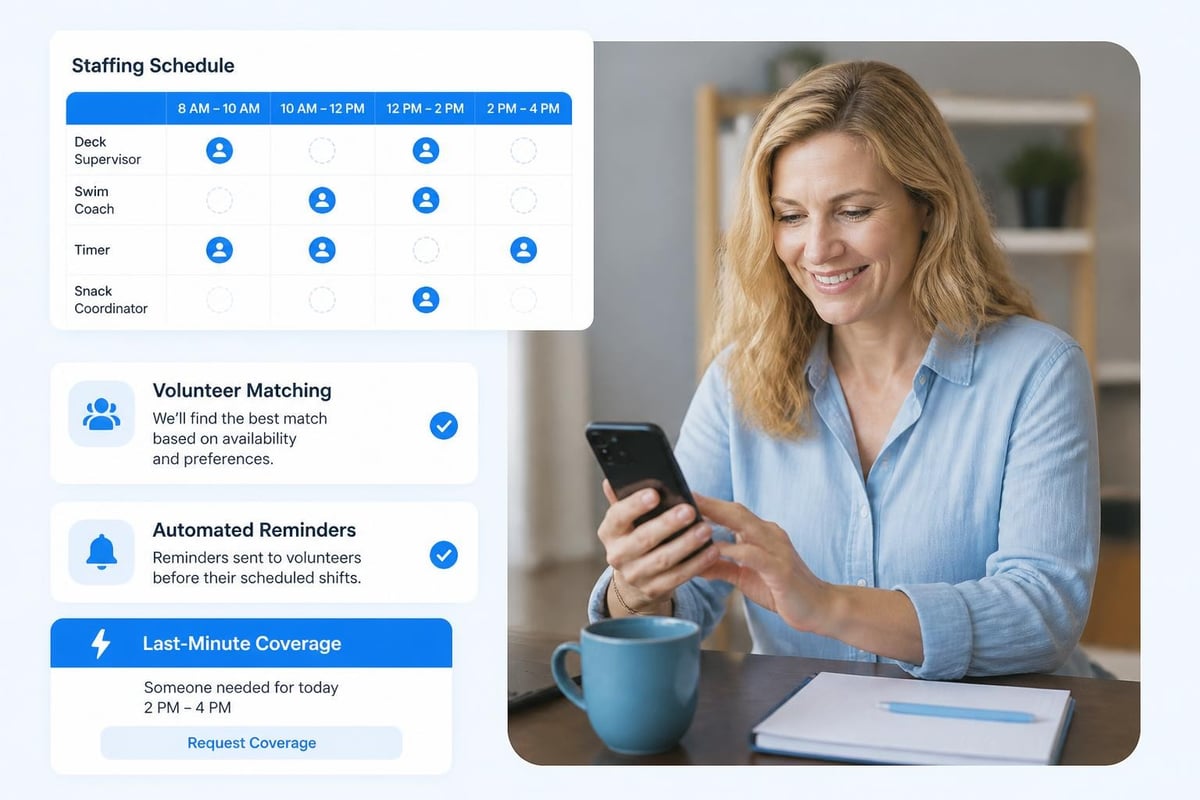
Look for tools that handle:
-
Self-service scheduling so volunteers can claim open shifts
-
Automated reminders sent 24-48 hours before shifts
-
Easy shift swapping when volunteers need to change plans
-
Coverage requests when shifts go unfilled
-
Tracking hours for volunteers who need documentation
The features available in modern club management platforms often include volunteer scheduling alongside member management, which means everything stays in one place rather than scattered across multiple systems.
Build In Buffer Time and Backup Plans
Here's what I've learned after years of managing free staffing: people forget shifts. They get sick. They have family emergencies. If your schedule has zero slack, you're setting yourself up for constant crisis management.
Smart scheduling includes:
-
Double-booking critical shifts when possible
-
Maintaining an on-call list of reliable volunteers
-
Cross-training people on multiple roles
-
Keeping some flexibility in your daily operations
-
Having paid staff who can fill gaps when absolutely necessary
One club I know schedules three volunteers for swim meets even though they only need two. That extra person provides coverage if someone doesn't show up, and on the rare occasions all three arrive, the meet runs even more smoothly.
Keeping Volunteers Engaged Long-Term
Getting volunteers is one challenge. Keeping them engaged for months or years? That's a whole different skill set. Free staffing programs collapse when everyone burns out or drifts away.
Recognition Matters More Than You Think
Volunteers aren't getting paid, so your appreciation becomes their compensation. And generic "thank you" emails don't cut it.
Effective volunteer recognition includes:
-
Calling out specific contributions in newsletters
-
Hosting an annual volunteer appreciation event
-
Providing club swag like t-shirts or water bottles
-
Offering small perks like priority lane reservations
-
Publicly acknowledging milestone hours or years of service
-
Writing personal thank-you notes for exceptional help
The best practices for volunteer management emphasize that recognition should be frequent, specific, and genuine rather than generic and infrequent.
One swim club gives volunteers "service credits" that can be used toward membership fees or swim lesson discounts. That creates tangible value while keeping the free staffing model sustainable.
Create Community Among Your Volunteers
When volunteers feel connected to each other, they're more likely to stick around. They're not just helping the club, they're part of a team.
Build volunteer community through:
|
Approach |
How to Implement |
Expected Outcome |
|---|---|---|
|
Regular gatherings |
Monthly coffee meetups or seasonal socials |
Volunteers form friendships |
|
Communication channels |
Private group chat or message board |
Easy peer support and questions |
|
Volunteer leadership |
Designate senior volunteers as mentors |
Built-in support structure |
|
Shared goals |
Track collective impact (hours, events) |
Team accomplishment feeling |
|
Input opportunities |
Survey volunteers on schedule or processes |
Volunteers feel heard and valued |
Volunteers who feel isolated or disconnected eventually stop showing up. Volunteers who have friends on the team keep coming back.
Common Free Staffing Mistakes to Avoid
Every club makes mistakes when building volunteer programs. Learn from others' experiences so you don't have to make them all yourself.
Mistake 1: Treating Volunteers Like Employees
Volunteers are giving their time freely. That means you can't demand the same level of commitment or accountability you'd expect from paid staff. You can't write them up for being five minutes late. You can't require mandatory overtime.
Yes, you need reliability. But you also need to remember that volunteers have other priorities: jobs, families, personal commitments. When you treat free staffing like unpaid employment, people leave.
Mistake 2: Failing to Set Boundaries
On the flip side, some clubs let volunteers do whatever they want with zero structure. That creates inconsistency and potential liability issues.
You still need clear policies about:
-
Background checks for volunteers working with minors
-
Confidentiality when handling member information
-
Safety procedures and emergency protocols
-
Appropriate communication with members
-
What decisions volunteers can and cannot make
The church volunteer management best practices translate well to swim clubs because both involve community organizations where trust and safety matter immensely.
Mistake 3: Overloading Your Best People
Your star volunteers who always say yes? You're probably asking too much of them. It's easy to keep going back to reliable people, but that's the fast track to burnout.
Watch for warning signs:
-
The same few people covering most shifts
-
Volunteers taking on multiple roles simultaneously
-
Declining quality or increased mistakes
-
Passive-aggressive comments or reduced communication
-
Previously enthusiastic volunteers becoming withdrawn
Spread the work around. Recruit actively even when you think you have enough volunteers. Build depth so no single person becomes irreplaceable.

Integrating Free Staffing With Your Operations
Your volunteer program can't exist in a vacuum. It needs to connect seamlessly with your other systems and processes.
Connect Volunteers to Your Member Database
When volunteers check in members at the front desk, they need access to current membership information. When they help with swim meet registration, they need to see who's signed up. When they field questions about billing, they need to know where to direct people.
This is where having integrated club management software becomes crucial. Your volunteers shouldn't be working from outdated lists or cobbled-together spreadsheets. They need the same information your staff uses, just with appropriate permission levels.
Modern platforms let you create volunteer user accounts with limited access. They can see what they need to do their jobs without accessing sensitive financial data or making changes to core settings.
Document Everything That Matters
When you rely on free staffing, you can't assume institutional knowledge stays intact. People cycle through volunteer roles. What everyone "just knows" this year might be completely forgotten next year.
Create documentation for:
-
Standard operating procedures for each role
-
Troubleshooting guides for common issues
-
Contact lists for when problems arise
-
Seasonal timelines (when to recruit, train, schedule)
-
Lessons learned from previous years
Store these documents somewhere accessible to current and future volunteers. Your club's website, a shared drive, or within your management software all work. The key is making sure people can find information when they need it.
Measuring Your Free Staffing Success
How do you know if your volunteer program is actually working? You need to track more than just whether shifts get filled.
Track These Key Metrics
Numbers tell the story of your free staffing program's health:
-
Fill rate: Percentage of shifts covered versus total shifts needed
-
Retention rate: Percentage of volunteers who return month over month
-
No-show rate: How often volunteers skip scheduled shifts
-
Training completion: New volunteers who finish onboarding successfully
-
Hours contributed: Total volunteer time and estimated dollar value
-
Satisfaction scores: Regular feedback from volunteers about their experience
You don't need fancy analytics tools. A simple spreadsheet tracking these numbers monthly gives you enough insight to spot trends and address problems early.
Listen to Volunteer Feedback
The data matters, but so do the stories behind the numbers. Regular conversations with volunteers reveal issues that metrics might miss.
Ask volunteers:
-
What's working well in their role?
-
What's frustrating or confusing?
-
What would make their experience better?
-
Do they feel adequately trained and supported?
-
Would they recommend volunteering to others?
The insights from these conversations help you refine your free staffing approach over time. Volunteers appreciate being asked for input, and you get valuable information about what needs to change.
Adapting Free Staffing to Different Club Sizes
A 50-family neighborhood pool operates differently than a 500-member competitive swim club. Your free staffing approach needs to match your scale.
Small Clubs (Under 100 Families)
With a small club, you probably know most members personally. That's your superpower. Use those relationships to recruit volunteers through direct conversations. Your volunteer coordinator might be a board member wearing multiple hats rather than a dedicated position.
Keep things simple:
-
Use straightforward scheduling tools rather than complex software
-
Rotate volunteer responsibilities among board members
-
Lean heavily on multi-talented volunteers who can handle various tasks
-
Make volunteer events social and fun to maintain engagement
-
Communicate primarily through group text or email
Small clubs can get away with less formal structure because everyone knows each other and communication happens naturally.
Medium Clubs (100-300 Families)
At this size, you need more structure but still maintain personal connections. Consider designating a volunteer coordinator who isn't also juggling five other major responsibilities.
Your free staffing program should include:
-
Written role descriptions for each position
-
Regular recruitment campaigns throughout the year
-
Basic tracking of volunteer hours and participation
-
Scheduled training sessions for new volunteers
-
Recognition programs that feel personal but scale to more people
Medium clubs benefit most from volunteer management strategies that balance personal touch with systematic processes.
Large Clubs (300+ Families)
Large clubs need robust systems to manage free staffing effectively. You might have a dedicated volunteer coordinator as a paid part-time position or a very active volunteer in that leadership role.
Essential components include:
-
Comprehensive volunteer management software
-
Multiple volunteer coordinators for different programs
-
Formal onboarding and training processes
-
Structured recognition programs with different levels
-
Regular volunteer appreciation events
-
Clear pathways for volunteers to move into leadership roles
At this scale, you're essentially managing a volunteer organization within your swim club. The principles stay the same, but the systems need to handle significantly more complexity.
Planning for Seasonal Fluctuations
Swim clubs have natural peaks and valleys throughout the year. Your free staffing needs change dramatically between winter and summer.
Summer: Your Peak Staffing Season
Summer means more members at the pool, longer hours, swim meets every weekend, and social events filling your calendar. You need maximum volunteer coverage precisely when it's hardest to find because everyone's busy with vacations and family activities.
Strategies for summer staffing:
-
Recruit heavily in spring before schedules fill up
-
Offer shorter shifts (2 hours instead of 4) to accommodate tight schedules
-
Build larger volunteer pools knowing some people will be unavailable
-
Create "floating" volunteers who can fill gaps on short notice
-
Communicate early and often about upcoming needs
One club I know asks members to commit to volunteer hours when they register for summer pool access. It's part of the membership expectation, not an optional add-on. That generates a much stronger volunteer base.
Off-Season: Maintenance and Planning
Winter volunteer needs look completely different. You're not staffing the front desk daily, but you might need help with facility maintenance, membership renewals, or planning for next season.
This is the perfect time to:
-
Thank and recognize volunteers from the previous season
-
Recruit and train new volunteers before the spring rush
-
Update procedures and documentation based on lessons learned
-
Plan recognition events and community-building activities
-
Identify volunteer leaders for the upcoming year
Don't let your volunteer relationships go dormant during the off-season. Stay connected so people are ready to jump back in when needed.
Legal and Safety Considerations
Free staffing comes with real legal responsibilities. Volunteers might not be employees, but you still need to protect both them and your club.
Background Checks and Screening
Any volunteer who works with minors needs a background check. This isn't optional. It's essential for safety and liability protection.
Develop a screening process that includes:
-
Criminal background checks for all volunteers working with kids
-
Clear policies about who has authority over minors
-
Two-adult rules for coaching or supervision situations
-
Training on mandatory reporting requirements
-
Regular rechecks for long-term volunteers
Yes, background checks cost money. But they're a necessary investment when you're using free staffing for programs involving children. Factor that cost into your budget planning.
Insurance Coverage
Check with your insurance provider about volunteer coverage. Most policies cover volunteers under your general liability insurance, but you need to verify. Some activities might require additional coverage or specific waivers.
Questions to ask your insurance agent:
-
Are volunteers covered under our current liability policy?
-
Do we need workers' compensation insurance for volunteers?
-
Are there activities volunteers shouldn't do due to liability concerns?
-
What documentation do we need to maintain?
-
How should we handle volunteer injuries?
Don't assume. Get clear answers in writing so you know exactly what's covered and what isn't.
Clear Policies on Authority and Decision-Making
Volunteers need to know what decisions they can make and when they need to escalate to staff or board members. A front desk volunteer can process a guest fee, but they shouldn't be deciding membership eligibility or handling billing disputes.
Create a decision-making matrix that shows:
|
Situation |
Volunteer Can Handle |
Must Escalate To |
|---|---|---|
|
Standard check-in |
Yes |
N/A |
|
Guest fee collection |
Yes |
N/A |
|
Membership questions |
Basic info only |
Manager or staff |
|
Billing issues |
No |
Manager or treasurer |
|
Safety incidents |
Initial response |
Pool manager immediately |
|
Facility problems |
Report issue |
Maintenance coordinator |
|
Member complaints |
Listen and document |
Board member or manager |
This clarity protects both volunteers and your club from liability issues that arise when people make decisions outside their authority.
Building Sustainability Into Your Program
The goal isn't just to get free staffing working this year. You want a program that continues thriving for years to come.
Create a Volunteer Leadership Pipeline
Your best volunteers can become volunteer coordinators, training leaders, or even board members. Actively develop these future leaders rather than waiting for them to emerge organically.
Look for volunteers who:
-
Show up consistently and reliably
-
Take initiative to solve problems
-
Communicate well with other volunteers
-
Understand club operations broadly
-
Care about the club's long-term success
Invite these people into expanded roles. Give them small leadership opportunities first, like coordinating one event or training new volunteers for a specific role. Success in these smaller assignments builds confidence and skills for larger responsibilities.
Document Your Systems and Processes
When volunteer coordination lives entirely in one person's head, you're one resignation away from chaos. Everything needs to be written down and accessible.
Your documentation should cover:
-
How to recruit volunteers for each role
-
Training materials and checklists
-
Scheduling processes and backup plans
-
Recognition program details
-
Troubleshooting common issues
-
Annual timeline of volunteer activities
Update this documentation annually based on what worked and what didn't. Treat it as a living resource that improves over time rather than a static document.
Plan for Coordinator Transitions
Eventually, your volunteer coordinator will step down. Plan for that transition before it happens, not after.
Succession planning includes:
-
Shadowing periods where new coordinators learn from outgoing ones
-
Overlap time with both coordinators active
-
Written documentation of all processes and contacts
-
Introduction of the new coordinator to all active volunteers
-
Continued availability of the outgoing coordinator for questions
The smoother these transitions, the less disruption to your free staffing operations. Volunteers need continuity and confidence that the program will continue running well.
Making Free Staffing Work For Your Club
Free staffing through volunteers isn't a magic solution that eliminates all your operational challenges. It's a tool that works when you invest time in building systems, training people, and maintaining relationships.
The clubs that succeed with volunteers share common traits. They're clear about expectations. They make the experience rewarding for people who contribute their time. They have systems that work reliably. And they recognize that free staffing requires ongoing attention and management to stay healthy.
Start small. Pick one area where volunteers could make a real difference. Build a solid foundation there before expanding to other roles. Learn what works for your specific club culture and membership base. Adjust your approach based on feedback and results.
Your volunteer program will evolve over time. What works this year might need tweaking next year. Stay flexible and keep improving your processes. The investment you make in building strong free staffing systems pays dividends for years through saved costs, engaged members, and smoother operations.
Getting free staffing right transforms your club operations while building deeper community connections among your members. When you combine solid volunteer management practices with modern tools that reduce administrative headaches, you create a sustainable model that benefits everyone. PoolPulse helps swim clubs streamline staffing,member management, scheduling, and check-ins through an AI-powered platform designed specifically for clubs like yours, making it easier to coordinate both staff and volunteers in one unified system.

The Swim Club Software Test Every Board Should Run
Run this simple test to see if your swim club software actually saves time or creates more work. Real scenarios, honest questions, better tools.

The Seven Signs You've Outgrown Your Club Operations
Your swim club is growing, but your tools aren't keeping up. These seven warning signs reveal when manual processes cost more than solutions.

How to Answer Every Board Question in Under Two Minutes
Your swim club board asks tough questions. Learn how management reporting software helps you pull accurate answers in seconds, not hours.
Want to see if PoolPulse is a good fit for your club?
Book a walkthrough and we'll show you exactly how PoolPulse can help based on your club's needs, goals, and current processes.