

Five Renewal Reminders That Stop No-Shows Cold
Stop losing members to forgotten renewals. Learn when to send reminders, what to say, and how to automate the nudges that keep memberships active.

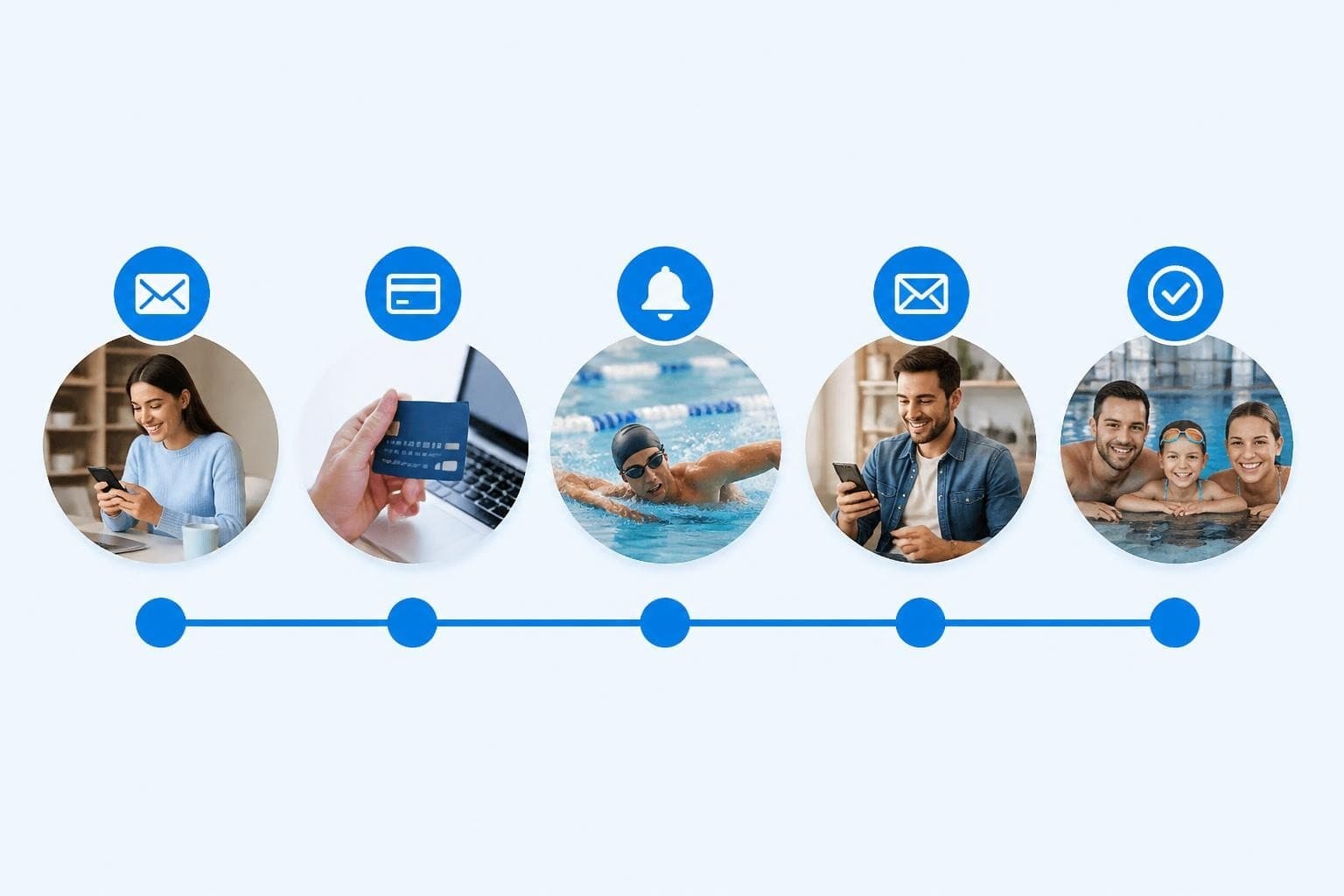
You're closing out another busy season when you notice something strange in the reports. Thirty-seven memberships expired last month without renewing. That's not normal. You send a few texts to families you know well, and they all say the same thing: "Oh no, I completely forgot! Can we still renew?" Of course they can, but now you're spending hours processing late renewals, resetting access cards, and explaining grace periods. Half of those families already signed up elsewhere because they assumed you didn't want them back. A simple renewal reminder could have saved all of that.
Why Renewal Reminders Work Better Than You Think
Most club operators treat renewal reminders as an afterthought. You send one email a week before expiration and call it good. But think about how your own life works. You ignore the first reminder. You notice the second one but tell yourself you'll handle it later. The third one finally gets you to pull out your credit card.
Your members are exactly the same. They're busy. They're juggling work, kids, carpools, and a hundred other commitments. A single reminder gets buried in their inbox between Target receipts and school newsletters.
Research shows that modern subscribers expect proactive communication about renewals , and they're more likely to renew when reminded multiple times with clear value messaging. It's not about being pushy. It's about being helpful.
The Real Cost of Silent Expirations
When a membership expires without warning, everyone loses. The member misses out on pool access during the hottest weeks of summer. Your club loses predictable revenue and has to work harder to fill that slot. Your front desk staff spends time fielding confused calls from people who showed up expecting to get in.
But here's what really hurts: silent expirations feel like rejection to your members. They wonder if you noticed they left. They assume you didn't care enough to reach out. That emotional distance makes it ten times harder to win them back later.

A good renewal reminder system tells members you're paying attention. It says "we want you here" without making anyone feel pressured.
The Five Reminders That Actually Get Renewals
You don't need a complicated system. You need five well-timed nudges that give members multiple chances to act without feeling harassed.
Reminder One: The 60-Day Head Start
Send your first renewal reminder two months before expiration. This one isn't about urgency. It's about planting a seed.
What to include:
- Clear expiration date
- Current membership benefits they're using
- Simple renewal link
- Early renewal bonus if you offer one
This message should feel informational, not salesy. You're just making sure they know renewal is coming. Most people won't act on this one, and that's fine. You're establishing a pattern of communication.
Reminder Two: The 30-Day Payment Check
A month out, shift your focus to logistics. This is when you help members avoid the number one renewal killer: expired credit cards.
Many clubs lose renewals simply because the card on file bounced. The member never sees a declined payment notice, assumes everything renewed automatically, and gets surprised when their access stops working. The FTC's guidelines on auto-renewals emphasize clear communication about payment dates and method verification, which protects both your club and your members.
This reminder should:
- Confirm the payment method on file
- Ask members to update if needed
- Remind them of renewal date
- Include a direct link to update payment info
PoolPulse makes this easy with automated payment verification workflows that flag expired cards before renewal day, but even a simple email asking "Is your card still current?" prevents most payment failures.
Reminder Three: The 14-Day Value Reminder
Two weeks before expiration, remind members why they joined in the first place. This is your chance to reinforce value without being pushy.
| Message Element | Purpose | Example |
|---|---|---|
| Usage stats | Show engagement | "You've checked in 47 times this year" |
| Upcoming events | Create FOMO | "Summer swim meets start in three weeks" |
| Community connection | Emotional tie | "Your family is part of 142 active members" |
| Simple CTA | Make action easy | "Renew now in 2 minutes" |
People renew when they remember why membership matters. A fourteen-day heads-up gives them time to budget for renewal without feeling rushed.
Reminder Four: The 3-Day Final Notice
This is your urgent-but-not-panicked reminder. Three days out, your tone shifts slightly. You're still friendly, but now you're making it clear that action is needed soon.
Keep it short:
- "Your membership expires in 3 days"
- One-click renewal button
- Contact info if they have questions
- Grace period details if you offer one
Don't bury the important information. Put the expiration date and renewal button at the top. Make it impossible to miss.
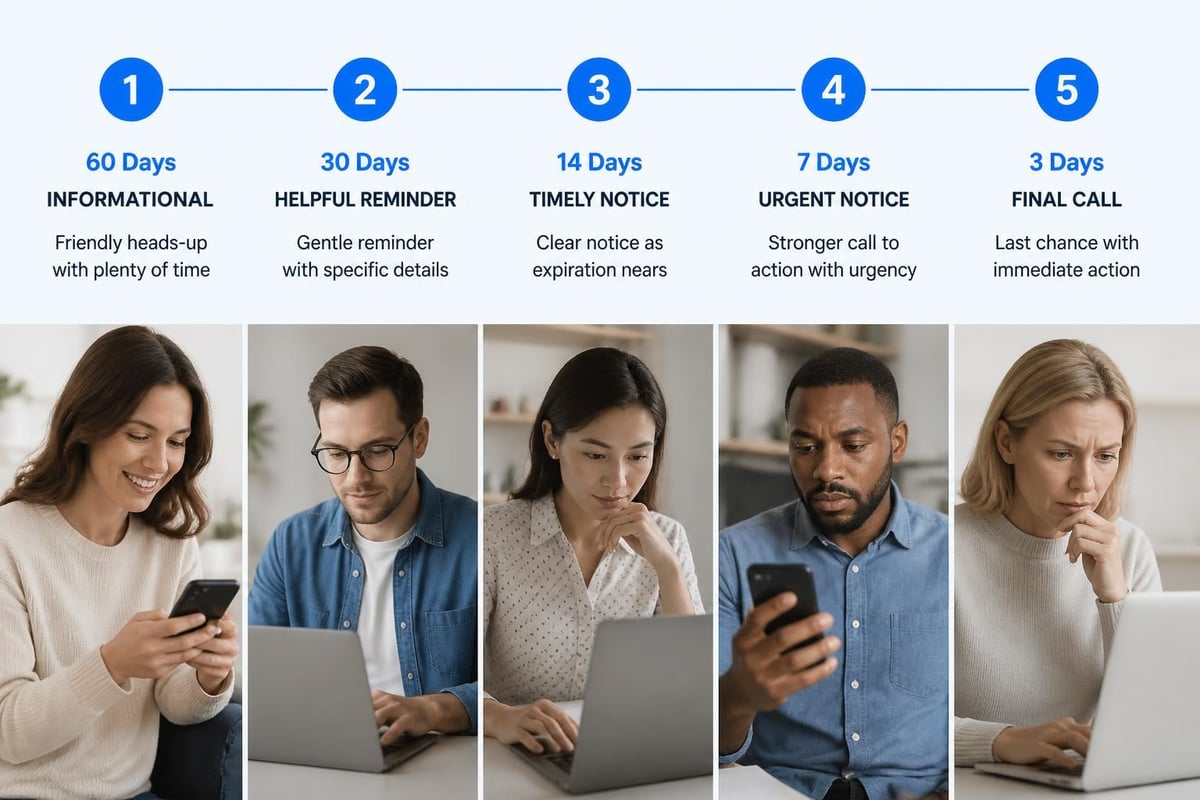
Reminder Five: The Expiration-Day Last Chance
On expiration day, send one final message. This isn't a guilt trip. It's a genuine last opportunity to renew without interruption.
Be direct:
- "Today is your last day"
- Explain what happens next (access ends, grace period, etc.)
- Make renewal stupidly easy
- Offer phone support for anyone who needs help
Some people genuinely intend to renew but need that final push. This message catches the procrastinators who would otherwise slip through the cracks.
Transactional vs. Marketing: Send Renewal Reminders the Right Way
Here's something most club operators get wrong: they send all renewal reminders as marketing emails. That might seem fine, but it creates deliverability problems.
Renewal reminders are transactional communications. They're tied to a specific account event (an upcoming expiration), not a promotional campaign. The difference between transactional and marketing email matters because transactional messages enjoy higher inbox placement and aren't subject to the same unsubscribe rules.
Why This Matters for Swim Clubs
When you send renewal reminders through your marketing email platform, several things can go wrong:
- Members who unsubscribed from newsletters never see renewal notices
- Spam filters treat them like promotions and bury them
- You can't send as frequently without hurting your sender reputation
- Important account information gets lumped in with event announcements
Best practices for transactional notifications recommend keeping these messages separate, timely, and directly related to the user's account status.
The fix is simple: use a separate sending infrastructure for renewal reminders. PoolPulse's automated member management features handle this automatically, treating renewals as transactional events while keeping marketing communications separate.
What to Actually Say in Your Renewal Reminder
You've probably received renewal reminders that feel like legal notices. All business, no warmth, just facts and a payment button. That approach works for software subscriptions, but member-driven facilities are different. Your members are neighbors. They're part of your community. Your reminders should sound like it.
Write Like a Real Person
Compare these two approaches:
Bad: "Notice: Membership #4721 expires 09/30/2026. Renewal required to maintain access privileges. Submit payment via member portal."
Better: "Hi Sarah! Your family membership renews on September 30th. We'd love to have you back for another season. Renew now to keep your access active without interruption."
The second version treats Sarah like a person, not an account number. It takes five seconds longer to write and makes all the difference in how members respond.
Include the Details That Matter
Every renewal reminder should answer these questions without making members hunt for information:
- When exactly does my membership expire? (Specific date, not "soon")
- What happens if I don't renew? (Lost access, grace period, etc.)
- How much does renewal cost? (Exact amount, including any changes)
- How do I renew? (One-click link, not a scavenger hunt)
- Who do I contact with questions? (Real phone number or email)
Engagement best practices emphasize clarity and easy action paths, especially for time-sensitive communications like renewals.
Timing Matters More Than You Think
You know what doesn't work? Sending all five reminders on Tuesday mornings at 10 AM because that's when you remember to do it. Your members have patterns. Some check email before work. Others scroll through messages after dinner. The best renewal reminder system adapts to when people actually engage.
Test Your Send Times
Run a simple experiment with your next batch of renewals. Split them into three groups:
- Group A: Morning sends (7-9 AM)
- Group B: Lunch sends (11 AM-1 PM)
- Group C: Evening sends (6-8 PM)
Track which group has the highest open and renewal rates. Do this for a few months, and you'll discover when your members are most likely to act. It might surprise you.
For most swim clubs, evening sends outperform morning ones. People make membership decisions when they're relaxed and thinking about family activities, not during their morning commute.
Don't Forget Weekend Warriors
Many clubs avoid sending renewal reminders on weekends, worried about annoying people. But think about when your members actually use your facility. Saturday morning. Sunday afternoon. Those are the moments they're reminded why membership matters.
A Saturday morning renewal reminder hits different when someone is actually at your pool, watching their kids swim, enjoying the facility. The value is right in front of them.
Automation That Doesn't Feel Robotic
You can't manually send five reminders to every expiring member. Even small clubs would spend hours each week just managing renewal communications. That's why automation exists.
But here's the trap: most automated renewal reminders feel automated. They're stiff, generic, and obviously sent by a robot. Your members can tell, and it makes them less likely to engage.
Personalize Without the Creep Factor
Good automation uses member data to create relevant messages without being weird about it. There's a difference between:
Creepy: "We noticed you check in every Tuesday at 6:14 AM and stay for exactly 47 minutes..."
Helpful: "You've checked in 38 times this season! Renew today to keep your access going."

The second version acknowledges engagement without making anyone feel surveilled. It's the difference between being attentive and being invasive.
Smart Triggers Beyond Just Dates
The five-reminder timeline works great for standard renewals, but smart automation watches for other signals too:
| Trigger | What It Means | Action |
|---|---|---|
| Payment declined | Card issue, not intent | Send payment update reminder |
| No recent check-ins | Engagement dropping | Add value reminder before renewal |
| Multiple family members | Larger household impact | Emphasize family benefits |
| Long tenure | Loyal member | Thank them, make renewal easy |
PoolPulse's AI-powered insights detect patterns like declining engagement and trigger appropriate renewal messaging before members drift away. You can explore how these AI insights work in a live demo environment.
Handle the "I Forgot" Members
Even with perfect renewal reminders, some members will forget. They'll miss all five messages, let their membership expire, and show up on a Saturday expecting to get in.
How you handle this moment determines whether they renew or walk away frustrated.
Grace Periods Save Relationships
A short grace period (3-7 days) after expiration gives forgetful members a chance to renew without punishment. During this window:
- Access continues (so they can still enjoy your facility)
- Reminders become daily
- Tone stays helpful, not scolding
- Renewal process stays simple
Yes, this means some members get "free" days. But the alternative is losing them entirely, which costs far more than a few days of access.
The Lapsed Member Win-Back
When members go beyond the grace period without renewing, they move into a different category. These aren't forgetful folks. They're people who actively chose not to renew, at least initially.
Your win-back campaign should acknowledge the gap:
"We noticed you didn't renew for the 2026 season. We'd love to have you back! Here's what's new since you were last here..."
Then make it easy to return with a clear call to action and maybe a small incentive (waived registration fee, first month discount, etc.). Don't guilt-trip them. Just make the door back in clearly marked and easy to walk through.
Mobile-First Renewal Reminders Win
Here's a stat that should change how you communicate: most of your members check email on their phones first. If your renewal reminder looks terrible on a mobile screen, you're losing renewals.
Design for Thumbs, Not Mice
Mobile-optimized renewal reminders follow different rules:
- Big buttons: A "Renew Now" button should be thumb-sized, not mouse-cursor-sized
- Front-load info: Most important details in the first screen, no scrolling required
- Single-column layout: Forget fancy two-column designs that break on phones
- Tap-to-call: Phone numbers that actually dial when tapped
- Short paragraphs: Walls of text are impossible to read on small screens
Test every renewal reminder on your own phone before sending it. If you have to pinch and zoom to read it, your members will delete it.
SMS as a Secondary Channel
Email works great for detailed renewal information, but text messages work better for urgent final reminders. When a membership expires in 24 hours, a short text message gets seen faster than an email.
Keep SMS renewal reminders extremely brief:
"Hi Alex, your swim club membership renews tomorrow. Tap here to renew in 60 seconds: [link]"
That's it. Don't use text messages for the educational early reminders. Save them for time-sensitive final notices where immediacy matters more than detail.
Measure What Works
You can't improve your renewal reminder system if you don't track results. Most clubs send reminders into the void and hope for the best. That's leaving money on the table.
Track These Key Metrics
Reminder open rates: Which of your five reminders actually get opened?
If your 60-day reminder has a 12% open rate but your 3-day reminder hits 47%, that tells you something. Members don't engage early. They wait until urgency kicks in. Maybe you need stronger subject lines on those early messages or better value messaging.
Click-through rates: Are people opening the email but not clicking "Renew"?
A high open rate with low click-through means your message isn't compelling or your call-to-action isn't clear enough. Test different button text, placement, and surrounding copy.
Time to renewal: When do people actually renew after receiving reminders?
Most clubs find that members renew within 24 hours of receiving a reminder or not at all. If you're seeing three-day delays between reminders and action, your renewal process might be too complicated.
Renewal vs. lapse rate: What percentage of expiring members actually renew?
This is your ultimate metric. If you're keeping 85% of expiring members with your current reminder system, you're doing well. Industry benchmarks for subscription apps in 2024 show significant variation by industry, but member-driven facilities should aim for 80%+ retention through effective renewal communication.
A/B Test Everything
Don't trust gut feelings. Test different approaches:
- Subject lines (urgent vs. friendly)
- Send times (morning vs. evening)
- Message length (short vs. detailed)
- Incentive presence (discount vs. no discount)
- Sender name (club name vs. specific staff person)
Run each test for at least 100 members to get meaningful data. Small sample sizes lie.
Common Renewal Reminder Mistakes to Avoid
Mistake One: Waiting Until the Last Minute
Some clubs send their first renewal reminder one week before expiration. That's too late. Members need time to budget, update payment methods, and make decisions. Starting at 60 days gives everyone breathing room.
Mistake Two: Making Renewal Harder Than It Should Be
If your renewal process requires members to log in, navigate three menu screens, fill out a form, and confirm their choice, you're killing renewals. Every additional step costs you members.
The ideal flow: click button in email, confirm payment method, done. Two clicks maximum.
Mistake Three: Ignoring Payment Failures
When a renewal payment fails, the clock starts ticking. Every hour you wait to notify the member increases the chance they'll lapse. Automated payment retry and immediate notification make a huge difference.
PoolPulse's revenue recovery tools automatically handle failed payments with smart retry logic and member notifications, recovering renewals that would otherwise be lost.
Mistake Four: Treating Everyone the Same
Your ten-year members deserve different renewal reminders than brand-new members. Long-tenured members should get personalized messages thanking them for loyalty. New members need more education about value and benefits.
Segmentation takes a few extra minutes but dramatically improves renewal rates.
Mistake Five: Forgetting to Say Thank You
When someone renews, acknowledge it. A simple confirmation email that says "Thanks for renewing! We're excited to have you back" makes members feel valued.
Most clubs send a receipt and call it done. That's a missed opportunity to reinforce the relationship and start the next membership year on a positive note.
Building Renewal Reminders Into Your Workflow
A great renewal reminder system runs in the background without constant manual intervention. You set it up once, adjust based on results, and let it do its job.
Start Simple, Then Optimize
Don't try to build the perfect five-reminder system on day one. Start with three reminders (30 days, 7 days, expiration day) and see how it goes. Once that's working smoothly, add the 60-day early notice and the 14-day value reminder.
Document Your Process
Write down exactly how your renewal reminder system works:
- What triggers each reminder?
- What does each message say?
- How do you handle payment failures?
- Who answers member questions about renewals?
This documentation helps train new staff and ensures consistency even when the person who set everything up isn't available.
Review Quarterly
Every three months, pull your renewal metrics and ask:
- Are our renewal rates improving or declining?
- Which reminders are performing best?
- What questions do members keep asking?
- Where are people getting stuck?
Use those answers to refine your messaging, timing, and process. Renewal reminder optimization is never "done." Member behavior changes, and your system should adapt.
Modern swim club management software makes it easier to configure complex renewal workflows without technical expertise, letting you focus on the message and strategy rather than fighting with technology.
Smart renewal reminders turn silent expirations into smooth renewals without pestering your members. The right sequence, timing, and message keep memberships active while respecting everyone's time. If you're tired of losing members to forgotten renewals or spending hours chasing down lapsed accounts, PoolPulse automates the entire renewal workflow with AI-powered insights, transactional messaging, and configurable reminder sequences that feel personal, not robotic. Set it up once, and your renewal reminders run themselves while you focus on running your club.

Five Front-Desk Tasks Your Swim POS Should Handle
Your front desk shouldn't need three systems to check in a swimmer. Here's how modern swim POS systems save time and reduce errors.

When Your Check-In Line Proves Software Is Too Slow
Discover how software timing affects your swim club's daily operations, from check-ins to billing, and why faster response times mean happier members.

Five Ways Clubs Lose Money Without Knowing It
Most swim clubs leak thousands in revenue each season. Learn five hidden profit drains and practical fixes to recover revenue now.
Want to see if PoolPulse is a good fit for your club?
Book a walkthrough and we'll show you exactly how PoolPulse can help based on your club's needs, goals, and current processes.