

The 3 AM Saturday Morning Billing Panic Test
Before Saturday rushes hit, run this quick sales billing audit. Catch errors early, protect revenue, and sleep better during peak season.


You know that feeling when Friday night billing runs finish and you're lying awake wondering if everything processed correctly? It's 3 AM on Saturday morning, your busiest day of the week starts in five hours, and you're mentally replaying whether the renewal emails went out, if the family plan discounts applied correctly, or if Mrs. Henderson's payment method was updated after her card expired. Most swim club managers have been there. The difference between a smooth Saturday and a chaotic one often comes down to how well your sales billing actually works when members show up at the door.
When Sales Billing Actually Happens at Your Club
Here's the thing about sales billing in member-driven facilities: it's not just one event. It happens constantly throughout your day, whether you're aware of it or not.
Think about a typical Saturday morning. The Johnson family arrives for their 9 AM lesson. Their monthly membership auto-renewed three days ago, but the payment declined. Now you're at the front desk, members are lining up behind them, and you need to figure out what happened. That's sales billing in action.
The Five Billing Moments That Matter Most
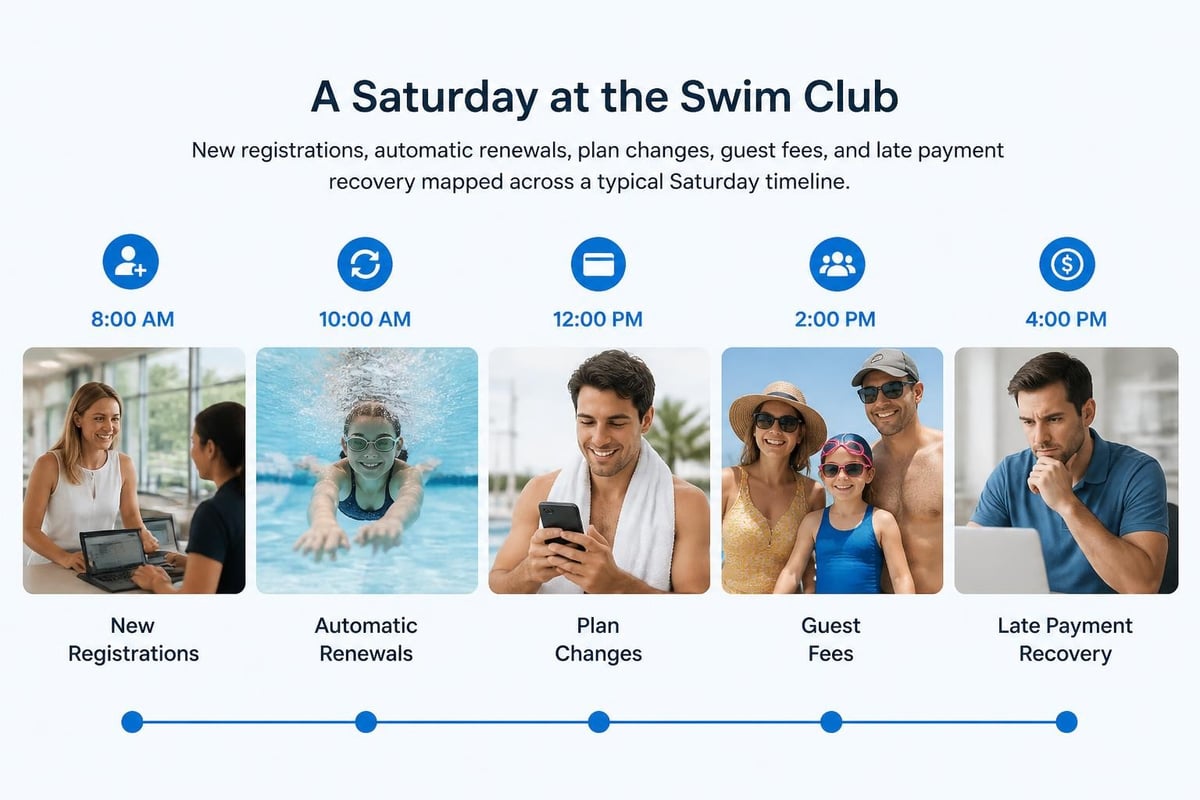
Not all billing events carry the same weight. Some happen quietly in the background, while others demand immediate attention:
- New member registrations when families sign up mid-season
- Automatic renewals that process overnight (or fail to process)
- Plan changes when members upgrade from individual to family passes
- Guest fees and day passes charged at check-in
- Late payment recovery attempts after declined transactions
Each moment requires different information, different timing, and different communication with your members. When one breaks down, everyone notices.
The complexity multiplies when you're running a facility with multiple membership tiers. Your HOA pool might have resident rates, your swim team has competitive vs. recreational pricing, and your tennis courts run on a completely separate fee structure. Sales billing needs to handle all of it without you manually calculating every charge.
What Actually Goes Wrong (And When You Notice)
Most billing problems don't announce themselves with error messages. They surface as confused members, missing revenue, or that nagging feeling that your numbers don't add up.
The Front Desk Discovery
Here's a common scenario: A member stops by to ask why they were charged twice. You pull up their account and see two transactions from the same day. Now you're investigating whether it's a duplicate charge, whether they actually made two purchases, or whether your system counted a declined payment as successful.
This happens more often than it should. According to KPMG's revenue recognition guidance , proper billing requires clear documentation of what was sold, when payment was received, and how that ties to actual service delivery. For swim clubs, that means tracking not just the charge, but which month of membership it covers, which family members it includes, and whether any credits or adjustments apply.
| Common Billing Error | When You Notice | Member Impact | Revenue Impact |
|---|---|---|---|
| Duplicate charges | Member complaint | High frustration | Refund processing time |
| Failed auto-renewal | Check-in denial | Service interruption | Lost month of revenue |
| Incorrect tier pricing | Month-end reports | Overcharge complaints | Trust damage |
| Missing family discounts | Annual audit | Overpayment by loyal members | Retention risk |
| Expired payment methods | Batch processing | Service gaps | Collection delays |
The scary part? Some errors hide for months. A family getting charged the single rate instead of the discounted family rate might not notice right away. But when they do notice and you have to explain why they've been overpaying for six months, that's a relationship problem money can't fix.
The Month-End Surprise
You run your monthly revenue report and the number doesn't match what you expected. It's off by $3,000. Could be a good thing, could be a problem, but either way, you need to know why.
Sales billing systems should make this easy to trace. Every charge should connect back to a specific member, a specific service, and a specific billing cycle. When they don't, you end up spending hours digging through transaction logs instead of planning your summer programming.
How Modern Sales Billing Actually Works
Let's talk about what happens behind the scenes when billing works correctly. Understanding this helps you spot problems before members do.
The Billing Cycle Journey
Imagine a family joins your swim club on June 15th. They select a family membership at $150/month with automatic billing on the 15th of each month. Here's what needs to happen:
- Initial setup: Their membership tier, billing date, payment method, and family member count get recorded
- First charge: Pro-rated amount for June (half month) processes immediately
- Recurring schedule: System sets July 15th as next billing date
- Pre-billing check: On July 14th, system verifies payment method is valid
- Transaction attempt: On July 15th, charge processes automatically
- Success confirmation: Member receives receipt, account updates, access continues
- Failure handling: If declined, system retries and alerts both member and admin
Each step requires data from previous steps. If the initial setup missed their correct email address, the receipt never arrives and they call asking why they weren't notified about the charge.
What Makes Sales Billing Complicated for Clubs
Unlike simple subscription services, swim clubs deal with real-world complexity that affects billing:
You have seasonal variations. Summer memberships cost more and include more access than winter rates. You have family structures that don't fit neat categories (divorced parents sharing custody, grandparents with visiting grandchildren, families with one competitive swimmer and two recreational swimmers). You have mid-season changes when families move, kids age into different groups, or members downgrade their plans.
Your sales billing system needs to handle all of this while staying compliant with payment security standards. The PCI Security Standards Council documentation outlines requirements for protecting payment card data, which matters every time you store a member's credit card for recurring billing.
The Questions Your Billing System Should Answer Instantly
When a board member asks about revenue or a member questions a charge, you need answers fast. Your sales billing approach determines whether you can respond in seconds or need to "get back to them."
Can You See What Actually Happened?
Pull up any member's account right now. Can you immediately see:
- Every charge in the past 12 months and what it was for
- Which charges succeeded and which failed
- What billing method was used for each transaction
- Whether any refunds or credits were issued
- What their next scheduled billing date is
If any of those takes more than three clicks or requires checking multiple screens, your billing system is costing you time.
Can You Explain Revenue in Plain English?
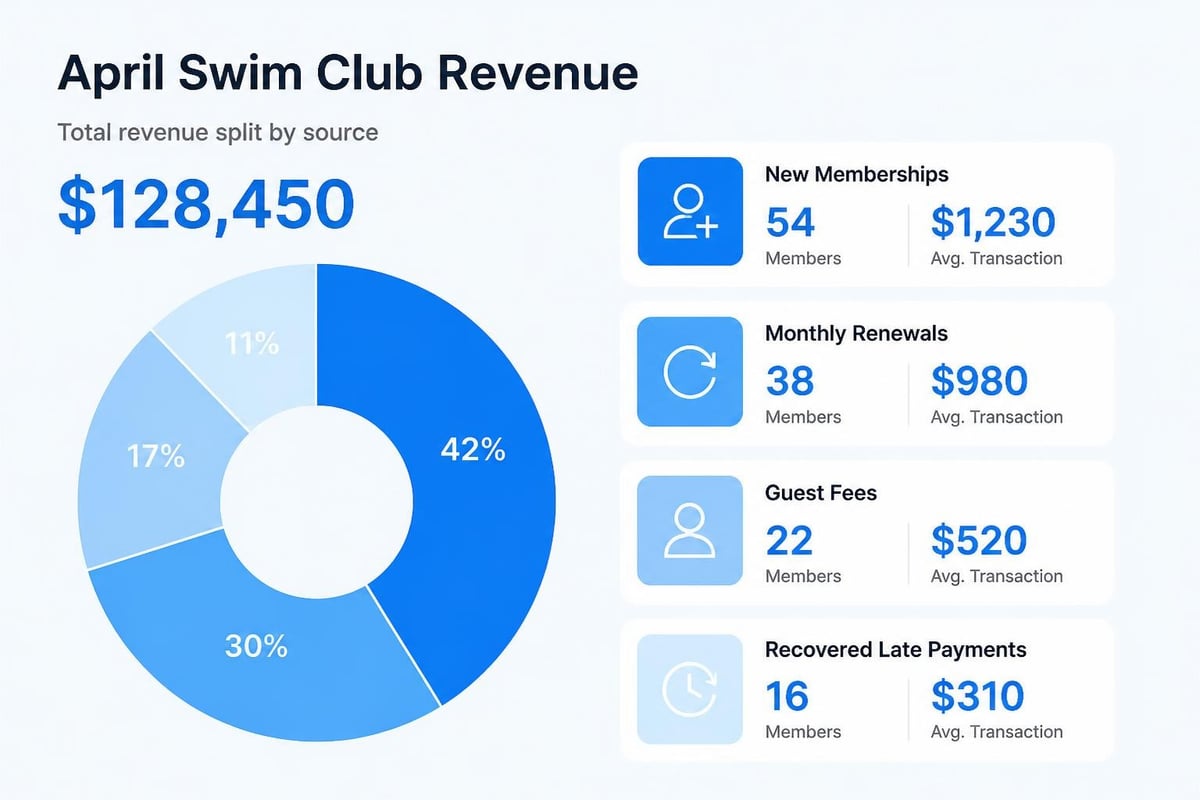
Your board treasurer wants to understand why April revenue was 15% higher than March. Your sales billing system should let you break this down by category (new memberships, renewals, guest fees, late payments collected) without exporting to Excel.
EY's guidance on revenue recognition addresses the accounting side, but for day-to-day club management, you need operational clarity. That means seeing not just how much money came in, but where it came from and whether it matches what you expected.
The Hidden Costs of Billing Problems
Let's get specific about what poor sales billing actually costs your club beyond the obvious accounting headaches.
Staff Time Spent on Billing Issues
Track how much time your team spends each week handling billing questions, fixing errors, or manually processing payments that should have been automatic:
- Front desk interruptions: 10-15 minutes per billing question, multiplied by questions per day
- Failed payment follow-up: 5-10 minutes per declined transaction to contact member and retry
- Manual adjustments: 15-20 minutes to research, correct, and document each billing error
- Board reporting prep: 2-4 hours monthly to compile and explain revenue data
A swim club with 300 member families handling just five billing issues per week loses about 6 hours of staff time. At $20/hour, that's $6,240 annually spent fixing preventable problems.
Member Frustration and Retention Impact
Here's what's harder to measure but potentially more costly: members who leave because billing feels broken.
A family doesn't usually quit over one billing error. They quit after the third time they had to call about a charge, or after being embarrassed at check-in when their renewed membership didn't show as active, or after realizing they've been overpaying for months and nobody noticed.
You might not connect these departures to your sales billing system because members rarely say "I'm leaving because of billing issues." They say they're "too busy this season" or "trying something else." But the pattern shows up in your retention data when you look closely.
Building a Sales Billing System That Actually Works
Whether you're evaluating new software or trying to fix your current setup, focus on these practical elements that determine whether billing helps or hurts your daily operations.
What to Look for in Billing Features
The goal isn't the most features – it's the right features working reliably together:
Automated recurring billing that handles multiple membership types, family structures, and seasonal variations without manual intervention. This includes smart retry logic when payments fail and clear communication to members about upcoming charges.
Flexible pricing rules that let you set up discounts, proration, add-ons, and special rates without workarounds. Your system should make it easy to offer sibling discounts, early-bird registration pricing, or loyalty rates for long-term members.
Real-time transaction tracking so you always know which payments cleared, which failed, and which are pending. This information needs to be visible both to administrators and (in appropriate detail) to members checking their own accounts.
Integrated receipts and invoices that automatically generate and send to members when charges process. Members should never have to ask "was I charged?" because they received confirmation the moment it happened.
How PoolPulse Approaches Sales Billing
Modern swim club software should handle billing complexity without requiring you to become a billing expert. PoolPulse's feature set includes intelligent billing automation that adapts to your club's specific pricing structure while maintaining the security and compliance standards members expect.
The platform's AI-powered insights help identify billing patterns before they become problems. If several members' cards are expiring next month, you get proactive alerts. If a billing configuration might cause duplicate charges, the system flags it during setup rather than after members get charged.
Because PoolPulse is built specifically for member-driven facilities like swim clubs, tennis clubs, and HOA pools, the sales billing features address real scenarios you deal with daily. When you need to handle a family membership with three kids where one is on the competitive team and two are recreational swimmers, each paying different rates, the system accommodates that without custom coding.
Testing Your Current Billing Setup
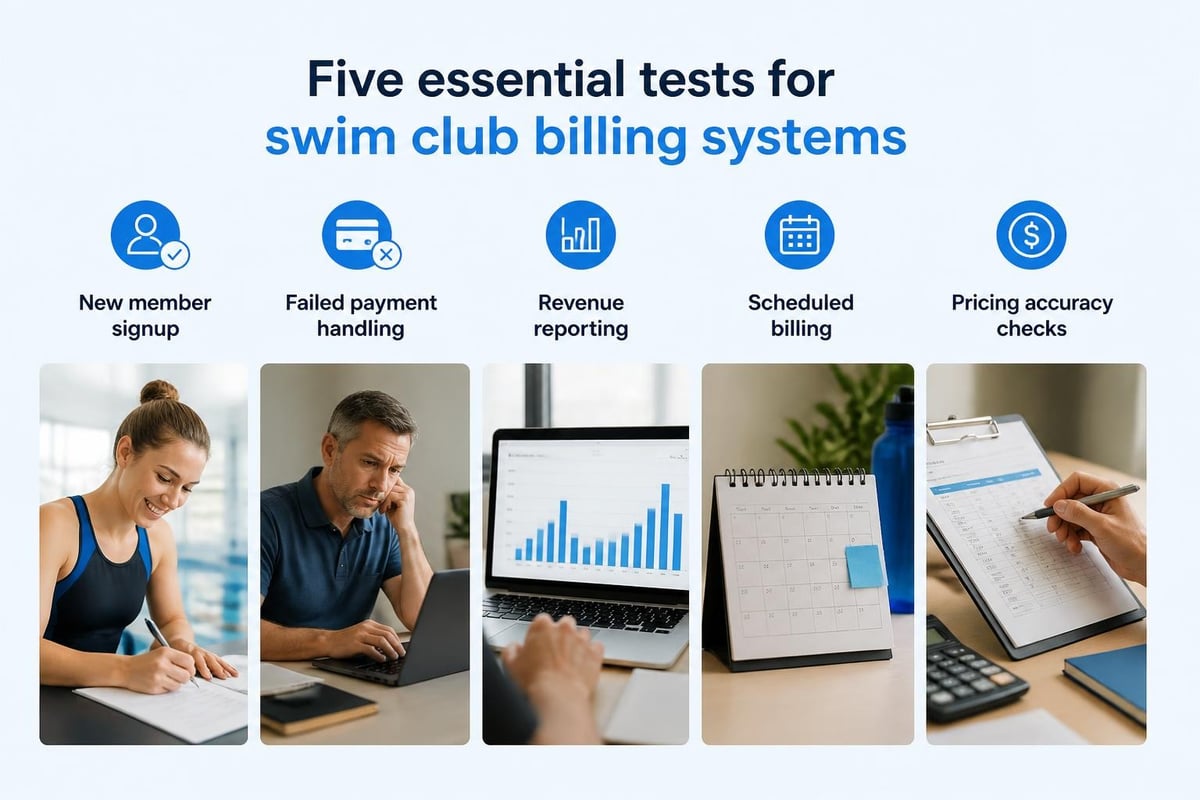
Want to know if your sales billing is actually working as well as you think? Run these quick tests this week.
The New Member Test
Create a test membership for a fictional family:
- Sign them up for your most complex membership tier (usually family or multi-program)
- Include all the add-ons, discounts, and special pricing they'd qualify for
- Set them up for automatic monthly billing
- Check what confirmation they receive
- Verify the scheduled charges show correctly in your system
If this process takes more than 10 minutes or requires you to manually calculate anything, your billing setup has friction that's affecting every real member signup.
The Failed Payment Test
Find a recent declined payment in your system (don't actually charge anyone – just review what happened):
- How long did it take to notice the failure?
- How was the member notified?
- What steps did staff need to take to resolve it?
- Did the member's access get suspended appropriately?
- Was the retry attempt logged and tracked?
Failed payments happen to every club. The question is whether your sales billing system makes recovery smooth or chaotic.
The Reporting Test
Imagine your board treasurer asks these questions tomorrow morning. How long would it take you to answer each one accurately?
| Question | Acceptable Answer Time | What It Tests |
|---|---|---|
| How much revenue did we collect last month? | Under 30 seconds | Basic reporting access |
| How many members are on payment plans vs. paid-in-full? | Under 2 minutes | Billing status visibility |
| Which members have failed payments pending? | Under 1 minute | Exception tracking |
| What's our average revenue per member by membership type? | Under 5 minutes | Category analysis |
| How much revenue is scheduled for next month? | Under 2 minutes | Forward visibility |
If any question requires you to export data, open Excel, or manually count transactions, your reporting capabilities are holding you back.
Seasonal Billing Challenges and Solutions
Sales billing gets more complicated when your busy season arrives and revenue needs to scale without breaking your operations.
Summer Rush Preparation
Before peak season hits, review these billing risk areas that cause problems when volume increases:
Payment method expirations: Run a report of members whose cards expire during your busy months. Contact them proactively to update payment information before their next billing date. A card declining during peak season creates front desk bottlenecks when you can least afford them.
Capacity-based pricing: If you charge different rates for peak vs. off-peak access or limit certain membership types based on facility capacity, make sure your sales billing system enforces these rules automatically. Manual enforcement fails under volume pressure.
Guest and day pass handling: Summer brings more guests, visitors, and day pass purchases. Your billing system needs to handle point-of-sale transactions smoothly even when membership billing runs in the background. These shouldn't conflict or slow each other down.
Off-Season Billing Adjustments
When your busy season ends, billing needs change but don't disappear:
Many clubs offer reduced winter rates, hibernation options, or pause memberships during off-season. Your sales billing system should handle these transitions automatically based on rules you set once, not require manual adjustment for every member.
Some members want to pre-pay for next season at current rates. Others want to pause billing entirely and rejoin in spring. Your billing needs to accommodate both approaches while maintaining accurate revenue tracking and membership status.
When to Upgrade Your Billing System
Most clubs limp along with inadequate billing tools longer than they should because the pain feels manageable day-to-day. But certain warning signs indicate your sales billing is actively costing you money and should be addressed now, not next budget cycle.
Clear Indicators It's Time to Switch
You're spending more than 5 hours weekly on billing administration, error correction, or member billing questions. That time has a dollar cost, and modern systems should reduce it dramatically.
You can't answer basic revenue questions without exporting data and building spreadsheets. Your billing system should be your revenue reporting tool, not a data source you need to analyze elsewhere.
You've had member complaints about billing in the past month. Even one complaint might indicate underlying issues affecting other members who haven't spoken up yet.
You're avoiding adding new membership types or pricing options because configuring them in your current system is too complicated. Your billing shouldn't limit your business model.
What the Migration Process Actually Looks Like
Switching billing systems sounds disruptive, but modern approaches minimize member impact when done correctly. The key is migrating billing data and payment schedules without interrupting service or missing charges.
If you're considering a switch, PoolPulse's migration support includes data transfer assistance that preserves your billing history, payment methods, and scheduled charges. Members don't experience service interruption, and you don't lose revenue during transition.
The process typically involves:
- Data export from your current system (member records, payment history, scheduled billing)
- Mapping your current membership types and pricing to the new system structure
- Test import with a small subset of members to verify accuracy
- Full migration during a low-activity period (usually mid-week, off-season)
- Parallel verification where both systems run briefly to confirm accuracy
- Cutover where the new system takes over all billing operations
Most clubs complete this in 2-4 weeks from decision to full operation, with the actual member-facing cutover happening in a single evening.
Compliance and Security in Sales Billing
This isn't the exciting part of billing, but it's the part that can create serious problems if you ignore it.
Payment Data Security Requirements
Every time you store a member's credit card for recurring billing, you're responsible for protecting that data. This means complying with payment card industry standards and ensuring your software vendor maintains proper security certifications.
Look for systems that don't actually store complete card numbers on their servers. Modern payment processing uses tokenization – storing a reference to the payment method held securely by the payment processor, not the actual card data. This dramatically reduces your security exposure.
PoolPulse's security overview details the platform's approach to payment data protection, including encryption, tokenization, and compliance with current security standards. This matters because a data breach doesn't just cost money – it destroys member trust in ways that take years to rebuild.
Revenue Recognition for Tax and Accounting
While most swim club managers aren't accountants, understanding basic revenue recognition principles helps you configure billing correctly and answer board questions accurately.
When you charge a member in June for their July membership, should that revenue count in June (when you received it) or July (when you'll provide the service)? For club accounting, this distinction affects monthly reports and tax filing.
Many clubs use cash-basis accounting where revenue counts when received, regardless of service timing. Others use accrual accounting where revenue matches the service period. Your sales billing system should support both approaches and make it clear which transactions fall into which period.
Pricing Strategies That Work with Your Billing System
How you price memberships directly affects how complex your sales billing becomes. Smart pricing structure design makes billing simpler while potentially increasing revenue.
Simple vs. Complex Pricing Models
Simple pricing offers fewer membership types with clear, consistent rates. A swim club might offer just Individual ($75/month), Family ($150/month), and Senior ($50/month) rates. This makes billing straightforward and easy for members to understand.
Complex pricing includes numerous tiers, add-ons, discounts, and variations. The same club might offer competitive team rates, recreational swimmer rates, lap swim only rates, social memberships, different pricing for residents vs. non-residents, sibling discounts, early-bird discounts, loyalty discounts, and seasonal variations.
Complex pricing isn't inherently bad – it can capture more revenue by matching prices to value for different member segments. But it requires sales billing systems that handle the complexity reliably without manual intervention.
Discount and Promotion Handling
Most clubs offer some type of promotional pricing during the year. Your billing system should make it easy to:
- Set time-limited discount codes for early registration or referrals
- Apply automatic sibling discounts without manual calculation
- Grandfather existing members at old rates when prices increase
- Offer flexible payment plans (pay-in-full discounts, quarterly vs. monthly billing)
The test is whether you can configure a new promotion in minutes or whether it requires developer help or workaround solutions.
AI and Automation in Modern Billing
Sales billing is moving beyond simple recurring charges into intelligent automation that actually helps you make better decisions.
Predictive Billing Insights
Newer platforms use AI to analyze billing patterns and surface insights you might miss in daily operations:
- Identifying members at risk of payment failure before their billing date based on historical patterns
- Suggesting optimal billing dates based on payment success rates across your member base
- Highlighting unusual billing activity that might indicate errors or fraud
- Forecasting revenue based on current membership, scheduled billing, and historical trends
This moves beyond reporting what happened to predicting what's likely to happen and suggesting preventive action. When your system tells you "15 members have cards expiring next week – send update reminders now," you can prevent failed payments before they occur.
Automated Communication Workflows
Modern sales billing should trigger appropriate member communication automatically:
- Receipt emails immediately after successful charges
- Friendly reminders before scheduled billing dates
- Proactive alerts when payment methods need updating
- Escalating notices when payments fail with clear resolution steps
- Confirmation messages when members update payment information
These communications should feel personalized and helpful, not robotic or punitive. The goal is reducing member anxiety about billing while keeping them informed without requiring staff time.
Making the Business Case for Better Billing
If you need board approval for billing system upgrades or changes, focus the conversation on measurable impact rather than features.
Calculating Current Billing Costs
Build a simple monthly cost model:
Staff time: Hours spent on billing tasks × hourly cost = monthly labor cost
Lost revenue: Estimate annual revenue lost to failed payments not recovered, members who left due to billing frustration, and pricing errors in members' favor that weren't caught
Software costs: Current system fees, payment processing fees, and any additional tools needed to make billing work
Opportunity cost: Revenue and membership growth you're missing because billing limitations prevent new pricing strategies or membership types
For a mid-sized swim club, these costs often total $1,000-$3,000 monthly. Compare that to modern platform pricing, and the ROI becomes clear.
Expected ROI from Billing Improvements
When presenting options to your board, quantify expected improvements:
| Current State | Improved State | Annual Value |
|---|---|---|
| 8 hours/week on billing tasks | 2 hours/week on billing tasks | $6,240 saved |
| 3% failed payment non-recovery | 0.5% failed payment non-recovery | $2,500 recovered revenue |
| 5 member losses attributable to billing | 1 member loss attributable to billing | $7,200 retained revenue |
| Limited pricing options | Flexible tier and discount structure | $5,000+ new revenue potential |
Conservative estimates for a 300-member facility show $20,000+ annual impact from billing system improvements. That makes even significant software investments pay back in the first year.
PoolPulse pricing is structured for clubs of different sizes, making it easier to calculate specific ROI for your facility when comparing options.
Daily Billing Operations That Save Time
Once your sales billing system is set up correctly, these daily habits keep it running smoothly and catch small issues before they become big problems.
The Morning Billing Check
Start each day with a quick billing review (should take 2-3 minutes):
- Check overnight billing runs for failures or errors
- Review any upcoming billing dates for the next week
- Scan member payment update requests
- Verify that yesterday's revenue matches expected daily amount
This quick check catches most issues while they're still easy to fix. A failed payment noticed same-day gets resolved before the member arrives. A failed payment noticed a week later often requires awkward conversations and service interruptions.
Weekly Billing Hygiene
Once weekly (Friday afternoon works well), spend 15-20 minutes on billing maintenance:
- Review and resolve all failed payments from the week
- Check for payment methods expiring in the next 30 days and send update requests
- Verify any manual billing adjustments were documented properly
- Compare week's actual revenue to expected revenue and investigate significant variances
This prevents small billing issues from accumulating into monthly problems that require hours to untangle.
Monthly Reconciliation
At month-end, reconcile your sales billing reports with your accounting system:
- Total revenue in billing system should match bank deposits (accounting for processing delays)
- Individual membership charges should tie to member accounts
- Any refunds or credits should be documented and explained
- Revenue by category should make sense given your membership mix
This process should take 30-60 minutes if your daily and weekly checks have been done consistently. If it takes longer, that's a signal your sales billing system isn't providing adequate reporting or tracking.
Getting your sales billing right isn't about perfect software or flawless automation – it's about removing friction from your daily operations so you can focus on serving members instead of chasing payment problems. When billing works reliably in the background, your team spends less time fixing errors and more time building the community experience that keeps members engaged season after season. PoolPulse was built specifically for clubs like yours, with intelligent billing automation that handles complexity while staying simple to use, backed by AI insights that help you make smarter decisions about pricing, revenue recovery, and member retention. Whether you're running a competitive swim club, managing an HOA pool, or overseeing multiple facilities, modern billing tools designed for your specific needs can eliminate the 3 AM worries and turn Saturday mornings back into the highlight of your week.

The True Cost of Messy Billing: What Your Club Loses
Manual billing costs more than you think. Learn how swim clubs lose revenue, waste staff time, and frustrate members with outdated systems.

Seven Signs Your Club's Payment Process Is Costing You Money
Your swim club's payment system should make life easier. If it doesn't, you're losing money. Here's how to spot the hidden costs.

Your Pool Needs More Than a Lifeguard on Duty
Swim club operators need systems that manage facilities, track maintenance, and protect members. Here's what works in 2026.
Want to see if PoolPulse is a good fit for your club?
Book a walkthrough and we'll show you exactly how PoolPulse can help based on your club's needs, goals, and current processes.