

Can Your Swim Club Survive Summer Without These Five Staff Roles?
Staffing in management determines whether your swim club thrives or struggles. Learn which positions matter most and how to fill them right.


It's Memorial Day weekend, and your swim club just opened for the season. By 11 AM, you've got a line at the front desk, three families asking about membership upgrades, someone reporting a broken locker, and the swim team coach wondering why practice lane reservations aren't showing up correctly. You're running between the office, the pool deck, and the parking lot because two staff members called out sick. Sound familiar? This scenario plays out at swim clubs every summer, and it all comes down to one thing: staffing in management done right makes everything easier, while getting it wrong creates chaos.
Why Staffing Decisions Matter More Than You Think
You might believe that staffing in management is just about filling shifts and making sure someone's at the front desk. But here's what I've learned after years of running swim clubs: the people you hire and where you place them directly impact your revenue, member satisfaction, and your own sanity.
Think about it this way. When you have the right person checking in members, they catch expired memberships before people walk through the gate. They notice when a family's payment method failed. They handle guest registrations smoothly and upsell day passes. That one position, filled correctly, can recover thousands in lost revenue.
The Real Cost of Empty Positions
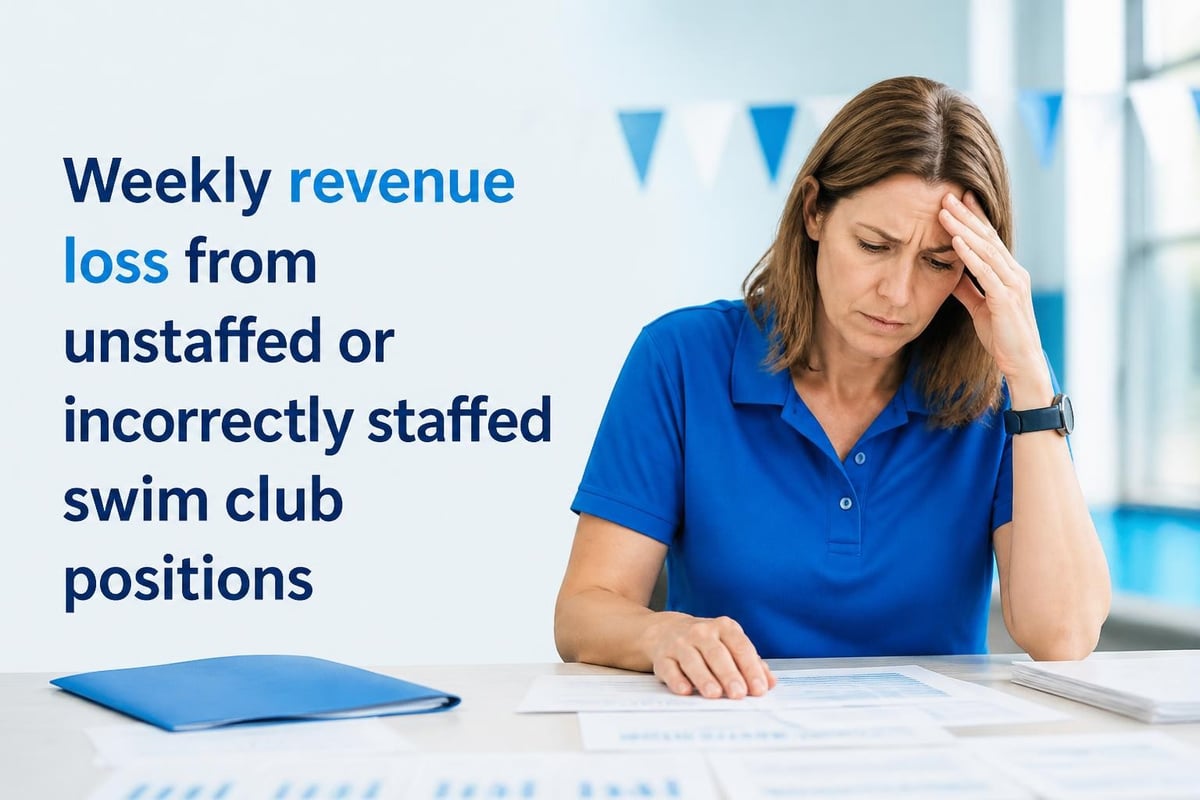
Let's talk numbers for a second. A typical 500-member swim club loses about $300-$800 per week when key positions sit empty or get filled by whoever happens to be available. That's not just payroll math. It's lost guest fees, missed renewal opportunities, and mistakes that take hours to fix later.
Here's what breaks down when staffing fails:
- Members check themselves in using expired cards
- Guest fees go uncollected
- Maintenance issues don't get reported until they become emergencies
- Swim team families get frustrated with schedule conflicts
- Board members start getting complaint emails
The Five Positions That Run Your Club
After managing multiple swim clubs and talking with dozens of other operators, I've identified five roles that make or break your season. These aren't fancy titles. They're the positions that keep everything moving.
Front Desk Coordinator
This person is your first line of defense and your best revenue recovery tool. They're not just checking people in. They're solving problems before they escalate.
A good front desk coordinator catches membership issues in real time. They see when someone's trying to check in on a suspended account. They notice patterns, like families who always bring extra guests on Saturdays. They become the face of your club.
What this role actually does each day:
- Verify memberships and process check-ins
- Handle guest registrations and collect fees
- Answer questions about policies and amenities
- Spot billing issues and flag accounts for follow-up
- Manage the flow during peak hours
I've seen clubs try to rotate different people through this position weekly. It never works. You need consistency here. Members should recognize the person at the desk, and that person should recognize your members.
Head Lifeguard or Aquatics Supervisor
Safety comes first, obviously. But this role does way more than watch the water. Your head lifeguard manages the guard rotation, handles certifications, trains new staff, and serves as the on-deck authority for everything pool-related.
This person needs to understand how to manage employees because they're supervising a team of mostly young, seasonal workers. They're teaching responsibility, enforcing standards, and making sure everyone shows up for their shifts.
During swim meets or special events, this role becomes even more critical. They coordinate extra coverage, brief guards on special procedures, and serve as the safety point person for hundreds of people in and around the water.
| Responsibility | Daily Impact | Season Impact |
|---|---|---|
| Guard scheduling | Zero coverage gaps | Consistent safety standards |
| Training & certification | Competent team | Reduced liability risk |
| Incident management | Quick emergency response | Fewer serious accidents |
| Equipment maintenance | Working rescue gear | Lower replacement costs |
Membership Manager
Staffing in management becomes strategic when you create a dedicated membership role. This person isn't just processing applications. They're actively managing your member lifecycle from inquiry to renewal.
Here's what changed at our club when we made this a real position instead of something the office manager did "when they had time." Our renewal rate jumped from 78% to 91% in one season. Why? Because someone was actually tracking expiration dates, reaching out to families before their memberships lapsed, and making the renewal process easy.
This role focuses on:
- Processing new member applications
- Managing the waitlist (if you have one)
- Sending renewal reminders and processing renewals
- Handling membership upgrades and downgrades
- Tracking member satisfaction and addressing concerns
Your membership manager should work closely with whatever swim club management software you're using. They need to pull reports, identify trends, and spot problems before they affect revenue.
Facilities Supervisor
Someone needs to own the building, the grounds, and all the equipment. When nobody's clearly responsible for facilities, little problems become big problems fast.
A clogged drain on Monday becomes a flooding issue by Wednesday. A loose fence board becomes a liability risk. Pool chemistry gets neglected until you're dealing with algae or unsafe pH levels.
Your facilities supervisor should do daily walkthroughs with a checklist. They should know every contractor's phone number. They should catch and fix 90% of issues before members even notice them.
Swim Team Liaison or Program Coordinator
If you run a swim team, lessons, or other programs, you need someone coordinating between the instructors, coaches, families, and your club operations. This role prevents the scheduling conflicts, communication breakdowns, and frustrated families that create headaches for everyone.
This person makes sure practice times don't conflict with pool maintenance. They communicate schedule changes to families. They handle registration for lessons and camps. They're the bridge between your programs and your facility operations.
How to Fill These Roles Without Breaking Your Budget
You're probably thinking, "That's five salaries I don't have in the budget." I get it. Most swim clubs operate on tight margins. But here's the thing about effective staffing in management: you're already paying these costs, just in different ways.
When positions sit empty, you're paying in lost revenue, member complaints, board frustration, and your own time fixing problems. Let's look at realistic ways to staff these roles.
Combine Roles Strategically
At smaller clubs (under 300 members), one person can often handle both front desk coordinator and membership manager responsibilities. The key is making sure they have protected time for membership work that isn't interrupted by check-ins.
Similarly, your facilities supervisor might also coordinate programs if your schedule isn't too complex. Just make sure you're not overloading anyone to the point where critical tasks get ignored.
Smart role combinations that work:
- Front Desk Coordinator + Membership Manager (for smaller clubs)
- Facilities Supervisor + Program Coordinator (if programs are simple)
- Head Lifeguard + Assistant Manager (for leadership development)
Use Part-Time Staff Effectively
You don't need everyone full-time. Your front desk needs coverage during open hours, but membership management might only require 15-20 hours per week. Facilities work might be 25 hours weekly during summer and 10 hours in the off-season.
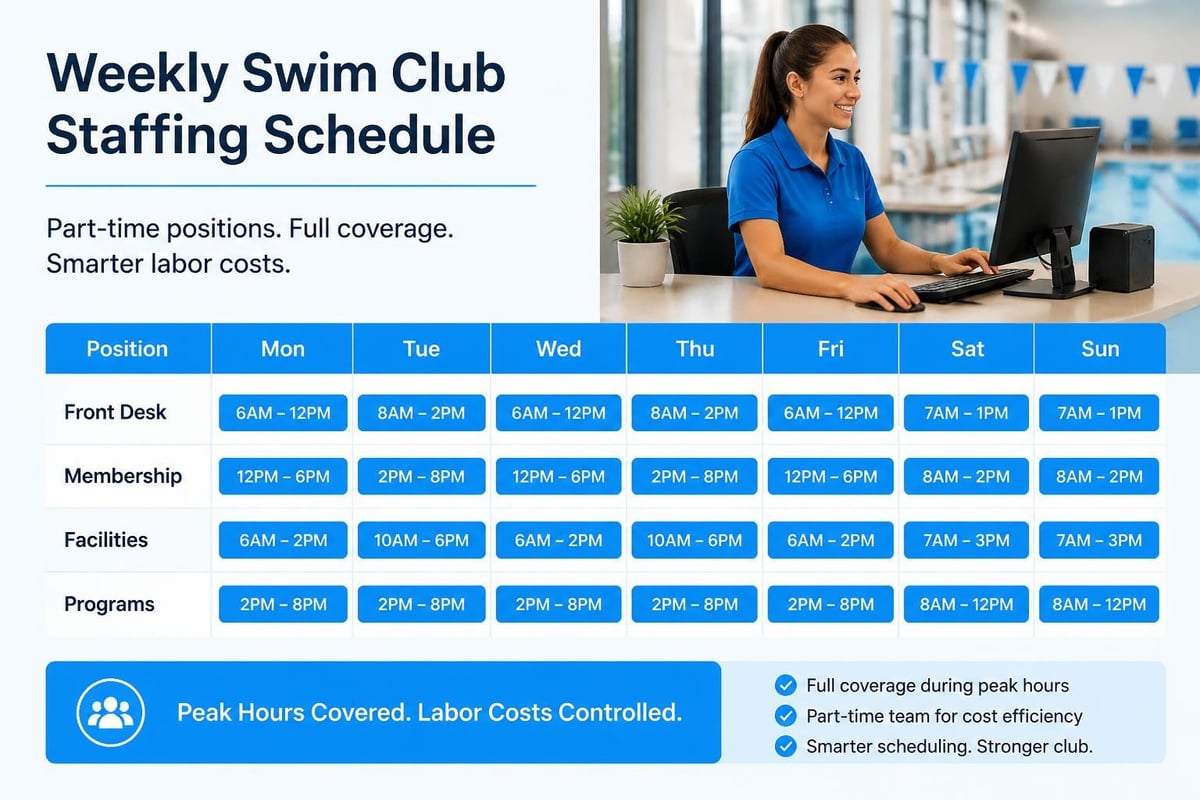
Build your staffing plan around your actual needs. Track when issues happen, when members visit, and when work actually gets done. Then staff accordingly.
Invest in the Right People
I learned this lesson the hard way. Hiring someone cheap who quits after six weeks costs way more than paying a fair wage to someone reliable who stays all season. The constant training, mistakes, and gaps in coverage add up fast.
When you're interviewing, look for people who've worked in customer service, managed responsibilities independently, and stayed at previous jobs for reasonable periods. Skills can be taught. Reliability and good judgment can't.
The concept of effective staffing means placing the right people in the right roles , which requires thinking beyond just filling shifts.
Training Your Team So They Actually Help
Hiring good people is step one. Getting them productive quickly is step two. Your training process should get new staff members functioning independently within their first week.
Create Position-Specific Checklists
Don't hand someone a massive manual and hope they figure it out. Break down each role into daily, weekly, and monthly checklists. Make these practical and specific.
For your front desk coordinator:
- Opening procedures (unlock, turn on computers, check overnight messages)
- Member check-in process (what to verify, how to handle issues)
- Guest registration steps (collect fees, issue day passes, explain rules)
- Closing procedures (reconcile cash, lock up, set alarms)
Your facilities supervisor needs different lists:
- Morning facility walk (check restrooms, test pool chemistry, inspect grounds)
- Equipment checks (rescue gear, cleaning supplies, maintenance tools)
- Issue reporting (what to fix immediately, what to schedule, who to call)
- Weekly deep tasks (filter cleaning, storage organization, safety equipment testing)
Shadow Before Solo
New hires should spend their first few shifts working alongside experienced staff. They watch, ask questions, and gradually take on tasks under supervision.
For front desk work, this might be two or three shifts. For facilities or membership management, it might be a full week. Don't rush this. Mistakes made during solo shifts take way more time to fix than proper training takes upfront.
Use Your Software as a Training Tool
Modern swim club member management software should make training easier, not harder. Your new front desk coordinator should be able to look up a member, see their account status, and process a check-in within minutes of learning the system.
If your software requires a week of training before someone can do basic tasks, that's a software problem. You need tools that make daily work simpler, not more complicated.
Common Staffing Mistakes That Cost You Money
Let me share the mistakes I've made and seen other clubs make repeatedly. Learn from our expensive lessons.
Mistake 1: Waiting Until May to Hire Summer Staff
By late April, the good candidates have already taken other summer jobs. You're left scrambling to fill positions with whoever's still available.
Start your hiring process in February or March. Line up your key positions before school lets out. Yes, this requires planning ahead. But showing up Memorial Day weekend with a partially trained team beats showing up with whoever you could grab last-minute.
Mistake 2: No Backup Plans for Key Positions
What happens when your front desk coordinator gets sick during the Fourth of July weekend? If the answer is "I guess I'm working the front desk," you need backup plans.
Cross-train at least one other person for each critical role. Your membership manager should be able to cover front desk in a pinch. Your facilities supervisor should know basic membership procedures. This flexibility saves you during emergencies and vacations.
Mistake 3: Treating All Positions as Equally Important
They're not. Your head lifeguard and front desk coordinator directly impact safety and revenue. These positions deserve your best people and most attention.
Some roles matter more than others for your specific club. Figure out where problems cost you the most money or create the biggest headaches. Staff those positions first and best.
Mistake 4: Ignoring the Off-Season
Staffing in management doesn't pause when you close for winter. Your membership manager should be working on renewals. Your facilities supervisor has maintenance and repairs to coordinate. Someone needs to handle billing, answer emails, and prepare for next season.
Many clubs lay off everyone in September and wonder why opening in May is always chaotic. Keeping key people engaged year-round, even at reduced hours, makes your seasonal ramp-up smoother.
Making Staffing Decisions as Your Club Grows
Your staffing needs change as your membership grows. A 200-member club runs differently than a 600-member club. Here's how to think about scaling up.
When to Add Positions
| Membership Size | Core Positions Needed | Optional Additions |
|---|---|---|
| Under 200 | Front desk (PT), Head lifeguard, Facilities (PT) | Combined membership/office manager |
| 200-400 | Above + dedicated membership manager | Assistant manager, program coordinator |
| 400-600 | Above + full-time facilities supervisor | Guest services specialist, maintenance assistant |
| Over 600 | Full management team with specialized roles | Department heads, seasonal supervisors |
These are guidelines, not rules. Your actual needs depend on your facility size, programs offered, and operating season length.
Signs You Need to Add Staff
You're stretched too thin when:
- Revenue recovery opportunities get missed regularly
- Maintenance issues pile up instead of getting fixed promptly
- Member complaints about service increase
- You're personally working 60+ hour weeks just to keep up
- Staff members are burning out and quitting mid-season
Don't wait until you're in crisis mode. If you're seeing these signs in June, add capacity before July hits.
Building Your Management Structure
As you grow beyond basic operations, you need someone coordinating the coordinators. This might be a general manager, club manager, or operations director depending on your structure.
This person should focus on big-picture issues: Are we staffed appropriately? Are our systems working? What needs to change for next season? They're not doing the daily work. They're making sure the daily work gets done smoothly.
Using Technology to Multiply Your Team's Impact
Smart staffing in management today means pairing good people with good tools. The right software doesn't replace staff. It makes each person more effective.
What Your Team Actually Needs From Software
Forget feature lists for a minute. Think about what your staff deals with daily.
Your front desk coordinator needs to:
- Check in members in seconds, not minutes
- Instantly see account status and outstanding balances
- Process guest registrations without hunting through spreadsheets
- Handle common questions without calling you
Your membership manager needs to:
- Track renewals and send automated reminders
- Process applications and payments online
- Pull reports on membership trends
- Identify at-risk members before they quit
Your facilities supervisor needs to:
- Log maintenance issues and track completion
- Schedule recurring tasks automatically
- Access vendor contacts and service history
- Report problems to the board efficiently
When you're evaluating features in club management software, ask whether each feature actually solves a problem your staff faces daily. Fancy capabilities you'll never use don't help anyone.
Making the Switch to Better Tools
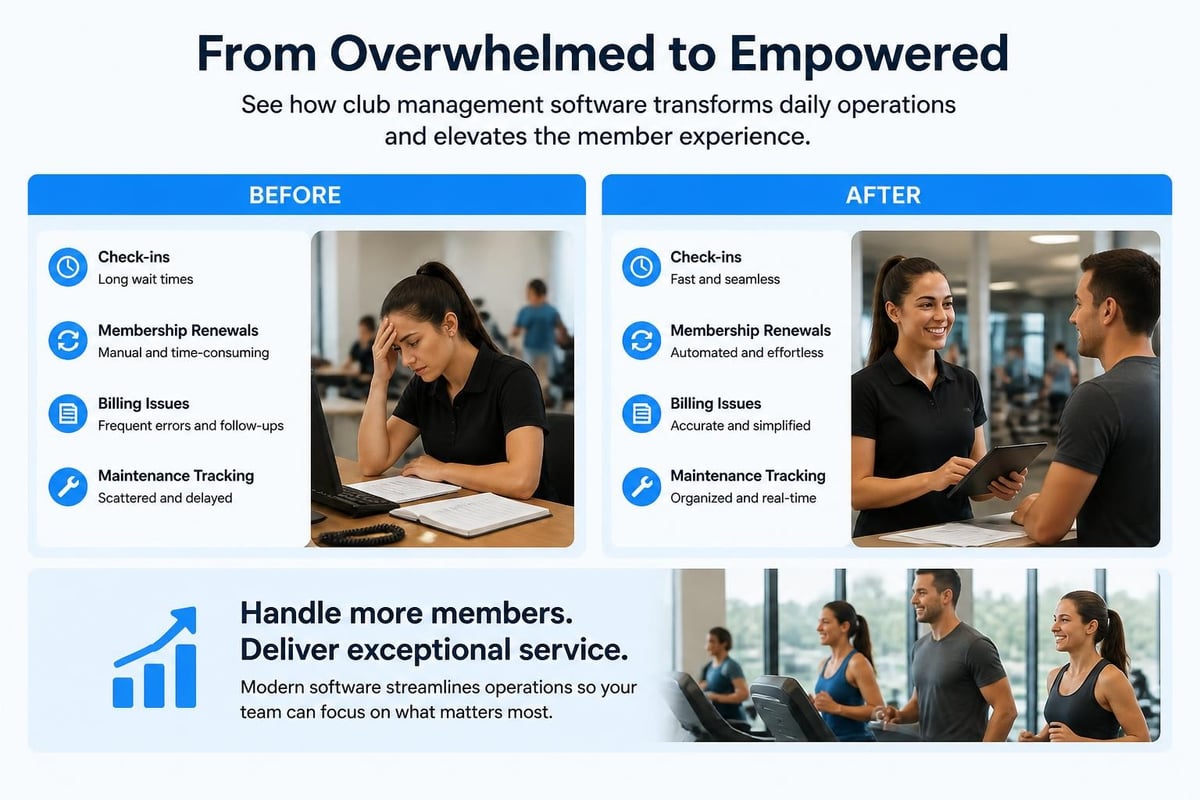
If you're currently running your club with spreadsheets, email chains, and paper forms, upgrading your tools is one of the highest-impact staffing decisions you can make.
A proper management platform cuts training time, reduces errors, and lets staff handle more members without feeling overwhelmed. The onboarding process matters here. You need software that gets your team productive quickly, not systems that take months to learn.
Planning Your Staffing Strategy for Next Season
Let's get practical. You've got to plan for 2027 before this season even ends. Here's how to approach it.
Document Everything This Season
Right now, while you're living it, document what's working and what's not. Keep notes on:
- When you're understaffed (specific days, times, situations)
- Which positions create the most problems when empty
- What tasks take longer than they should
- Where staff members struggle or need help
- What you wish you'd done differently in hiring
These notes become your roadmap for next season's staffing plan.
Build Your Hiring Timeline
Work backwards from your opening day. If you open Memorial Day weekend, your timeline might look like:
February: Post job listings for key positions March: Interview and hire front desk coordinator, membership manager, head lifeguard April: Begin training key staff, hire additional lifeguards and seasonal help Early May: Full team training, systems testing, dry runs Late May: Soft opening, final adjustments before peak season
Adjust this based on your climate and season length. The principle stays the same: hire early, train thoroughly, open confidently.
Calculate Your Real Staffing Costs
Budget for actual costs, not wishful thinking. Include:
- Wages (base pay for all positions)
- Payroll taxes and insurance
- Training time (you're paying people while they learn)
- Uniforms or required equipment
- Background checks and certifications
- Recruiting costs (job board fees, advertising)
A typical swim club might spend 25-35% of operating budget on staffing. If that seems high, remember that good staff drive revenue, reduce waste, and prevent expensive mistakes.
Compare this against the cost of doing it poorly. Calculate what you lost last season in missed guest fees, failed payments, maintenance emergencies, and your own time firefighting problems.
Getting Your Board on Board With Staffing Investments
You might understand why proper staffing in management matters, but you still need to convince your board to approve the budget. Here's how to make that case.
Speak Their Language: Numbers
Board members respond to data. Show them:
- Current revenue loss from unstaffed or poorly staffed positions
- Comparison of staffing costs vs. revenue recovery potential
- Member retention rates with good vs. poor service
- Your personal hours spent compensating for missing staff
Frame staffing as an investment that pays for itself through better revenue collection, higher renewals, and lower emergency costs.
Show Them the Member Experience
Board members are usually members themselves. Ask them to think about their last visit. Who greeted them? How long did check-in take? Were their questions answered well?
Help them see the connection between staff quality and member satisfaction. When members feel well-served, they renew, they refer friends, and they don't complain to board members at weekend barbecues.
Present Specific Solutions, Not Vague Requests
Don't ask for "more money for staffing." Present a specific plan:
"I'm requesting approval to hire a part-time membership manager at 20 hours per week for $18/hour. Based on our current renewal rate of 78% and average membership value of $800, improving renewals to 88% would generate an additional $40,000 in revenue. This position pays for itself if it improves renewals by just 3%."
That's a business case they can evaluate and approve.
Staffing in management isn't about filling slots on a schedule, it's about building a team that makes your swim club run smoothly while you focus on bigger picture issues. When you have the right people in the right positions, trained properly and supported with good tools, everything else gets easier. PoolPulse helps your staff work more efficiently through AI-powered automation, streamlined member management, and intuitive tools that reduce training time and eliminate daily headaches, so you can spend less time managing systems and more time building a great team.

The Swim Club Software Test Every Board Should Run
Run this simple test to see if your swim club software actually saves time or creates more work. Real scenarios, honest questions, better tools.

The Seven Signs You've Outgrown Your Club Operations
Your swim club is growing, but your tools aren't keeping up. These seven warning signs reveal when manual processes cost more than solutions.

How to Answer Every Board Question in Under Two Minutes
Your swim club board asks tough questions. Learn how management reporting software helps you pull accurate answers in seconds, not hours.
Want to see if PoolPulse is a good fit for your club?
Book a walkthrough and we'll show you exactly how PoolPulse can help based on your club's needs, goals, and current processes.