

Swim Club Renewal Playbook: 7 Automated Messages That Save More Families
The automated renewal workflows clubs use to retain more families without turning board members into full-time follow-up staff.

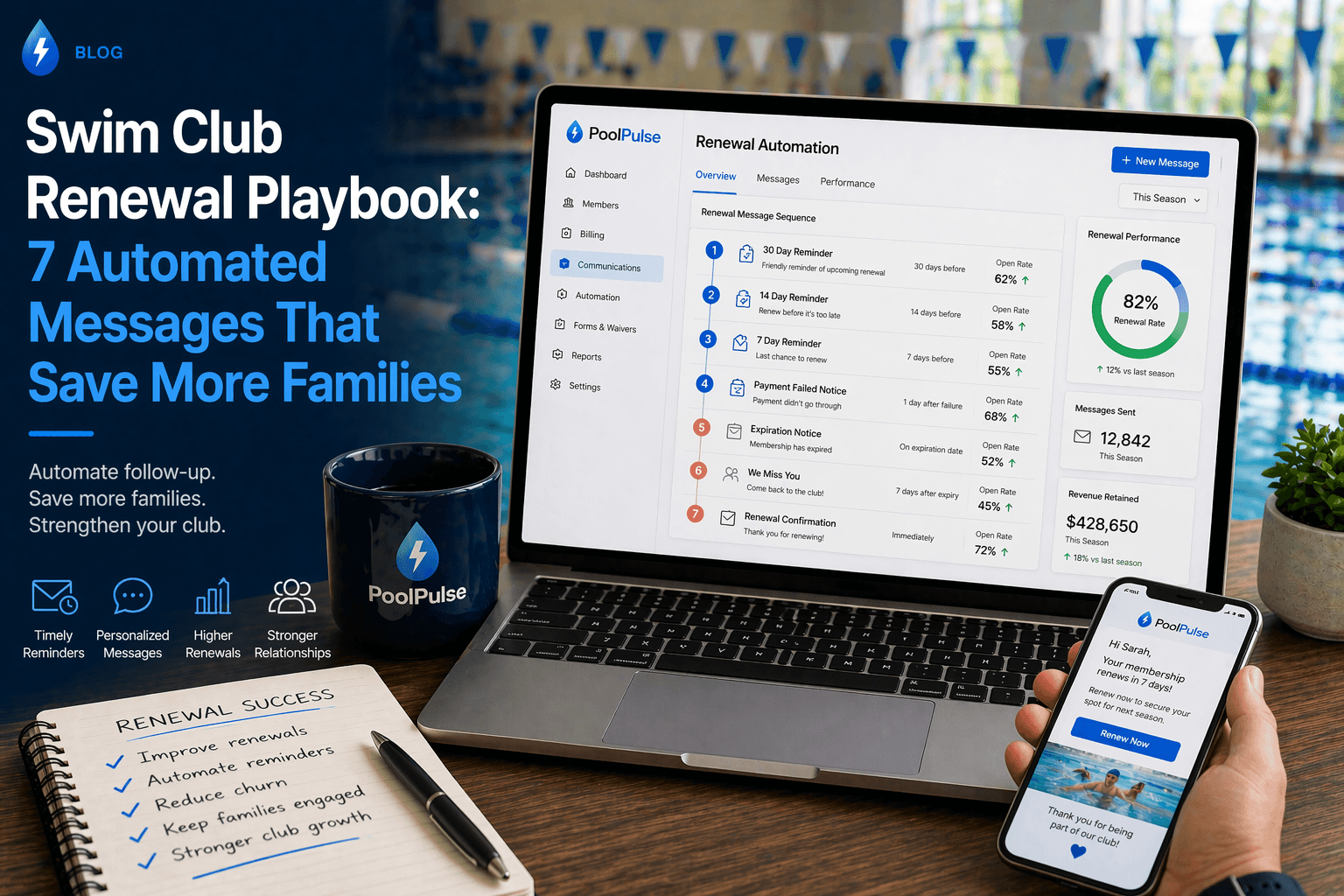
Most swim clubs do not lose families because one single renewal email failed.
They lose families because the renewal window is too quiet, too generic, or too manual. One board member sends a note. Someone else remembers to follow up with a few households. A handful of families mean to renew later and never come back to it.
That is why the best renewal workflow is not one message. It is a sequence.
PoolPulse already leans into renewal nudges, segmentation, win-backs, and churn visibility across its marketing automation and member management story. This post turns that product promise into a practical operator playbook.
First, define what a good renewal system should do
A strong renewal flow should:
- reach families before the deadline becomes urgent
- adapt based on member behavior
- reduce manual follow-up for staff and board members
- surface at-risk households before they quietly lapse
- make the next action obvious
If a club sends the same reminder to every family at the same time, it usually gets one of two bad outcomes: too much noise or not enough action.
The 7-message renewal sequence
Below is a simple sequence most clubs can run every season.
1. The early heads-up message
Send this before the renewal window feels urgent.
The goal is not to force an immediate conversion. The goal is to put the timeline on the family's radar.
Include:
- when renewals open
- what may be changing this season
- what members should verify before renewing
- the simplest path to review their account
Why it works: families who know the season is approaching are less likely to interpret later reminders as surprise admin.
2. The member-value reminder
This message explains why renewing early is worth doing.
For many clubs, this is where you highlight:
- priority access to programs
- smoother check-in
- easier guest or prepaid workflows
- fewer paperwork delays if records stay current
This message should not read like a brochure. It should connect the renewal action to the member experience families actually care about.
3. The account-readiness nudge
Before the deadline gets close, remind families to review the pieces that often slow down renewals:
- household details
- package selection
- saved payment method
- waiver or document requirements
This is one of the most useful automations because it catches the "I was going to do it later" group before they become last-minute front-desk issues.
4. The deadline-window reminder
This is the straightforward reminder that the renewal window is active now.
Keep it clear:
- renewal deadline
- account status
- what happens if they do nothing
- the exact link or button to renew
This is where good segmentation matters. Active families with complete records do not need the same message as households with missing paperwork or unpaid balances.
5. The incomplete-renewal follow-up
Some families start the process but do not finish. This deserves its own message because the objection is different.
They may have:
- paused when they hit missing information
- needed another household member to confirm something
- intended to come back after checking pricing or schedules
Your follow-up should acknowledge that context and help them finish the step they already started.
6. The risk-and-rescue message
This is the message for households that are close to lapsing.
Tone matters here. You are not trying to shame anyone into renewing. You are trying to remove friction and invite a response.
This message works best when it includes one of the following:
- a clear deadline reminder
- a direct support contact
- a note about account issues that can be resolved quickly
- a simple "reply if you need help" fallback
For many clubs, this is where segmented automation makes a real difference. A family with strong prior attendance and a nearly complete account should not get the same message as a household that has already drifted away.
7. The post-window win-back message
Some renewals will still be missed. That does not mean the family is gone forever.
A final win-back message should:
- acknowledge the missed renewal window
- make the return path easy
- clarify whether any steps changed
- show the club still wants the household back
This is especially effective when tied to real behavior, like a family that attended often last season or one that left without obvious dissatisfaction.
How to segment the messages without overcomplicating the work
You do not need a giant CRM strategy to improve renewals. Start with a few practical segments:
- fully active households with complete records
- households with missing payment or waiver details
- families with prior high attendance
- households with overdue balances
- lapsed members worth winning back
That is already enough to send more useful messages and reduce the "everyone gets the same reminder" problem.
What each message should include
Every renewal message should answer three questions fast:
- Why am I getting this?
- What should I do next?
- What happens if I wait?
If your email makes people hunt for the action, renewal completion drops. If the message sounds like a generic announcement, families assume it is not urgent.
Keep the structure consistent:
- short subject line
- one clear purpose
- one primary CTA
- one fallback contact path
Common renewal mistakes clubs should avoid
Even a good sequence can underperform if the workflow around it is messy.
Watch out for:
- sending the first reminder too late
- sending every message to every household
- forcing staff to reconcile missing waivers manually
- making families jump between multiple tools to finish renewal
- treating lapsed households as lost immediately
The smoother your memberships, packages, and member records are behind the scenes, the more effective renewal messaging becomes.
A simple renewal cadence for busy clubs
Here is a lightweight version most teams can actually run:
- Early heads-up
- Value reminder
- Account-readiness nudge
- Renewal window reminder
- Incomplete-renewal follow-up
- Risk-and-rescue outreach
- Post-window win-back
That is enough to build momentum without overwhelming members or staff.
Where PoolPulse fits
This is exactly the kind of workflow that gets easier when marketing automation, membership rules, and member records live in one system.
PoolPulse already positions this through:
- lifecycle automation
- segmentation by membership and billing signals
- renewal and package logic
- cleaner household records
If your club wants renewal follow-through without turning board volunteers into a manual call center, start with Marketing Automation. If you want to see where it fits into the bigger platform, head to Pricing.
Switching Club Platforms Shouldn't Become a Second Job
The fear of migration keeps many clubs stuck on platforms they have already outgrown. A modern, well-supported transition should remove work from your team, not create more of it.
Swim Club Billing Software: What Clubs Should Verify Before They Buy
What clubs should verify before choosing billing software — dues handling, renewals, household balances, payment visibility, and the workflows that matter most.
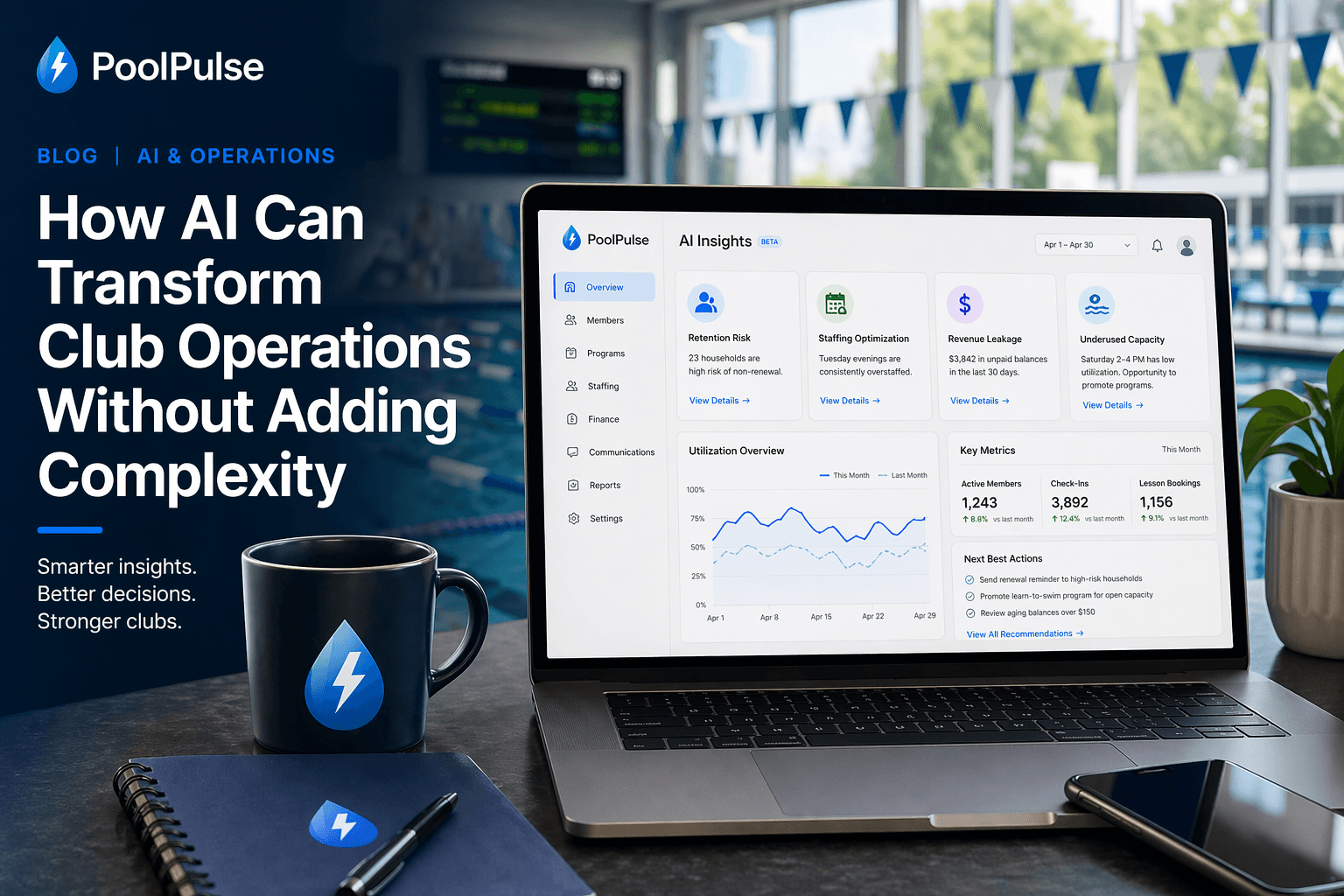
How AI Can Transform Club Operations Without Adding Complexity
How swim clubs use AI signals for staffing gaps, retention risk, and revenue leakage — without creating another dashboard to manage.
Want to see if PoolPulse is a good fit for your club?
Book a walkthrough and we'll show you exactly how PoolPulse can help based on your club's needs, goals, and current processes.