

Weekly Check In: A Guide for Swim Club Administrators
Learn how weekly check in meetings transform swim club operations. Practical tips for better team alignment, member satisfaction, and club management.


Running a swim club means juggling dozens of moving parts every single day. You're tracking memberships, handling billing questions, coordinating with coaches, managing facility maintenance, and somehow trying to stay ahead of member complaints. It's easy to feel like you're always putting out fires instead of actually running the place. That's where a weekly check in comes in. This simple meeting can be the difference between chaos and control, helping you catch small problems before they become big headaches and keeping your entire team on the same page.
Why Your Swim Club Needs a Weekly Check In
Think about your typical week at the club. Monday morning starts with three voicemails about billing issues. Tuesday brings a complaint about locker room cleanliness. Wednesday, you discover the registration system didn't process renewals correctly. By Friday, you're exhausted and reactive, not proactive.
A weekly check in changes this pattern completely.
When you set aside dedicated time each week to review operations, you create a rhythm that catches issues early. Instead of learning about unhappy members through angry emails, your front desk staff mentions concerns during the weekly check in. Instead of discovering billing errors at month-end, you spot them within days.
The Real Benefits You'll See
Here's what actually happens when you implement regular check-ins:
- Fewer surprises that ruin your weekend
- Staff who feel heard and stay longer
- Problems caught early before members notice
- Better coordination between coaches, admin, and maintenance
- Clear accountability for who's handling what
The performance management benefits of weekly check-ins extend beyond just keeping tabs on tasks. They create a culture where communication flows naturally and people actually want to raise concerns.
You'll also notice something interesting: your stress level drops. When you know you have a structured time to address everything, you stop carrying mental lists of "things I need to remember to tell someone about."
Setting Up Your Weekly Check In Structure
The best weekly check in happens at the same time every week, with the same core people, following a consistent format. This isn't about being rigid. It's about creating a dependable space where everyone knows what to expect.
Choosing the Right Day and Time
Most swim clubs find Tuesday or Wednesday mornings work best. Monday mornings are too chaotic, catching up from weekend issues. Fridays are when people mentally check out early.
Pick a time when your key people are actually available:
- Before morning swim practice ends
- After the breakfast rush at the cafe
- Before afternoon lessons begin
Block 45-60 minutes. Yes, it feels like a lot when you're busy, but this investment saves hours of scattered conversations throughout the week.
Who Should Attend
Keep your weekly check in small enough to be productive. Here's who typically needs to be there:
| Role | Why They're Essential |
|---|---|
| Club Manager | Owns overall operations and final decisions |
| Front Desk Lead | Knows member concerns and registration issues |
| Head Coach | Represents coaching staff and program needs |
| Maintenance Supervisor | Updates on facility status and repairs |
| Bookkeeper/Admin | Reports on billing, renewals, and financials |
You don't need your entire staff. In fact, too many people makes the meeting drag. The folks at this table should be able to speak for their areas and make decisions.
What to Cover in Your Weekly Check In
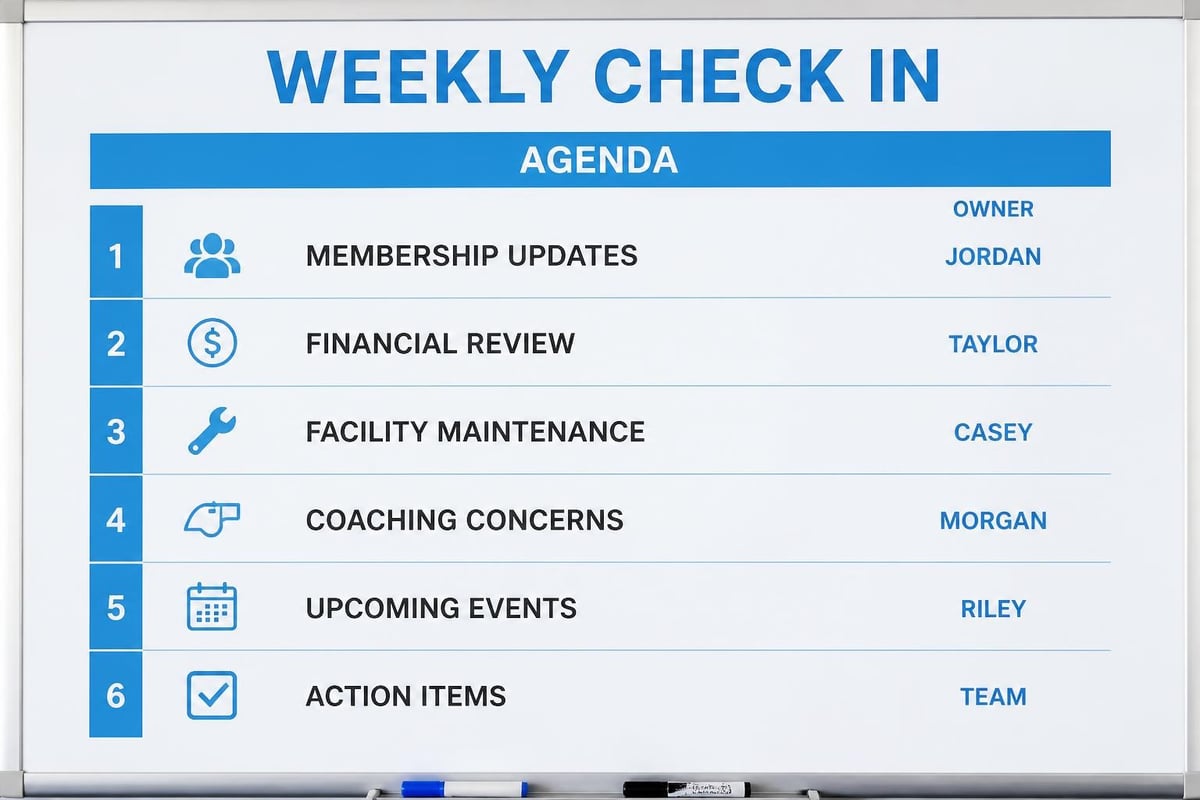
A scattered meeting wastes everyone's time. Following effective check-in meeting best practices means having a consistent agenda that you actually stick to.
Membership and Registration Updates
Start here because members are why you exist. Your front desk lead should come prepared with:
- New registrations from the past week
- Renewal status and any drop-offs
- Member complaints or concerns
- Questions that came up repeatedly
This is where you catch trends early. If three families asked about adding evening lap swim hours, that's not random. That's data telling you something about demand.
Modern swim club management software makes this section easier by generating weekly reports automatically. You can see registration patterns, popular class times, and membership trends without manually pulling numbers.
Financial Quick Look
You don't need a full financial review every week, but you do need to know:
- Did billing run correctly?
- Are payment failures up or down?
- Any unusual refund requests?
- Revenue tracking compared to this point last month
Keep this section under 10 minutes. The goal is spotting anomalies, not analyzing every line item. If your system flagged 15 failed credit card charges, you need to know that now, not at month-end when you're short on cash flow.
Facility and Maintenance Status
Your maintenance supervisor should have a simple update ready:
- Current repairs in progress
- Upcoming maintenance scheduled
- Equipment issues reported by staff or members
- Chemical levels and water quality notes
This prevents the classic problem where members complain about something for weeks before it reaches management. When your lifeguards can mention a wobbly diving board during the weekly check in, you fix it before someone gets hurt.
Coaching and Program Updates
Your head coach needs a few minutes to share:
- Upcoming competitions or events
- Team performance highlights
- Staffing needs or schedule changes
- Equipment or pool time requirements
This is also where you coordinate between programs. If the competitive team needs extra pool time the same week your adult water aerobics class is growing, you need to talk through that conflict now, not when schedules clash.
Running the Meeting Effectively
Having an agenda is one thing. Actually keeping the meeting productive is another. Here's how to make your weekly check in something people actually value instead of dread.
Start on Time, End on Time
Nothing kills meeting culture faster than wasting people's time. If you scheduled 45 minutes, finish in 45 minutes. This forces prioritization and keeps energy high.
Set a timer if you need to. Allocate specific minutes to each section:
- Membership updates: 10 minutes
- Financial review: 8 minutes
- Facility status: 10 minutes
- Coaching updates: 10 minutes
- Action items and follow-up: 7 minutes
If something needs more discussion, note it for a separate conversation. Don't let one topic hijack the entire meeting.
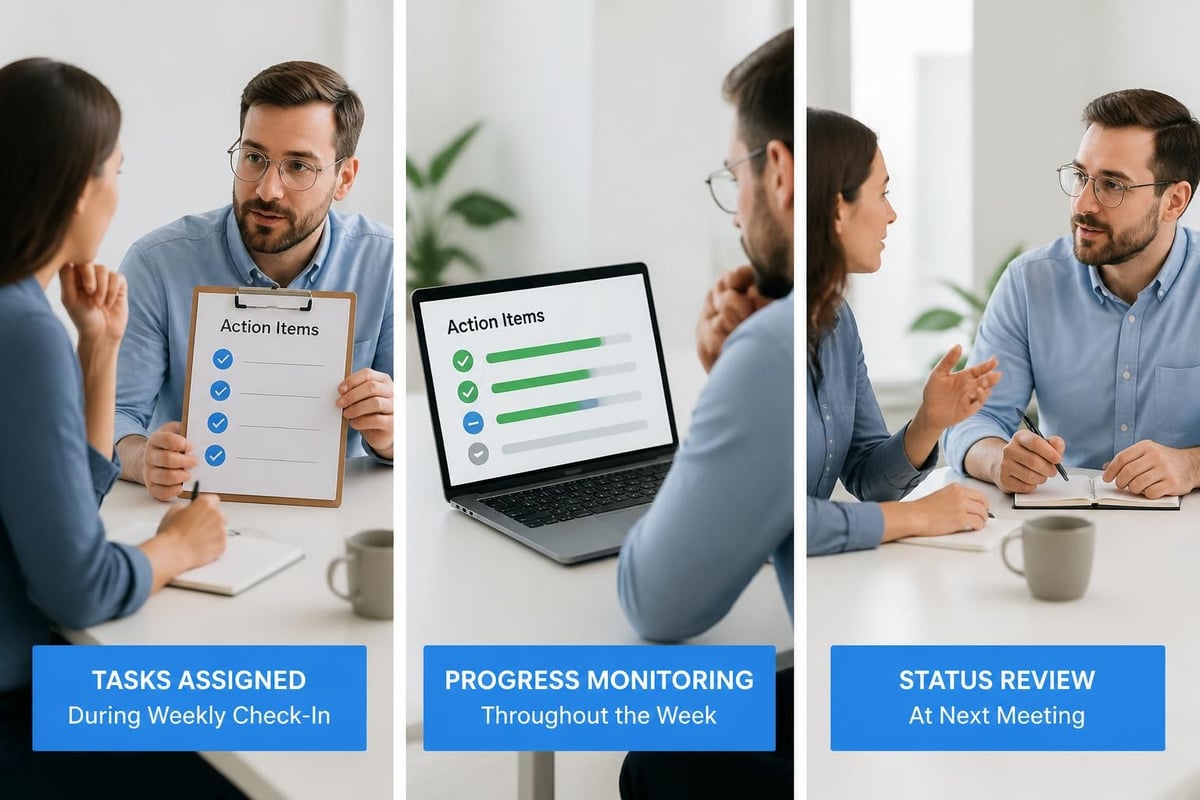
Document Decisions and Action Items
Every weekly check in should end with clear next steps. Use a simple format:
| Action Item | Owner | Due Date |
|---|---|---|
| Contact HVAC company about pool area temperature | Maintenance Supervisor | March 15 |
| Update website with new summer hours | Front Desk Lead | March 12 |
| Review pricing for family membership tier | Club Manager | March 19 |
Share this list immediately after the meeting. Email works fine. The key is accountability. When people know their action items are written down and will be reviewed next week, completion rates soar.
The seven-step approach to effective weekly check-ins emphasizes this accountability piece. It's not enough to talk about problems. You need to assign ownership and deadlines.
Review Last Week's Action Items First
Before diving into new topics, spend five minutes on last week's list. This creates natural accountability and shows you actually care about follow-through.
Go around the table:
"Sarah, you were going to call that HVAC company. What happened?"
"Mike, did you update the website with those new hours?"
Most items will be done. Some won't be. That's fine. Understanding why something didn't get done tells you if it's a capacity issue, a priority issue, or maybe just not that important after all.
Adapting Your Weekly Check In Through the Seasons
Swim clubs aren't static. Your needs in January look nothing like your needs in June. Your weekly check in should flex with those changes.
Off-Season Focus Areas
During slower months, your check-in naturally shifts toward:
- Facility improvements and deep cleaning
- Member retention and engagement programs
- Planning for peak season
- Staff training and development
- Budget reviews and financial planning
This is when you have mental space to work ON the club instead of just IN the club. Use these meetings to tackle bigger strategic questions without the urgency of daily operations consuming all the oxygen.
Peak Season Adjustments
When your pool is packed and every day feels like controlled chaos, the weekly check in becomes even more critical. Shift focus to:
- Daily capacity and crowding issues
- Guest policy enforcement
- Staff scheduling and coverage
- Member complaints about wait times
- Revenue opportunities (lessons, camps, events)
You might even consider a quick mid-week pulse check during peak season, just 15 minutes to make sure nothing's falling through the cracks.
Common Mistakes That Kill Your Weekly Check In
I've seen plenty of clubs start strong with check-ins and then slowly let them die. Here's what usually goes wrong and how to avoid it.
The Meeting That Never Happens
Life gets busy. Someone's on vacation. There's a facility emergency. Before you know it, you've skipped three weeks in a row, and the weekly check in becomes the "whenever we remember" check in.
The fix: Treat this meeting like you treat pool opening hours. It's non-negotiable. If the club manager can't make it, the assistant manager runs it. If it's the day after a holiday, you still meet, maybe for 30 minutes instead of 45.
Everyone Shows Up Unprepared
People arrive without numbers, without updates, without having thought about their area at all. The meeting becomes 45 minutes of "I don't know, let me check that and get back to you."
The fix: Create a simple prep template everyone fills out 24 hours before the meeting. Five bullets covering their area. That's it. If someone consistently shows up unprepared, have a direct conversation about why this matters.
It Becomes a Complaint Session
Instead of problem-solving, the weekly check in devolves into everyone venting about how hard their job is. No decisions get made. No actions get assigned. People leave feeling worse than when they arrived.
The fix: When someone raises an issue, immediately ask: "What do you think we should do about that?" or "What do you need from the rest of us to handle this?" This shifts from complaining to collaborating. Sometimes people just need to vent, and that's okay. But then move to action.
No Follow-Through Between Meetings
Action items get assigned, everyone nods, and then nothing happens. The same issues come up week after week because nobody's actually doing anything about them.
The fix: Send the action item list within one hour of the meeting ending. Check in with people mid-week on critical items. And most importantly, start every meeting by reviewing last week's list. Public accountability works.
Using Technology to Support Your Weekly Check In
You don't need fancy software to run good meetings. A notebook and pen work fine. But the right tools can make everything smoother, especially when it comes to gathering the data you'll discuss.
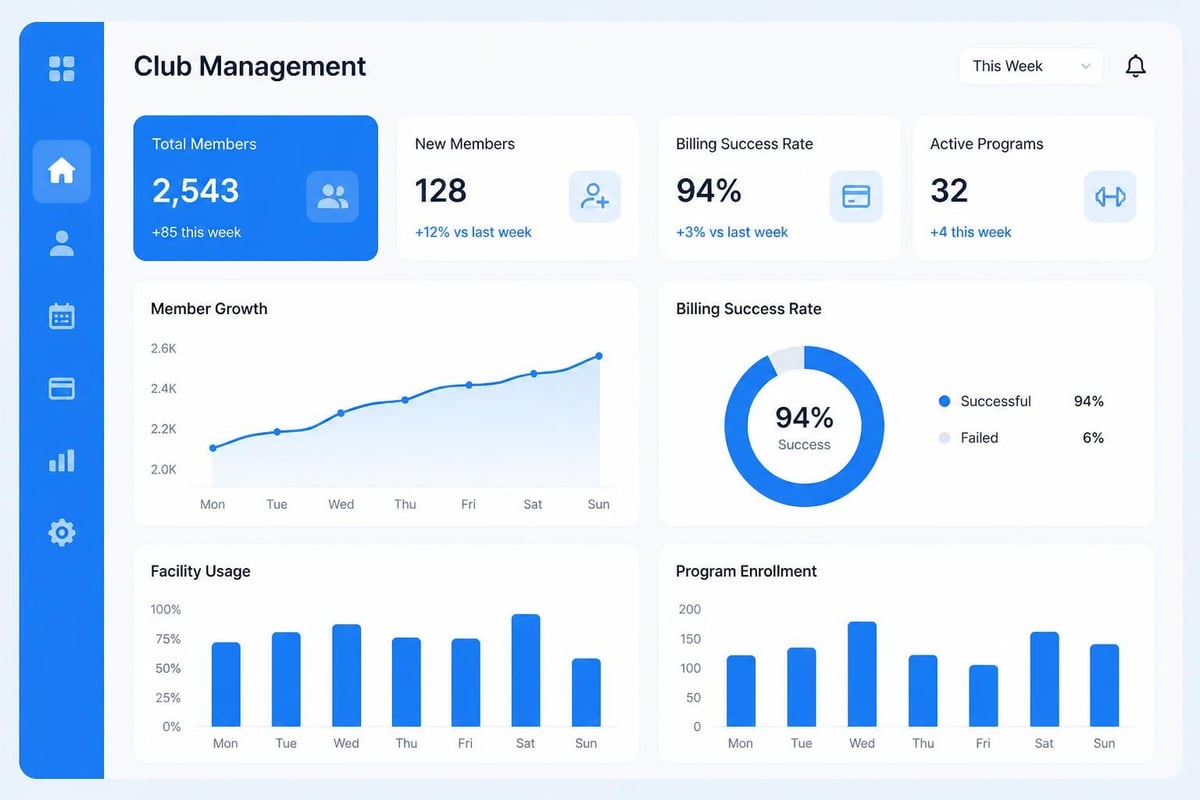
Pulling Reports Before the Meeting
Instead of spending meeting time pulling up screens and hunting for numbers, generate reports beforehand. You want to walk in knowing:
- How many new members joined this week
- Current renewal rate compared to last month
- Failed payment attempts
- Facility check-in patterns (busiest days/times)
- Revenue by program or service
When you're working with configurable swim club management software , you can schedule these reports to run automatically. Your front desk lead opens their email Monday morning and the membership summary is already there.
This turns your weekly check in from a data-gathering session into an actual decision-making session.
Centralized Communication
One challenge with weekly check-ins is that great ideas and action items get lost if they only live in someone's notebook. Consider using:
- Shared online documents for meeting notes
- Task management tools for tracking action items
- Messaging platforms for quick updates between meetings
The goal isn't adding more technology for technology's sake. It's making sure when someone says "I'll look into that," there's a clear record of it that everyone can see.
AI-Powered Insights
Modern club management platforms are starting to use AI to surface patterns you might miss. For example, noticing that failed payments spike on certain days of the month, or identifying members who show reduced check-in frequency (a leading indicator they might not renew).
Bringing these insights to your weekly check in elevates the conversation. Instead of just reviewing what happened, you're discussing what it means and what to do about it.
Making Your Weekly Check In Actually Stick
Starting a new meeting routine is easy. Maintaining it through busy seasons, staff changes, and daily chaos is hard. Here's how to build a weekly check in that becomes part of your club's DNA instead of another abandoned initiative.
Get Buy-In From Your Team
People support what they help create. Before implementing weekly check-ins, talk with your key staff about why you're doing this and what you hope to accomplish.
Ask them:
- What information would help them do their job better?
- What frustrates them about how communication works now?
- What's the best day and time for a regular meeting?
When people feel involved in designing the process, they're invested in making it work. You might discover that your front desk staff has been desperate for a regular forum to raise issues. Or that your head coach has scheduling conflicts you didn't know about.
Start Small and Build
Don't try to solve every operational problem in week one. Start with the basics:
Week 1-4: Just get in the habit of meeting consistently. Focus on basic updates and building the routine.
Week 5-8: Start tracking action items more formally. Begin reviewing the previous week's commitments.
Week 9-12: Add metrics and data. Start looking for trends and patterns.
Week 13+: Now you can tackle bigger strategic questions and use the meeting for real planning.
This gradual approach prevents overwhelm and lets everyone adapt to the new rhythm. Research on effective weekly check-in structures shows that consistency matters more than perfection, especially in the early weeks.
Celebrate Wins
Your weekly check in shouldn't only focus on problems. Make time to acknowledge what's going well:
- The front desk handled a difficult member situation beautifully
- Renewals are up 12% compared to this time last year
- The coaching staff organized an amazing community event
- Maintenance fixed that chronic issue that's been bugging everyone
This creates positive momentum and reminds everyone why they work here. Club management is hard work. Recognizing good outcomes makes the challenging parts more bearable.
Connecting Check-Ins to Long-Term Success
The weekly check in isn't just about putting out this week's fires. Done right, it becomes your primary tool for actually improving your club over time.
Building Institutional Knowledge
When you document discussions and decisions week after week, you create a record of how your club operates. New staff can review past meetings to understand why you do things certain way. You can look back at last summer to remember how you handled similar challenges.
This is especially valuable for seasonal operations. When next June arrives and you're wondering how many lifeguards you needed last year, you have notes from your weekly check in meetings documenting exactly that.
Spotting Patterns Early
Individual member complaints might seem random. But when you review them weekly, patterns emerge:
- Five people mentioned the water temperature being too cold
- Multiple families asked about earlier morning hours
- Several members complained about crowding on weekday evenings
These patterns tell you where to focus your energy. Maybe you need to adjust your heating system. Maybe there's demand for a 6 AM session. Maybe you need to rethink capacity limits during peak hours.
Without a regular review process, these insights stay hidden in individual interactions that never get connected.
Aligning Everyone Around Priorities
It's easy for different parts of your operation to drift in different directions. Coaches focus on competitive results. Front desk focuses on member satisfaction. Maintenance focuses on equipment longevity. Nobody's wrong, but nobody's fully aligned either.
The weekly check in creates a shared understanding of what matters most right now. Maybe this month, the priority is hitting renewal targets. Next month, it might be preparing for summer camp season. Having everyone in the room understanding the same priorities reduces conflict and increases cooperation.
When you're evaluating different club management approaches , consider how well they support this kind of operational alignment. The best systems make it easy to share data and insights across your whole team.
Real Examples From Actual Swim Clubs
Theory is nice. Real stories are better. Here's how weekly check-ins have played out at actual clubs (names changed, situations real).
The Billing Crisis We Caught Early
One club's front desk lead mentioned during their weekly check in that she'd gotten "a few questions" about duplicate charges. It seemed minor, not worth much discussion.
But the club manager asked her to be specific: "How many is a few?"
Turns out it was seven people in one week. For this club, that was unusual. They pulled the billing report right there in the meeting and discovered their payment processor had a bug that was double-charging members on a specific membership tier.
They caught it within five days instead of discovering it at month-end when 50+ families would have been affected. One member was annoyed. Fifty members would have been furious.
That's the weekly check in working exactly as it should.
The Retention Signal Nobody Noticed
Another club was reviewing their weekly numbers when the bookkeeper casually mentioned renewal rates were "a bit soft." Nothing dramatic, just a couple percentage points lower than expected.
The front desk lead chimed in that she'd noticed fewer familiar faces lately. Some long-time members hadn't been checking in much.
This sparked a conversation that revealed the club had recently changed their lap swim hours without properly communicating why. Members who relied on that specific schedule felt ignored and started exploring other options.
The club immediately sent out a member survey, adjusted hours based on feedback, and personally reached out to every member whose check-in frequency had dropped. They recovered most of those at-risk memberships.
Without the weekly check in connecting those dots, they would have just seen poor renewal numbers at the end of the quarter and wondered what happened.
The Event That Almost Didn't Happen
A third club was planning their annual family swim night. Different people owned different pieces: coaching staff handling activities, front desk managing registration, maintenance setting up extra seating and tables.
During their weekly check in six weeks before the event, the maintenance supervisor mentioned they couldn't get the usual rental company for tables and chairs. The backup option was twice as expensive, which would blow the event budget.
Because everyone was in the same room, they immediately problem-solved together. The front desk lead knew a member who owned an event rental business. The head coach suggested using some of the competition equipment budget since their team wasn't traveling that month.
Within 15 minutes, they'd solved a problem that could have derailed the entire event. That's the power of getting the right people together regularly with a shared understanding of what's happening across the club.
Adapting the Weekly Check In for Different Club Sizes
A 200-member neighborhood pool doesn't operate like a 2,000-member competitive swim club. Your weekly check in should reflect your scale and complexity.
Small Clubs (Under 300 Members)
You might not have distinct department heads. The club manager might also be the head coach, bookkeeper, and maintenance coordinator all rolled into one person.
Your weekly check in can be shorter and more informal:
- 20-30 minutes
- Just 2-3 people (maybe manager, assistant, and lead instructor)
- Focus on immediate operations and member concerns
- Less formal reporting, more conversational updates
The structure still matters though. Even small clubs benefit from a consistent time to step back from daily tasks and look at the bigger picture.
Mid-Size Clubs (300-1,000 Members)
This is where the full weekly check in format really shines. You have enough complexity that coordination matters, but you're still small enough that one meeting can cover everything.
Follow the structure outlined earlier in this article:
- 45-60 minutes
- 4-6 key people representing different areas
- Structured agenda with time limits
- Formal action item tracking
This is typically where clubs see the biggest return on their weekly check in investment. Communication breaks down quickly at this scale without intentional structure.
Large Clubs (1,000+ Members)
You might need multiple layers of check-ins. A weekly operations meeting with your core team, plus separate meetings for coaching staff, events coordination, or facility management.
The key is ensuring information flows between these different check-ins. Your operations meeting should include leads from each sub-team who can share relevant updates and bring back decisions to their people.
Consider:
- Main weekly check in stays at 45-60 minutes maximum
- Department-level meetings happen separately
- Clear documentation so information doesn't get lost between layers
- Monthly all-staff meetings to share big-picture updates
Training New Staff on Your Check-In Process
When someone new joins your team, teaching them how your weekly check in works is part of teaching them how your club operates.
What They Need to Know
Before their first weekly check in, new staff should understand:
-
The purpose: This isn't a status report meeting. It's where we coordinate, solve problems, and make decisions together.
-
Their role: What are they expected to contribute? What should they prepare beforehand?
-
The norms: Do people interrupt each other or wait their turn? How do you signal you want to speak? What's the tone (formal vs. casual)?
-
The follow-up: What happens to action items? How are decisions communicated to the rest of the team?
Onboarding Timeline
Week 1: New staff attends but doesn't present. They're just observing and learning the rhythm.
Week 2: They give a brief update on their area, with support from whoever trained them.
Week 3+: They're fully participating, bringing prepared updates and contributing to discussions.
This gradual approach prevents them from being overwhelmed while ensuring they quickly understand this is how your club operates. When you're onboarding new team members , building good meeting habits early prevents communication problems later.
The Weekly Check In as Your Operational Foundation
Here's what I've learned after years of running swim clubs: you can have the best facility, the most qualified coaches, and the latest technology, but if your team isn't communicating well, everything else breaks down.
The weekly check in is your insurance against that breakdown. It's not glamorous. It doesn't directly generate revenue. But it creates the operational foundation that makes everything else possible.
When your front desk, coaches, maintenance, and management are all aligned, you catch problems early, serve members better, reduce staff stress, and make smarter decisions. That's worth 45 minutes a week.
The clubs that run best aren't necessarily the ones with the most resources. They're the ones where everyone knows what's happening, feels heard, and works together instead of in isolation. A solid weekly check in routine gets you there.
Start simple. Meet at the same time every week. Stick to a basic agenda. Track action items. Review what happened last week. That's it. The sophistication can come later. The consistency needs to start now.
A well-run weekly check in transforms how your swim club operates, turning scattered communication into coordinated action and helping you spot small issues before they become member-facing problems. If you're looking for technology that supports this kind of operational clarity, PoolPulse provides swim club management software designed specifically to give you the data and insights that make your check-ins more productive, with automated reporting, AI-powered pattern recognition, and a unified view of your members, billing, and operations.

Five Front-Desk Tasks Your Swim POS Should Handle
Your front desk shouldn't need three systems to check in a swimmer. Here's how modern swim POS systems save time and reduce errors.

When Your Check-In Line Proves Software Is Too Slow
Discover how software timing affects your swim club's daily operations, from check-ins to billing, and why faster response times mean happier members.

The Five-Minute Front Desk Test for Swim Clubs
Does your front desk slow you down or speed things up? Run this quick test to spot gaps in member check-ins, billing questions, and daily workflow.
Want to see if PoolPulse is a good fit for your club?
Book a walkthrough and we'll show you exactly how PoolPulse can help based on your club's needs, goals, and current processes.