

Allocation Software: Better Resource Management for Clubs
Learn how allocation software helps swim clubs manage lanes, staff, and resources more efficiently. Practical tips for club administrators.


Running a swim club means constantly juggling limited resources. You've got lanes to assign, staff to schedule, facilities to maintain, and members who all want prime time slots. Sound familiar? That's where allocation software comes into play. Instead of relying on spreadsheets, sticky notes, and memory, the right tools help you distribute your resources fairly and efficiently. Let me walk you through what allocation software actually does and how it can make your life as a club administrator significantly easier.
What Allocation Software Actually Means for Your Club
When we talk about allocation software, we're really talking about systems that help you assign limited resources to competing demands. Think about your typical Tuesday evening. You might have:
- Six lanes available
- Three swim teams wanting practice time
- Two instructors on duty
- Lap swimmers expecting open lanes
- A family event scheduled in the shallow end
How do you make it all work without disappointing anyone?
That's the core problem allocation software solves. It's not just about scheduling (though that's part of it). It's about making smart decisions when you don't have enough of something to go around.
The Resources You're Already Allocating
You might not think of yourself as doing "resource allocation," but you do it every day. Here's what I mean:
Physical Space
- Pool lanes during peak hours
- Locker room assignments
- Parking spots on busy days
- Meeting rooms for board sessions
People
- Lifeguard shifts
- Coaching assignments
- Front desk coverage
- Maintenance staff schedules
Time Slots
- Practice times for different teams
- Private lesson blocks
- Open swim periods
- Special events and parties
Equipment
- Kickboards and training gear
- Lane lines and timing systems
- Cleaning and maintenance tools
Right now, you're probably managing most of this through a combination of paper schedules, personal knowledge, and constant adjustments. It works, but it's exhausting.

Why Spreadsheets Stop Working
I've talked to dozens of club administrators who started with Excel. It makes sense at first. You create a grid, plug in your resources, and assign them out. Simple enough.
But here's what happens as you grow:
You're managing version 47 of the schedule spreadsheet. Someone emails you a change request. You update your copy. Meanwhile, your assistant coach updates their copy. Your facility manager has a different version. Nobody knows which one is current.
Then there's the ripple effect. Move one team's practice time, and suddenly you need to:
- Reassign lifeguards
- Update the instructor schedule
- Notify affected members
- Adjust equipment allocation
- Check if it conflicts with maintenance
That's five downstream changes from one simple adjustment. Spreadsheets don't help you see those connections or make those updates automatically.
The Real Cost of Manual Allocation
Let's put some numbers to this. Say you spend three hours per week managing schedules, resolving conflicts, and answering "when can I..." questions. That's 150+ hours per year. What could you do with that time instead?
Manual allocation also creates invisible costs:
- Members leave because they can't get the time slots they want
- Staff get frustrated with last-minute schedule changes
- You miss opportunities to use your facilities more efficiently
- Conflicts and complaints eat up your day
Research on resource allocation in business processes shows that automated approaches significantly reduce the time spent on assignment tasks while improving satisfaction levels.
What Good Allocation Software Does Differently
The best allocation software doesn't just digitize your spreadsheet. It fundamentally changes how you approach resource management.
It Sees the Whole Picture
Instead of separate schedules for lanes, staff, and equipment, everything connects. The software knows that if you assign Lane 3 to the junior team from 4-5 PM, you need:
- A coach assigned to that team
- A lifeguard on duty
- The right equipment pulled from storage
- The lane ropes configured correctly
Make one change, and the system highlights what else needs to adjust.
It Prevents Double-Booking
You'll never accidentally schedule two teams in the same lane or assign one instructor to be in two places at once. The software simply won't let it happen.
It Handles Complexity
Maybe your senior team gets priority on Tuesdays and Thursdays. Your lap swimmers need at least two lanes during morning hours. The dive team needs the deep end on weekends. That's a lot of rules to remember.
Good allocation software lets you set these rules once, then enforces them automatically. You're not relying on memory or hoping you didn't forget something.
Features That Actually Matter for Swim Clubs
Not all allocation software is created equal. Some tools are built for manufacturing plants or IT infrastructure. Those won't help you much. Here's what to look for in software designed for facilities like yours:
Capacity Management
| Feature | Why It Matters | Example Use |
|---|---|---|
| Real-time availability | See what's open right now | Member calls asking about open swim |
| Capacity limits | Prevent overcrowding | Max swimmers per lane during lessons |
| Buffer times | Allow for setup/cleanup | 15 minutes between sessions |
| Seasonal adjustments | Handle changing schedules | Summer vs. school year programs |
Conflict Resolution
The software should automatically flag potential problems:
- Overlapping reservations
- Insufficient staff coverage
- Equipment shortages
- Maintenance conflicts
Instead of discovering issues when someone shows up for practice, you catch them days in advance.
Member Preferences and Priority
Different members have different needs and privileges. Your allocation software should handle:
- Membership tiers (full members, social members, lesson-only)
- Standing reservations for teams and classes
- First-come-first-served booking for individuals
- Blackout periods and restricted access
- Waitlist management when resources are full
This is where understanding best practices in cost allocation becomes valuable. Fair allocation isn't just about availability. It's about distributing resources in a way that reflects your club's priorities and financial realities.
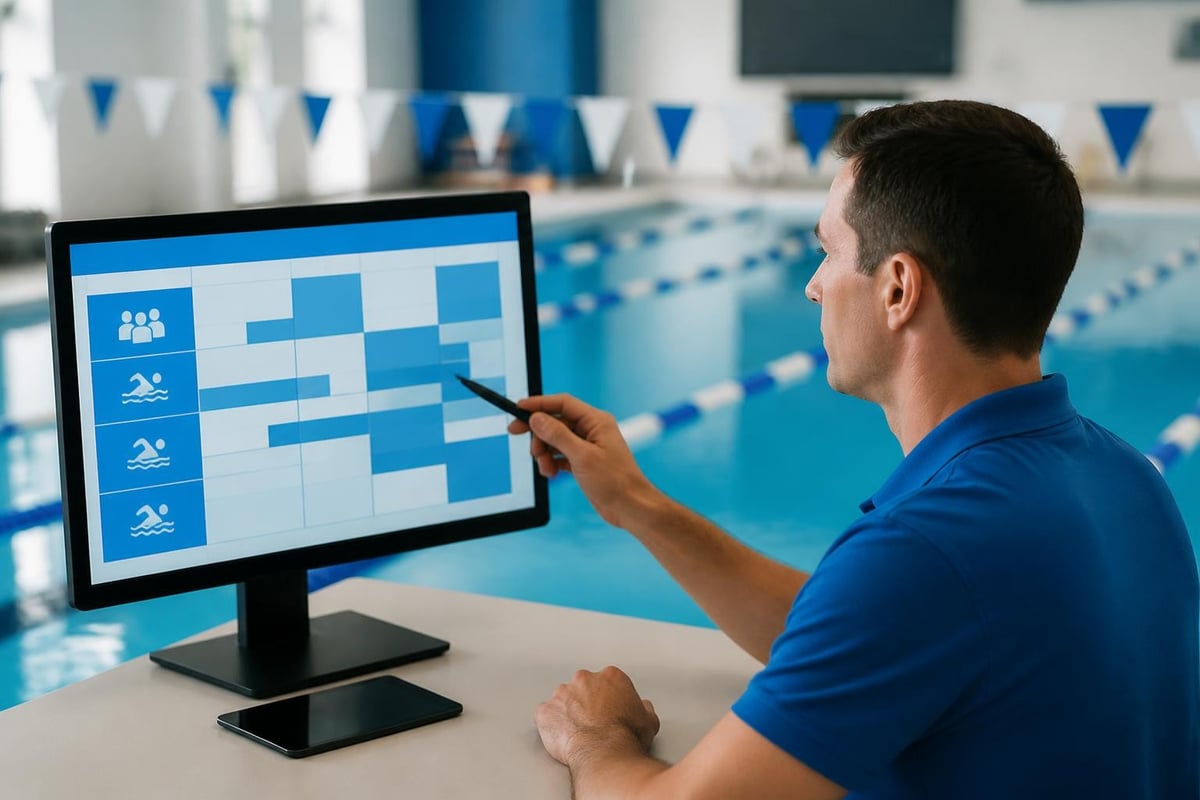
Integration: Making Your Systems Work Together
Here's a scenario that plays out constantly: A new family joins your club. Someone adds them to your billing system. Then separately adds them to your check-in system. Then grants them access to the booking calendar. Three different places, three opportunities for mistakes.
Allocation software works best when it talks to your other tools. When everything connects through modern club management platforms , you get:
Automatic Access Control
Member status changes in one place? Their booking privileges update everywhere automatically. Membership expires? They can't reserve lanes anymore. It just happens.
Billing Integration
Some allocations should trigger charges. Private lane rental? Special coaching session? The software creates the billing item automatically. No more forgetting to charge for resources used.
Communication Flow
Schedule changes push notifications to affected members. Cancellations free up resources and alert waitlisted people. You're not playing phone tag or writing individual emails.
Think about how different systems need to work together to create a smooth member experience. Allocation is just one piece, but it touches everything else.
AI and Smart Allocation
You've probably heard a lot about AI lately. Some of it's hype, but there are real applications for resource allocation that can help you right now.
Pattern Recognition
AI can analyze your historical data and spot patterns you might miss:
- Tuesday evenings are consistently overbooked
- Your Saturday morning slots fill up fast in summer but sit empty in winter
- Certain instructors generate more bookings than others
- Specific lanes are requested more frequently
Armed with these insights, you can adjust your allocation strategy before problems develop.
Optimization Suggestions
Modern systems can run through thousands of possible schedules in seconds. They can suggest arrangements that:
- Maximize facility usage
- Reduce staff overtime
- Minimize member conflicts
- Balance revenue opportunities
Research on AI-driven resource allocation demonstrates how these systems can improve efficiency while reducing the manual workload on administrators.
Predictive Allocation
What if your software could predict demand? AI models can forecast:
- Which time slots will be popular next month
- When you'll need additional staff coverage
- Which resources to prioritize during peak seasons
- Where capacity constraints will emerge
This lets you get ahead of problems instead of constantly reacting. AI-powered insights can help you make better decisions about everything from staffing to facility improvements.
Common Allocation Challenges and Solutions
Let's walk through some scenarios you've probably dealt with and how allocation software helps.
Challenge: The Prime Time Problem
Everyone wants the same time slots. Your 5-6 PM lanes on weekdays are gold. How do you distribute them fairly?
Manual Approach: First-come-first-served booking opens months in advance. Members camp on your website. The popular slots fill in minutes. Complaints flood in.
Software Approach: Set allocation rules:
- Teams get first pick (they're your revenue base)
- Individual members can book 2 weeks ahead
- Different tiers get different advance booking windows
- Lottery system for highly contested slots
The software enforces these rules automatically. Everyone knows the system is fair because it's consistent.
Challenge: Last-Minute Changes
A coach calls in sick thirty minutes before practice. Now what?
Manual Approach: Panic. Call around looking for coverage. Maybe cancel the session. Apologize to disappointed swimmers.
Software Approach: The system knows which instructors are available and qualified. It sends automated requests to potential substitutes. Accepts the first response. Updates the schedule. Notifies affected members. Done in minutes, not hours.
Challenge: Seasonal Transitions
School's out. Your schedule needs to flip from afternoon focus to all-day operation. Hundreds of allocations need to change.
Manual Approach: Block out a weekend. Rebuild your entire schedule from scratch. Hope you didn't miss anything. Deal with the inevitable mistakes that crop up.
Software Approach: Load your summer allocation template. The system automatically:
- Shifts recurring reservations to new times
- Adjusts staffing levels
- Updates capacity limits
- Notifies affected members of changes
- Flags conflicts that need manual review
What took days now takes hours.
Building Your Allocation Strategy
Before you implement any software, you need a clear strategy. The tool only works if you feed it good rules.
Define Your Priorities
Make a list. What matters most to your club?
- Revenue generation - Paid programs get priority over free usage?
- Member satisfaction - Equal access for all membership levels?
- Competitive success - Teams get the best resources?
- Community building - Reserve times for social events?
There's no single right answer. Your priorities should reflect your club's mission and financial reality.
Set Clear Rules
Document your allocation policies:
Booking Windows
- Teams: Season-long standing reservations
- Individual members: 14 days in advance
- Guests: 48 hours in advance
Capacity Limits
- Maximum swimmers per lane during lessons: 6
- Maximum swimmers per lane during open swim: 8
- Deep end capacity during dive practice: 12
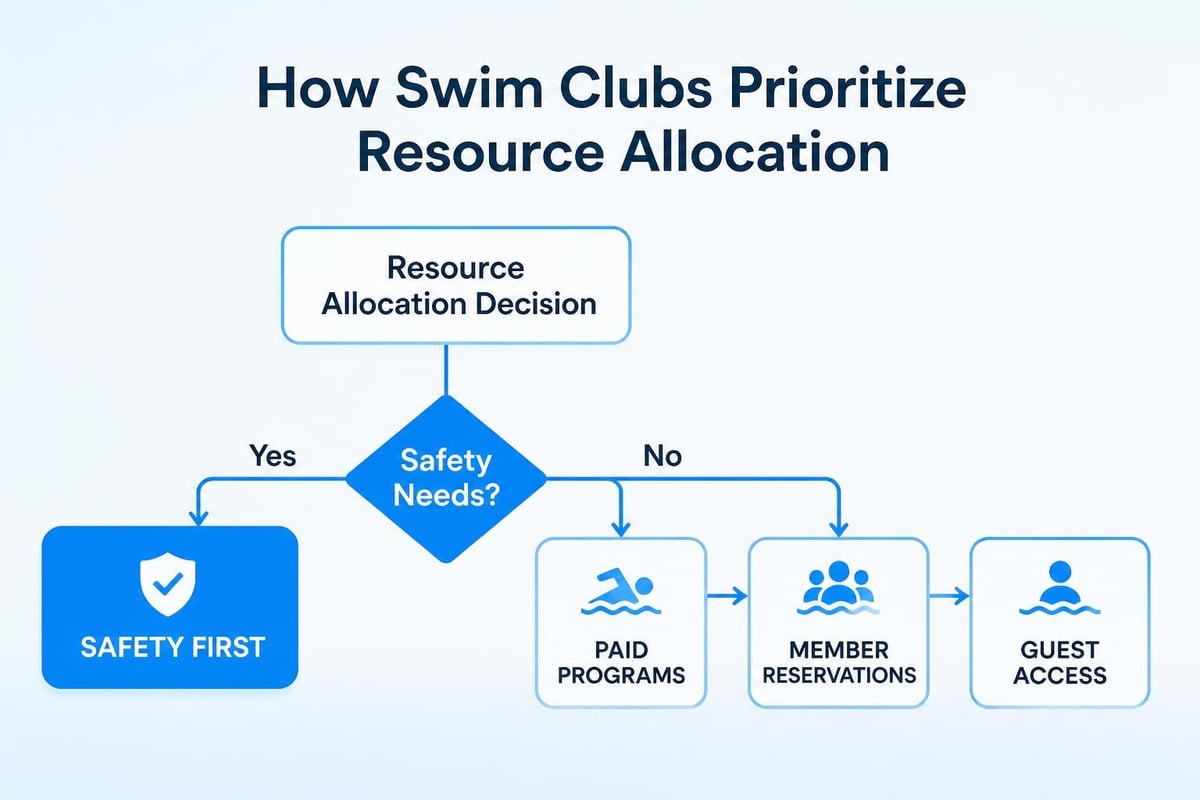
Priority Rankings
- Safety and maintenance: Block everything else
- Paid programs: Guaranteed allocation
- Member recreation: Fill remaining slots
- Guest passes: Last priority
Write these down. When members question allocation decisions, you can point to documented, consistent policies.
Plan for Exceptions
Rules need flexibility. Your allocation software should let you:
- Override automated assignments when needed
- Create one-time exceptions for special events
- Temporarily adjust capacity limits
- Block resources for emergency maintenance
The key is tracking these exceptions. If you're constantly overriding the system, your rules need adjustment.
Measuring Success
How do you know if your allocation approach is working? Track these metrics:
Utilization Rates
What percentage of your resources are actually being used?
| Time Period | Lane Utilization | Staff Utilization | Target |
|---|---|---|---|
| Weekday mornings | 45% | 52% | 60% |
| Weekday evenings | 95% | 98% | 90% |
| Weekend days | 78% | 85% | 85% |
Low utilization means you're not filling available slots. You could adjust pricing, marketing, or scheduling. High utilization is good, but 100% means you're probably turning people away.
Member Satisfaction
Survey your members regularly:
- Can you usually book your preferred times?
- Do you feel the allocation system is fair?
- How often are your reservations disrupted by changes?
Track complaint volume about scheduling conflicts and allocation disputes. Good allocation software should reduce these headaches, not create new ones.
Administrative Time
How many hours per week do you spend on:
- Creating and updating schedules
- Resolving booking conflicts
- Answering availability questions
- Managing resource assignments
This number should go down significantly after implementing allocation software. If it doesn't, something's wrong with your setup.
Revenue Impact
Are you capturing revenue opportunities?
- Rental fees for private lane usage
- Premium pricing for peak time slots
- Add-on sales when members book resources
Your allocation system should help you identify and capture these opportunities, not leave money on the table. Many clubs discover that better resource tracking leads to improved revenue recovery just by ensuring nothing slips through the cracks.
The Implementation Process
You've decided allocation software makes sense. Now what? Here's what successful implementation looks like:
Phase 1: Document Current State
Before changing anything, map out your current allocation process:
- List all resources you allocate
- Document current assignment rules
- Identify who makes allocation decisions
- Note common problems and complaints
- Calculate time spent on allocation tasks
This baseline helps you measure improvement later.
Phase 2: Configure the System
Work with your software provider to:
- Set up your resources in the system
- Configure allocation rules and priorities
- Establish user roles and permissions
- Import existing schedules and reservations
- Create member access levels
Don't rush this phase. Getting the configuration right prevents headaches later.
Phase 3: Parallel Run
Before going live completely, run both systems simultaneously for a few weeks:
- Make allocations in your new software
- Keep your old system as backup
- Compare results daily
- Identify and fix configuration issues
- Train staff on the new process
This overlap period catches problems while you still have your safety net.
Phase 4: Go Live
Pick a transition date. Typically the start of a new season works well. On that date:
- Turn off your old allocation system
- Make the new software your single source of truth
- Communicate the change to all members
- Provide extra support for questions
- Monitor closely for issues
Expect a learning curve. Members and staff need time to adjust.
Studies on implementing automated resource allocation show that organizations often see initial productivity dips before achieving significant gains. Plan for this.
Making the Business Case
Maybe you're convinced allocation software would help, but you need to persuade your board or management team. Here's how to build that case:
Calculate Current Costs
Direct Costs:
- Staff time on scheduling (hours × hourly rate)
- Software or tools you currently use
- Consultant fees if you hire outside help
Indirect Costs:
- Lost revenue from unused resources
- Member churn from scheduling frustrations
- Staff turnover from tedious manual work
- Errors and their cleanup
Project Software Costs
Be realistic:
- Initial setup and implementation
- Monthly or annual subscription fees
- Training time for staff
- Ongoing support and maintenance
Calculate Return on Investment
Conservative estimates for most clubs:
- 50% reduction in time spent on allocation tasks
- 10-15% increase in resource utilization
- 5% reduction in member complaints
- 3-5% revenue increase from better tracking
Even modest improvements usually pay for the software within the first year. Tools like PoolPulse's pricing calculator can help you model the specific numbers for your facility.
Present the Non-Financial Benefits
Numbers matter, but so do quality-of-life improvements:
- Reduced stress for administrators
- Better member experience
- More professional operations
- Scalability as you grow
- Competitive advantage over other clubs
Integration with Club Management
Allocation software works best as part of a complete club management system rather than a standalone tool. When you're choosing swim club software , look for platforms where allocation connects seamlessly to:
Member Database Every allocation decision should respect member status, privileges, and restrictions automatically.
Billing System Resource usage triggers appropriate charges. No manual invoicing for lane rentals or equipment use.
Check-In Process Staff can see who's supposed to be using which resources at any given time. Unauthorized usage gets flagged immediately.
Communications Schedule changes, availability updates, and booking confirmations flow automatically to affected members.
This integration eliminates the duplicate data entry and synchronization headaches that plague clubs using multiple disconnected systems.
Looking at Game Theory Approaches
Here's something interesting: allocation isn't just a scheduling problem. It's often a negotiation problem. Different members, teams, and programs compete for limited resources.
Game theory applications in resource allocation offer frameworks for thinking about these competing demands. While the math might get complex, the principles are simple:
Fair Division How do you split resources when everyone wants the same thing? Mechanisms like rotating priorities or auction systems can help.
Preference Matching Can you allocate in ways that satisfy more people, even if nobody gets their perfect choice?
Dynamic Adjustment How do you reallocate when circumstances change or new demands emerge?
You don't need a PhD in economics to apply these concepts. Good allocation software can implement fairness mechanisms that feel intuitive to members while actually being mathematically sound.
Special Considerations for Different Club Types
While the core principles stay the same, different types of facilities have unique allocation challenges:
Competitive Swim Teams
- Need consistent lane access for training cycles
- Peak demand during championship preparation
- Travel schedules create complex coverage needs
- Different age groups need different resources
Recreation-Focused Clubs
- More variable demand patterns
- Casual booking preferences
- Family-friendly scheduling
- Flexible capacity requirements
Multi-Sport Facilities
If you run both tennis courts and pools (or other amenities), allocation gets more complex. You need:
- Cross-facility scheduling visibility
- Shared staff allocation (especially for front desk)
- Coordinated event planning
- Unified member access controls
Tennis and swim club management requires software that handles this complexity without forcing you to manage separate systems.
HOA Pools
Homeowner associations face unique challenges:
- All residents have equal rights to access
- Peak demand on hot weekends
- Limited ability to charge premium pricing
- Guest management and restrictions
Your allocation approach needs to balance fair access with practical capacity limits. HOA pool management often requires different strategies than private clubs.
Real-World Results
Let me share what actual clubs have experienced after implementing allocation software:
Case 1: Mid-Size Swim Club
- 400 member families
- 8-lane pool
- Before: 12 hours/week on scheduling
- After: 3 hours/week on scheduling
- Utilization increased from 68% to 84%
Case 2: Multi-Facility Tennis & Swim Club
- 600 members
- Pool + 6 tennis courts
- Before: Constant double-booking complaints
- After: Near-zero booking conflicts
- Member satisfaction scores up 23%
Case 3: HOA Pool Complex
- 250 homes
- 2 pools (lap + recreational)
- Before: Overcrowding and disputes
- After: Smooth capacity management
- Board inquiry volume down 40%
The common thread? These clubs didn't just buy software. They used it to implement clear, consistent allocation policies that members could understand and trust.
Common Mistakes to Avoid
I've seen clubs stumble in predictable ways. Learn from their mistakes:
Over-Complicating Rules
Don't create 47 different allocation scenarios. Keep it simple. Most clubs need maybe 5-7 clear rules. More than that and even your staff won't remember them.
Ignoring Member Input
Your allocation policies affect members daily. Survey them. Ask what's working and what's frustrating. Adjust accordingly.
Not Training Staff Thoroughly
If your front desk doesn't understand how to use the allocation software, you'll end up doing it all yourself. Invest in proper training.
Failing to Communicate Changes
When you change allocation rules or implement new software, tell your members. Explain why. Give them time to adjust. Surprise policy changes breed resentment.
Forgetting Maintenance Needs
Your allocation system needs to account for cleaning, repairs, and equipment maintenance. Don't book every single available hour. Leave buffer time.
Future Trends in Allocation Technology
Where is this field heading? Here's what's coming:
Mobile-First Management
Members increasingly expect to see availability, make bookings, and manage reservations from their phones. Desktop-only allocation systems feel outdated.
Predictive Analytics
Better forecasting of demand patterns, seasonal trends, and resource needs. The software will suggest proactive adjustments before problems develop.
Dynamic Pricing
Allocation systems that automatically adjust pricing based on demand. Peak time slots cost more. Off-peak times offer discounts. This balances utilization while optimizing revenue.
Enhanced Automation
More decisions handled automatically with less manual intervention. The system gets smarter about resolving conflicts and suggesting optimal allocations.
Integration Depth
Allocation systems will connect to more club functions: marketing automation, member engagement tools, facility monitoring systems, financial reporting.
The direction is clear: less manual work, smarter decisions, better member experiences.
Effective resource allocation is one of those behind-the-scenes functions that dramatically affects member satisfaction and club profitability. When done well, nobody notices. When done poorly, everyone complains. Allocation software won't solve every club management challenge, but it can eliminate the constant scheduling headaches that consume so much administrative time. If you're ready to see how modern, AI-powered club management can transform your operations, PoolPulse offers a comprehensive platform designed specifically for swim clubs, tennis facilities, and HOA pools. The right tools make allocation feel effortless rather than overwhelming.

What Your Billing and Invoices Are Telling You
Your swim club's billing and invoices reveal hidden patterns about late payments, refund requests, and cash flow. Here's how to read the signals.

The Swim Club Software Test Every Board Should Run
Run this simple test to see if your swim club software actually saves time or creates more work. Real scenarios, honest questions, better tools.

The Seven Signs You've Outgrown Your Club Operations
Your swim club is growing, but your tools aren't keeping up. These seven warning signs reveal when manual processes cost more than solutions.
Want to see if PoolPulse is a good fit for your club?
Book a walkthrough and we'll show you exactly how PoolPulse can help based on your club's needs, goals, and current processes.