

Billing in Accounting: A Guide for Swim Clubs
Learn how billing in accounting works for swim clubs. Understand invoicing, revenue tracking, and financial reporting to improve your operations.


If you've ever wondered how billing connects to your club's financial reports, you're not alone. Many swim club administrators find themselves juggling member invoices, payment tracking, and financial statements without fully understanding how these pieces fit together. Billing in accounting isn't just about sending invoices. It's the bridge between what members owe and what shows up in your financial records. When you get this right, you can track revenue more accurately, spot payment issues faster, and make better decisions about your club's future. Let's break down what billing in accounting really means and how it affects your daily operations.
What Billing in Accounting Actually Means
Think of billing in accounting as the process that connects what you charge members to what appears in your financial statements. When you create an invoice for annual dues, that's billing. When that invoice gets recorded in your books, that's accounting.
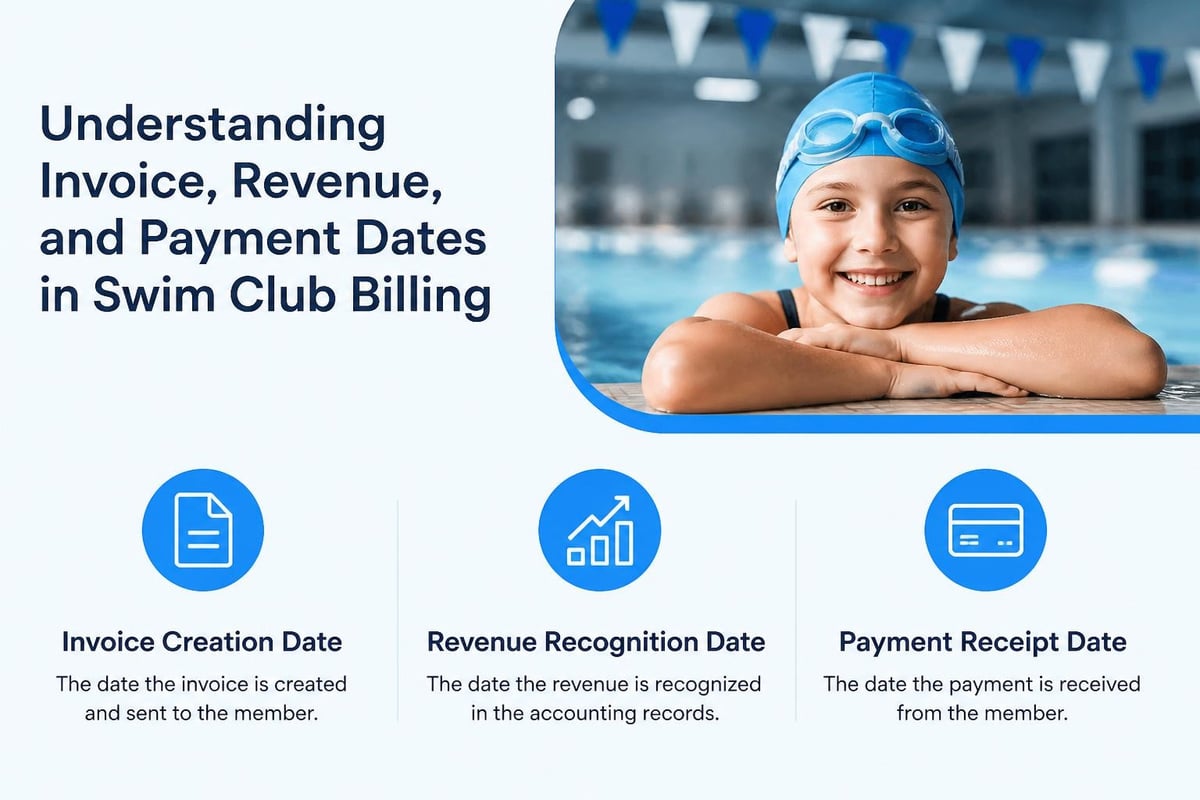
Here's where it gets interesting. The moment you send an invoice doesn't always match when you recognize revenue in your accounting records. This timing difference trips up a lot of club administrators.
The Two Sides of Every Transaction
Every time you bill a member, two things happen in your accounting system:
- You create a record of money owed (accounts receivable)
- You recognize revenue according to your accounting method
- You track when actual payment arrives
Most swim clubs use accrual accounting, which means you record revenue when you earn it, not necessarily when cash hits your bank account. So if you bill $1,000 in annual dues in December 2025 but the member pays in January 2026, you still record that revenue in 2025.
Cash accounting works differently. You only record revenue when payment arrives. Smaller clubs sometimes use this method because it's simpler, but it can make financial planning harder.
How Billing Fits Into Your Daily Operations
Let's talk about what this looks like in real life. You probably handle several types of billing at your club:
Membership dues are the big one. You bill these annually, seasonally, or monthly depending on your membership structure. The billing ledger tracks every invoice you create, forming a complete record of what members owe.
Guest fees happen throughout the season. A member brings friends for the day, you charge $10 per guest, and you need to track that transaction.
Program fees cover swim lessons, team participation, and special events. These often have different billing schedules than regular dues.
Late fees are nobody's favorite, but they're part of maintaining fair payment policies.
Creating the Invoice
When you create an invoice, you're documenting a financial obligation. Your invoice should include:
- Member name and account number
- Date of the invoice
- Itemized charges
- Payment due date
- Total amount owed
- Payment instructions
The invoice creation date matters for your accounting records. This is when the transaction enters your system, even if payment comes later.
Understanding Accounts Receivable
Accounts receivable (AR) represents all the money members owe you. Think of it as a holding area between billing and actual payment. Managing AR well means you always know who owes what and for how long.
Your accounts receivable process starts the moment you create an invoice. That invoice amount sits in AR until the member pays. Then it moves from AR to cash in your bank account.
| AR Aging Category | Time Period | Action Needed |
|---|---|---|
| Current | 0-30 days | Monitor normal payment patterns |
| Slightly Past Due | 31-60 days | Send payment reminder |
| Past Due | 61-90 days | Follow up with phone call |
| Seriously Delinquent | 90+ days | Consider suspension or collections |
Aging reports show how long invoices have been outstanding. If you see AR piling up in the 60+ day categories, you have a collection problem that needs attention.
Revenue Recognition and Why It Matters
Here's where billing in accounting gets interesting for membership-based organizations. When should you recognize revenue from annual dues?
Say a family pays $2,000 in January 2026 for the full swim season. If your season runs April through September, you shouldn't recognize all $2,000 as revenue in January. Instead, you spread it across the months when members actually use the facilities.
This is called deferred revenue. You've collected the cash, but you haven't fully earned it yet. It sits on your balance sheet as a liability until you deliver the service.
The Monthly Breakdown
For that $2,000 annual membership covering six months:
- January payment: Record $2,000 cash received
- Create deferred revenue liability: $2,000
- Each month April-September: Move $333 from deferred revenue to earned revenue
- By September: All $2,000 is recognized revenue
This approach gives you accurate monthly financial reports. You can see exactly what revenue you've earned each month, which helps with budgeting and financial planning. Modern swim club management software can automate this process, saving hours of manual calculations.

Electronic Billing Changes Everything
Remember mailing paper invoices and waiting for checks? Those days are fading fast. Electronic billing has changed how clubs handle billing in accounting.
Electronic billing means you create, send, and track invoices digitally. Members receive email notifications, view invoices online, and often pay with a few clicks. This speeds up the entire billing cycle.
Benefits You'll Actually Notice
Faster payment processing happens when members can pay immediately upon receiving an invoice. No waiting for mail delivery or checks to clear.
Better tracking comes built-in. You know exactly when someone opened an invoice email, when they viewed it, and when they paid.
Reduced errors occur because you're not manually entering payment information or dealing with illegible handwriting.
Lower costs add up quickly. No printing, no envelopes, no postage, no trips to the bank to deposit checks.
Most swim clubs using PoolPulse features see payment times drop from 15-20 days to 5-7 days on average. That's a huge improvement in cash flow.
Common Billing Mistakes and How to Avoid Them
Let's talk about what goes wrong and how to fix it. I've seen these issues at clubs of all sizes.
Inconsistent billing schedules confuse members. If you bill some families monthly and others annually without a clear policy, you'll have questions and complaints. Pick a standard schedule and stick to it.
Missing invoice details create unnecessary back-and-forth. Every invoice should clearly show what the charges are for. "Annual dues" isn't enough. Break it down: membership, facilities access, insurance, capital improvements.
No payment reminders mean past-due accounts pile up silently. Set up automatic reminders at 15 days, 30 days, and 60 days past due.
Manual entry errors happen when you're typing invoice amounts, member information, or payment details by hand. Automated systems catch these before they become problems.
Building Better Billing Controls
You need checks and balances in your billing process. Here's a simple framework:
- Separate the person who creates invoices from the person who processes payments
- Require approval for any invoice adjustments or credits
- Reconcile your billing system with bank deposits weekly
- Review AR aging reports monthly
- Document your billing policies in writing
These controls prevent both honest mistakes and deliberate fraud. They also make audits much easier when your board or accountant needs to review financial records.
Billing in Accounting for Different Membership Types
Not all memberships work the same way. Your billing approach should match how each membership type actually works.
| Membership Type | Billing Frequency | Revenue Recognition | Special Considerations |
|---|---|---|---|
| Annual Full Access | Once yearly | Monthly over season | Handle mid-season joins prorated |
| Monthly Rolling | Monthly | Same month as invoice | Auto-renewal settings matter |
| Seasonal Limited | Once at season start | Monthly over season | Clear start and end dates |
| Social/Limited | Annually or monthly | Based on actual use period | May need usage tracking |
Family memberships often include multiple people under one account. Your billing system needs to track family composition changes. When families add or remove members mid-season, you need clear policies about prorated adjustments.
Corporate or group memberships might involve a company paying for multiple employees. These need different invoicing because you're often sending one invoice for many members.
Trial or promotional periods require special handling. How do you account for a "first month free" promotion? You recognize zero revenue during the trial, then normal revenue once the paid period starts.
Handling Payment Plans and Installments
Some members can't pay annual dues all at once. Payment plans help maintain membership while managing your cash flow.
When you offer a payment plan, you're still owed the full amount. The full invoice amount goes into accounts receivable immediately. As the member makes installment payments, you reduce AR accordingly.
Setting Up Payment Plans That Work
Require a down payment of at least 20-30%. This shows commitment and reduces your risk if the member stops paying.
Set clear terms including number of payments, due dates, and what happens if a payment is missed.
Build in the cost of payment plans. Processing multiple payments costs more than receiving one annual payment. Some clubs add a small administrative fee to cover this.
Automate the payments whenever possible. Members who set up automatic monthly payments are far less likely to fall behind than those who need to remember to pay manually.
Reconciling Billing Records With Bank Deposits
Here's something that needs to happen weekly: making sure the money in your bank account matches what your billing records say should be there.
Start with your billing ledger . This shows every invoice created and every payment received. Compare this to actual bank deposits.
Differences usually come from:
- Payments in transit (member paid but deposit hasn't cleared)
- Processing fees deducted by payment processors
- Returned checks or failed electronic payments
- Refunds or credits issued
- Timing differences between when you record payment and when it hits the bank
Don't let reconciliation pile up. When you wait months to reconcile, tracking down discrepancies becomes nearly impossible. Someone's memory gets fuzzy, paper receipts get lost, and you're left guessing.

Year-End Billing Considerations
December and January create unique challenges for billing in accounting. You're closing out one year's books while starting the next year's billing cycle.
Timing annual dues matters for both you and your members. Many clubs bill annual dues in late fall for the following season. This creates cash flow early, but it also creates that deferred revenue situation we discussed earlier.
Accrued revenue is the flip side. If members have used facilities but haven't been billed yet, you have revenue you've earned but haven't invoiced. This needs to show up in year-end financial statements even without an invoice.
Uncollectible accounts need to be written off eventually. If someone owes $500 from two years ago and hasn't responded to any collection efforts, carrying that in AR forever makes your financial reports inaccurate.
Creating Your Billing Calendar
A year-round billing calendar keeps you organized:
- January: Process holiday billing from December, send annual tax documents
- February-March: Bill spring/summer renewals, collect payment plans
- April-May: Season opens, bill late renewals and new members
- June-August: Process program fees, guest fees, and rolling memberships
- September: End-of-season billing reconciliation
- October-November: Bill next year's annual memberships
- December: Year-end closing, prepare tax documents
How Modern Systems Change the Game
Traditional billing meant spreadsheets, paper invoices, and hours of manual work. Modern club management systems handle most of this automatically.
When a family joins, the system creates their member record, generates the first invoice, sends it via email, and sets up their payment schedule. When they pay, the system records it, updates accounts receivable, and triggers a receipt email. All without you touching it.
The revenue recovery features in dedicated swim club software help you spot billing issues before they become major problems. You can see which invoices are outstanding, which members have payment patterns that suggest future issues, and where your collection efforts should focus.
Integration matters too. When your billing system talks to your financial accounting software, you avoid duplicate data entry and the errors that come with it. Transactions flow automatically from billing to your general ledger.
Reporting That Actually Helps
What reports should you look at regularly? Here are the ones that actually matter:
AR aging report shows you who owes what and for how long. Run this weekly.
Revenue by month compares actual revenue to budget and to prior years. This catches seasonal trends and highlights problems early.
Payment method breakdown shows how members are paying (credit card, ACH, check, cash). This helps you plan processing costs and member preferences.
Refund and credit report tracks all money going back to members. Unusual patterns here might indicate billing errors or policy problems.
Deferred revenue schedule shows your future revenue obligations. This matters for clubs with significant pre-payments.
Training Your Team on Billing Procedures
Your billing process is only as good as the people running it. Even with great software, someone needs to understand how billing in accounting works.
Document your procedures in plain English. Include screenshots, examples, and step-by-step instructions for common tasks:
- Creating a new member invoice
- Processing a payment
- Issuing a credit or refund
- Handling a returned payment
- Running month-end reports
Cross-train at least two people on billing tasks. When your main billing person goes on vacation or gets sick, operations shouldn't grind to a halt.
Review procedures annually. Your processes should evolve as your club grows and as software capabilities improve. What worked for 200 families might not work for 500.
Compliance and Audit Considerations
Nobody loves audits, but proper billing in accounting makes them far less painful. Auditors want to see that you have controls in place and that you're following them consistently.
Keep detailed records of all billing activity. Most accounting standards and tax regulations require you to maintain records for at least seven years. This includes:
- All invoices created
- Payment receipts
- Credit memos or adjustments
- Bank reconciliations
- Supporting documentation for unusual transactions
Understanding the sources of Generally Accepted Accounting Principles helps you maintain compliant records. Even small clubs benefit from following GAAP standards because it makes your financial reports more credible to banks, insurance companies, and potential investors.
Membership Agreements and Billing Terms
Your membership agreement should spell out billing terms clearly. This protects both you and your members by setting expectations upfront.
What should be in there?
- When dues are billed (date or timeframe)
- Accepted payment methods
- Late payment penalties and when they apply
- Cancellation policies and any associated fees
- Prorated membership policies for mid-season joins
- How and when fees can change
The agreement should reference where members can find detailed fee information and current policies. Don't bury important billing terms in fine print. Members should clearly understand their financial obligations before signing up.
Handling Billing Disputes
Despite your best efforts, billing disputes happen. A member sees a charge they don't recognize, questions a late fee, or claims they already paid.
Respond quickly to any billing questions. The longer a dispute sits, the harder it becomes to resolve and the more frustrated the member gets.
Pull the records immediately. Look at the invoice, payment history, any notes in the member's account, and supporting documentation.
Explain clearly what happened. Walk the member through the charges step by step. Often disputes happen simply because the member didn't understand what they were being billed for.
Fix legitimate errors immediately and apologize. If you made a mistake, own it, correct it, and make sure it doesn't happen again.
Document everything related to the dispute. Write notes about conversations, save emails, and record the resolution. This protects you if the same issue comes up again.
The Connection Between Billing and Member Satisfaction
Here's something worth remembering: billing affects how members feel about your club. Clear, accurate, timely billing builds trust. Confusing or error-prone billing destroys it.
Members should always know what they owe and why. They should be able to easily access their billing history and payment records. They should receive invoices with enough advance notice to plan their payment.
When you make billing transparent and convenient, members notice. They're more likely to pay on time, less likely to complain, and more likely to renew next season. Good billing practices directly support member retention.
Planning for Growth
As your club grows, your billing needs change. What works fine for 100 families breaks down at 300 families. Manual processes that seem manageable today become overwhelming tomorrow.
Think about where you want to be in three years. If you're planning to add members, expand facilities, or offer new programs, your billing system needs to scale with you.
Look for systems that can handle:
- Multiple membership types and pricing tiers
- Various billing schedules and payment plans
- Family account management with multiple members
- Integration with online registration and payments
- Automated reminders and follow-ups
The swim club management approach you choose today should support your club's growth plans, not limit them.
Making the Switch to Better Systems
If you're currently using spreadsheets and manual processes, moving to dedicated software feels like a big step. But staying with outdated methods costs you more in the long run.
Calculate the time your staff spends on billing tasks each month. Include invoice creation, payment processing, follow-ups on late payments, reconciliation, and reporting. Multiply that by your effective hourly cost. Now compare that to the cost of software that automates these tasks.
Most clubs find that switching and saving isn't just about money. It's about reducing stress, eliminating errors, and freeing up time to focus on member service instead of administrative paperwork.
When evaluating new systems, ask:
- How does it handle the specific membership types we offer?
- Can it automate our payment reminders and late fee assessments?
- Does it integrate with our bank and accounting software?
- How easy is it to generate the reports we need?
- What kind of support do they offer during and after implementation?
Getting billing in accounting right makes everything else about running your swim club easier. When you have accurate records of what members owe, when payments arrive, and how revenue flows through your books, you can make better decisions about programs, budgets, and long-term planning. If you're ready to move beyond spreadsheets and manual processes, PoolPulse offers a modern platform built specifically for swim clubs, with automated billing, integrated payment processing, and AI-powered insights that help you spot issues before they become problems. The right tools turn billing from a monthly headache into a smooth, reliable process that supports your club's growth.

Five Front-Desk Tasks Your Swim POS Should Handle
Your front desk shouldn't need three systems to check in a swimmer. Here's how modern swim POS systems save time and reduce errors.

The Swim Club Software Test Every Board Should Run
Run this simple test to see if your swim club software actually saves time or creates more work. Real scenarios, honest questions, better tools.

The Seven Signs You've Outgrown Your Club Operations
Your swim club is growing, but your tools aren't keeping up. These seven warning signs reveal when manual processes cost more than solutions.
Want to see if PoolPulse is a good fit for your club?
Book a walkthrough and we'll show you exactly how PoolPulse can help based on your club's needs, goals, and current processes.