

Your Club Software Launch Needs a Decision Log, Not Another Meeting
Implementation stalls when decisions disappear into meetings. Use one decision log to keep configuration, migration, training, and launch approval moving.


The implementation meeting ends with everyone agreeing that billing is nearly ready. A week later, finance expects one renewal rule, the membership office has trained staff on another, and the vendor is waiting for an answer nobody realizes is still open.
Keep a decision log that names the exact question, accountable owner, approver, needed-by date, supporting evidence, and test that will prove the answer works. Use it to close dependencies between policy, configuration, migration, and training. The log should shorten meetings by making the unresolved decisions visible before people join the call.
PoolPulse supports field mapping, household relationships, account activation, waiver setup, and guided configuration through its onboarding process. For a broader transition framework, use the club platform switching guide .
Create the log before configuration
Start with a single shared record for decisions that affect scope, data, policy, roles, member communication, testing, and launch.
A decision belongs in the log when different answers would change configuration, cost, risk, timing, or the member experience.
Start with the decisions that can block another person’s work. Household matching, renewal categories, opening balances, staff roles, member invitations, and cutover timing are useful first candidates. Give each decision a short identifier so configuration notes and test cases can point to it without copying the whole discussion. Keep routine tasks in the project task list; use the decision log for choices where different answers change the work. For example, “upload the approved roster” is a task, while “which record wins when two household emails disagree” is a decision. Link the task to the decision it depends on. This keeps the log from becoming an unmanageable checklist and helps the team see which unanswered question is responsible for a stalled activity.
Write the question precisely
Replace “finalize billing” with a specific decision such as which fees renew automatically, when they are due, who may apply credits, and what happens after a failed payment.
Precise questions produce reviewable answers. Broad labels allow teams to believe a topic is settled when several important rules remain open.
Break a broad topic into independently answerable questions. Instead of “billing setup,” write: Which membership categories renew? Which charges are optional? What is the due date? How are approved credits carried forward? Who may change a charge after review? Each question needs a proposed answer, the options considered, and the operating consequence. Avoid wording that asks for a preference without explaining its effect. “Use one household balance or separate participant balances?” should identify what each choice means for statements, staff explanations, and reconciliation. Use a sample household to make the choice visible. If a question contains three different approval owners, split it. A finance decision should not remain unresolved because the team is also debating the wording of a member email in the same row.
Assign one decision owner
The owner gathers input and obtains approval; the owner does not necessarily decide alone. Name the approving role and any people who must be consulted.
Avoid committees without accountable owners. A meeting attendee list is not a responsibility model.
Name one person or role accountable for getting the answer, then distinguish that responsibility from approval. A membership lead may assemble the renewal rule and sample records, while the board or manager approves a policy change. The vendor can explain configuration options without becoming the club’s policy authority. Record who must be consulted and which input is advisory. Set a backup for an absent approver when the club’s governance permits it. In the meeting, ask the owner for the proposed answer and unresolved evidence rather than inviting a general discussion from everyone on the call. If no one has authority to decide, escalate that ownership gap explicitly. More meetings will not resolve a question when the participants cannot approve the resulting choice.
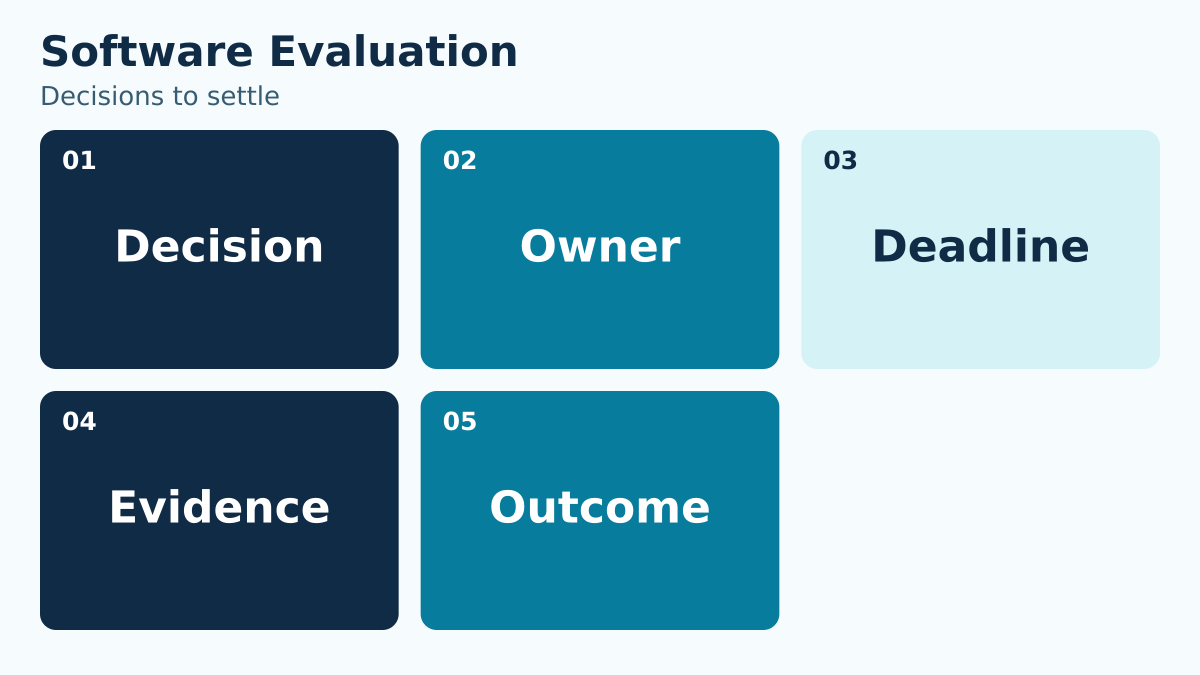
Record evidence and assumptions
Link the source policy, sample data, current workflow, contract point, or test result that informed the decision. State assumptions that could change the answer.
This makes later changes rational. The team can see whether new evidence invalidated the old assumption instead of relitigating every preference.
Attach evidence that another reviewer can use. For a data-mapping decision, include the source column definition, a few authorized sample records, the proposed destination, and the handling of blank or conflicting values. For a membership rule, link the approved policy and identify any assumption about how members currently use it. Keep private customer information out of broad project channels and use limited samples where possible. Distinguish a tested result from a plan to test. “Import verified” should point to an actual comparison and its date, not to the original migration checklist. When evidence changes, identify which assumption is affected. The team can then reconsider a defined decision instead of reopening the entire implementation because one participant remembers a different conversation.
Set a needed-by date
Tie the deadline to the downstream work it blocks: configuration, migration mapping, test scripts, staff training, member messaging, or launch approval.
Escalate overdue decisions by impact. Not every open question is urgent, but a blocked migration rule should not hide beside a cosmetic preference.
Work backward from the first dependent activity. If staff training needs the final membership categories, set the category decision before training materials are prepared. If an import depends on how credits are mapped, settle the mapping before running the acceptance comparison. Put the blocked activity and its owner in the decision row so the cost of delay is visible. Separate an internal target from a contractual commitment or member-facing launch promise. Escalate a missed decision with the options now available: postpone the dependent work, narrow scope with approval, or assign an authorized decision maker. Do not silently convert a missed deadline into an assumed answer. A short daily review of the few decisions blocking progress is often more useful than a long status call covering every completed task.
Translate decisions into tests
For each material decision, define an observable result. If guest passes reset annually, create a test household and prove the reset, purchase, use, and exception path.
Testing turns policy language into operational evidence and reveals when different teams interpreted the same decision differently.
Write the acceptance test in plain operational terms. For a guest-pass rule, specify the starting balance, permitted use, expected remaining value, and correction path. For a renewal rule, specify the household category, due date, approved credit, and expected amount. Use controlled demonstration records and record the observed result. Include at least one boundary case that tests the actual decision, such as a renewal submitted at the cutoff or a household with a partial credit. The test should fail clearly when the configuration differs from the approved answer. Name who accepts the result and where evidence is stored. Then connect the same scenario to training so staff learn the behavior the project actually verified. Passing a vendor demonstration is not a substitute for accepting the club’s configured workflow.
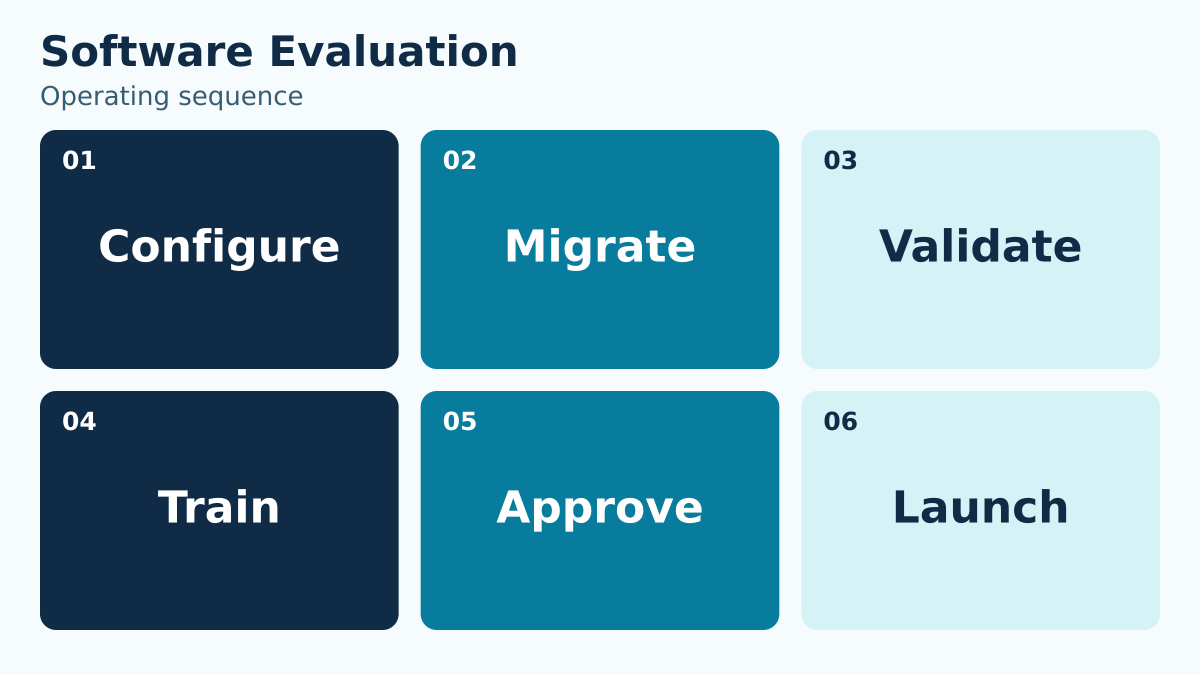
Control changes
When a decision changes, preserve the prior answer, reason, approver, effective date, and affected work. Reopen dependent tests and communications.
Silent changes are dangerous because configuration may move while training documents and member messages remain on the old rule.
Treat a changed answer as a new decision event with consequences. Suppose the club changes the renewal due date after emails and test scripts have been prepared. Record the new date, approval, reason, and affected items: configuration, member message, staff reference, reminders, and acceptance test. Assign an owner to each revision and prevent the old material from being used by mistake. Preserve the previous answer so later reviewers can explain why an earlier record differs. Ask whether the change affects already completed member actions, not only future ones. If it does, obtain an explicit transition decision. This is where a decision log earns its place: it connects a small policy change to all the work that must move with it, rather than letting teams discover the mismatch independently.
Use the log for launch approval
Before go-live, review unresolved decisions, accepted risks, test evidence, owner readiness, and rollback or contingency actions.
Launch approval should be an explicit decision based on visible evidence, not the absence of objections at the end of a status call.
Prepare the launch review from the log’s unresolved and recently changed decisions. For each open item, show the operational effect, the temporary procedure if one is approved, the responsible owner, and the date for resolution. Separate an accepted limitation from a decision that nobody has made. The approving leader should be able to say what is ready, what remains constrained, and what would trigger postponement or a contingency response. Include the first post-launch review and the people who will handle member questions. Use the software board decision memo to summarize the business decision for directors. Keep the detailed log available to the implementation team so launch approval does not erase the assignments and evidence needed during the first operating week.
Work one renewal-credit decision from question to acceptance
Consider a club moving to a new platform with credits remaining on several household accounts. “Bring over credits” is too broad for configuration. The log should ask which credit categories transfer, how the amount is verified, which household receives it, and whether any restrictions or expiry terms must remain attached. The finance owner gathers the supporting records and obtains the required policy approval.
Give the decision a needed-by date before the import test. Record the approved mapping and identify exceptions that cannot be resolved automatically. For the test, select a household with one ordinary credit and another with a restricted credit. Compare the source evidence, imported amount, restriction, member-facing balance, and the effect of a permitted purchase. An equal grand total does not prove that each household or restriction is correct.
When the test passes, link the evidence to the decision and tell the training owner how staff should explain the result. If a late adjustment changes a credit after the source export, record the correction and repeat the affected comparison. At launch review, the sponsor should see any unresolved credit decisions and the approved handling for those accounts. This single example connects finance, migration, configuration, testing, and communication through one traceable answer.
Use this working-session checklist
- Name the reader or staff role who must make the decision.
- Write the operational question in one sentence.
- Identify the source record and the person responsible for it.
- Define the normal path and the most common exception.
- State which role can approve an override or correction.
- Choose the evidence that proves the outcome was completed.
- Set a review date and a trigger for revisiting the rule.
- Test the process with a realistic household, staff account, or operating day.
Do not mark the work complete because a document exists. Ask someone who did not write it to use it. If that person cannot reach the correct outcome without private coaching, the process still depends on memory.
How to make the decision durable
Write the final rule in language a seasonal employee can understand. Put technical configuration details in the implementation record, not in the staff instruction. Connect the policy to the screen, report, or record staff actually use, and give exceptions a visible route instead of an informal favor.
Then review the first few real cases. Compare the expected result with what staff and members experienced. Correct wording, permissions, fields, or training while the evidence is fresh. A small early review is more useful than a large annual cleanup because it catches interpretation gaps before they become habits.
Finally, keep ownership visible. Every open item needs a person and a date. “The board,” “the office,” or “the vendor” is not an owner. A role or named person who can act is.
Turn the framework into an operating advantage
The purpose of this work is not a perfect document. It is a club that can answer a member, complete a shift, prepare a report, and hand responsibility to the next person without losing context. Clear records reduce the number of situations that require heroic memory.
PoolPulse onboarding and migration support can help keep the relevant account and operational context connected. The club still owns its policies, approvals, and judgment; the platform should make those decisions easier to apply and review.
Discuss your club’s implementation path in a PoolPulse walkthrough.

Before You Switch Club Platforms, Name Who Owns Every Handoff
Build a club software transition plan that assigns data, validation, configuration, training, cutover, and post-launch ownership.

Do Not Ask Your Board to Approve Software From a Demo Deck
A board-ready framework that converts demos and proposals into an operational, financial, and implementation decision.

Five Front-Desk Tasks Your Swim POS Should Handle
Your front desk shouldn't need three systems to check in a swimmer. Here's how modern swim POS systems save time and reduce errors.
Want to see if PoolPulse is a good fit for your club?
Book a walkthrough and we'll show you exactly how PoolPulse can help based on your club's needs, goals, and current processes.