

Switching Club Platforms Shouldn't Become a Second Job
The fear of migration keeps many clubs stuck on platforms they have already outgrown. A modern, well-supported transition should remove work from your team, not create more of it.

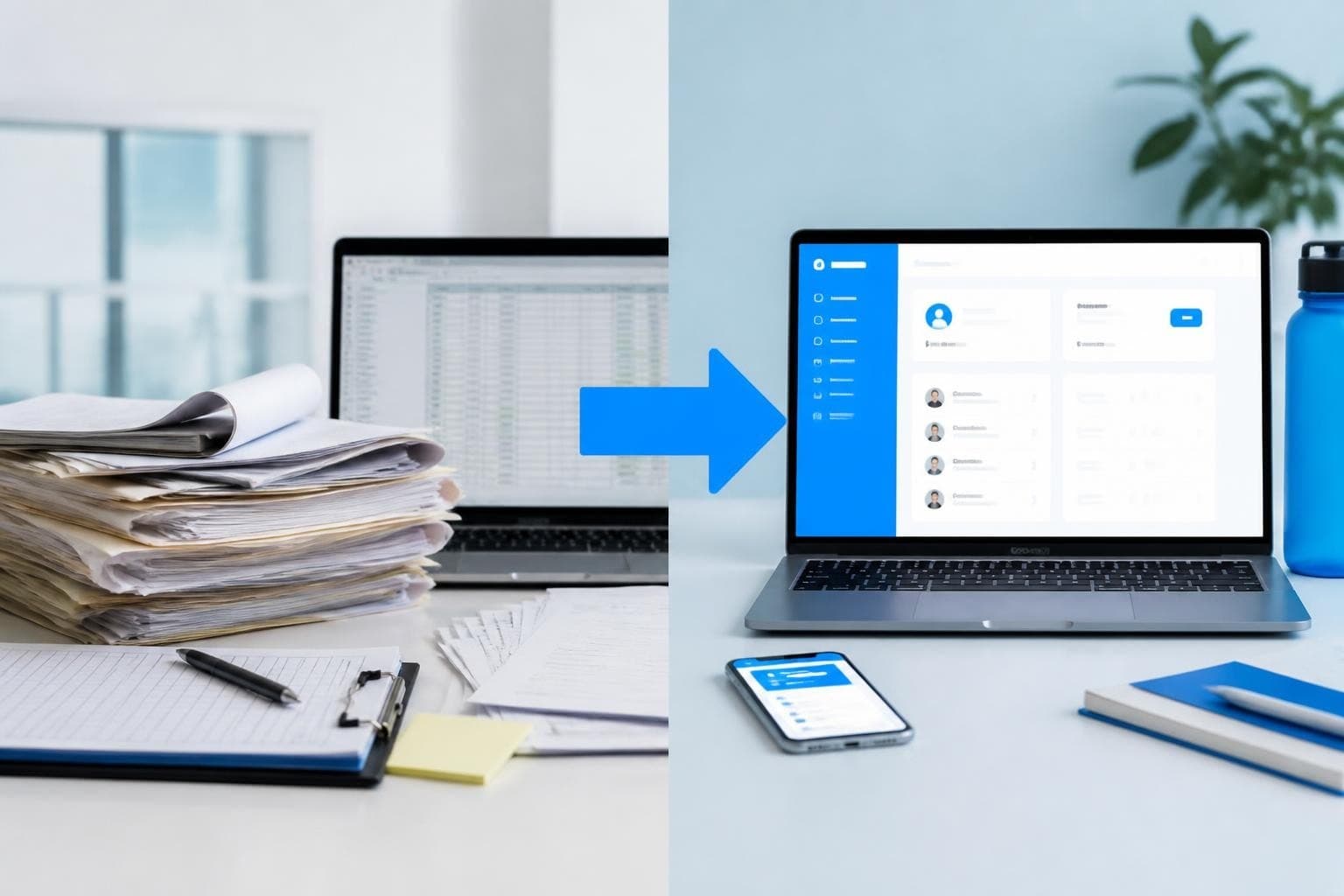
Many clubs stay with a platform they have already outgrown for one simple reason: switching sounds like even more work.
The current system may be slow, disconnected or difficult for seasonal staff to learn. Reports may require manual cleanup. Billing questions may take too long to answer. Important member information may live in several places. Everyone knows the club needs something better, but the thought of moving years of data, rebuilding workflows and retraining the team is enough to delay the decision for another season.
That hesitation is understandable. A platform transition touches member records, billing, waivers, check-ins, communications and the daily routines people rely on. But clubs should not have to become implementation experts just to escape an outdated platform.
A modern club platform should start reducing operational stress before your club even goes live.
The Real Reason Clubs Put Off Switching
Most clubs are not confused about whether their current platform is working well. They experience the friction every day. The harder question is whether changing it will create a larger problem.
Boards and managers worry about practical consequences:
- Will historical member data transfer correctly?
- Could billing records or balances be lost?
- Will members have to enter payment information again?
- Can staff continue checking people in during the transition?
- How much time will training take?
- Who will answer questions when the club goes live?
Those are not minor concerns. They are reasonable questions that every platform provider should be prepared to answer clearly.
The mistake is treating onboarding as something that begins after the platform decision. The quality of the transition should be part of how the platform itself is evaluated. Features matter, but so does the amount of work required to reach them.
Onboarding Is Part of the Platform Experience
Onboarding is sometimes presented as a short kickoff call followed by a spreadsheet template and a collection of help articles. The club is left to clean its data, recreate its policies, configure the platform and train each staff member while continuing to run the season.
That is not a guided transition. It is an implementation project handed back to the customer.
Good onboarding should connect the platform to the way the club actually operates. It should account for membership structures, household relationships, billing rules, facility access, waivers, guest policies, check-in expectations and reporting needs. It should also recognize that a treasurer, club manager and seasonal front desk employee do not need the same experience.
The goal is not simply to get data into a new database. The goal is to help the club reach a point where its information is trustworthy, its workflows make sense and its people know what to do.
What a Platform Provider Should Help Handle
Every transition requires participation from the club, but the provider should carry the technical and organizational weight of the move. Before signing a contract, clubs should understand exactly which responsibilities the provider will own.
Data Mapping, Migration and Validation
Member data is rarely as clean as anyone hopes. Households may have duplicate contacts, former members may still appear as active and years of custom membership names may no longer match current policies. A generic CSV upload can move those problems without helping the club understand them.
A supported migration should include:
- Reviewing the data sources the club currently uses
- Mapping old fields and membership structures into the new platform
- Identifying duplicates, missing information and inconsistent records
- Importing a test set before the final migration
- Validating household relationships, balances and membership statuses
- Giving the club a clear way to review exceptions
The club will still need to make decisions when records conflict. But it should not have to manually reconstruct every household or discover migration errors at the front desk.

Workflow and Policy Configuration
Moving data is only one part of the transition. The new platform also needs to reflect the club's real operating rules.
That may include:
- Membership packages and renewal periods
- Billing schedules, fees and payment expectations
- Waiver requirements
- Guest pass allowances and restrictions
- Facility eligibility and access rules
- Reservation capacity and availability
- Staff permissions and approval boundaries
A strong provider should help translate those rules into the platform. Clubs should not be forced to choose between rebuilding everything alone and changing sensible operations to fit rigid technology.
Role-Based Staff Onboarding
Training should be based on what each person needs to accomplish, not on how many features the platform contains.
| Role | What They Need to Know | What They Usually Do Not Need |
|---|---|---|
| Front Desk | Check-ins, guests, waivers, account alerts and common exceptions | Full billing configuration or board reporting |
| Club Manager | Member records, operations, staff oversight and issue resolution | Technical implementation details |
| Treasurer | Balances, payments, reconciliation and financial reporting | Front desk procedures or facility scheduling |
| Board Member | High-level reporting, trends and oversight | Daily administrative workflows |
Seasonal and rotational staffing makes this especially important. A club should not have to repeat a full platform seminar every time a new employee or volunteer joins. People should be introduced to the responsibilities, information and workflows that belong to their role.

Launch Planning and Early Support
Going live should not feel like stepping off a ledge. The provider should help the club define what will happen before, during and immediately after launch.
That includes confirming critical workflows, identifying who will monitor issues, preparing member communication and establishing a clear path for urgent questions. Billing and check-ins deserve special attention because small errors in either area become visible quickly.
Good launch support is not the promise that nothing unexpected will happen. It is the confidence that someone is watching, questions have an owner and problems will not be left for the club to solve alone.
What the Club Should Own
A provider can handle the mechanics of a transition, but it cannot make club policy decisions on the board's behalf. The club's role should focus on knowledge, decisions and verification.
The club should be prepared to:
- Identify the people authorized to make operational and financial decisions
- Explain current membership, billing and access policies
- Flag important exceptions that may not be obvious from exported data
- Review imported information and confirm that it is accurate
- Approve member communications and launch timing
- Provide focused feedback during testing
That is meaningful involvement without turning a club manager or volunteer board member into a full-time migration coordinator.
What a Smooth Transition Should Look Like
No two clubs are identical, and a responsible provider should not promise the same timeline for every organization. A club with a clean member list and simple annual dues will have a different transition from one combining multiple facilities, complex billing, programs and years of fragmented records.
Even so, the shape of a well-managed transition should be consistent.
| Stage | Provider Focus | Club Focus |
|---|---|---|
| Discovery | Understand data, workflows, priorities and risks | Explain policies and identify decision makers |
| Setup | Configure the platform and prepare the migration | Review choices and resolve exceptions |
| Validation | Test imports and critical workflows | Confirm records, balances and expected behavior |
| Onboarding | Guide users through role-relevant tasks | Practice the workflows used day to day |
| Launch | Monitor the transition and respond quickly | Communicate with members and report issues |
| Stabilization | Resolve edge cases and refine configuration | Share feedback based on real use |
The work should feel structured and visible. Managers should know what is complete, what still needs attention and who owns the next step.
Protecting the Season During a Platform Change
Timing matters. A club should avoid introducing unnecessary risk immediately before its busiest registration period, opening weekend or a major billing run. But waiting for a mythical moment when nothing is happening can also keep a club stuck indefinitely.
The better approach is to identify the workflows that cannot be disrupted and build the transition around them.
- Confirm when dues, renewals and program registrations are processed
- Map the dates when check-in volume is highest
- Complete test imports before the final data cutover
- Keep a verified export of historical records
- Define what will remain accessible in the former system
- Prepare a fallback process for critical front desk operations
- Tell members what will change and what action, if any, they need to take
Payment information deserves a direct conversation. Depending on the payment processors involved, stored payment credentials may not transfer between platforms. Clubs should know this early so they can plan clear member communication without surprises.
Questions to Ask Before Choosing a Platform
A polished demo can show what a platform does after launch. These questions help reveal what it will take to get there:
- Who performs the data migration? Ask whether the provider actively assists or simply supplies a template.
- How will our existing data be mapped and validated? Look for a test process and a clear way to review exceptions.
- What information cannot be migrated? The answer should be specific, especially for payments and historical records.
- Who configures our membership, billing and access rules? Understand how much setup is expected from the club.
- How are different staff roles onboarded? A front desk employee should not need the same training as a treasurer.
- What support is available during launch? Ask who responds, how quickly and through which channels.
- How do we verify billing before going live? Balances, schedules and payment behavior should be tested carefully.
- What happens when we hire seasonal staff later? Onboarding should continue working after the initial launch.
- Can we export our information whenever we need it? A club should retain access to its own data.
The answers reveal something important about the provider's philosophy. Does the company see onboarding as a shared responsibility it is prepared to lead, or as a list of tasks the club must complete before receiving value?
Warning Signs That the Work Is Being Handed Back to You
Clubs should be cautious when the transition depends heavily on vague promises or unpaid internal labor.
Common warning signs include:
- The migration plan begins and ends with a CSV template
- No one reviews how your club currently handles billing or access
- Every user receives the same generic training session
- The provider cannot explain how imported data will be validated
- Payment migration is not discussed until late in the process
- There is no clear owner for launch-day questions
- Your team is expected to build its own documentation before going live
- The proposed timeline ignores your operational calendar
None of these automatically means a transition will fail. Together, however, they suggest the club may be buying a platform and inheriting an implementation project.
A Better Standard for Club Platform Onboarding
Clubs should evaluate onboarding by the same standard they use for the rest of the platform: how much work does it remove from the people running the season?
Can the provider help turn scattered records into trustworthy member information? Can staff learn the workflows that matter without searching through an entire knowledge base? Can managers see what still needs attention? Can the board trust that billing and historical data were validated? Can members move into the new experience without unnecessary confusion?
Those questions matter as much as the feature list.
At PoolPulse , we believe a modern club operations platform should make the transition easier from the beginning. That means guided setup, practical migration support and experiences shaped around what each role needs to accomplish. Memberships, billing, waivers, check-ins, access, communications and reporting should come together without forcing the club to piece together the move on its own.
Because the first operational problem a better platform should solve is the stress of switching to it.
See how onboarding with PoolPulse works.
Frequently Asked Questions
How long does it take to switch club management platforms?
The timeline depends on the amount and condition of the club's data, the complexity of its billing and membership rules, the number of integrations involved and its operational calendar. A provider should review those factors before giving a realistic timeline.
Can all member data be moved to a new platform?
Most standard member, household, membership and historical information can usually be imported, but the result depends on what the current system can export. Stored payment credentials may be subject to additional restrictions. The provider should identify limitations before the transition begins.
When is the best time for a swim club to switch platforms?
A lower-volume period is often easier, but the best timing depends on registration, renewal, billing and opening dates. The important thing is to protect critical workflows and complete validation before the club's highest-pressure periods.
Will every staff member need extensive training?
They should not. Role-based onboarding focuses each person on the tasks and information relevant to their responsibilities. Seasonal front desk staff, managers, treasurers and board members should receive different levels of access and guidance.
What should a club prepare before migration?
The club should gather available exports, document important policies, identify decision makers and flag known exceptions. The platform provider should then help map, migrate and validate the information rather than leaving the club to reconstruct everything alone.
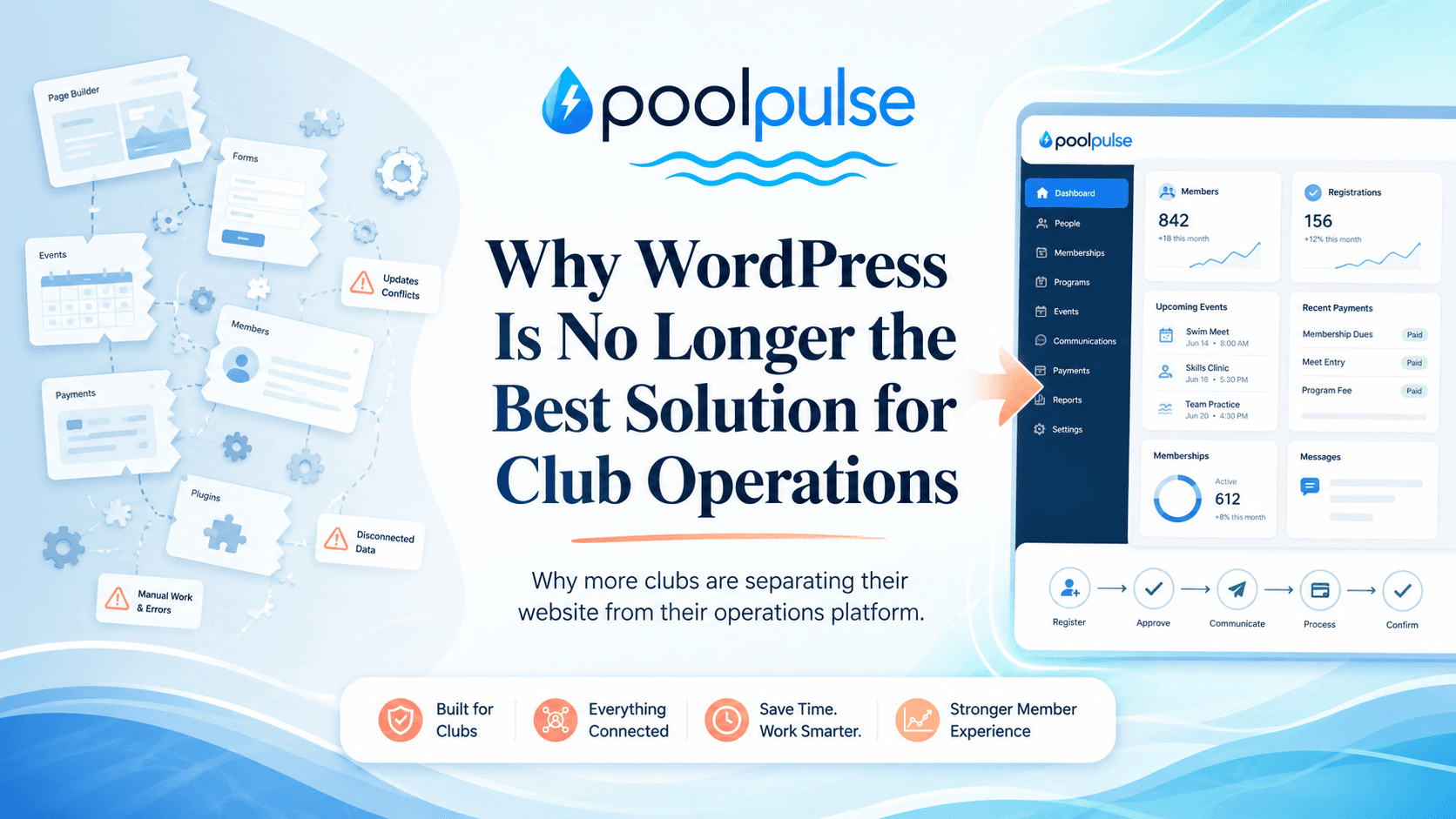
Why WordPress Is No Longer the Best Solution for Running Your Club Operations
A practical look at why growing clubs should keep WordPress focused on marketing and move memberships, billing, waivers, check-ins and reporting into a purpose-built platform.
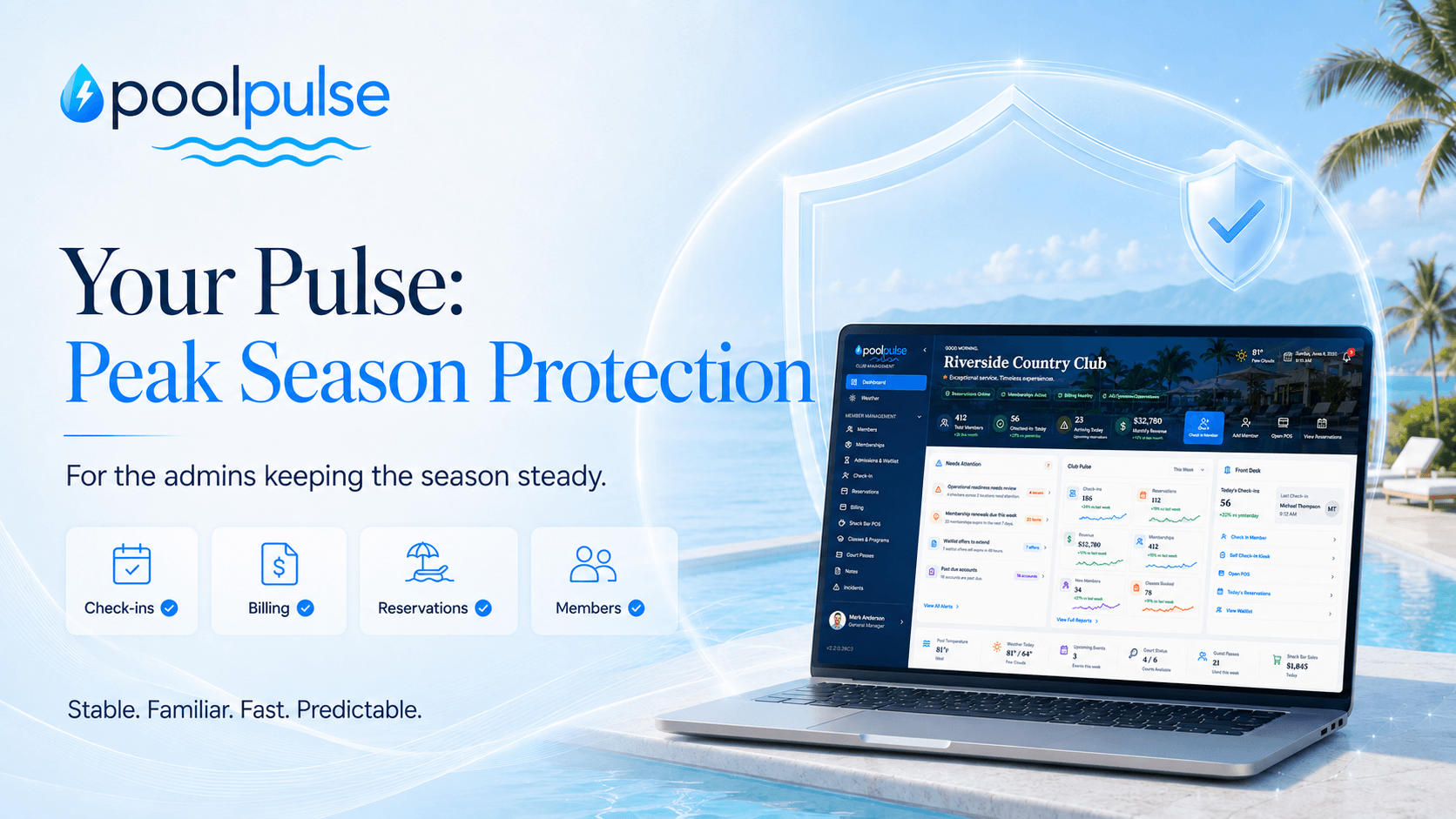
Your Pulse: Peak Season Protection™
Peak season puts every part of club operations under pressure. Your Pulse: Peak Season Protection is PoolPulse’s approach to keeping seasonal clubs stable, familiar, fast and ready when it matters most.
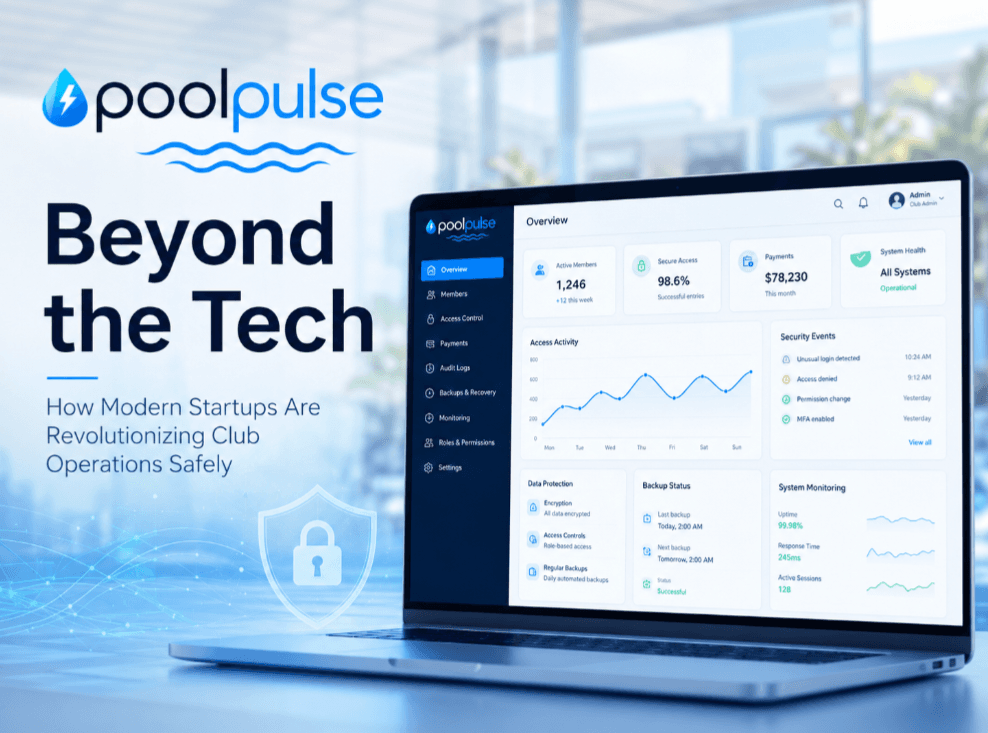
Beyond the Tech: How Modern Startups Are Revolutionizing Club Operations Safely
Modern club startups are reshaping operations with safer workflows, clearer access controls, stronger payment visibility, audit trails and security-forward design.
Want to see if PoolPulse is a good fit for your club?
Book a walkthrough and we'll show you exactly how PoolPulse can help based on your club's needs, goals, and current processes.