

Management Systems for Swim Clubs: A Simple Guide
Learn how management systems help swim clubs organize operations, reduce admin work, and improve member experience. Practical guide for club operators.


You're running a swim club, tennis facility, or HOA pool. Every day feels like you're juggling a dozen different tasks. Member renewals are coming up. Someone needs to update billing information. There's a question about who has access to the facility this weekend. And somewhere in that pile of spreadsheets and emails, you know the answer exists. You just can't find it quickly.
This is where management systems come into play. Not the fancy corporate kind that require a PhD to understand. Just organized ways to handle the daily work that keeps your facility running smoothly.
What Actually Is a Management System?
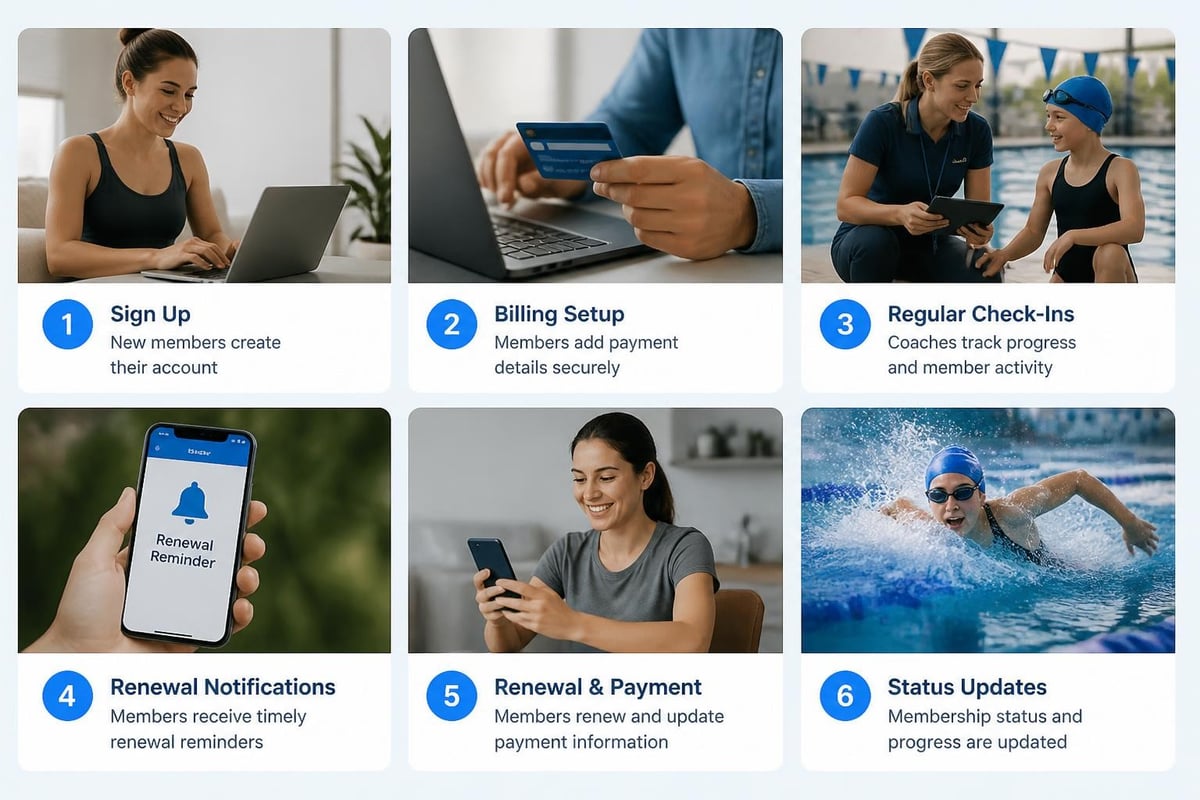
Think of a management system as your club's operational playbook. It's how you handle the repetitive tasks that happen every single day. Member check-ins. Billing cycles. Renewal reminders. Guest passes. All of it.
Management systems are really just documented ways of doing things consistently. Instead of remembering everything in your head or relying on tribal knowledge, you have a clear process everyone can follow.
Here's what that looks like in practice:
- A new family joins your swim club. Your system knows exactly what information to collect, which forms they need, and how to set up their billing.
- It's renewal season. Instead of manually emailing everyone, your system sends reminders automatically based on membership end dates.
- Someone checks in at the gate. Your system verifies their membership status in seconds, not minutes.
The beauty is in the consistency. When you handle things the same way every time, you make fewer mistakes. You save time. And your members get a better experience because they know what to expect.
Why Clubs Need Organized Systems
Let me tell you what happens without them. You're tracking memberships in one spreadsheet. Billing is in another system. Check-in records are somewhere else. When someone asks a simple question like "How many active family memberships do we have?" you spend twenty minutes hunting through files.
Or worse, you get it wrong. You bill someone who already canceled. You forget to send renewal notices until memberships have already lapsed. A member shows up and you can't quickly verify if their access is current.
These aren't rare problems. They happen at clubs every single day. And they create stress for you and frustration for your members.
According to the International Organization for Standardization , well-designed management systems help organizations achieve consistent results while reducing errors and improving efficiency. That applies to Fortune 500 companies, sure. But it also applies to your 200-member swim club.
The Core Parts of Any Good System
Every management system, whether it's for a swim club or anything else, has a few essential pieces. You need a way to store information. A way to track what's happening. And a way to make sure things get done on time.
Member Information Management
This is your foundation. You need accurate, up-to-date information about every member. Names, addresses, email, phone numbers. Membership types and start dates. Emergency contacts. Any special notes or restrictions.
When this information lives in one place, you can find it quickly. You can update it once instead of in five different locations. And you can actually trust that what you're looking at is current.
Key member data to track:
- Contact information and emergency contacts
- Membership type and status
- Payment history and billing preferences
- Access permissions and restrictions
- Family relationships and authorized guests
- Communication preferences
Financial Operations
Money matters. You need to know who's paid, who owes, and when payments are due. Your system should handle recurring billing automatically. It should flag failed payments so you can follow up. And it should give you a clear picture of your revenue at any moment.
This is where many clubs get into trouble. They're using outdated systems that require manual work for everything. Sending invoices by hand. Tracking payments in spreadsheets. Reconciling everything at month-end and finding discrepancies they can't explain.
| Manual Process | System-Managed Process |
|---|---|
| Create invoices individually each month | Automatic billing on scheduled dates |
| Email payment reminders as you remember | Automated reminders based on payment status |
| Update payment records by hand | Real-time payment processing and recording |
| Hunt for missing payments during reconciliation | Instant alerts for failed or missed payments |
The difference isn't just time saved. It's accuracy. When your system handles the repetitive financial tasks, you catch problems early instead of discovering them weeks later.
Access and Check-In Control
Who can use your facility right now? That's a question you need to answer instantly, especially during busy summer months. Your system needs to verify membership status, check guest limits, and log entries without creating a bottleneck at the gate.
Modern swim club management software handles this seamlessly. Members check in with a card, code, or mobile app. The system verifies their status in real-time. You get logs of who's using the facility and when. All without adding work to your plate.
How Management Systems Actually Help Your Club
Let's move past theory and talk about real benefits you'll notice immediately.
You Stop Losing Revenue
This is big. Every club loses money to simple oversights. Someone's membership expires, but they keep using the facility because nobody caught it. A family downgrades their membership type, but the billing never changes. Guest fees don't get collected because there's no easy way to track them.
With a proper system, these gaps close. The revenue recovery happens automatically because the system catches what humans miss. Expired memberships get flagged. Billing matches current membership types. Guest usage gets tracked and billed.
One club we know found $12,000 in annual revenue they were missing. Not from raising prices. Just from collecting what they should have been collecting all along.
Your Admin Time Drops Dramatically
Think about how much time you spend on tasks that should be simple:
- Answering "What's my account status?" questions
- Updating member information in multiple places
- Creating and sending invoices
- Following up on late payments
- Generating reports for board meetings
- Managing renewal season
A good system automates most of this. Members can check their own account status online. Information updates in one place. Invoices generate and send automatically. Payment reminders go out on schedule. Reports compile themselves. The features that matter most are the ones that give you time back.

Members Get Better Service
Your members don't care about your backend processes. They just want things to work smoothly. They want to check in quickly. Get accurate bills. Receive timely information. And not have to repeat themselves every time they contact you.
When your management system works well, their experience improves without them knowing why. Check-ins are fast. Bills are accurate. They get renewal reminders before their membership expires, not after. Questions get answered quickly because you can pull up their information instantly.
This matters more than you might think. Happy members renew. They recommend your club to friends. They're understanding when real problems come up because they trust you're running things well.
Choosing the Right System for Your Club
Not all management systems are created equal. Some are built for generic businesses and shoehorned into club operations. Others are designed specifically for facilities like yours.
What to Look For
Ease of use should be at the top of your list. If your system requires extensive training or constant reference to instruction manuals, you won't use it consistently. And if you won't use it, it won't help you.
You want something intuitive. Something you can figure out without a manual. Something new board members or volunteers can learn quickly. Because let's be realistic - you're not spending weeks training people on software.
Integration capabilities matter too. Your system shouldn't exist in isolation. It needs to work with your payment processor. Connect to your website. Maybe integrate with your communication tools. The more things talk to each other, the less manual data entry you're doing.
Research from IEEE Technology Navigator shows that effective management systems replace informal, undocumented practices with structured processes that everyone can follow consistently.
Common Pitfalls to Avoid
Here's what trips up clubs when they're picking or implementing systems:
Going too complex. You don't need enterprise software with a hundred features you'll never use. You need the core functions done well. Member management. Billing. Access control. Communication. Get those right before worrying about anything fancy.
Choosing based on price alone. The cheapest option usually costs more in the long run. Either because it doesn't actually do what you need, or because it creates so much extra work that you're paying in staff time instead of software fees.
Not planning for migration. If you're switching from an old system, you need to move your data over. Member records. Payment history. All of it. A good vendor makes this easy. A bad one leaves you manually entering everything. Check the swim club software migration checklist before you commit to anything.
Setting Up Your Management System
Once you've picked a system, implementation is where things get real. This is where theory meets practice, and where planning matters.
Getting Your Data Ready
Your first job is cleaning up your current data. Because here's the truth - if you migrate messy data into a new system, you just have messy data in a nicer location.
Steps to clean your data:
- Remove duplicate member records
- Update outdated contact information
- Verify membership status for everyone
- Confirm payment information is current
- Document any special cases or exceptions
- Archive inactive or expired memberships
This takes time. But do it right, and your new system starts with a solid foundation. Skip it, and you'll be fixing problems for months.
Training Your Team
Even the best system fails if nobody knows how to use it. You need to train everyone who'll touch the system. Board members. Office staff. Anyone who answers member questions or processes transactions.
Good news: if you picked an intuitive system, training doesn't take long. A few hours to cover the basics. Then hands-on practice with real scenarios. Most people get comfortable within a week.
Transitioning Members
Your members will notice when things change. Maybe the check-in process looks different. Maybe they receive different emails. Maybe they can now access information online that they couldn't before.
Communication is key. Tell them what's changing and why. Emphasize how it makes their lives easier. Give them resources to understand new features. And be ready for questions during the first few weeks.
Making Your System Work Long-Term
Implementation is just the beginning. The real value comes from using your management system consistently over time.
Regular Maintenance Tasks
Even automated systems need some care and feeding. Set aside time each month for basic maintenance:
- Review and clean up member data
- Check for billing errors or failed payments
- Update any membership status changes
- Archive old records appropriately
- Review access logs for any issues
This isn't hours of work. Maybe thirty minutes a month. But it keeps your system running smoothly and your data accurate.
Using Data to Improve Operations
Here's something most clubs miss: your management system collects valuable information. You can use this data to make better decisions.
Which membership types are most popular? When do renewals typically happen? What times see the heaviest facility usage? Which communication methods get the best response? Your system knows all of this.
| Metric to Track | Why It Matters | How to Use It |
|---|---|---|
| Membership growth by type | Shows what members value | Guide pricing and offerings |
| Renewal rates by cohort | Identifies retention issues | Target at-risk members early |
| Peak usage times | Reveals capacity needs | Plan staffing and maintenance |
| Payment timing patterns | Improves cash flow planning | Schedule expenses accordingly |
According to guidance from CEOpedia on management systems , organizations that actively use their system data to inform decisions see better outcomes than those who just use systems for basic record-keeping.

Keeping Up with Changes
Your club evolves. Membership types change. Pricing adjusts. Policies update. Your management system needs to keep pace with these changes.
Good systems make this easy. You can add new membership categories. Adjust billing schedules. Update access rules. All without breaking what's already working.
The key is documenting changes as you make them. Don't just update the system and move on. Note what changed, when, and why. Six months from now when someone asks "Why do we do it this way?" you'll have the answer.
Integration With Your Broader Operations
Management systems don't exist in a vacuum. They connect to everything else you're doing to run your club.
Website Integration
Your members should be able to interact with your system through your website. Check membership status. Update contact information. Pay bills online. Register for events. All without calling or emailing you.
This self-service capability saves you massive amounts of time. Instead of being the middleman for every transaction, you let members handle routine tasks themselves. You're available for the complex questions and actual problems.
Website integration should be seamless from the member's perspective. They shouldn't feel like they're jumping between different systems or entering information multiple times.
Communication Tools
Your management system should power your communication, not complicate it. When you need to send renewal reminders, the system knows who needs them. When there's a facility closure, you can notify active members instantly. When someone asks a question, you can pull up their complete history.
The best systems even personalize communication automatically. Renewal emails that include the member's specific details. Welcome messages for new members. Birthday wishes or anniversary notes. These touches matter, and they should be automatic.
Financial Reporting
Board meetings need accurate financial information. How many active memberships? What's the monthly revenue? How does this compare to last year? What's outstanding in receivables?
Your management system should answer these questions instantly. Not after hours of spreadsheet work. Just pull a report and you're done. This lets you spend board meetings discussing strategy instead of arguing about numbers.
Common Challenges and How to Handle Them
Even great systems face hiccups. Here's how to handle the most common ones.
Resistance to Change
Some people hate changing how they work. They've been doing things a certain way for years. Why mess with it now?
The answer is showing, not telling. Demonstrate how the new system saves time. How it prevents errors. How it makes their specific job easier. Once people see the benefit firsthand, resistance usually melts away.
Start with the people who are most open to change. Get them comfortable with the system. Then let them become advocates who help others learn. Peer influence is powerful.
Data Quality Issues
You'll discover data problems you didn't know you had. Duplicate records. Outdated information. Inconsistent formatting. Missing details.
Address these systematically. Don't try to fix everything at once. Pick the most critical issues first. Maybe that's duplicate records that cause billing problems. Or outdated email addresses that prevent communication.
Set standards for new data entry. Make required fields actually required. Use dropdown menus instead of free text where possible. Add validation rules that catch obvious errors.
System Downtime
What happens when your system goes down? Even reliable systems have occasional issues. You need a backup plan.
Keep critical information available offline. Have a way to verify memberships manually if needed. Know how to process payments without the system. Document emergency procedures before you need them.
This is also where vendor support matters. When something breaks, how quickly can you get help? Do they have phone support or just email? What's their typical response time? These questions matter when you're dealing with a crisis.
The Evolution of Club Management Systems
Management systems have changed dramatically over the past decade. Understanding where things are headed helps you make better decisions now.
From Manual to Automated
Ten years ago, most clubs were running on spreadsheets and memory. Five years ago, basic database systems became common. Today, we're seeing AI-powered systems that actually help you make decisions.
Modern AI-powered insights can spot patterns you'd never notice. Which members are likely to cancel? When should you launch your renewal campaign for maximum response? What pricing changes might increase revenue?
This isn't science fiction. It's happening right now at forward-thinking clubs. And the technology is getting more accessible every year.
Cloud-Based Systems
Remember when software meant installing programs on your office computer? Those days are gone. Cloud-based management systems let you access everything from anywhere. Check a member's status from home. Review financials from your phone. Process a registration from vacation.
This flexibility matters more than it used to. Board members want to review information without scheduling office time. You want to handle urgent issues without driving to the facility. Cloud systems make that possible.
Security is actually better with cloud systems too. Professional hosting services have better backups, better security measures, and better disaster recovery than most clubs could manage on their own.
Mobile-First Design
More members interact with your club through their phones than through computers. Your management system needs to work well on mobile devices. Not just "work" in the sense of being technically functional. But actually be easy to use on a small screen.
This affects everything. Check-in systems that work with phone apps. Member portals designed for mobile first. Administrative functions you can handle from a tablet. All of this is becoming standard, not optional.
Measuring Success With Your System
How do you know if your management system is actually helping? You need concrete metrics, not just feelings.
Time Savings
Track how long routine tasks take before and after implementation. Generating a membership report. Processing a month's worth of renewals. Following up on failed payments. Your time investment should drop significantly.
If a task took two hours monthly and now takes fifteen minutes, that's measurable success. Multiply that across all your routine tasks, and the time savings add up quickly.
Error Reduction
Count mistakes. Before the system, how often did you have billing errors? Missed renewals? Check-in problems? After implementation, these should drop dramatically.
Even one prevented error often justifies the system cost. Especially if that error would have meant lost revenue, member frustration, or time-consuming corrections.
Member Satisfaction
Survey your members periodically. Ask about their experience with registration, billing, check-in, and communication. Track how satisfaction changes over time.
Happy members renew at higher rates. They bring guests. They volunteer for committees. They're patient when real problems occur. A good management system contributes directly to member satisfaction, which drives everything else.
Financial Impact
The bottom line matters. Are you collecting more revenue? Spending less on administration? Reducing the time volunteers need to contribute?
Look at metrics like:
- Total membership revenue year over year
- Collection rate on outstanding balances
- Administrative costs as a percentage of revenue
- Volunteer hours required for operations
Building on Your Foundation
Once your basic management system is humming along, you can add capabilities that were impossible before.
Event Management
Many clubs run events. Swim meets. Social gatherings. Training sessions. Managing these manually is a nightmare of spreadsheets and email chains.
Your management system can handle this. Registration with automatic payment collection. Waitlists that fill spots automatically. Communication targeted to registered participants. Post-event surveys to gather feedback.
Enhanced Member Engagement
When you have good data and automation handling the basics, you can focus on relationship building. Recognizing member milestones. Personalizing communication. Offering targeted programs based on member interests and history.
This is where clubs really differentiate themselves. Anyone can process a registration. The special clubs make members feel valued and connected to the community.
Multi-Facility Management
Some organizations run multiple pools or facilities. Maybe a HOA with several community amenity centers. Or a club with multiple locations. Managing these separately creates duplicate work and inconsistent experiences.
Unified multi-community amenity management lets you handle everything from one system. Consolidated reporting. Consistent policies. Shared resources. Members can use any facility seamlessly.
Making the Switch If You Already Have a System
Maybe you're reading this and thinking "We already have a system, but it's not working well." That's common. Many clubs are stuck with outdated software that creates more problems than it solves.
Switching systems feels daunting. What about your data? What about member disruption? What about the learning curve? These are legitimate concerns, but they're also manageable.
When to Switch
Signs your current system isn't working:
- You're doing lots of manual work that should be automated
- Data lives in multiple places and stays out of sync
- The system breaks frequently or is unreliable
- Your vendor doesn't provide good support
- Members complain about the user experience
- You can't get the reports or information you need
- The cost keeps increasing without added value
If several of these apply, it's time to evaluate alternatives. Sticking with a bad system because switching seems hard just means ongoing pain instead of short-term transition effort.
Migration Planning
Switching systems successfully requires planning. Start at least two months before you want to go live. Longer if you're in the middle of busy season.
Create a detailed timeline. When will you migrate data? When will you train users? How will you communicate with members? What's your backup plan if something goes wrong?
Many providers offer migration support that handles the technical heavy lifting. They'll map your data from the old system to the new one. Help you verify everything transferred correctly. Guide you through testing before you go live.
Minimizing Disruption
Your members don't need to know or care about your backend systems. They just want things to keep working. Plan your switch to minimize visible impact.
Ideally, migrate during your slowest season. Give yourself time to work out any kinks before peak demand hits. Have a transition period where both systems run parallel if possible, so you can verify everything before shutting off the old one.
Communicate clearly with members about any changes they'll notice. Updated check-in procedures. New member portal access. Different billing emails. Give them plenty of advance notice and provide help resources.
Management systems aren't about technology for its own sake. They're about running your club more smoothly, giving members better service, and spending less time on administrative headaches. When you organize your operations properly, everything else gets easier. If you're ready to see how modern swim club management software can transform your operations, PoolPulse offers the configurable, AI-powered platform designed specifically for clubs like yours. Our team understands the daily challenges you face because we've built our system around solving them.

Five Front-Desk Tasks Your Swim POS Should Handle
Your front desk shouldn't need three systems to check in a swimmer. Here's how modern swim POS systems save time and reduce errors.

The Swim Club Software Test Every Board Should Run
Run this simple test to see if your swim club software actually saves time or creates more work. Real scenarios, honest questions, better tools.

The Seven Signs You've Outgrown Your Club Operations
Your swim club is growing, but your tools aren't keeping up. These seven warning signs reveal when manual processes cost more than solutions.
Want to see if PoolPulse is a good fit for your club?
Book a walkthrough and we'll show you exactly how PoolPulse can help based on your club's needs, goals, and current processes.