

Schedule Check: Keep Your Swim Club Running Smoothly
Learn how regular schedule checks help swim clubs avoid conflicts, improve member experience, and save hours each week on administrative tasks.


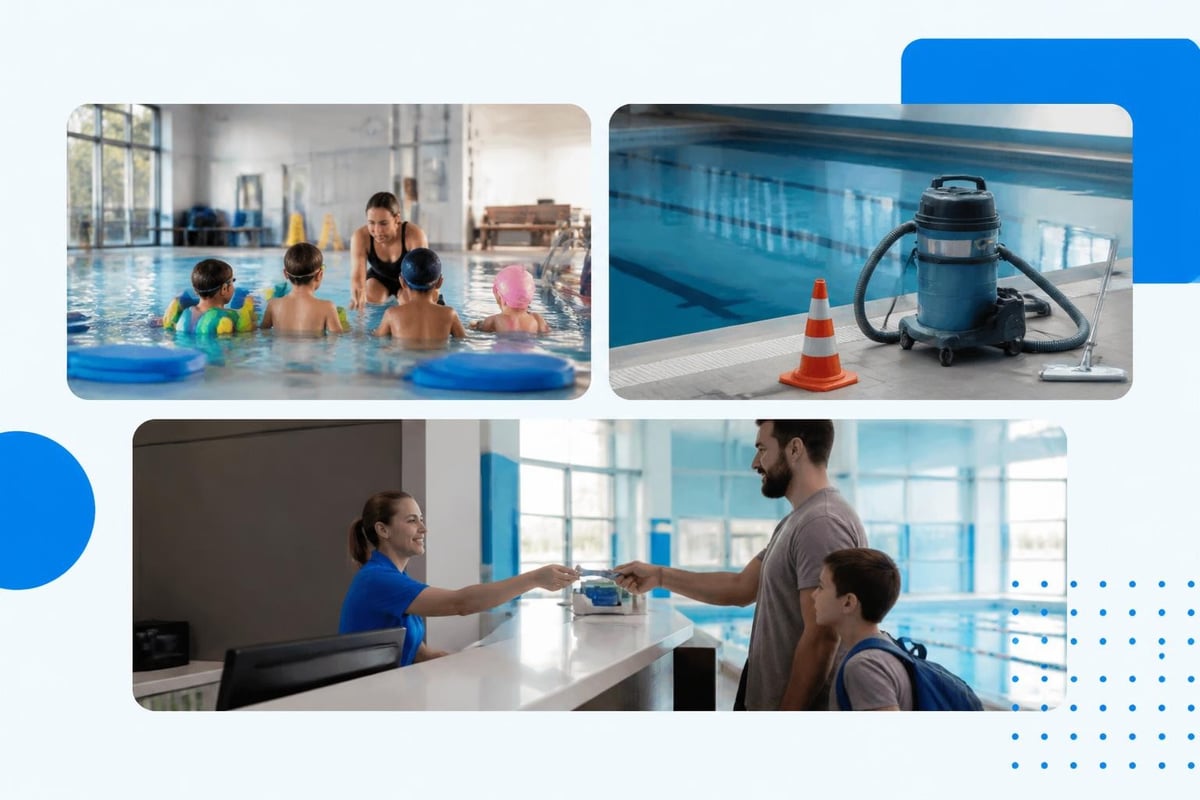
Running a swim club means juggling dozens of schedules at once. You've got lifeguard shifts, swim lesson blocks, lap swim times, pool maintenance windows, and member check-ins all competing for the same hours in your day. When schedules overlap or conflict, it creates headaches for everyone: frustrated members, stressed staff, and you stuck playing referee. That's why doing a regular schedule check isn't just good practice; it's essential for keeping your club running without constant fires to put out.
Why Your Schedule Matters More Than You Think
Your schedule is the backbone of your entire operation. When it works, nobody notices. When it breaks, everyone feels it.
Think about what happens when two events get double-booked. Maybe you've got a swim lesson scheduled at the same time as pool maintenance, or two different groups reserved the same lane space. Suddenly you're getting angry calls, your instructors are confused, and members are posting negative reviews online.
A good schedule check catches these problems before they happen. It's like inspecting your pool equipment regularly instead of waiting for something to break during your busiest weekend.
The Real Cost of Schedule Conflicts
Here's what actually happens when schedules collide:
- Members show up for lap swim during a reserved event
- Instructors arrive to find no pool space available
- Maintenance crews can't access the pool when they need to
- Staff members get scheduled for overlapping shifts
- Member check-ins get delayed because nobody's at the desk
Each conflict costs you time and trust. Time because you're scrambling to fix it. Trust because members start wondering if you have things under control.
What a Schedule Check Actually Looks Like
A schedule check isn't complicated, but it needs to be thorough. You're looking for gaps, overlaps, and anything that doesn't make sense.
Start by pulling up your full week view. Look at each day from opening to closing. Ask yourself: Does this actually work?
Daily Schedule Review Steps
Here's how to check your schedule without spending all day on it:
- Morning Review - Check today's schedule for conflicts or gaps
- Staffing Verification - Confirm all shifts are covered
- Space Allocation - Make sure pool areas aren't double-booked
- Equipment Needs - Verify any special equipment is available
- Member Notifications - Check if anyone needs updates about changes
This process takes maybe 15 minutes each morning. But those 15 minutes can save you hours of cleanup later.
Some clubs use comprehensive scheduling tools that help identify potential conflicts before they become problems. Others rely on spreadsheets or calendar apps. What matters is consistency, not fancy software.
Common Schedule Problems (And How to Catch Them)
You'll see the same issues pop up again and again. Once you know what to look for, spotting them becomes second nature.
The Double-Booking Trap
This is the classic problem. Someone books the pool for a private event, but your regular swim lessons are still on the calendar. Or two different instructors think they have the same time slot.
How to catch it: Look for any time blocks where multiple activities share the same space. Your calendar should make these obvious.
Quick fix: Set up your scheduling system so it won't allow overlapping bookings in the same physical space. If you're using PoolPulse's management platform , this kind of conflict prevention is built in.
The Staffing Gap
You've got a lifeguard shift that nobody's covering, or an instructor called in sick and the backup plan fell through.
How to catch it: Every time slot that requires staff should have a name attached. No generic "Lifeguard TBD" entries.
Quick fix: Maintain a backup list of certified staff who can fill in on short notice. Update it monthly.
| Schedule Problem | Warning Signs | Prevention Method |
|---|---|---|
| Double-booking | Two events, same time/space | Automated conflict checking |
| Staffing gaps | Empty shift slots | Required staff assignments |
| Back-to-back bookings | No buffer time | Minimum 15-min gaps |
| Overbooked instructors | Same person, multiple places | Staff capacity limits |
| Maintenance conflicts | Pool work during member hours | Dedicated maintenance blocks |
The Missing Buffer Time
You scheduled swim lessons ending at 3:00 PM and the next group starting at 3:00 PM. Sounds efficient, right? Except nobody's accounting for cleanup, setup, or the fact that classes rarely end exactly on time.
How to catch it: Look for events that butt directly against each other with zero transition time.
Quick fix: Build in 10-15 minute buffers between different activities. Your schedule might look less packed, but it'll actually run smoother.
Weekly Schedule Check Routine
Daily checks catch immediate problems. Weekly checks catch patterns and bigger issues.
Set aside 30 minutes every Sunday or Monday to review the coming week. This isn't just looking for conflicts. You're checking the flow of your entire operation.
What to Review Weekly
Pull up your whole week and ask these questions:
- Are staffing levels right for expected member traffic?
- Do any special events need extra preparation?
- Are maintenance windows scheduled before busy periods?
- Have any members requested schedule changes?
- Does anything look unusually light or heavy?
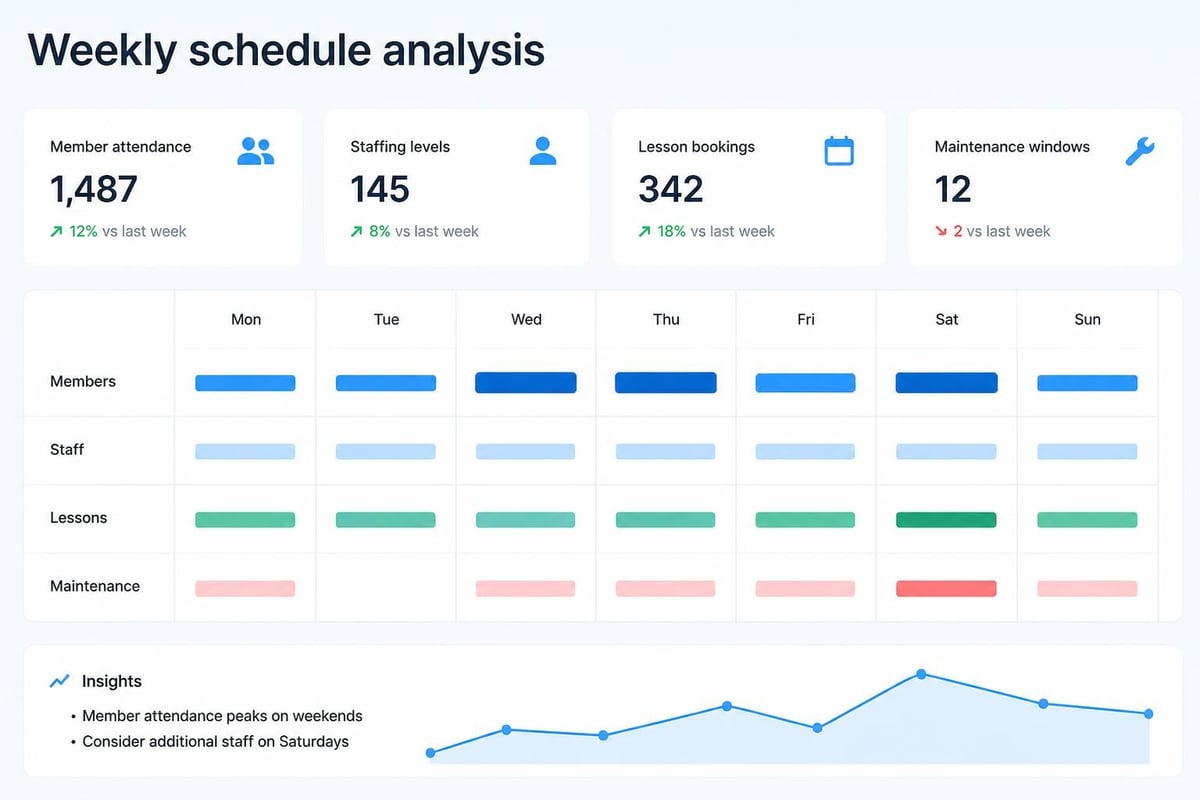
You're looking at the big picture here. Maybe you notice that Wednesday afternoons are consistently overbooked while Thursday mornings are dead. That's useful information for adjusting your offerings.
Some clubs find that specialized quality checks help them maintain consistent standards across their scheduling. The key is finding a rhythm that works for your team.
Monthly Schedule Check: The Deep Dive
Once a month, go deeper. This is when you look at trends, not just individual days.
Pull reports on member check-ins. Which time slots are most popular? Where are you losing revenue because you're understaffed during peak times? Where are you paying staff to sit around during slow periods?
Key Monthly Metrics
Track these numbers to understand your schedule performance:
- Check-in patterns - When do members actually show up?
- Capacity utilization - Are you filling available slots?
- No-show rates - Which time slots have the most cancellations?
- Staff overtime - Are schedule changes forcing extra hours?
- Revenue per time slot - Which activities make money?
This data tells you if your schedule matches reality. Maybe you think morning lap swim is popular, but the numbers show it's actually your slowest time. That's valuable information for making changes.
The PoolPulse platform automatically tracks many of these metrics, which means you spend less time crunching numbers and more time making good decisions.
Technology That Actually Helps
Let's be honest: scheduling on paper or in basic spreadsheets is painful. You can do it, but it's slow and mistakes are easy to make.
The right software doesn't just store your schedule. It actively helps you avoid problems.
What to Look For in Scheduling Tools
Not all scheduling software is created equal. Here's what actually matters for swim clubs:
- Conflict detection - Catches double-bookings automatically
- Staff management - Tracks certifications and availability
- Member check-in - Records who's actually using your facility
- Mobile access - Staff can check schedules from anywhere
- Change notifications - Automatic alerts when schedules update
You don't need every bell and whistle. You need tools that solve real problems you face every day.
Some administrators use cron-based scheduling tools for automated tasks, though most swim club needs are simpler than that. Focus on ease of use over complexity.
Handling Schedule Changes Without Chaos
Schedules change. That's life. The question is how smoothly you handle those changes.
When an instructor calls in sick, when maintenance takes longer than expected, when a member emergency requires pool closure, you need a system for updating your schedule and notifying everyone affected.
The Update Process
Here's a simple workflow that prevents most confusion:
- Make the change in your primary scheduling system
- Document why you made the change (even briefly)
- Identify who's affected by the schedule change
- Notify those people through their preferred contact method
- Update any public-facing schedules (website, posted hours, etc.)
The worst thing you can do is change the schedule without telling people. Suddenly members show up expecting lap swim and find a private event instead. Or staff arrive for a shift that was cancelled.
Communication isn't optional when schedules change. It's the whole point of making the change in an organized way.
Member Check-ins and Schedule Accuracy
Here's something many clubs miss: your member check-in data is gold for schedule accuracy.
Every time someone checks in, you're learning about actual usage patterns. Compare that to what you planned in your schedule, and you'll see where reality differs from expectations.
Using Check-in Data
Let's say your schedule assumes 20 members during Tuesday morning lap swim. But check-in data shows you're averaging 45 members. That's a problem. You're understaffed, the pool is crowded, and the member experience suffers.
Or maybe you're paying a lifeguard for Sunday evening hours when check-ins show you get maybe three members total. That's money you're wasting.
Member management software like PoolPulse tracks these patterns automatically, so you're not manually counting check-ins and comparing them to schedules.
The data shows you:
- Peak usage times - When you need maximum staffing
- Underutilized slots - Where you can reduce costs
- Seasonal patterns - How summer differs from winter
- Day-of-week trends - Why Wednesdays are busy but Mondays aren't
This information makes your schedule check much more valuable because you're comparing planned schedules against real usage.

Building a Schedule That Prevents Problems
The best schedule check catches issues early. But an even better approach is building schedules that prevent issues in the first place.
Think about common problems you've dealt with. Now design your schedule to avoid them.
Prevention Through Design
If instructors are constantly running late between classes, build in transition time. If maintenance always takes longer than planned, add buffer windows. If member check-ins create bottlenecks, spread arrival times across broader windows.
You're not just filling time slots. You're creating a system that works with human behavior and real-world constraints.
Smart scheduling principles:
- Leave breathing room between activities
- Stack similar activities together (all lessons in one block)
- Put maintenance during naturally slow periods
- Schedule your most experienced staff during peak times
- Create backup plans for common disruptions
Some clubs find automated scheduling checks helpful for catching issues, though the real value comes from thoughtful planning upfront.
The Seasonal Schedule Check
Your summer schedule shouldn't look like your winter schedule. Member needs change with the seasons, and your schedule should change too.
Do a major schedule review before each season starts. That means four times a year: spring, summer, fall, winter.
Seasonal Adjustments to Consider
Summer considerations:
- Extended hours for longer daylight
- More swim lesson demand
- Higher member traffic overall
- Pool parties and private events
- Maintenance during early morning hours
Winter considerations:
- Reduced hours (shorter daylight)
- Focus on competitive swim programs
- Lower casual swim traffic
- More aggressive maintenance scheduling
- Indoor amenity coordination
The schedule that worked perfectly in July will frustrate everyone in December if you don't adjust. Plan these transitions well in advance. Don't wait until the season starts to figure out your new schedule.
Training Your Team on Schedule Management
Your schedule only works if your whole team understands it and follows it.
Make sure everyone knows:
- Where to find the current schedule
- How to request schedule changes
- What to do when conflicts arise
- Who approves schedule modifications
- How to check for updates
This isn't just for administrators. Lifeguards, instructors, maintenance staff, and front desk workers all need schedule literacy.
Regular Schedule Meetings
Brief your team weekly on the upcoming schedule. Five minutes in a staff meeting makes a huge difference.
Cover:
- Any unusual events coming up
- Schedule changes from last week
- Special preparation needed
- Questions or concerns about the schedule
When everyone's on the same page, you spend less time fixing miscommunication and more time actually running your club.
The onboarding process for new staff should include schedule management training. It's as important as teaching them pool safety procedures.
Emergency Schedule Changes
Sometimes things break. Equipment fails, weather forces closures, health issues require immediate action.
You need a protocol for emergency schedule changes that's faster than your normal process but still organized enough to keep chaos under control.
The Emergency Update Protocol
- Assess the situation - How long will this affect your schedule?
- Identify affected time slots - What needs to change?
- Make necessary schedule updates - Do it in your system immediately
- Send emergency notifications - Text, email, social media, phone tree
- Post physical notices - At the facility entrance
- Document the incident - For future planning and records
Speed matters in emergencies, but documentation still counts. You want to know what happened, how you handled it, and what you learned for next time.
Keep emergency contact lists current. When you need to notify members about a closure, you don't have time to hunt for phone numbers.
Measuring Schedule Check Success
How do you know if your schedule check routine is actually working?
Look at these indicators:
| Success Metric | What to Track | Target |
|---|---|---|
| Schedule conflicts | Number per week | < 2 per week |
| Member complaints | Schedule-related issues | < 5 per month |
| Staff confusion | Questions about assignments | Decreasing trend |
| Last-minute changes | Emergency schedule updates | < 3 per month |
| Check-in accuracy | Planned vs. actual attendance | Within 15% |
If your numbers are getting worse instead of better, your schedule check process needs adjustment. Maybe you're not doing it frequently enough, or you're missing key problem areas.
Track these numbers monthly. Look for trends, not just individual data points. One weird week doesn't mean your system is broken. But three months of increasing conflicts definitely means something needs to change.
Integrating Schedule Checks Into Daily Operations
The schedule check shouldn't feel like extra work piled on top of everything else. It should be a natural part of how you operate.
Build it into your daily routine like checking the pool chemistry or counting the cash drawer. Do it at the same time every day until it becomes automatic.
Making It Stick
Morning routine example:
- 7:00 AM - Arrive, walk the facility
- 7:15 AM - Check pool chemistry
- 7:30 AM - Schedule check for the day
- 7:45 AM - Review staff assignments
- 8:00 AM - Open to members
When the schedule check is part of a larger routine, you're less likely to skip it. And consistency is what makes this work.
Some clubs assign schedule checking to specific staff members. That's fine, as long as there's accountability and backup when that person is unavailable.
Common Schedule Check Mistakes
Even clubs that do regular schedule checks sometimes miss important things. Here are the traps to avoid.
Checking Too Fast
You're rushed, so you scan the schedule quickly and move on. But you missed that one instructor is scheduled in two places at once, or that maintenance is happening during your busiest swim time.
Speed matters less than thoroughness. Better to spend 20 minutes and catch everything than 5 minutes and miss a major conflict.
Only Looking Forward
You check tomorrow's schedule but never review what already happened. That means you're not learning from past problems or spotting patterns.
Include a backward glance in your schedule check. What went wrong yesterday? What worked well last week?
Ignoring Staff Input
Your front desk staff or lifeguards might notice schedule problems you miss from the office. If they mention something doesn't work, listen.
They're dealing with members face-to-face. They see the real-world impact of scheduling decisions.
Skipping the Check When Busy
Ironically, you're most likely to skip the schedule check exactly when you need it most: during busy periods.
That's when schedules are most complex and conflicts most likely. Don't skip the check because you're swamped. That's like skipping vehicle maintenance because you're driving too much.
Coordinating Multiple Schedules
If you run more than just a pool (maybe you've got tennis courts, a clubhouse, or fitness facilities), you're managing multiple schedules that need to work together.
A tennis tournament might mean more traffic at the pool. A clubhouse rental might require adjusted parking or entrance procedures. Everything connects.
The Master Schedule View
You need one place where you can see everything happening across your entire facility. Not just pool schedules, but all activities that affect operations.
This is where comprehensive club management software becomes essential. Trying to coordinate multiple calendars manually is asking for mistakes.
Your master schedule should show:
- Pool activities (lessons, lap swim, events)
- Facility rentals (clubhouse, party areas)
- Maintenance across all areas
- Staff schedules for all departments
- Member events and programs
When you can see the big picture, you catch conflicts you'd otherwise miss. Like scheduling pool maintenance during a clubhouse wedding that's expecting 200 guests to use your parking lot.
Getting Buy-in From Your Board
If you're working with a board of directors or HOA committee, you might need to convince them that regular schedule checks matter.
Here's how to make the case:
Show them the cost of conflicts. When you have to refund a member because your schedule was wrong, that's lost revenue. When staff works overtime fixing schedule mistakes, that's extra expense. When members leave for competitor clubs because of constant confusion, that's long-term damage.
A 15-minute daily schedule check that prevents even one major conflict per month easily pays for itself.
Present data if you have it. "We've reduced schedule conflicts by 60% since implementing daily checks" is more convincing than "I think this is a good idea."
If you need help making the business case, resources like PoolPulse's decision-making tools can provide frameworks for presenting operational improvements to leadership.
Future-Proofing Your Schedule
Your club will change. You'll add programs, modify hours, hire new instructors, and respond to member requests. Your schedule check process needs to work not just today but also as you grow.
Build flexibility into your system. If you're using software, make sure it can scale. If you're using processes, make sure they're documented so new staff can learn them.
Think about what your club might look like in three years. Will your current schedule check process still work? Or will you need something more sophisticated?
Planning ahead prevents the need for emergency overhauls later. Gradual improvements beat starting from scratch.
Regular schedule checks save you time, reduce headaches for members and staff, and help your club run smoothly every single day. When you build this practice into your routine, you're preventing problems instead of constantly reacting to them. PoolPulse brings all your scheduling, member management, and check-in tracking together in one place, making it easier to spot conflicts before they happen and keep your entire operation running without the constant firefighting. The platform handles the complexity so you can focus on creating great experiences for your members.

When Your Check-In Line Proves Software Is Too Slow
Discover how software timing affects your swim club's daily operations, from check-ins to billing, and why faster response times mean happier members.

What Your Billing and Invoices Are Telling You
Your swim club's billing and invoices reveal hidden patterns about late payments, refund requests, and cash flow. Here's how to read the signals.

The Swim Club Software Test Every Board Should Run
Run this simple test to see if your swim club software actually saves time or creates more work. Real scenarios, honest questions, better tools.
Want to see if PoolPulse is a good fit for your club?
Book a walkthrough and we'll show you exactly how PoolPulse can help based on your club's needs, goals, and current processes.