

Before You Order Again, Count What’s Left in the Snack Bar
Count snack-bar supplies in consistent units and investigate differences before turning stock records into new orders.

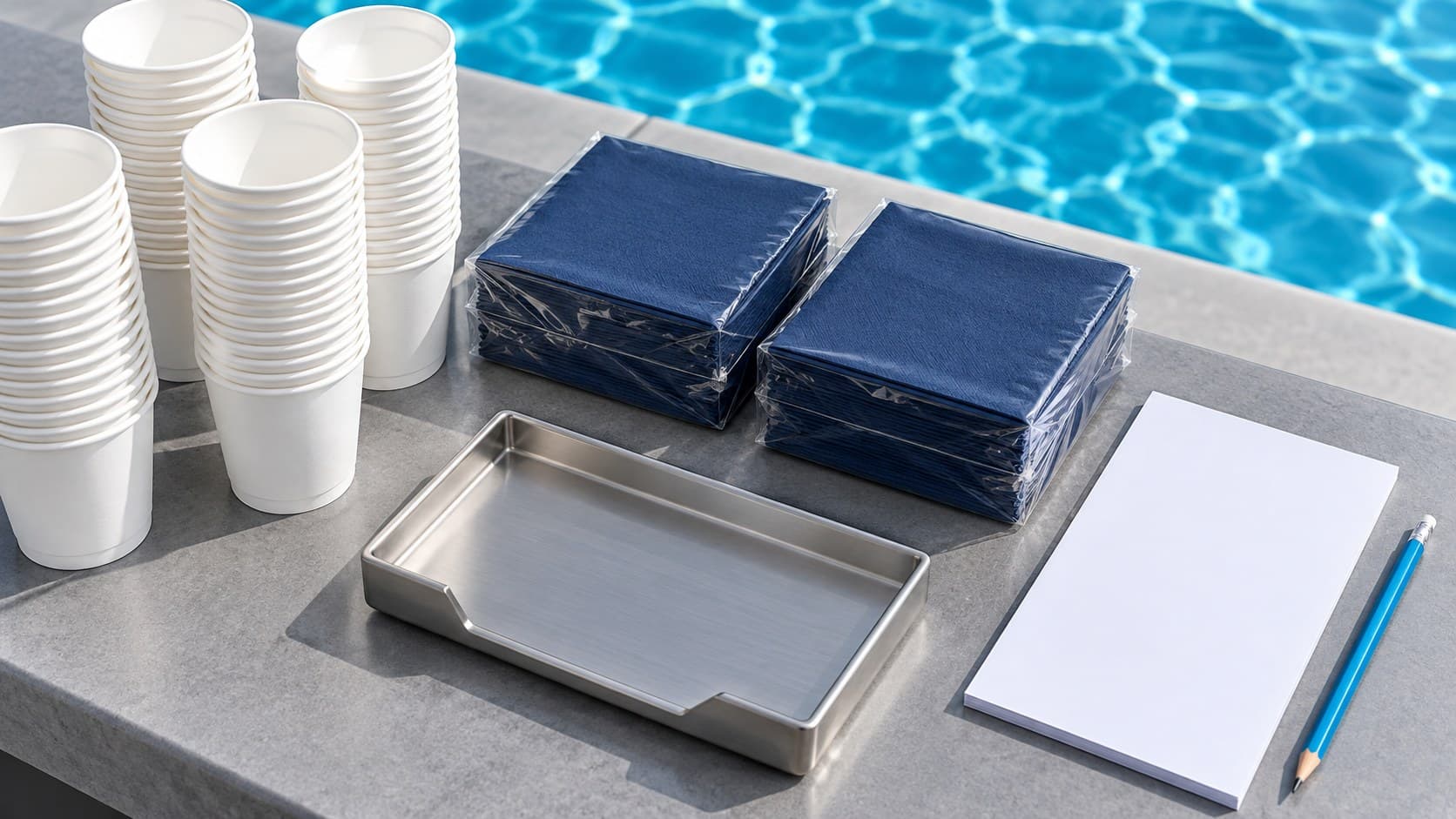
The snack bar is closed for the season, but nobody is quite sure what is left. One volunteer remembers ordering cups. Another remembers moving a case into the clubhouse. The next purchasing list starts with “probably need more,” and the same uncertainty gets carried into spring.
You do not need an elaborate inventory project for a small counter. You need a repeatable method that tells the next operator what is present, where it is stored, and what needs a decision. Start with a manageable group such as cups, napkins, packaged merchandise, and other ordinary supplies.
Decide what this count is meant to answer
Write the question at the top of the count sheet. Are you preparing next season's opening order, checking a disputed delivery, or explaining a difference between purchases and recorded sales? Each purpose calls for a different comparison. A physical count alone will not answer every purchasing or finance question.
For an opening order, identify usable stock and storage location. For a delivery issue, compare the received quantity with the order and delivery record. For a movement review, gather opening stock, receipts, transfers, sales where applicable, and documented adjustments. Keep the purpose clear so volunteers know what to record.
Set the scope. Decide which cupboards, back rooms, event bins, and satellite counters are included. A case stored beside the pool office can be missed if everyone assumes the snack bar count ends at the counter door. Put the locations on the sheet before assigning counters.
Choose a cutoff the team can follow
Pick a time when normal movement can pause, or define how anything moved during the count will be recorded. Tell the people who collect supplies for events. A count made while cups are being carried into another room needs a way to account for that movement.
Name one count coordinator. That person assigns locations, collects the sheets, resolves duplicate coverage, and confirms when the count is complete. The role is about keeping the process coherent, not expecting one person to count every cupboard alone.
Keep the starting records. Save the relevant stock or purchasing view at the cutoff, where available, and record the time. If the system total changes later, the reviewer should still understand what the physical count was compared against. Do not quietly replace the original comparison with a newer report.
Agree on the counting unit
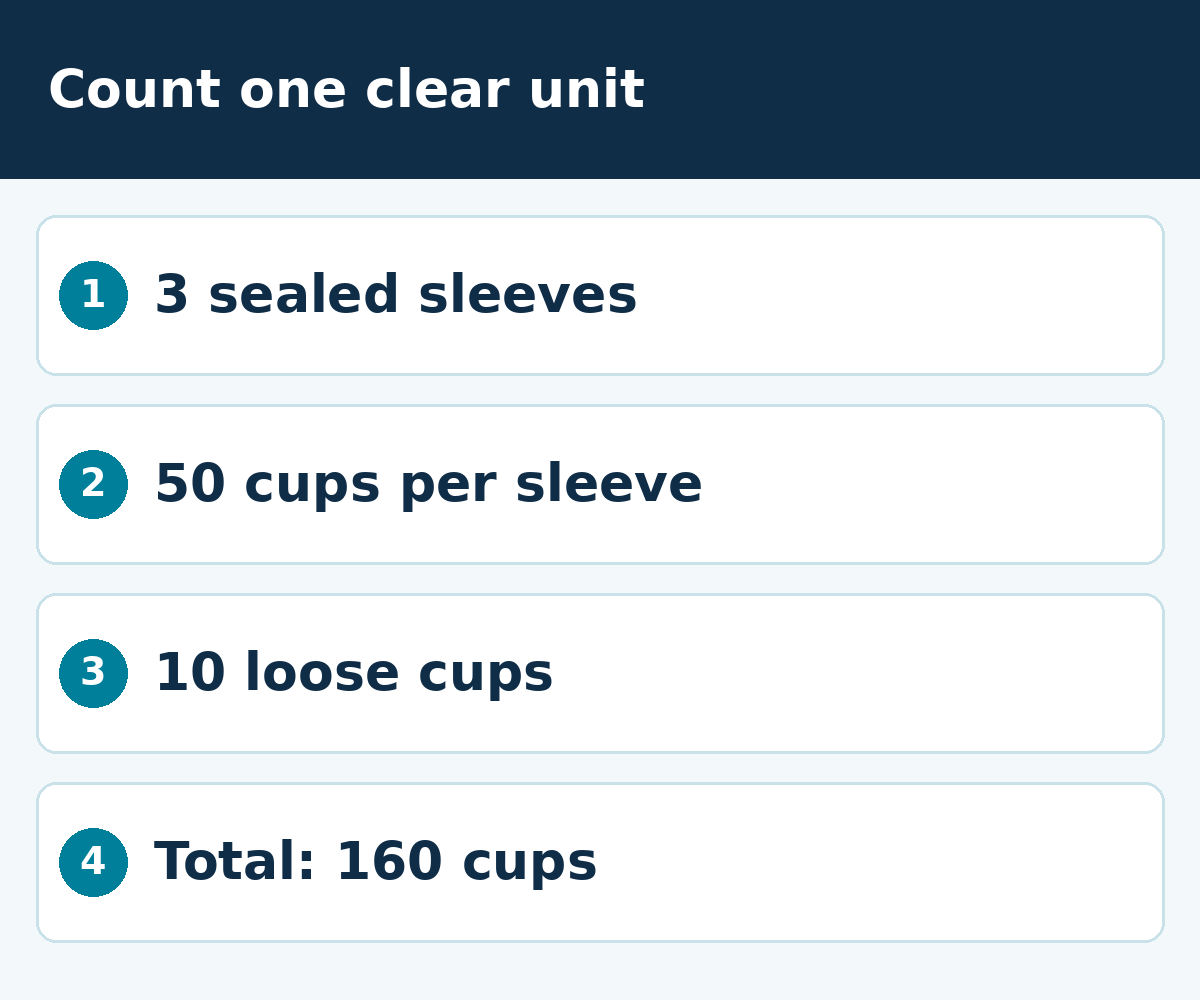
Choose a unit that the next person can understand. A case, sleeve, box, and individual item are not interchangeable. Write the pack size beside the item where it matters. For example, record cups as individual cups with the number of cups per sealed sleeve shown separately.
Count sealed packs and loose items distinctly, then convert them using the verified pack size. If the supplier changes packaging, update the conversion before using the old sheet. A correct count of “three cases” is still unhelpful if the board cannot tell whether a case contains ten sleeves or twelve.
Count what is there before explaining it
Ask counters to record the observed quantity first. Keep any explanation in a separate notes field. If someone remembers moving a box, that is useful information to investigate; it should not be used to adjust the physical count without checking the location.
Mark each completed location so it is not counted twice. If a supply is found in an unexpected place, add the location and notify the coordinator. Do not move it into an already counted area without recording the move, or the same item may appear in both totals.
For an unexpected difference, recount the item and check the unit before drawing conclusions. Then check the cutoff and location coverage. A missing sleeve may be a recording problem, a transfer, damage, or something else. Treat the difference as a question to resolve rather than an accusation against the last person on shift.
Separate quantity from condition
Keep usable supplies separate from damaged, opened, or uncertain items that need review. Record the condition and the person responsible for deciding the next action. A cupboard full of unusable items should not make the opening-order list look complete.
Do not turn this general count sheet into food-safety instructions. Food handling and disposition belong under the club's approved procedures and the applicable local requirements. The FDA describes its Food Code as a model for retail and food-service regulation; it is not a substitute for checking the rules that apply to your facility. FDA Food Code .
Use the same discipline for cleaning products or other controlled supplies: keep the count separate from instructions on storage, handling, or disposal. Refer questions to the responsible person. The count should help identify what needs attention without encouraging an untrained volunteer to make a technical decision.
Reconcile a difference with a short trail
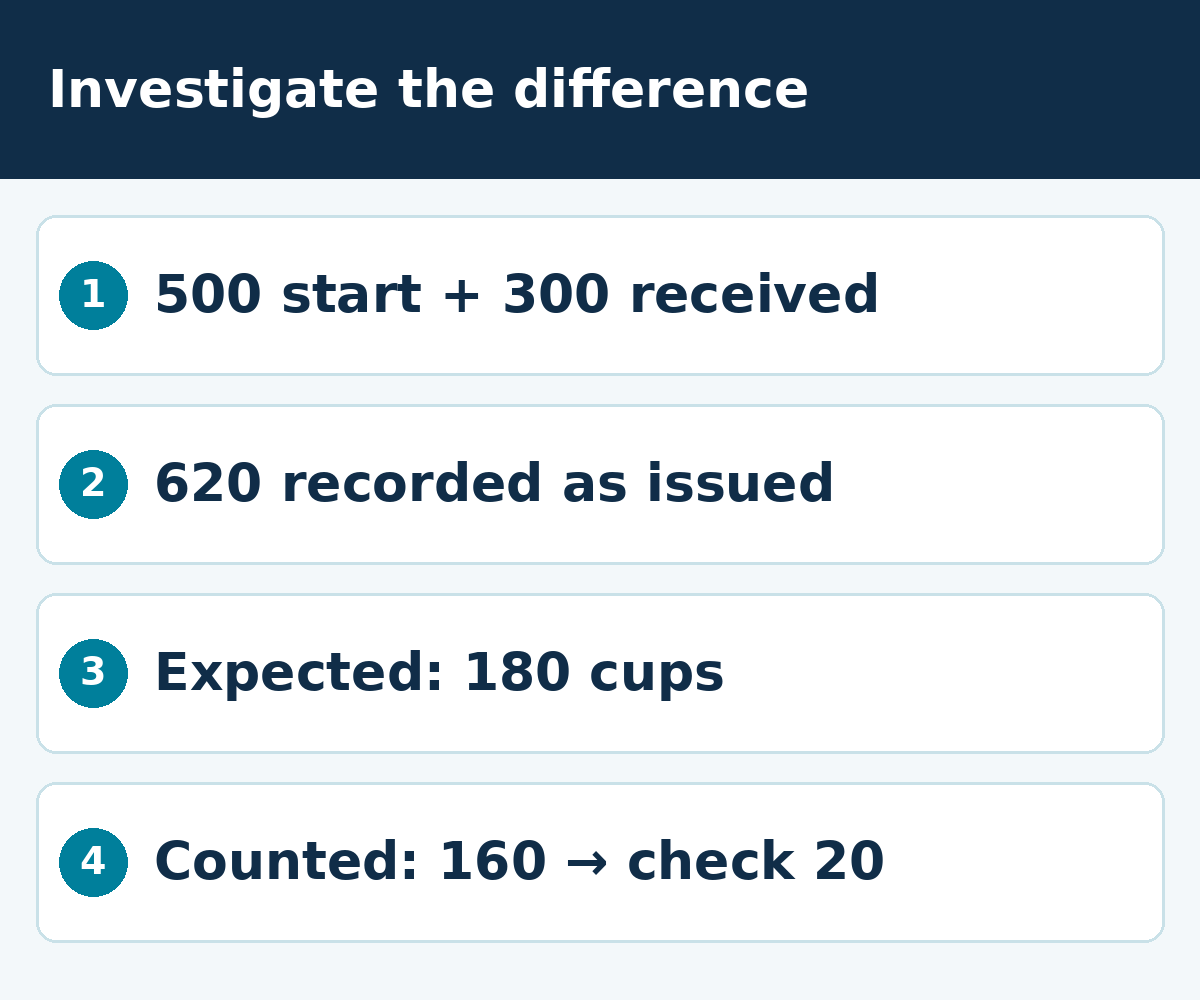
For a simple consumables example, start with 500 cups, add 300 received, and subtract 620 recorded as issued to service. That leaves an expected 180 cups. If the physical count is 160, the difference is 20 cups. Check the records that could explain that difference.
Perhaps an event transfer of 20 cups was never entered. If the transfer is confirmed, record it through the approved adjustment process with its date and reference. If it cannot be confirmed, keep the difference unresolved rather than inventing a transfer to make the figures agree.
Be careful about what “issued” means. For a consumable, it may mean moved from storage to the counter, not used by a customer. Do not subtract both an issue and the later use from the same stock total unless your method explicitly tracks separate locations. Decide where each movement belongs before doing the arithmetic.
Keep the arithmetic visible. The next volunteer should be able to follow opening stock, receipts, movements, and the physical count without rebuilding your calculation. A short reconciliation note is enough when it includes the units and the source records.
Do not confuse sales with stock movement
A sale, a complimentary item, a damaged item, and a transfer need different explanations in the club's records. Decide how each will be recorded during the season. Otherwise, an end-of-season difference becomes a conversation about everything that might have happened over several months.
For items sold at the register, compare like with like. A sales report for a product bundle may not describe the component supplies in the same unit used on the shelf. Check the product setup and the reporting scope before treating a difference as missing stock.
PoolPulse's POS page describes snack-bar sales, prepaid balances, and account charging connected to the household record. It does not by itself establish that your required stock-count or purchasing workflow is included. Use the sales information as one input and confirm the inventory process separately. PoolPulse POS and snack bar .
Turn the count into an opening order
Start the proposed order with the usable quantity actually available. Add the amount needed for your planned opening period, then consider confirmed incoming orders. Keep the reasoning beside the proposed purchase so a second person can review it without knowing last season's cupboard by heart.
Use the club's own operating plan. A larger program schedule or a different opening weekend may change the need. Ask the manager what has changed before copying last year's order. Avoid adding a large buffer simply because the records are uncertain; resolve the uncertainty where possible.
Have the appropriate person approve the order. Record the supplier, item, pack size, quantity, expected arrival, and storage location. When it arrives, check it against that record. A count becomes more useful when the next purchasing cycle preserves the same units and references.
Make storage understandable to the next operator
Give each counted location a simple name used on the sheet and in the room. “Clubhouse cupboard B” is easier to follow than “where we usually put them.” Label shelves in a way that fits the club's approved storage procedures and makes the location clear to a new volunteer.
Keep an accessible summary of usable opening stock, items awaiting a decision, and orders already placed. Put the detailed sheets behind it. The next operator should be able to prepare service without reading every reconciliation note, while still having a route to the detail when a question arises.
Assign a person to maintain the record between closeout and reopening. Off-season events can use supplies too. If a case is removed in January, the spring count should not be compared with an untouched September total as though nothing happened in between.
Handle shared spaces and borrowed supplies
If the club shares storage with swim teams, event organizers, or another program, define which supplies belong in the snack-bar count. Label shared and reserved items clearly. Do not include another group's stock in the available opening quantity because it happens to be on the same shelf.
Use a small transfer record when supplies move between groups. It should identify the item, quantity, unit, date, source, destination, and person recording the move. Keep the process easy enough that someone can complete it while organizing an event.
If borrowing is allowed, explain whether items will be returned, replaced, or charged through an approved arrangement. The count coordinator should not have to negotiate those terms at closeout. Put unresolved borrowing on the action list and let the responsible manager settle it.
Review the procedure without blaming the counters
After the count, ask where the sheet was hard to use. Were pack sizes missing? Did two people cover the same cupboard? Were receipts stored somewhere the reviewer could not access? Improve the specific step that caused trouble rather than adding a general instruction to “be more careful.”
Practice with one item before the next full count. Ask a new volunteer to locate it, identify the counting unit, record the quantity, and explain a sample transfer. Keep the instructions beside the work and see whether they are enough. A procedure that needs constant verbal rescue is not ready for an unfamiliar team.
Record the change you made and who owns the current version. Connect larger issues to your end-of-season debrief . If the same supplies disappear from the purchasing picture every year, the debrief should end with a named process change, not another note that inventory was confusing.
Bring the right questions to a platform walkthrough
Ask how the platform identifies sold items, handles voids or corrections, and reports the period you want to compare. Show the presenter your actual counting unit and explain any bundles or shared locations. Ask which parts are supported and which remain an external club procedure.
Keep a short record of the answers. A clear boundary is better than assuming that a POS screen automatically answers purchasing, inventory, storage, and supplier questions. If another tool or manual sheet remains necessary, give that handoff an owner and a consistent reference.
Test an ordinary sale and a correction, then find both in the report. The person reviewing the stock should understand what the report includes without asking the cashier to reconstruct the day. That is the practical connection between a useful sales record and a better closeout conversation.
Leave these five things ready
- A dated physical count with clear locations and units.
- A separate list of usable stock and items awaiting a condition decision.
- A reconciliation trail for differences, including unresolved questions.
- A reviewed opening-order proposal that accounts for stock and orders already placed.
- A named owner for off-season movements and the next count.
The result should make spring easier for someone who was not there at closing. Book a PoolPulse walkthrough and bring one snack-bar reporting question, so you can see how the sales record will support the club's own counting and purchasing process.

Before You Sell Guest Passes for 2027, Decide What They Actually Allow
Build a club guest pass policy staff can apply consistently, covering sponsors, limits, payment, exceptions, records, and opening-day testing.

Before You Approve Your 2027 Club Budget, Count the Work Between Your Systems
A practical way to expose the software, labor, handoff, and transition costs that ordinary budget lines miss.

The Repair Was Reported. Who Checked That It Was Finished?
Make repair handoffs clear with named owners, agreed completion evidence, recorded verification, and useful staff instructions.
Want to see if PoolPulse is a good fit for your club?
Book a walkthrough and we'll show you exactly how PoolPulse can help based on your club's needs, goals, and current processes.