

Handling Staffing Issues at Your Swim Club in 2026
Learn practical strategies to solve staffing issues at your swim club. From hiring lifeguards to managing front desk schedules effectively.


Running a swim club in 2026 means dealing with staffing issues that seem to pop up at the worst possible times. You're not alone if you've scrambled to find lifeguards right before summer opens, juggled instructor schedules during lesson season, or wondered why your front desk keeps calling in sick on the busiest weekends. These challenges affect every aspect of your operation, from member satisfaction to your ability to keep the doors open safely. Let's walk through what's really happening with swim club staffing and how you can tackle these problems head-on.
Why Swim Clubs Face Unique Staffing Challenges
Your club operates differently than most businesses, and that makes staffing harder.
Think about it. You need lifeguards with specific certifications, swim instructors who can actually teach, front desk staff who understand membership systems, and maintenance workers who know pool chemistry. That's already a tall order. Now add the seasonal element. Most clubs see their highest demand from May through August, but you can't just flip a switch and double your staff overnight.
The labor market has shifted dramatically. Today's potential employees want flexibility, competitive pay, and work that fits around their other commitments. Staffing shortages continue to erode customer experience across industries, and swim clubs feel this pressure acutely.
The Certification Bottleneck
Here's a problem you know well: not everyone can guard or teach.
Lifeguard certification takes time and money. Red Cross courses run several days, cost a few hundred dollars, and require recertification every two years. You might find enthusiastic candidates, but if they're not certified, you're looking at weeks before they can actually work. Some clubs try to solve this by offering to pay for certifications, only to have new hires leave right after getting credentialed.
Swim instructors face similar barriers. You need people who can swim well and have the patience to teach a scared five-year-old. Those individuals don't grow on trees.
Common Staffing Issues That Disrupt Operations
Let's get specific about what goes wrong and when.
Last-Minute Callouts
It's Saturday morning, the pool opens in an hour, and your lead lifeguard texts that they're sick. Now what? You start calling down the list, hoping someone can cover. Maybe you find someone. Maybe you don't. If you can't, you might have to close certain areas or cancel activities.
These situations stress everyone out. Your remaining staff gets stretched thin, members notice reduced services, and you spend your day fighting fires instead of managing the club.
Seasonal Hiring Pressure
Every spring, you compete with every other pool, summer camp, and seasonal business for the same small group of certified lifeguards and instructors.
The clubs that hire early get first pick. The ones that wait often settle for whoever's left or operate understaffed all summer. Understanding how to handle these staffing issues requires planning months in advance, not weeks.
High Turnover Rates
You train someone, they work a season, and then they're gone. College students graduate. High school kids get different summer jobs. Experienced staff burn out or move on.
This creates a constant need to recruit and train. Every new hire represents an investment of time before they're truly productive. Some clubs estimate it takes 2-3 weeks before a new front desk staffer really understands the systems and can handle member questions independently.

How Staffing Issues Impact Your Members
When you're short-staffed, members notice immediately.
The front desk line gets longer. Phone calls go to voicemail. Questions about billing or registration take days to answer instead of minutes. Lesson slots fill up because you don't have enough instructors. Lane availability shrinks because you can't staff all pool areas.
Your members don't care about your hiring challenges. They care that they can't get their kid into swim lessons or that the pool closes early on weekends. Some will complain directly. Others just won't renew next season.
The Revenue Connection
Here's the painful part: staffing issues directly hit your bottom line.
- Fewer instructors = fewer lesson slots = less lesson revenue
- Reduced desk coverage = slower registration processing = delayed payments
- Early closures or limited hours = unhappy members = higher attrition
- Constant training cycles = higher labor costs per hour worked
Some clubs lose thousands of dollars each season simply because they can't staff enough swim lesson sessions to meet demand. Modern swim club management software can help you track these patterns and make better decisions, but the fundamental staffing constraint still limits what you can offer.
Practical Solutions That Actually Work
Let's talk about what you can do right now to reduce these headaches.
Start Recruiting Earlier Than You Think
If you want good staff for summer, you need to start hiring in January or February. Post jobs in December if possible.
Target these groups:
- College students home for summer (they often have lifeguard certs already)
- Teachers looking for summer income (great for instruction roles)
- Retirees who want part-time work (excellent for front desk)
- Previous season staff (retention is easier than recruiting)
Create a waitlist of qualified applicants. When someone calls out or quits, you already have names to contact instead of scrambling.
Build Scheduling Flexibility Into Your Model
Not everyone can work every shift. Accept this reality and plan accordingly.
Use these strategies:
- Cross-train staff so lifeguards can cover desk shifts and vice versa
- Offer varied shift lengths (some people prefer 4-hour shifts, others want 8)
- Create on-call positions for people who want occasional hours
- Split peak shifts between multiple people to avoid burnout
The more flexible you are, the larger your available labor pool becomes. A parent might not be able to work 40 hours weekly but could reliably cover Tuesday and Thursday mornings.
Pay Competitively (Or Get Creative)
You probably can't outbid the country club across town, but you can offer other benefits.
Consider:
- Free family memberships for staff
- Flexible scheduling that actually works around their other commitments
- End-of-season bonuses for completing the full season
- Paid certification renewals
- First dibs on preferred shifts
Sometimes the combination of decent pay plus real flexibility beats slightly higher pay with rigid scheduling.
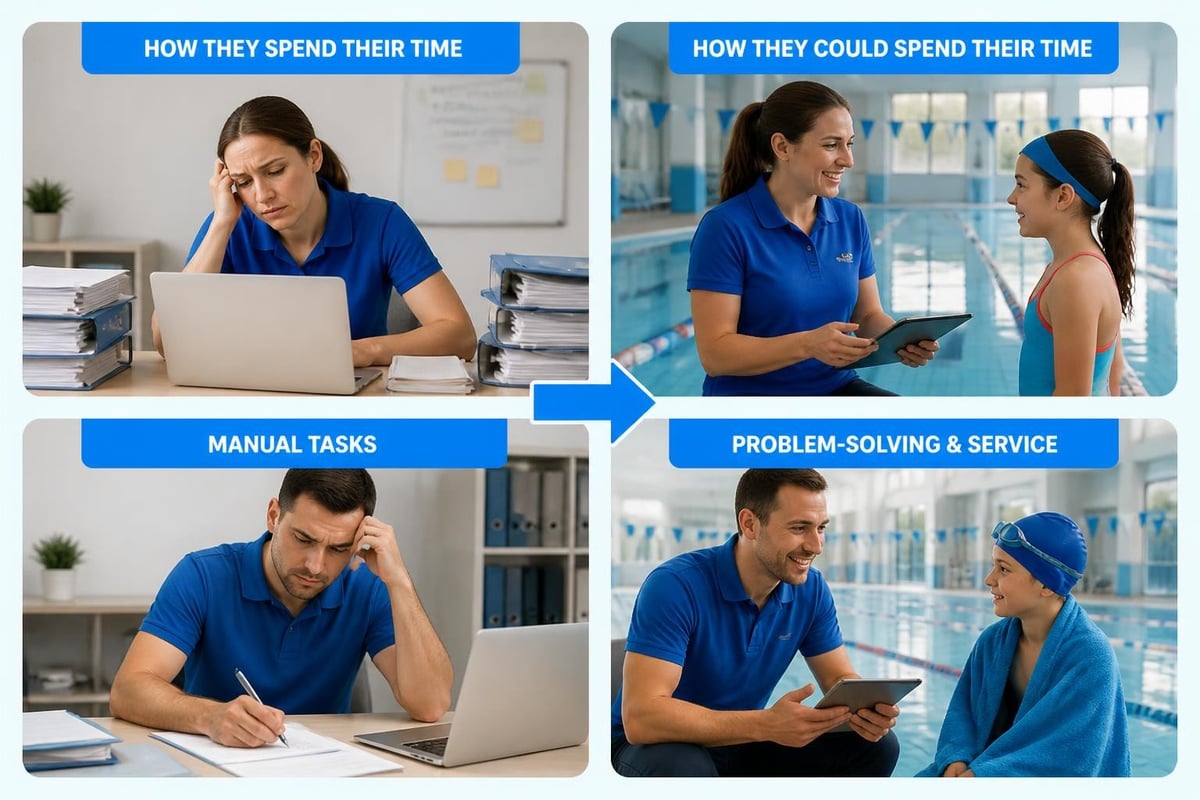
Reduce Administrative Burden With Better Systems
Here's something you might not have considered: staffing issues get worse when your administrative systems create extra work.
If your front desk staff spend half their time fixing billing errors, hunting for member information across multiple spreadsheets, or manually processing renewals, you need more staff hours to handle the same member base. Streamlining operations through features designed for swim clubs means you can serve more members with the same staffing levels.
Think about it this way: would you rather hire another part-time desk person or give your current team tools that cut their busywork in half?
Managing Your Current Team More Effectively
Even with perfect hiring, you need to manage the people you have well.
Communication That Prevents Problems
Most last-minute staffing issues stem from poor communication somewhere along the line.
Set up these basics:
| Communication Tool | Purpose | Frequency |
|---|---|---|
| Staff group text | Shift coverage requests | As needed |
| Weekly schedule email | Confirmed shifts | Every Sunday |
| Monthly staff meeting | Updates, concerns, feedback | First Monday |
| One-on-ones | Individual check-ins | Quarterly |
When people feel informed and heard, they're less likely to quit suddenly or call out without good reason. You'll also spot potential problems (someone struggling with their schedule, considering leaving) before they become crises.
Recognition Matters More Than You Think
Your staff members work with screaming kids, demanding members, and pool chemicals. A little recognition goes a long way.
Simple things that work:
- Publicly acknowledge good work in staff meetings
- Give "employee of the month" parking spots
- Send birthday cards
- Provide food during peak busy periods
- Actually say thank you regularly
These cost almost nothing but significantly impact retention. Common staffing problems often have surprisingly simple solutions rooted in basic appreciation.
Clear Expectations From Day One
New hires should know exactly what's expected before their first shift.
Create written guides for each position covering:
- Specific duties and responsibilities
- How to handle common situations
- Who to contact for different problems
- Standards for attendance and punctuality
- Growth opportunities within the club
When expectations are clear, performance improves and conflicts decrease. You also have a reference point for addressing issues when they arise.
Technology Solutions for Staffing Challenges
Modern tools can't hire people for you, but they can make staffing issues less painful.
Automated Scheduling Systems
Stop managing schedules in spreadsheets. Dedicated scheduling tools let staff:
- See their schedules from their phones
- Request shift swaps without calling you
- Mark availability weeks in advance
- Receive automatic reminders before shifts
You save hours each week on schedule management and reduce no-shows because people get automatic reminders.
Integrated Management Platforms
When your member management, billing, scheduling, and check-in systems all talk to each other, your staff spend less time on busy work.
A front desk person should be able to:
- Answer billing questions without opening three different programs
- Register new members without printing forms
- Process renewals in under two minutes
- Check in members with a quick scan
Member management software built specifically for swim clubs understands these workflows. Generic systems make staff work harder, which means you need more staff hours to accomplish the same tasks.
Self-Service Member Portals
Here's a game-changer: what if members could handle routine tasks themselves?
When members can:
- Update their own information online
- Register for lessons through a portal
- View their billing history
- Reserve guest passes
Your desk staff field fewer routine questions and can focus on complex issues that actually require human attention. This effectively multiplies your staffing capacity without hiring anyone new.
Planning for Peak Seasons
Summer brings staffing issues to a head for most clubs.
The Spring Preparation Timeline
Here's what works:
January-February:
- Post job openings
- Review previous season's schedule data
- Contact returning staff about their availability
March:
- Complete first round of interviews
- Make initial offers
- Schedule certification courses for promising candidates
April:
- Finish hiring
- Begin training sessions
- Finalize summer schedules with staff input
May:
- Run dress rehearsals
- Address any remaining gaps
- Create backup plans for each position
The clubs that follow this timeline start summer fully staffed. The ones that start hiring in May spend all summer playing catch-up.
Building Your Bench
Athletic teams don't just have starters. They have benches full of people ready to play when needed.
Your club needs a bench too:
- Substitute list: People who want occasional hours when you're short
- Retiree pool: Former staff willing to help during emergencies
- Parent volunteers: Members who can cover non-certified roles temporarily
- Partnership agreements: Arrangements with other clubs to share staff during coverage gaps
Building these relationships before you need them prevents panic when someone quits unexpectedly.

Financial Realities of Staffing
Let's talk numbers because staffing issues always come down to budget eventually.
What Does Adequate Staffing Really Cost?
Here's a rough breakdown for a mid-sized swim club:
| Position | Staff Needed | Hourly Rate | Hours/Week | Season Cost |
|---|---|---|---|---|
| Lifeguards | 8-12 | $15-18 | 200-300 | $45,000-$81,000 |
| Instructors | 4-8 | $18-25 | 80-160 | $28,800-$60,000 |
| Front Desk | 3-5 | $14-16 | 60-100 | $13,440-$24,000 |
| Manager | 1-2 | $25-35 | 40-80 | $15,000-$42,000 |
| Total | 16-27 | - | - | $102,240-$207,000 |
These numbers might seem high, but understaffing costs more in lost revenue, member attrition, and potential safety issues.
When Hiring Delays Create Bigger Problems
Delaying hiring decisions increases workforce risks in several ways you might not immediately see.
If you wait to hire until you're desperate:
- You accept lower-quality candidates
- You pay rush fees for background checks and certifications
- You skip thorough training, leading to mistakes
- Your current staff burns out from covering extra shifts
- You lose revenue from services you can't offer
The cost of hiring one extra person in April is almost always less than the combined costs of these problems in June and July.
Legal Considerations You Can't Ignore
Staffing issues can create legal exposure if you're not careful.
Safety and Certification Requirements
You probably know that operating without proper lifeguard coverage is illegal and dangerous. But do you know the specific requirements in your state?
Most states mandate:
- Minimum number of lifeguards per swimmers in the water
- Specific certification requirements (Red Cross, YMCA, Ellis, etc.)
- Recertification timelines
- Documentation of training and credentials
Keep meticulous records. If something happens and you can't prove your staff was properly certified and positioned, you're exposed to significant liability.
Fair Labor Practices
Make sure you're handling these correctly:
- Overtime pay (anything over 40 hours weekly for most positions)
- Break requirements (varies by state)
- Minor labor laws (work permits, hour restrictions, prohibited tasks)
- Equal opportunity employment
Many clubs accidentally violate labor laws simply because they don't know the rules. Talk to an employment attorney or HR consultant to audit your practices.
Retention Strategies That Reduce Turnover
Keeping good staff is easier than finding new staff.
Career Pathing at Your Club
Even though most positions are part-time or seasonal, you can still offer growth.
Create a clear progression:
- New lifeguard → Senior lifeguard → Head lifeguard
- Junior instructor → Lead instructor → Instructor coordinator
- Desk staff → Lead desk → Assistant manager
Each step should include:
- Modest pay increases
- Additional responsibilities
- Skills training
- Leadership opportunities
When people see a future at your club, they stick around longer.
Exit Interviews Reveal Patterns
When someone leaves, ask why. Really listen to their answer.
Are multiple people mentioning:
- Scheduling conflicts you could fix?
- Pay rates that need adjustment?
- Management issues you should address?
- Facility problems driving them away?
These conversations provide the roadmap for reducing future turnover. You just have to act on what you learn.
Building Relationships With Local Programs
You don't have to solve staffing issues alone.
Partner With Schools and Universities
Contact athletic departments, recreation programs, and student employment offices at nearby colleges and high schools.
Offer to:
- Post jobs through their systems
- Sponsor certification courses for students
- Provide internship opportunities
- Serve as a reference for future employment
These relationships create a steady pipeline of potential candidates who already know about your club.
Connect With Certification Providers
Work directly with organizations that offer lifeguard and instructor certifications.
Some clubs:
- Host certification courses at their facility
- Offer discounted memberships to newly certified individuals
- Create referral agreements where certification instructors send candidates your way
- Sponsor scholarships for certification courses in exchange for employment commitments
This proactive approach means you're building your candidate pool while others are just posting jobs.
How Modern Software Reduces Staffing Pressure
Here's something most club managers don't realize: the right software doesn't just organize data; it actually reduces how many staff hours you need to operate effectively.
Automation Handles Routine Tasks
Think about all the repetitive work your staff does:
- Sending payment reminders
- Processing auto-renewals
- Confirming lesson registrations
- Generating reports for the board
When software handles these automatically, your team focuses on tasks that actually require human judgment and interaction. You might discover you can serve 200 families with the same desk coverage that previously handled 150.
Better Information Means Faster Service
When staff can instantly access complete member information, check-ins that took three minutes take thirty seconds. Questions that required callbacks get answered immediately. Problems that needed manager involvement get resolved at the front desk.
Speed matters because it determines how many members each staff person can effectively serve per hour.
Data-Driven Scheduling Decisions
Instead of guessing how many people you need when, AI-powered insights can show you exactly when your peak traffic occurs, which services drive the most questions, and where bottlenecks consistently appear.
This lets you schedule staff precisely when and where they're needed most, reducing both understaffing during rushes and overstaffing during slow periods.
Creating Your Staffing Playbook
Every club should document what works and what doesn't.
Build Institutional Knowledge
When you finally figure out the perfect staff mix for summer weekends or the ideal way to handle instructor schedules during lesson intensives, write it down.
Create a playbook that includes:
- Hiring timelines and sourcing strategies
- Interview questions that predict success
- Training checklists for each position
- Schedule templates for different seasons
- Contact information for backup coverage
- Solutions to common problems
This prevents you from reinventing the wheel every season and provides continuity when managers change.
Review and Revise Annually
Your staffing playbook should evolve.
After each season, gather your team and ask:
- What staffing issues caused the biggest problems?
- Which positions were hardest to fill?
- Where did we have too much or too little coverage?
- What would we change about hiring or training?
- Which staff members exceeded expectations and why?
Use these insights to improve your approach for next season.
The Real Cost of Ignoring Staffing Issues
Let's be honest about what happens when you don't address staffing issues proactively.
Your best staff members leave because they're constantly covering for empty positions. Member satisfaction drops because service quality declines. Revenue suffers because you can't offer all your programs. Your own stress levels become unsustainable as you personally fill gaps.
Eventually, something breaks. Maybe you lose a major member family who's fed up with service issues. Maybe you face a safety incident because coverage was inadequate. Maybe you burn out and start questioning why you're running a club at all.
These aren't scare tactics. They're the predictable outcomes of letting staffing issues persist without addressing root causes.
Taking Action This Season
You can't fix everything overnight, but you can start somewhere.
Pick your biggest staffing pain point right now:
-
Can't find enough lifeguards? Start recruiting for next season today, contact certification programs, and consider hosting a cert course at your facility.
-
Front desk always overwhelmed? Evaluate whether better tools could reduce their workload before hiring another person.
-
High turnover every season? Interview departing staff to understand why and address the top two issues they mention.
-
Last-minute callouts disrupting operations? Build a substitute list and create clear protocols for coverage requests.
Choose one thing. Make progress on it this month. Then pick the next thing.
Staffing issues won't disappear completely. Running a swim club means managing people, and people bring complexity. But you can absolutely make these challenges smaller, more predictable, and less stressful than they are right now.
Staffing issues affect every swim club, but they don't have to control your operation or ruin your season. The strategies we've covered, from earlier recruitment to better systems, can transform how you manage your team and serve your members. PoolPulse helps swim clubs reduce administrative burden on staff, automate routine tasks, and serve more members with the same team size through AI-powered tools built specifically for how clubs actually operate. See how modernized club management software can ease your staffing pressure and improve your entire operation.

Five Front-Desk Tasks Your Swim POS Should Handle
Your front desk shouldn't need three systems to check in a swimmer. Here's how modern swim POS systems save time and reduce errors.

Five Ways Clubs Lose Money Without Knowing It
Most swim clubs leak thousands in revenue each season. Learn five hidden profit drains and practical fixes to recover revenue now.

The Swim Club Software Test Every Board Should Run
Run this simple test to see if your swim club software actually saves time or creates more work. Real scenarios, honest questions, better tools.
Want to see if PoolPulse is a good fit for your club?
Book a walkthrough and we'll show you exactly how PoolPulse can help based on your club's needs, goals, and current processes.