

Swim-Club Software Growth Signals: What the Market Shift Means for Your Club
Sports-management software is growing quickly, and that matters because member expectations, self-service, and operational complexity are rising for swim clubs too.

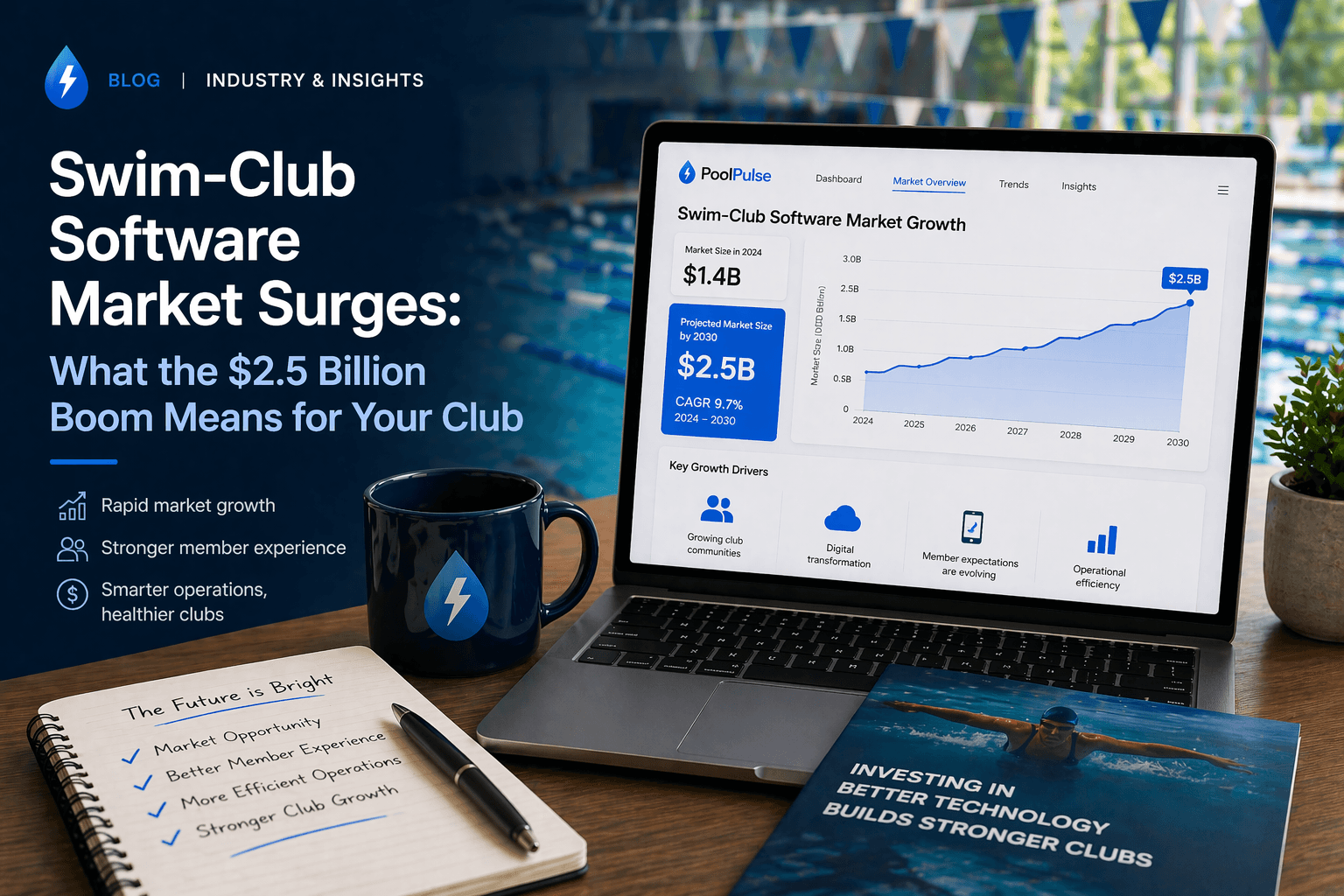
The swim-club software category is not standing still.
Broader market research from Grand View Research shows the surrounding sports-management software category growing from $4.26 billion in 2025 to $14.79 billion by 2033.
That report covers a broader category than swim clubs alone, but it still tells a useful story:
clubs are moving away from manual operations, and software expectations are rising with them.
Why this matters to swim clubs now
Market growth is not just an investor story. It is an operator story.
As more clubs adopt modern platforms, the baseline expectation changes for everyone else:
- families expect better self-service
- boards expect cleaner reporting
- staff expect fewer manual handoffs
- volunteers expect tools they can learn quickly
That does not mean every club needs the biggest or most complex platform on the market. It does mean "we can keep patching this together for another few seasons" gets riskier over time.
What rising adoption usually signals
1. Members want digital convenience
Online payments, mobile-first check-in, digital forms, and cleaner renewal flows are increasingly normal. If a club still depends on paper packets or spreadsheet-driven follow-up, the gap becomes more visible every season.
2. Boards want faster answers
As clubs handle more programs, guest activity, staffing decisions, and event workflows, leadership expects better visibility into revenue, renewals, attendance, and exceptions. That is hard to deliver from disconnected tools.
3. Volunteers have less tolerance for admin drag
Modern clubs still rely heavily on volunteers and seasonal staff. That makes simple systems more important, not less. The more brittle the workflow, the harder it is to onboard new people and keep them engaged.
Why waiting can cost more than moving
Modernization feels easier to postpone than it actually is.
The longer a club waits, the more operational debt tends to build:
- more legacy spreadsheets
- more exceptions hidden in email threads
- more inconsistent member records
- more seasonal knowledge trapped with one person
That is why the timing question is usually not "Should we modernize eventually?"
It is:
Do we want to modernize while we still have the space to do it calmly?
Clubs that move earlier usually have more control over the migration, the data cleanup, and the rollout pace. Clubs that wait often migrate only after a painful renewal season, a front-desk breakdown, or a leadership transition.
What a smart modernization path looks like
A strong platform does not need to solve every future idea on day one. It does need to solve the operational core well.
For most clubs, that means starting with:
- Member Management
- Memberships & Packages
- Billing & Payments
- Check-Ins & Access Control
- Notes & Notifications
Then, as the club is ready, it can extend into:
The practical takeaway
The market is growing because more organizations are deciding that manual coordination is no longer acceptable as the operating system.
For swim clubs, that should be read as encouragement, not pressure.
The opportunity is not to chase software because it is trendy. The opportunity is to modernize before manual work becomes the thing that limits member experience, renewal performance, and volunteer sustainability.
If your club already feels the strain in renewals, front-desk flow, or event coordination, that is usually your signal that the timing is right to evaluate a more connected platform.
Sources referenced

Before the Pool Closes: The 60-Minute Season Debrief Every Swim Club Should Run
Before the details of the season fade, use this focused 60-minute swim club debrief to capture operational problems, protect what worked and turn real evidence into priorities for next year.
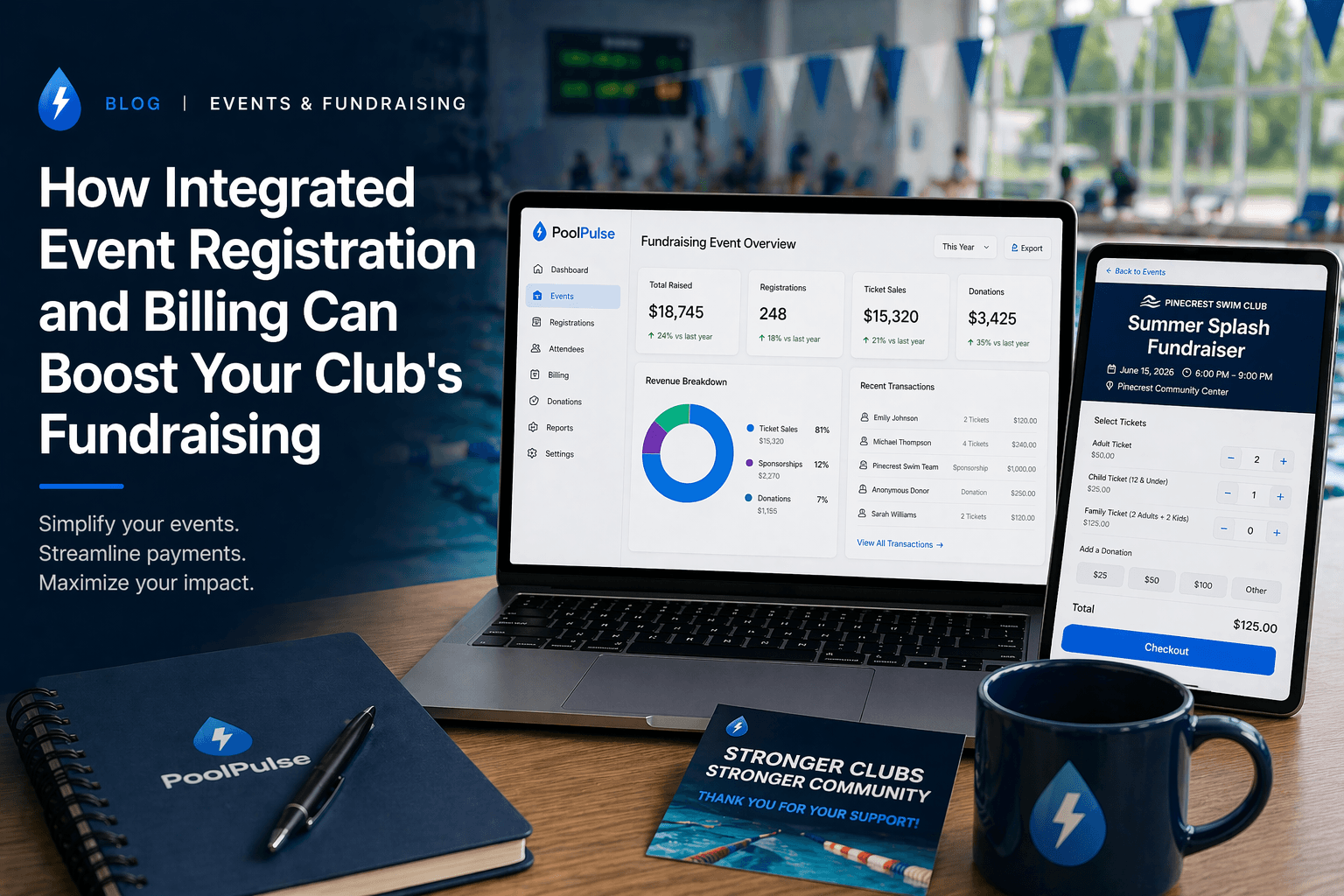
How Integrated Event Registration and Billing Can Boost Your Club's Fundraising
Fundraising events work better when registration, payment, reminders, and follow-up live in one connected workflow.
Want to see if PoolPulse is a good fit for your club?
Book a walkthrough and we'll show you exactly how PoolPulse can help based on your club's needs, goals, and current processes.