

A Weather Alert Is Not a Club Communication Plan
Build a weather communication ladder that connects the trigger, authority, affected groups, shelter action, updates, and reopening decision.


A radar alert, a lifeguard whistle and a social post are three separate signals unless the club defines how they work together. Members need to know what to do now. Staff need to know who can stop an activity and where to find the current decision.
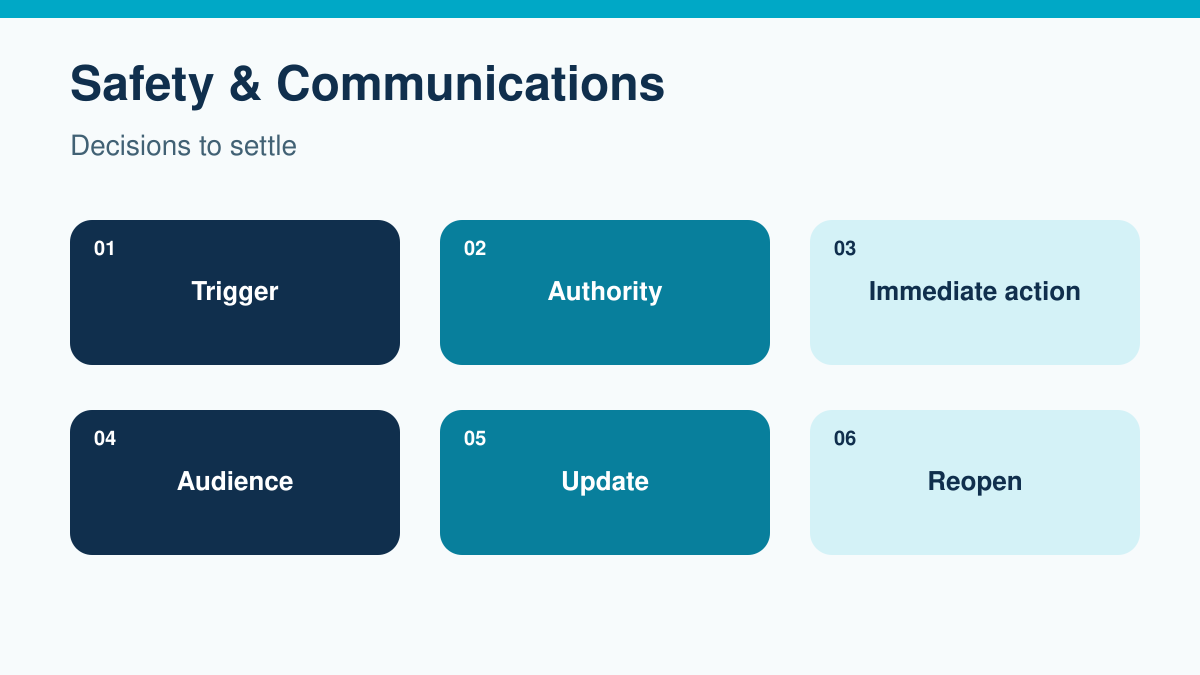
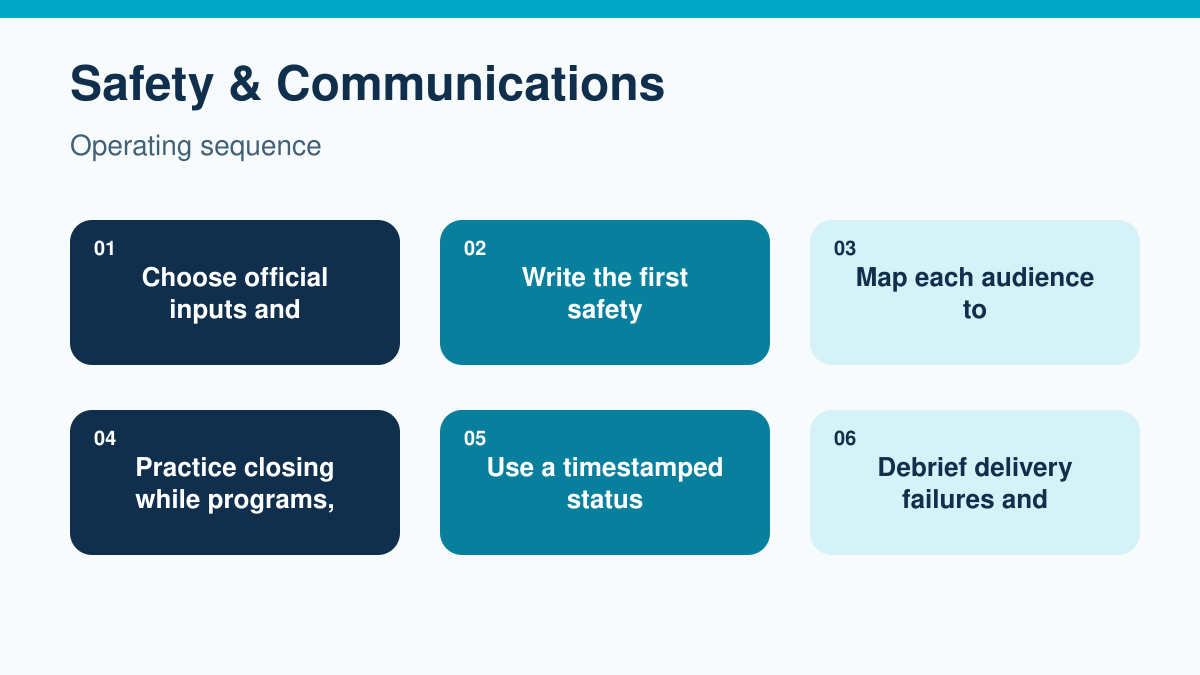
A weather communication ladder connects six decisions: trigger, authority, immediate action, audience, update and reopening. It should work when the usual manager is absent, the front desk is busy and some families have already left home. The plan must also distinguish an urgent safety instruction from a later explanation about bookings or money.
This is an operating framework for club managers and aquatics leaders, not a substitute for a site-specific emergency plan. Build the actual procedures with qualified safety personnel and relevant local authorities. Different hazards require different protective actions. One generic instruction to “wait inside” cannot cover every situation.
1. Define the trigger before staff start debating it
List the hazards that can affect the site and identify the information used for each. Official warnings, observed thunder, water over an access road and a damaged facility can require different decisions. Specify which staff role monitors the inputs during opening hours and who takes over during breaks or shift changes.
A useful trigger includes an observable condition and the action it starts. “Watch the weather” is not enough. Staff need to know whether the condition starts closer monitoring, suspends an activity, moves people to shelter or activates another part of the emergency plan. Keep the wording consistent with the club's approved procedures.
For lightning, the National Weather Service advises immediate movement to safe shelter when thunder is heard . Do not make staff wait for an app notification before responding to thunder on site. A radar display and an observed hazard can disagree without the observed hazard becoming irrelevant.
Use weather technology as an input rather than a complete decision system. Document what happens if connectivity fails, a device loses power or two sources show different information. The backup should be something the duty team can actually access. A password known only by the general manager is not a dependable fallback.
2. Give the person on duty clear authority
Name the role authorized to suspend an activity and identify its alternate. The plan should not require an employee to reach an unavailable executive before taking the protective action already required by an approved trigger. Make the handoff explicit when the duty role changes during an active closure.
Closure authority and reopening authority may belong to different roles. A staff member who stops a lesson should know whether they can later restart it or must wait for a designated manager. This distinction prevents a well-intentioned instructor from reopening one area while the rest of the club still considers it closed.
Assign communication work separately where staffing allows. The person directing people to shelter should not also be expected to edit a website and answer every phone call. One employee can manage the status record while another sends approved notices. In a small team, define the priority order so urgent on-site instructions happen first.
Set an escalation route for conditions beyond the routine plan. If there is an injury, structural damage or an immediate threat requiring emergency services, staff should follow the emergency procedures rather than continue a normal closure checklist. Communication supports the response but must not delay it.
3. Tell people what to do, not merely what changed
“The pool is closed” leaves several questions unanswered. Should people leave the water, move away from the deck, report to a designated shelter or await supervised pickup? Write the first announcement around the required action and the approved destination. Use location names that guests can recognize without knowing staff terminology.
For lightning, NWS identifies substantial buildings with electricity or plumbing and enclosed metal-topped vehicles with windows up as shelter options. Open picnic shelters and similar outdoor structures should not be treated as equivalent protection. Check the site's actual shelter arrangements rather than assuming that anything with a roof is suitable. The NWS lightning guidance also addresses precautions indoors.
Walk the approved routes before the season. Check whether doors will be unlocked, whether the destination can accommodate the expected crowd and how staff will assist people with mobility or communication needs. A route that works for five employees may not work for a crowded family event. Resolve capacity questions during planning.
Account for children in supervised programs. Staff need the current participant list and the established reunification procedure. Do not tell children to find their parents independently or send caregivers toward a hazardous area to collect equipment. Preserve supervision responsibilities while the activity is suspended and communicate where authorized pickup will occur.
Use hazard-specific instructions
A lightning shelter route is not automatically an evacuation route for flooding or the correct protective location for another hazard. Maintain separate procedures where necessary and make the active instruction unmistakable. When multiple hazards occur, follow the site emergency plan and instructions from responsible authorities rather than choosing whichever routine is most familiar.
The National Weather Service's flood guidance warns against entering floodwater and directs people to obey evacuation orders. A club notice should not encourage arriving families to drive through water or bypass a road closure. If access is affected, identify the closure and direct members to official travel information instead of improvising an unverified alternative route.
Heat and air-quality decisions also need their own approved criteria. Avoid copying a lightning countdown into these situations. Assign someone to maintain the relevant procedures with current local guidance and the needs of the activities involved. Staff should know where those criteria live without having to interpret a general weather dashboard during a busy shift.
4. Match each audience to an action and a channel
Begin with people on site. Use the communication methods designated in the emergency plan, with staff positioned to reach areas where announcements may not be heard. Written alerts can reinforce the instruction but should not be the only way to reach someone in the water, on a court or away from their phone.
Next reach people who are about to arrive. Use the current reservation and program lists, including recently promoted waitlist participants. Explain which activity is affected and whether they should delay travel. A general social post may help visitors but cannot establish that every registered family has received the decision.
Staff and contractors need operational detail. Tell incoming employees whether to report, whom to contact and whether their usual entry point is unavailable. Vendors may need a delivery delay. Leadership may need an incident summary, but that reporting should not crowd out the messages that help people act immediately.
Use one designated status source for the current public position and repeat its facts across channels. Record which employee owns each channel and its backup. A website banner, text message and phone script should agree on the affected areas, current status and next update time even if their wording differs.
Make notices short enough to use under pressure
A closure notice can follow a simple order: affected place, required action, current status and next update. For example: “Outdoor pool activities are suspended. Please follow staff directions to the designated shelter. The pool remains closed until an authorized reopening notice. We will provide another status update at 3 p.m.” The shelter instruction must match the actual site plan.
A message to people off site needs different wording: “The 3 p.m. outdoor swim program is suspended. Please do not travel for that program while this notice is active. We will confirm whether it can run later today in the next update at 2:30 p.m.” Use specific dates when messages may be forwarded or read later.
Do not publish a guessed reopening time merely to make the notice feel complete. An update time is a commitment to communicate, not permission to return. Clearly distinguish “next update at 3 p.m.” from “reopens at 3 p.m.” Staff should use the same distinction when responding to calls.
5. Maintain a timestamped status through the event
Create a short event log with the trigger, observation time, decision owner and actions taken. Record which areas are closed rather than using a single vague club-wide label. If indoor services continue, say so only after the responsible staff have confirmed that those services can operate under the active plan.
At every promised update, either report the new decision or confirm that the closure remains in effect. Include the next update time. This reduces the temptation for individual staff members to invent an answer because members have heard nothing. If circumstances require a faster warning, send it without waiting for the scheduled update.
Check the delivery results available from each channel. Returned email, failed texts and an unavailable website need an owned response. Do not confuse a sent count with proof that everyone has understood. On site, staff observation and direct guidance remain important, especially for people who cannot access the usual digital channels.
When correcting a message, label the correction and state what changed. Do not simply edit an old post and assume everyone will see the revision. Ask the desk to retire the earlier script. Preserve enough history internally to explain why people received different instructions at different times.
6. Treat reopening as a new decision
The National Weather Service's outdoor sports guidance says to wait at least 30 minutes after the last thunder before resuming outdoor activities. This is not a guarantee that all other reopening conditions have been satisfied. Follow the club's approved plan and any applicable requirements, including more conservative criteria where relevant.
Record new thunder observations so the waiting period is not measured from the original closure announcement. A message saying the next update is due in ten minutes must not become an informal countdown to reopening. The designated decision maker needs the current observation record, not someone's memory of when the rain eased.
Before reopening, check the site conditions required by the plan. That may include facility damage, obstructions, equipment status and required staffing. Assign checks only to people trained and authorized to perform them. Do not send an employee into a hazardous area simply to complete the inspection faster.
Confirm the program decision separately. A pool may reopen too late for the original lesson to run. Announce whether that session is cancelled, shortened under an approved arrangement or rescheduled. Avoid making families infer their booking status from a general “facilities open” message.
Record the reopening authorization and time, then update every active channel. Tell members exactly which areas are available. If a court remains closed while the pool opens, preserve that distinction in the website, desk script and staff briefing. Remove outdated signs only after the new status has been approved.
Practice the ladder during a realistic shift
Run a tabletop exercise with an active lesson, a private booking and an incoming staff shift. Start with thunder reported on site while the weather app has not refreshed. Make the usual manager unavailable. Ask each employee to identify their next action using the written plan rather than relying on whoever speaks most confidently.
Add a failed text delivery and a caregiver arriving after the first announcement. Check whether the team can locate the participant, explain the current status and maintain supervision. Then introduce another thunder observation just before the planned update. The exercise should reveal whether anyone treats the communication timetable as permission to reopen.
Use the findings to repair specific gaps. Replace an inaccessible contact list, clarify the alternate decision owner or rewrite a confusing destination. Avoid turning every issue into another long paragraph in the manual. Staff need a usable action card with access to the fuller procedures when required.
Finish the communication after the weather passes
Reconcile cancelled bookings and programs after the immediate safety response. Tell affected households when they will receive information about makeup sessions or account treatment. Do not let a front-desk employee improvise refund terms while also handling a queue of returning visitors.
Review the event log with the staff involved. Compare the first observation, protective action, notices and reopening authorization. Investigate gaps without treating every delay as individual failure. A missing backup channel or unclear division of duties is a process problem that the next shift will inherit unless it is repaired.
If your club is reviewing how operational records and member communication could work together, book a Clubward demo with this scenario in hand. Ask which parts of the ladder the proposed setup can support and what still requires separate safety procedures or communication tools. Software should support the approved decisions, not be presented as a safety guarantee.
The useful test is whether a substitute duty manager can find the current status, give the correct instruction and identify who can authorize the next change. When that answer is clear, members receive a coherent response instead of a collection of alerts that leave them guessing.
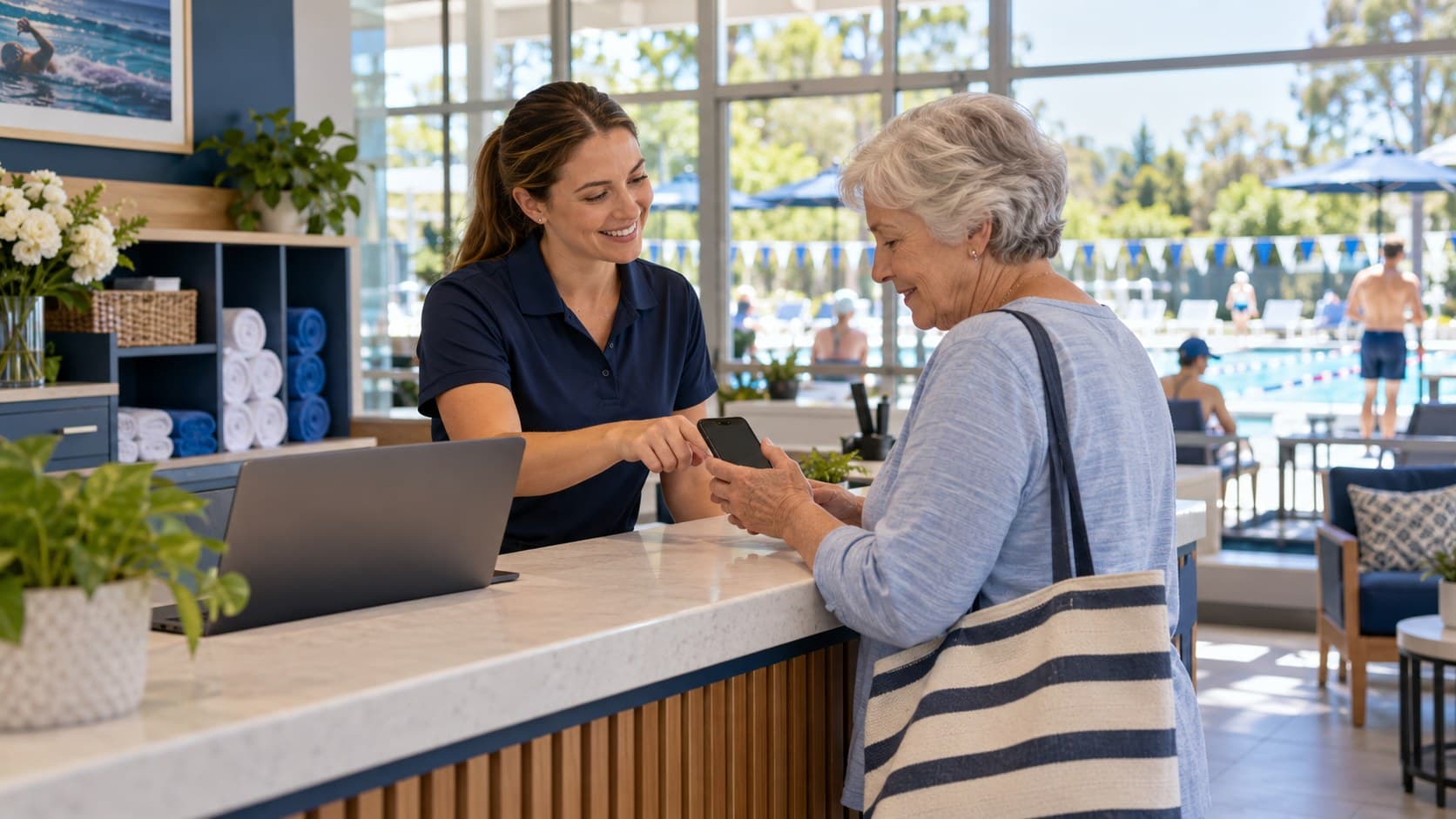
Changing Payment Methods? Plan the Member Transition Before the Invoice
A payment change looks technical until the first invoice fails, a member cannot find a receipt or staff cannot explain whether an old authorization still applies. Learn the practical decisions, owners and checks that turn the issue into a controlled club workflow.

The Program Was Cancelled. The Member Account Still Needs an Ending.
Connect the operational cancellation to attendance, communication, refunds, credits, rescheduling, and the member account.
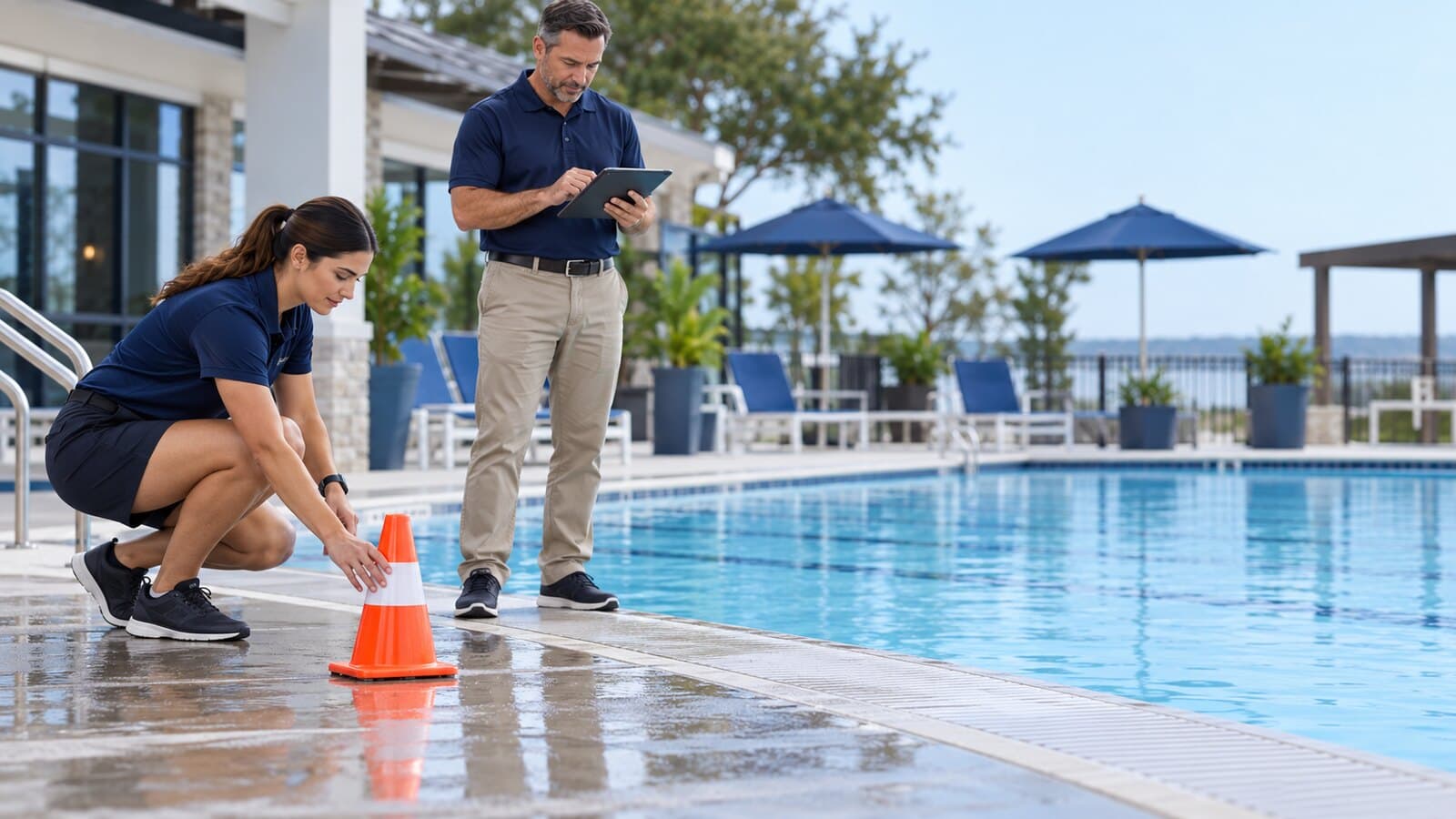
The Incident Form Is Complete. Is the Follow-Up?
Create a practical club incident follow-up process with triage, ownership, corrective actions, communication, privacy, and closure checks.
Want to see if PoolPulse is a good fit for your club?
Book a walkthrough and we'll show you exactly how PoolPulse can help based on your club's needs, goals, and current processes.