

The Swim Club Scheduling Playbook
A practical scheduling playbook for swim clubs: how to coordinate staff, reservations, billing, check-ins, maintenance and member communication before small conflicts become big problems.


It is opening weekend. The check-in line is getting longer, a lesson group is waiting on the deck, two lanes were reserved for private coaching, a birthday party has arrived early and the manager just found out the maintenance window was never moved.
That kind of chaos rarely starts at the front desk. It usually starts much earlier, when schedules, staffing, reservations, member communication and administrative deadlines drift out of sync.
For swim clubs, checking the schedule is not just a time management habit. It is an operating discipline. A good schedule tells your team what is happening, who is responsible, which members are affected, what needs to be communicated and where the club may be exposed before members feel the problem.
That is why schedule management matters for both current PoolPulse customers and clubs evaluating new software. The goal is not to create a prettier calendar. The goal is to run a smoother season.
Why swim club scheduling deserves more attention
Most club leaders already know their facility is busy. The harder question is whether the club is busy in a way that is coordinated, visible and manageable.
A full calendar can look successful while still hiding operational risk. A lesson may be scheduled without the right instructor assigned. A lane reservation may be approved without checking team practice. A facility closure may be added to a staff calendar but never communicated to members. A renewal campaign may go out the same week the pool is closed for maintenance.
None of those issues are just calendar problems. They affect member trust, staff stress, revenue, board confidence and the overall experience of the club.
The real cost of schedule blindness
Schedule blindness happens when each piece of the club technically has a plan, but no one can see how those plans interact.
The member activity calendar says one thing. The staff shift list says another. The maintenance notes live in someone's inbox. The billing dates are in a spreadsheet. The board meeting agenda is in a shared drive. The result is a club that reacts instead of leads.
Common symptoms include:
- Members arriving for programs that were moved or cancelled.
- Staff coverage gaps during peak swim times.
- Pool space double-booked for lessons, practice, rentals or private events.
- Maintenance scheduled during high-demand hours.
- Renewal, billing or payment reminders landing at the wrong moment.
- Front desk teams answering member questions without the full context.
- Managers spending evenings reconciling what should have been visible earlier.
The frustrating part is that many of these issues are preventable. Clubs do not need perfection. They need a reliable rhythm for reviewing what is coming and a system that keeps the important pieces connected.

The schedule layers every swim club should manage
A swim club does not run on one schedule. It runs on several overlapping schedules that all affect one another.
The most successful operators do not treat those layers as separate islands. They build one operating picture that shows how member activity, staffing, facility availability and administrative work connect.
| Schedule layer | What belongs there | Why it matters |
|---|---|---|
| Member activities | Lessons, swim team practice, lap swim, camps, rentals, parties, clinics and events. | This is what members experience directly, so accuracy affects trust immediately. |
| Staff coverage | Lifeguards, instructors, front desk, maintenance, managers, substitutes and certification requirements. | The activity schedule only works if qualified people are assigned at the right time. |
| Facility availability | Lane availability, pool closures, cleaning, chemical checks, repairs, locker rooms and shared amenities. | Facility constraints determine what can actually happen safely and comfortably. |
| Member communication | Program reminders, cancellation notices, event updates, schedule changes and seasonal announcements. | A change is not complete until the affected people know what changed and what to do next. |
| Billing and administration | Renewals, invoices, payment reminders, board meetings, insurance, permits, inspections and reporting deadlines. | Operational timing and financial timing should support each other instead of colliding. |
For PoolPulse customers, this is the lens to use when building or reviewing workflows: do not ask only, "Is the event on the calendar?" Ask, "Does everyone and everything connected to this event know what needs to happen?"
For current customers
Use scheduling as an operations check
Review your calendar alongside staffing, reservations, member communication and reporting so your team can catch conflicts before they reach the front desk.
For prospects
Evaluate more than the calendar
When comparing software, look for whether scheduling connects to the workflows that actually run your club: check-ins, billing, waivers, reservations, staff access and member updates.
A practical review rhythm for club operators
You do not need a complicated planning ritual. You need a repeatable rhythm that matches the pace of club operations.
The key is to review the schedule at different distances. Same-day issues require fast action. Weekly issues require coordination. Monthly and seasonal issues require planning, communication and board-level visibility.
| Review frequency | What to check | Best outcome |
|---|---|---|
| Daily | Today, tomorrow, staffing coverage, cancellations, reservations, maintenance notes and urgent member communication. | The team starts the day with fewer surprises. |
| Weekly | The next seven to ten days, weekend demand, event prep, staff gaps, lesson capacity and weather-sensitive activities. | Managers can adjust before conflicts become public. |
| Monthly | Billing cycles, renewal reminders, board reports, staffing trends, program demand and scheduled maintenance. | Operations, finance and communication stay aligned. |
| Seasonally | Opening day, closing day, holidays, swim meets, camp schedules, staff onboarding, facility readiness and member renewal timing. | The club moves into the next phase with a plan instead of a scramble. |
Where scheduling shapes the member experience
Members may not think about your internal schedule, but they feel the impact of it constantly.
They feel it when check-in is fast because staff can see who is expected. They feel it when swim lessons begin on time because instructors, lane assignments and class rosters are ready. They feel it when a closure notice arrives before they pack the kids into the car. They feel it when a reservation confirmation is clear, accurate and easy to reference.
That is why scheduling should be treated as part of the member experience, not just an internal management task.
Check-ins
Check-in runs better when the front desk knows what is happening at the facility and who is expected to arrive. If a family is registered for a class, signed up for an event, using guest passes or waiting on a waiver, that context should be easy for staff to see.
A disconnected schedule turns check-in into detective work. A connected workflow helps the team move people through quickly and confidently.
Reservations and capacity
Reservations are not only about claiming a time slot. They affect space, staffing, equipment, communication and sometimes billing.
Before approving a pool rental, private lesson, party or court reservation, clubs should be able to answer a few simple questions: Is the space actually available? Does the club have the right coverage? Are there setup or cleanup needs? Does the member know the rules? Has the payment or approval step been handled?
Billing and renewals
Billing also has a schedule. Renewal windows, payment reminders, failed payment follow-ups, credits, refunds and invoices all happen on timelines.
When financial communication ignores the operational calendar, members can receive the wrong message at the wrong time. For example, a renewal reminder may land while members are frustrated about a closure, or a payment reminder may go out immediately after a weather cancellation.
Better timing does not make billing less important. It makes billing feel more professional.
Communication
Changing the schedule is only half the job. Communicating the change is the other half.
Members should not have to call the office, search old emails or rely on social media rumors to find out whether a program moved. A member-friendly schedule is visible, current and supported by timely updates.

How PoolPulse customers can put this into practice
PoolPulse customers can use scheduling as a daily operating checkpoint rather than a separate administrative chore.
The strongest approach is to make PoolPulse the place your team checks first when they need to understand what is happening at the club. That does not mean every conversation disappears. It means your conversations start from the same source of truth.
Use one operating picture
When staff, managers and board leaders rely on different documents, the club spends too much time reconciling versions of the truth. Put the operational schedule, member-facing activities and related administrative notes where the right people can see them.
This helps teams avoid the classic summer problem: one person knows the real plan, but everyone else is working from yesterday's version.
Connect schedule review to staff roles
Not every staff member needs the same view. Front desk teams need member-facing activity context. Instructors need class details and participant expectations. Managers need staffing, exceptions, cancellations and escalation points. Board members may need higher-level visibility into programming, demand and operational patterns.
Role-aware access keeps people focused. It also reduces the risk of sensitive or irrelevant information being passed around informally.
Make schedule changes part of a workflow
A schedule change should trigger a few automatic questions: Who is affected? What else does this touch? What needs to be updated? Who needs to be notified? How will the team confirm that the change worked?
When the process is clear, staff do not have to improvise under pressure.
A simple schedule change workflow
Identify the change
Confirm what is changing: time, location, staff assignment, capacity, activity status or facility availability.
Check the ripple effects
Review related reservations, classes, staffing, billing, check-ins, member groups and facility needs.
Update the source of truth
Make the change where your team actually works so staff are not relying on memory, texts or side notes.
Notify the affected people
Tell members, staff, instructors, managers or board contacts what changed and what action is needed.
Confirm the result
After the change, verify that check-ins, attendance, staffing and member communication matched the plan.
Handling common schedule disruptions
Every club has disruptions. The goal is not to avoid every change. The goal is to respond in a way that feels organized to members and manageable for staff.
Weather closures
Outdoor pools, summer programs and events are especially vulnerable to weather. Decide in advance who has authority to cancel, when the decision will be made, how members will be notified and whether makeup sessions, credits or refunds apply.
The worst time to invent a weather policy is while families are already asking whether they should drive to the club.
Staff callouts
Staff absences are inevitable. The important question is whether the team can see coverage gaps early enough to respond.
For lifeguards and instructors, coverage is not interchangeable. Certification, experience, role and availability matter. Treat staffing as part of the schedule, not a separate spreadsheet that only one manager understands.
Maintenance and facility issues
Maintenance windows should be planned around actual usage patterns whenever possible. A slow weekday morning may be a better time for facility work than a busy weekend afternoon, but clubs only know that if they review schedule and attendance patterns over time.
When emergency repairs happen, update the operational schedule first, then communicate clearly. Members are usually more understanding when the message is fast, specific and practical.
Special events and rentals
Swim meets, parties, community events and private rentals need more than a start time. They need setup time, cleanup time, staffing, equipment, rules, capacity limits and member communication.
If the calendar only shows the event itself, the club may still be underprepared.
Planning around peak demand and quiet periods
A schedule is also a business planning tool. It helps clubs see where demand is strongest, where staff are stretched, where space is underused and where new programming might fit.
Instead of asking only, "What is on the calendar?" ask, "What is the schedule telling us about the club?"
| Pattern | What it may mean | Possible action |
|---|---|---|
| Saturday lessons are always full. | Demand is stronger than available capacity. | Add another lesson block, create a waitlist or review instructor availability. |
| Weekday afternoons are lightly used. | The facility may have room for new programming. | Test homeschool swim, senior lap swim, private lessons or small group clinics. |
| Front desk lines spike before events. | Arrival flow, waivers or payments may need earlier preparation. | Send reminders, check waivers ahead of time or adjust staffing. |
| Maintenance keeps interrupting member activity. | Facility work is not aligned with usage trends. | Protect recurring maintenance windows during lower-demand times. |
| Staff overtime appears around the same programs. | The schedule may be profitable but operationally inefficient. | Review staffing ratios, prep time, cleanup time and program pricing. |
For prospects evaluating swim club management software, this is a major distinction. A basic calendar helps you see events. A connected platform helps you understand operations.
PoolPulse is designed for the broader operating picture around swim clubs, including workflows like member management, reservations, check-ins, billing, communication and reporting. When those pieces work together, clubs can make better decisions with less manual reconstruction.
Seasonal planning: where clubs win or lose time
Most swim clubs have a seasonal rhythm. Even year-round facilities feel waves of demand around school calendars, holidays, swim team schedules, camp seasons, renewal windows and staffing changes.
The transition points are where scheduling discipline matters most.
Before opening day
Opening day is not one date. It is the result of dozens of smaller deadlines coming together: staffing, training, waivers, dues, facility readiness, guest policies, signage, check-in procedures, program registration and member communication.
Use the schedule to work backward. What must be true one week before opening? Two weeks before? A month before? Which tasks depend on board approval, vendor timing, staff availability or member action?
During the busy season
During peak season, the schedule becomes a daily command center. Managers should be watching for staff coverage, lesson capacity, events, rentals, weather-sensitive activities, maintenance windows and communication needs.
This is where centralization pays off. The busier the club gets, the more expensive it becomes for information to live in scattered places.
After the season
After the season, your schedule history becomes a planning asset. Which programs filled fastest? Which time slots stayed quiet? Which events required more staff than expected? Which communications reduced confusion? Which weekends created the most operational pressure?
Those answers help the board and management team plan the next season with more confidence.
Common scheduling mistakes to avoid
Better scheduling is not about micromanaging every minute. It is about avoiding the predictable mistakes that create avoidable stress.
Using too many calendars
Separate tools can seem harmless at first. A Google Calendar for events. A spreadsheet for staff. A notebook for maintenance. Email threads for rentals. A payment system for billing. A whiteboard for the front desk.
The problem is that no single person can confidently see the full club. When something changes, every separate system becomes another place where the update can be missed.
Forgetting buffer time
A swim lesson that ends at 5:00 rarely means the pool is fully ready for the next activity at 5:00. Children need to exit the water, equipment needs to move, the deck may need to clear and the next group needs to check in.
Build buffers into busy areas of the schedule. Ten minutes of breathing room can prevent a full evening of running behind.
Not assigning ownership
If everyone can change the schedule but no one owns accuracy, confusion is almost guaranteed.
Decide who can approve changes, who updates the system, who communicates to members and who verifies that staff are prepared. Ownership does not have to be heavy-handed. It just has to be clear.
Assuming members will find updates
Posting a change somewhere is not the same as communicating it. Members are busy. They miss emails. They overlook social posts. They assume their regular time is still valid unless told otherwise.
For urgent changes, use direct communication. For upcoming changes, repeat the message in the channels members already expect. The more important the change, the less you should rely on members discovering it by accident.
Treating the schedule as fixed
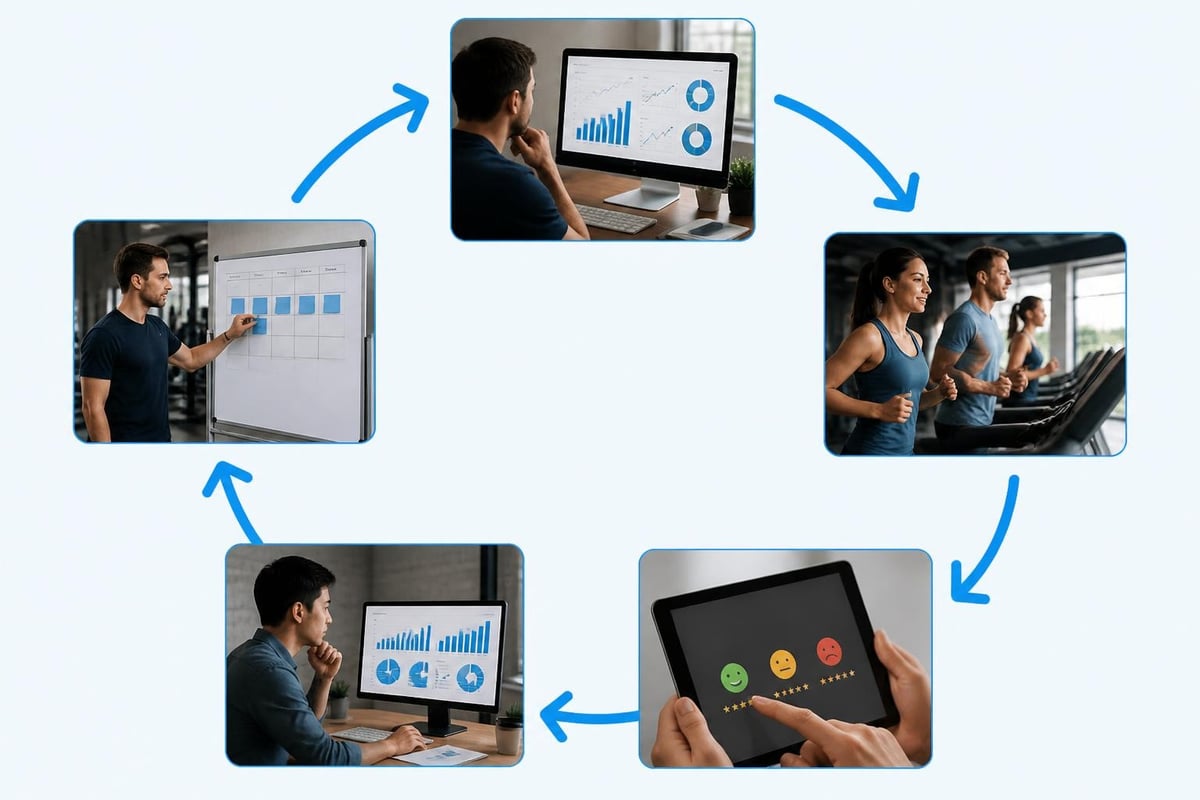
A schedule should be stable enough for members to plan around, but flexible enough to improve. If certain classes always run late, if one shift always feels understaffed or if one time slot always has a waitlist, the schedule is giving you feedback.
Use that feedback. A well-run club reviews, adjusts and communicates.
What prospects should look for in scheduling software
If your club is evaluating new software, scheduling should be part of the conversation even if it is not the only feature on your checklist.
Ask how the system handles the real-life situations your club faces: last-minute cancellations, reservation conflicts, staff visibility, member communication, billing timing, waiver status, guest rules, board reporting and seasonal transitions.
| Basic question | Better question for a swim club |
|---|---|
| Does it have a calendar? | Can the calendar connect to reservations, staff responsibilities, member communication and reporting? |
| Can members register online? | Can registration connect to payment, roster visibility, capacity limits, reminders and check-in context? |
| Can staff see the schedule? | Can staff see the right schedule details for their role without exposing unnecessary information? |
| Can we send updates? | Can the club communicate changes quickly to the specific members affected? |
| Can we pull reports? | Can schedule, attendance, reservation and billing patterns help the board make better decisions? |
The best scheduling tools do more than place blocks of time on a screen. They reduce confusion, support staff, improve communication and help the club make decisions.
What current customers should review inside their own operation
For clubs already using PoolPulse, this article can serve as a schedule health check.
Pick one week from your current season or upcoming season and walk through the following questions with your team:
- Can the front desk quickly explain what is happening each day?
- Can instructors see their classes, rosters and expectations?
- Can managers spot coverage gaps before the day begins?
- Are member-facing schedule changes communicated clearly?
- Are billing, renewals and reminders timed with the operational calendar in mind?
- Are maintenance windows protected and visible?
- Can the board understand demand patterns without manual spreadsheet cleanup?
If the answer to any of those questions is "not consistently," that is a good place to improve your workflow.
The bigger picture
Good scheduling is not really about the calendar.
It is about confidence.
Confidence that members know where to be. Confidence that staff understand their responsibilities. Confidence that the front desk has the context it needs. Confidence that billing and communication are timed thoughtfully. Confidence that the board can see how the club is actually operating.
When scheduling is disconnected, everyone feels it. Members feel confusion. Staff feel pressure. Managers feel stretched. Boards feel like they are making decisions with incomplete information.
When scheduling is connected, the club feels more professional. Lines move faster. Questions get answered sooner. Programs start on time. Changes are easier to manage. Members trust the operation because the operation feels ready.
That is the standard PoolPulse is built to support: a more connected, more visible, more manageable way to run swim club operations.
Whether you are already using PoolPulse or evaluating it for the first time, start with a simple question: can your club see what is coming clearly enough to act before members notice a problem?
If not, the schedule is not just something to check. It is something to modernize.
PoolPulse brings swim club management workflows together so clubs can manage members, billing, reservations, check-ins, staffing, communication and reporting with more clarity. Learn more about swim club management software , explore PoolPulse features or visit PoolPulse to see how a connected platform can help your club stay ahead of the season.

When Your Check-In Line Proves Software Is Too Slow
Discover how software timing affects your swim club's daily operations, from check-ins to billing, and why faster response times mean happier members.

What Your Billing and Invoices Are Telling You
Your swim club's billing and invoices reveal hidden patterns about late payments, refund requests, and cash flow. Here's how to read the signals.

The Swim Club Software Test Every Board Should Run
Run this simple test to see if your swim club software actually saves time or creates more work. Real scenarios, honest questions, better tools.
Want to see if PoolPulse is a good fit for your club?
Book a walkthrough and we'll show you exactly how PoolPulse can help based on your club's needs, goals, and current processes.