

Who Really Runs Your Club? The Platform Control Test
Test if you control your swim club software or if it controls you. Learn how platform control affects daily operations and member experience.


You've just gotten off the phone with your software vendor. They told you the feature you desperately need won't be available until "sometime next year." Meanwhile, your front desk staff is manually tracking guest check-ins in a spreadsheet because the system won't let you customize the process. Sound familiar? You're experiencing what happens when you lack platform control. And it's costing you more than just time.
Let me share what happened at a swim club I visited last summer. They'd been using the same software for seven years. The board wanted to offer family memberships with flexible access levels. The vendor said it wasn't possible without a complete plan overhaul that would take six months and cost thousands. That's when the club administrator realized they didn't control their own operations anymore. The platform did.
What Platform Control Actually Means for Your Club
Platform control isn't about technical specs or fancy features. It's about who makes decisions in your daily operations. Can you adjust membership types when the board votes to change them? Can you pull a report when a member asks about their payment history? Can you fix a simple workflow without calling support?
Think of it this way. If you own a house, you can paint the walls, add a shelf, or rearrange the furniture whenever you want. If you rent, you need permission for everything. The same principle applies to your club management software.
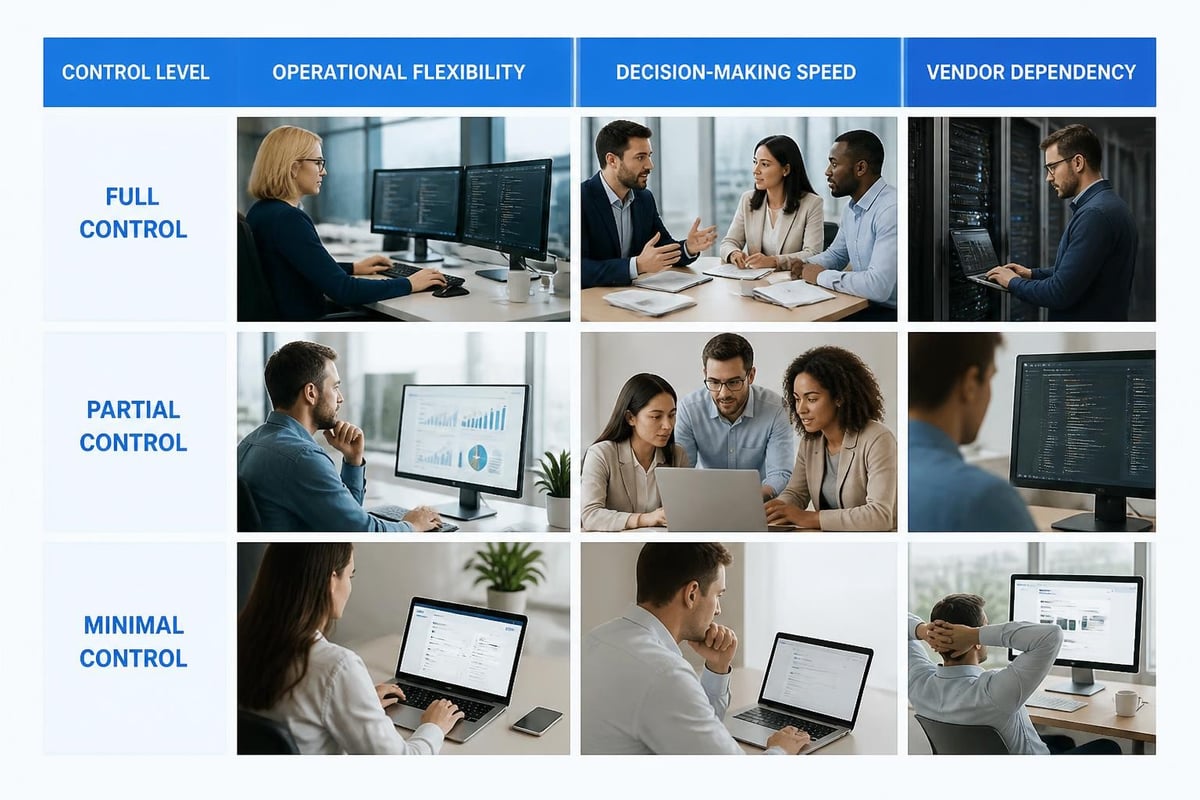
The Three Levels of Control
Different software platforms give you different levels of control over your operations:
- Full control: You can modify workflows, create custom fields, build reports, and adjust processes without vendor assistance
- Partial control: You can handle basic changes but need vendor help for significant modifications
- Minimal control: You're locked into predefined workflows and must request changes through support tickets
Most swim clubs operate with partial or minimal control. They don't realize how much this limitation costs them until they try to change something simple and hit a wall.
The Five-Minute Platform Control Test
Want to know where you stand? Try these five quick tasks right now. If you can't complete them without calling support, you've found your answer.
Test One: Create a Custom Membership Type
Log into your system. Try to create a new membership category with custom pricing and access rules. Maybe "Senior Single with Guest Privileges" or "Young Professional Weekend Only."
Can you do it yourself? How long does it take? Do you need to submit a request?
Test Two: Pull a Custom Report
You need a list of all members who joined in the last 90 days, showing their payment method and outstanding balance. Not a pre-built report. A custom one with exactly the fields you need.
Can you build this report yourself? Or are you limited to whatever templates came with the software?
Test Three: Change a Workflow
Your board just decided that all new members must complete an online waiver before their first visit. You need to add this step to the registration process.
Can you modify the workflow today? Or does this require a development ticket and a six-week wait?
Test Four: Adjust Access Permissions
Your seasonal front desk staff should only see check-in functions, not billing information. Your bookkeeper needs billing access but shouldn't process refunds without manager approval.
Can you configure these permission levels yourself? Or is everyone forced into preset roles that don't match your actual needs?
Test Five: Export Your Data
You want to analyze renewal trends or share information with your accountant. You need your complete member database, payment history, and attendance records in a standard format like CSV or Excel.
Can you export everything right now? Or are you limited to partial exports with some data locked inside the system?
| Test | Full Control | Partial Control | Minimal Control |
|---|---|---|---|
| Custom memberships | Create immediately | Submit request, wait days | Not available |
| Custom reports | Build unlimited reports | Limited to templates | Pre-set reports only |
| Workflow changes | Modify instantly | Vendor assistance required | Fixed workflows |
| Permission settings | Granular control | Preset roles only | One-size-fits-all |
| Data export | Complete access | Restricted fields | Summary data only |
Why Platform Control Matters More Than You Think
Here's what happens when you lack control over your platform. These scenarios play out at swim clubs every season.
Your board makes a decision. They vote to add a new membership tier or change guest policies. You're excited to implement it. Then you discover the software can't accommodate the change without a costly customization that takes months.
A busy Saturday morning hits. Your check-in process breaks down because the system forces everyone through the same rigid workflow. You can't adapt it to handle the line of twenty families waiting to get in. Your staff creates workarounds using paper and spreadsheets.
Renewal season arrives. You want to segment your communication based on member activity and payment history. But you can't access that data in a useful way. Everyone gets the same generic email, and your renewal rate suffers.
The underlying issue in all these scenarios? The platform controls your operations instead of supporting them. Understanding platform strategy helps explain why this dynamic develops and how it impacts your daily work.
Hidden Costs of Limited Control
Let's talk about money. Limited platform control creates costs you might not recognize:
- Staff time: Manual workarounds for inflexible systems add hours to every task
- Member frustration: Clunky processes drive members away when they expect modern, smooth experiences
- Missed revenue: You can't implement pricing strategies or membership options that would increase income
- Vendor dependence: Every change requires billable support time or custom development
- Decision delays: Board initiatives stall while you wait for software modifications
One club administrator told me they spent $3,200 last year on custom reports they couldn't build themselves. Another paid $5,000 for a "simple" workflow change that took four months to implement.
How Modern Platforms Handle Control Differently
The software world has changed dramatically in recent years. Modern platforms approach control differently than legacy systems built ten or fifteen years ago. The difference comes down to how they're architected.
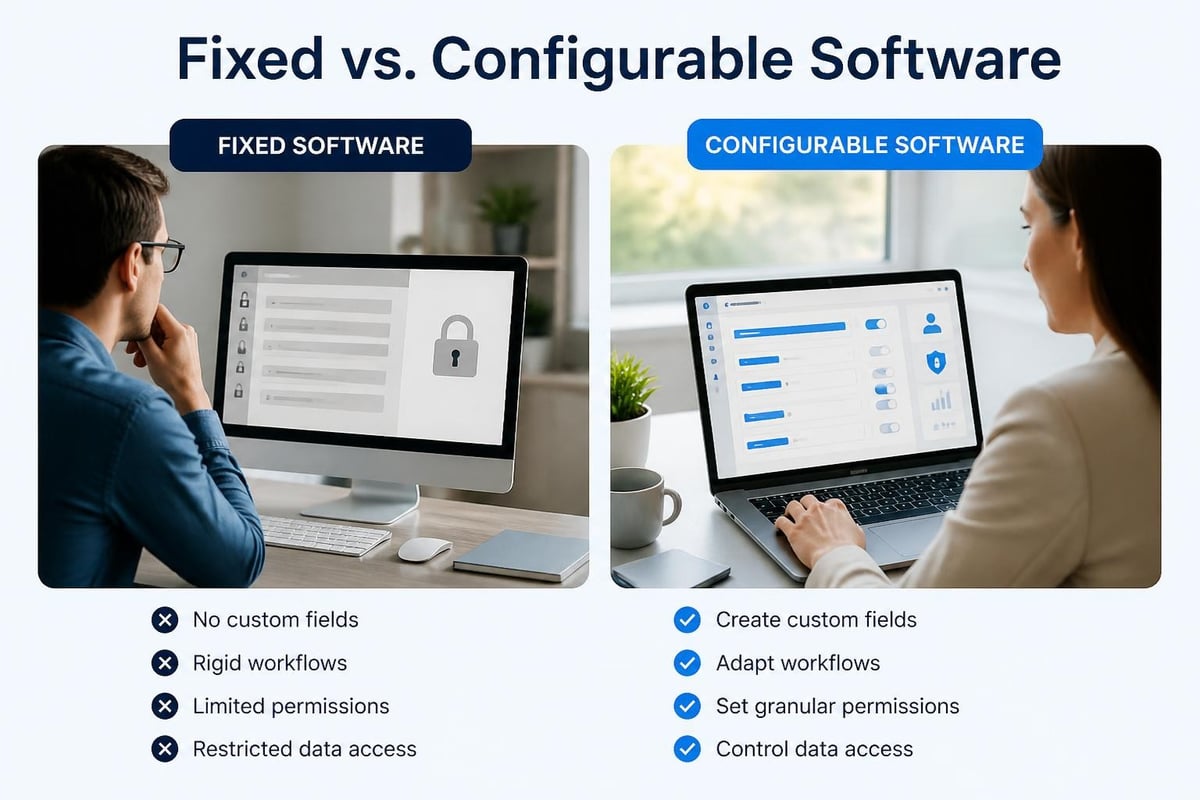
Traditional swim club software was built as a fixed solution. The vendor decided every workflow, field, and process. You got what everyone else got. Changes required the vendor to modify their core codebase, which is expensive and slow.
Newer platforms embrace configurability. They're designed so you can adapt the system to your club without custom development. This approach draws from platform engineering principles that prioritize flexibility and user control.
What Configurable Really Means
You'll hear software vendors talk about "configurable" or "flexible" systems. Here's what to look for beyond the marketing language:
Custom fields and attributes: Can you add new data points to track information unique to your club? Maybe you need to track swim team participation, tennis lesson enrollment, or pool locker assignments.
Workflow builders: Can you design processes that match how your club actually operates? Different clubs have different needs for registration, renewals, guest check-ins, and seasonal access.
Report builders: Can you create reports that answer your specific questions? Not just view pre-made dashboards, but actually build custom analyses.
API access: Can your system connect to other tools you use? Maybe your accounting software, email platform, or website. Integration capabilities expand your control significantly.
Permission frameworks: Can you define who sees and does what at a granular level? Your staff structure is unique, and your software permissions should reflect that.
The AI Control Question
Artificial intelligence adds a new dimension to platform control. Some clubs worry that AI means less control. Actually, the opposite can be true when implemented properly.
AI should help you understand your data and operations better. It might suggest which members are at risk of not renewing based on activity patterns. It could recommend optimal pricing for a new membership tier based on your market and history. It might draft communications based on your club's voice and past messages.
But you should always make the final decision. AI as a suggestion engine enhances your control. AI as a black box that makes decisions for you diminishes it. The distinction matters when you're evaluating swim club management software .
Taking Back Control: What to Look For
Let's say you're ready to evaluate your current situation or shop for new software. What questions should you ask?
During the Demo
Don't just watch a sales presentation. Ask to see these specific scenarios:
- "Show me how I would create a custom membership type that doesn't exist in your standard package."
- "Build a report in front of me that shows members by join date, payment status, and attendance frequency."
- "Change a workflow step right now. Add a required field to your registration process."
- "Export the sample data we're looking at to a CSV file with all fields visible."
- "Show me how I would give one staff member access to check-ins but not billing."
Watch what happens. Does the salesperson do these things themselves in real-time? Or do they say "We'd need to set that up for you" or "That would be a custom development project"?
Questions About Data Ownership
Your club's data belongs to you. Period. But some platforms make it hard to access or export that data. Ask these questions directly:
- Can I export all my data at any time in standard formats?
- If I leave your platform, what data can I take with me?
- Are there any fields or records I can't access or export?
- Do you charge fees for data exports or migrations?
- How quickly can I get a complete data backup if I need it?
Understanding platform engineering principles helps clarify why data access matters so much for long-term control.
Understanding the Update Process
Software updates can enhance your control or diminish it. Find out how updates work:
- Forced updates: Does the vendor push changes you didn't request and can't refuse?
- Breaking changes: Will updates disrupt workflows you've configured?
- Feature removal: Has the vendor ever eliminated features customers were using?
- Customization preservation: If you configure something, will updates overwrite it?
You want a platform that evolves without breaking your existing setup or forcing unwanted changes.
Real Club Scenarios Where Control Makes the Difference
Let me walk you through three real situations where platform control changed the outcome.
Scenario One: The Midseason Policy Change
A community pool discovered members were sharing access cards. The board voted to require photo verification at check-in. They needed to implement this immediately, right in the middle of summer.
With limited control: The club would submit a feature request, wait for the next development cycle, and probably not see the change until next season. Meanwhile, the problem continues.
With full control: The administrator modified the check-in workflow that afternoon. Added a required photo upload field to member profiles. Configured the front desk view to show member photos during check-in. Problem solved in hours, not months.
Scenario Two: The Revenue Recovery Initiative
A swim club realized they had dozens of members with outdated payment methods. Credit cards had expired. Billing was failing. Money was being left on the table every month.
With limited control: The club could run a generic report of failed payments. But they couldn't segment by payment age, member tenure, or lifetime value. They sent everyone the same email and recovered about 30% of the lost revenue.
With full control: The administrator built a custom analysis showing exactly which members represented the highest recovery opportunity. Created targeted communication workflows based on member segments. Automated follow-up sequences. Recovered 78% of the lost revenue using revenue recovery strategies they could implement themselves.
Scenario Three: The Staff Training Challenge
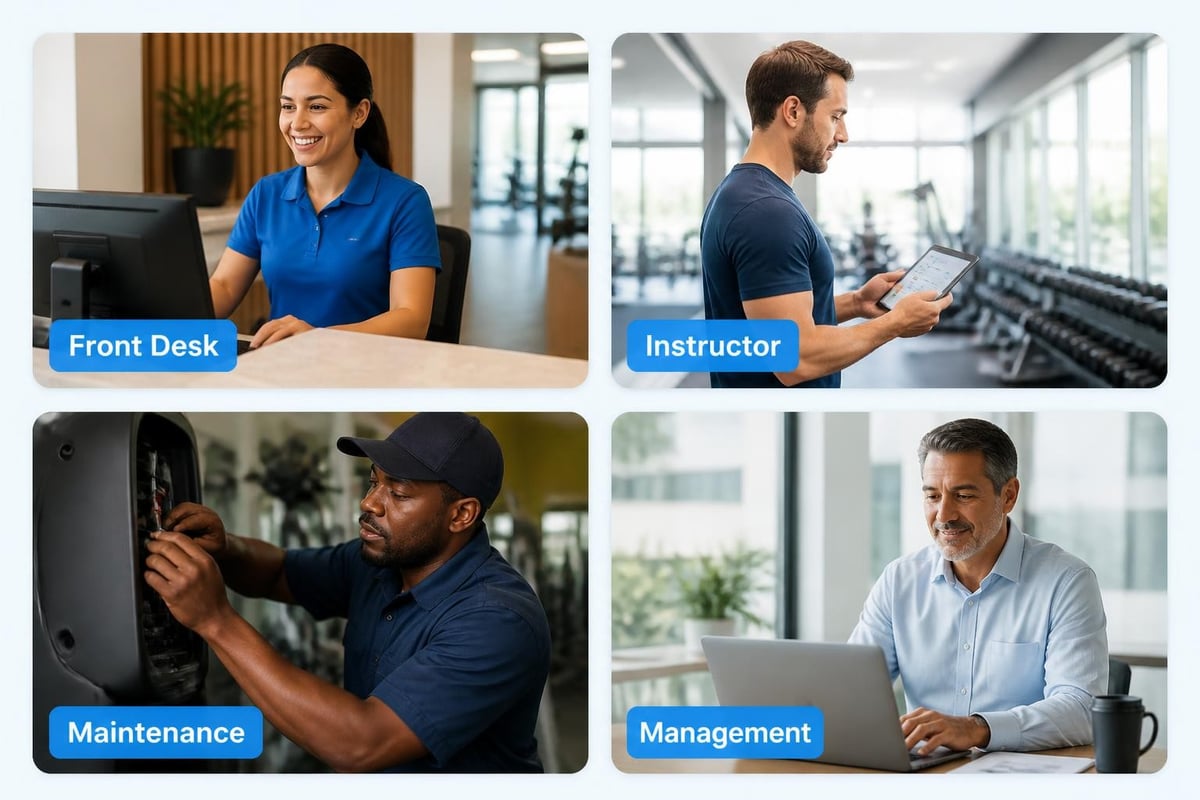
A tennis and swim club hired eight seasonal employees for summer. Each role needed different access levels. The front desk staff needed check-in. The swim instructors needed class rosters. The maintenance crew needed incident reporting. The manager needed everything.
With limited control: Everyone got the same access level because the system only offered three preset roles: Admin, Staff, and Member. This created security concerns and confusion as staff saw information they didn't need.
With full control: The administrator created custom role definitions for each position. Configured exactly what each person could see and do. New employees logged in and saw only relevant tools for their job. Training time dropped by 60% because interfaces were simpler and more focused.
The Migration Decision: When to Switch Platforms
Sometimes you realize your current platform will never give you the control you need. The vendor's business model depends on keeping you dependent. Or the software architecture simply can't support modern flexibility.
Making the switch feels daunting. I get it. You've got years of data, established processes, and staff who know the current system. But staying with software that limits your control has its own costs.
Signs It's Time to Consider Switching
You should seriously evaluate alternatives if you're experiencing several of these issues:
- You regularly pay for "customizations" that should be standard features
- Simple changes require support tickets and weeks of waiting
- Your workarounds have workarounds because the system is too rigid
- You can't implement board decisions without vendor approval
- Staff complain daily about clunky processes they can't modify
- You're planning your operations around software limitations instead of member needs
A useful resource for thinking through this decision is the swim club software migration checklist , which helps you evaluate whether the short-term disruption of switching is worth the long-term benefits of increased control.
What Makes Migration Successful
If you decide to switch platforms, control over the migration process itself matters enormously. Look for these characteristics:
Self-service data preparation: Can you export and format your current data without vendor assistance? Or are you dependent on your old vendor's cooperation?
Staged migration: Can you move in phases rather than all at once? Maybe start with new members while keeping historical data accessible during transition.
Parallel operation: Can you run both systems briefly to verify everything transferred correctly before fully committing?
Rollback capability: If something goes wrong, can you pause or reverse the migration without losing data?
The more control you have over the migration process, the less risky it becomes. When evaluating features in new software, make sure migration tools and support are part of the package.
Platform Control and Your Club's Future
Here's what most club administrators don't think about until it's too late. The software you choose today shapes your club's capabilities for years to come.
Your community changes. Membership expectations evolve. Competition increases. Board priorities shift. Technology advances. You need a platform that can adapt as quickly as your environment changes.
2026 realities: Members expect mobile check-in, real-time balance visibility, and seamless online registration. They compare your experience to Amazon, their banking app, and their gym's system. "That's how we've always done it" doesn't cut it anymore.
Future-Proofing Through Control
Think about what your club might need in the next three to five years:
- Integration with contactless entry systems or smart lockers
- Dynamic pricing based on demand or capacity
- Automated communication workflows triggered by member behavior
- Advanced analytics to predict retention and optimize revenue
- Multi-location management if your organization expands
- API connections to accounting, marketing, or facility management tools
Can your current platform adapt to these needs? Or will each advancement require vendor approval, custom development, and significant expense?
Platforms built on modern platform engineering principles give you the foundation to add capabilities as you need them. You're not locked into 2026 functionality. You can evolve.
The Control-Support Balance
One concern I hear frequently: "If I have more control, does that mean I'm on my own when something breaks?"
This is a legitimate question. Control and support aren't opposites. They should work together.
What Good Support Looks Like
You want a platform that gives you control over routine operations while providing expert support for complex situations:
You control: Daily workflows, membership configuration, report building, permission settings, routine data exports
Vendor supports: System architecture, security updates, performance optimization, integration troubleshooting, advanced technical issues
Think of it like owning a car. You control where you drive, when you refuel, and basic maintenance. But you rely on mechanics for engine repairs and complex diagnostics. You don't need to understand internal combustion to drive effectively.
The same principle applies to club management software. You should control your operations without needing to be a software engineer.
Documentation and Training
Platforms that offer real control invest heavily in documentation and training. Why? Because they want you to succeed independently.
Look for these resources:
- Searchable knowledge base: Written guides for every feature and common task
- Video tutorials: Step-by-step walkthroughs for complex processes
- Interactive training: Hands-on sessions that teach you to use advanced features
- Community forums: Other users sharing tips and solutions
- Regular webinars: Updates on new capabilities and best practices
If a vendor's support model is "call us for everything," they're not really offering you control. They're offering dependence.
Making Your Platform Control Decision
You've now got the framework to evaluate your current situation and make informed decisions about platform control. Let's bring it together.
Your Action Plan
Start with the five-minute test we covered earlier. Actually do it. Right now. Don't just think about whether you could complete those tasks. Log in and try them.
If you passed most tests: You've got good platform control. Make sure you're using it. Train your staff to leverage the flexibility you have. Document your custom configurations so you don't lose knowledge when staff turns over.
If you passed some tests: You've got partial control. Identify which limitations hurt most. Can you work with your vendor to expand access? Sometimes you just need to ask for additional permissions or training.
If you failed most tests: You're operating with minimal platform control. Calculate what this costs you in staff time, missed opportunities, and vendor fees. Compare that to what switching platforms would cost. The math might surprise you.
Questions to Ask Your Current Vendor
Before making any major decisions, have an honest conversation with your current software provider:
- What control can you give us over workflows and customization?
- What would it cost to add the configuration capabilities we need?
- What's your roadmap for increasing user control?
- Can you provide references from clubs with similar control needs?
Sometimes vendors can enable additional capabilities for existing customers. Sometimes they can't or won't. Either way, you'll have clarity.
Evaluating New Platforms
If you're shopping for alternatives, use what you've learned here. Don't just watch demos. Get trial access. Actually configure something. Build a report. Modify a workflow. Export data.
And talk to current users. Not the reference customers the vendor provides. Find clubs actually using the platform and ask them about control, flexibility, and limitations they've encountered.
The guide on platform strategy offers valuable context for understanding how different vendors approach customer control and why those approaches vary so widely.
Platform Control Is About People, Not Technology
I want to end with this thought. Platform control ultimately isn't about software features or technical specifications. It's about respect.
Does your software vendor respect that you understand your club better than they do? Do they respect your board's decision-making authority? Do they respect your staff's ability to solve problems?
Or do they treat you as someone who needs to be guided through every decision, protected from your own choices, and kept dependent on their expertise?
The platform you choose reflects how you want to run your club. With autonomy and agility. Or with permission and waiting.
You know which one serves your members better.
Platform control determines whether your software works for you or you work for your software. The clubs that thrive in 2026 and beyond are the ones that maintain control over their operations, data, and member experience. If you're ready to see how a modern, configurable platform can transform your club's operations while keeping you in the driver's seat, PoolPulse offers the flexibility and control you need with the support you deserve. Our AI-powered platform is designed to adapt to your unique requirements, not force you into someone else's vision of how a swim club should operate.

Five Front-Desk Tasks Your Swim POS Should Handle
Your front desk shouldn't need three systems to check in a swimmer. Here's how modern swim POS systems save time and reduce errors.

When Your Check-In Line Proves Software Is Too Slow
Discover how software timing affects your swim club's daily operations, from check-ins to billing, and why faster response times mean happier members.
The Swim Club Software Test Every Board Should Run
Run this simple test to see if your swim club software actually saves time or creates more work. Real scenarios, honest questions, better tools.
Want to see if PoolPulse is a good fit for your club?
Book a walkthrough and we'll show you exactly how PoolPulse can help based on your club's needs, goals, and current processes.