

They Want to Come Back. Do You Actually Have Next Season’s Staff?
Separate interest, availability, approval, and assigned shifts to build a practical staffing plan for next season.


“I'd love to come back next summer” is a good conversation to have on closing weekend. It is not yet a staffing plan. Before the board treats familiar names as next season's coverage, find out when those people could actually work and what still needs to be decided.
You do not need to build the whole summer schedule in September. You need a clear starting picture, a way to update it, and an owner for the next conversation. That is enough to replace “we think everyone is coming back” with a useful planning decision.
Start with the work the club expects to run
List the services under consideration for next season before asking people to choose shifts. Include opening and closing coverage, front-desk hours, programs, concessions, and supervisor responsibilities. Mark which plans are approved and which are still being discussed. Staff should not be asked to commit around a timetable the club has not agreed to offer.
Describe the role as well as the hours. A person available on Saturday morning may be willing to work concessions but not the front desk. Someone interested in teaching may not want a general operations role. Keep those preferences visible so the planning list does not quietly become a promise of interchangeable coverage.
Bring the responsible manager into the exercise. They should identify the requirements for each role and use the club's approved process for checking them. Availability alone does not establish that someone is qualified, authorized, or selected for a position. Keep those checks with the people responsible for hiring and staffing decisions.
Ask questions people can answer now
Use a short first contact. Ask whether the person is interested in returning, the earliest and latest dates they expect to be available, the roles they want to discuss, and any known recurring limits. Give them a way to say that school, another job, or travel plans are not settled yet.
Avoid asking for a final weekly schedule months before the person can reasonably know it. Instead, ask what is known now and when the uncertain parts may become clearer. A response such as “interested, exam dates pending until March” is useful when it has a follow-up date attached.
Keep the message clear about its purpose. This is an interest and planning check, with any offer or assignment handled through the club's normal process. Have your hiring lead approve the language. Do not let a cheerful return survey accidentally stand in for the decisions and communications that belong to employment administration.
Use four simple planning states
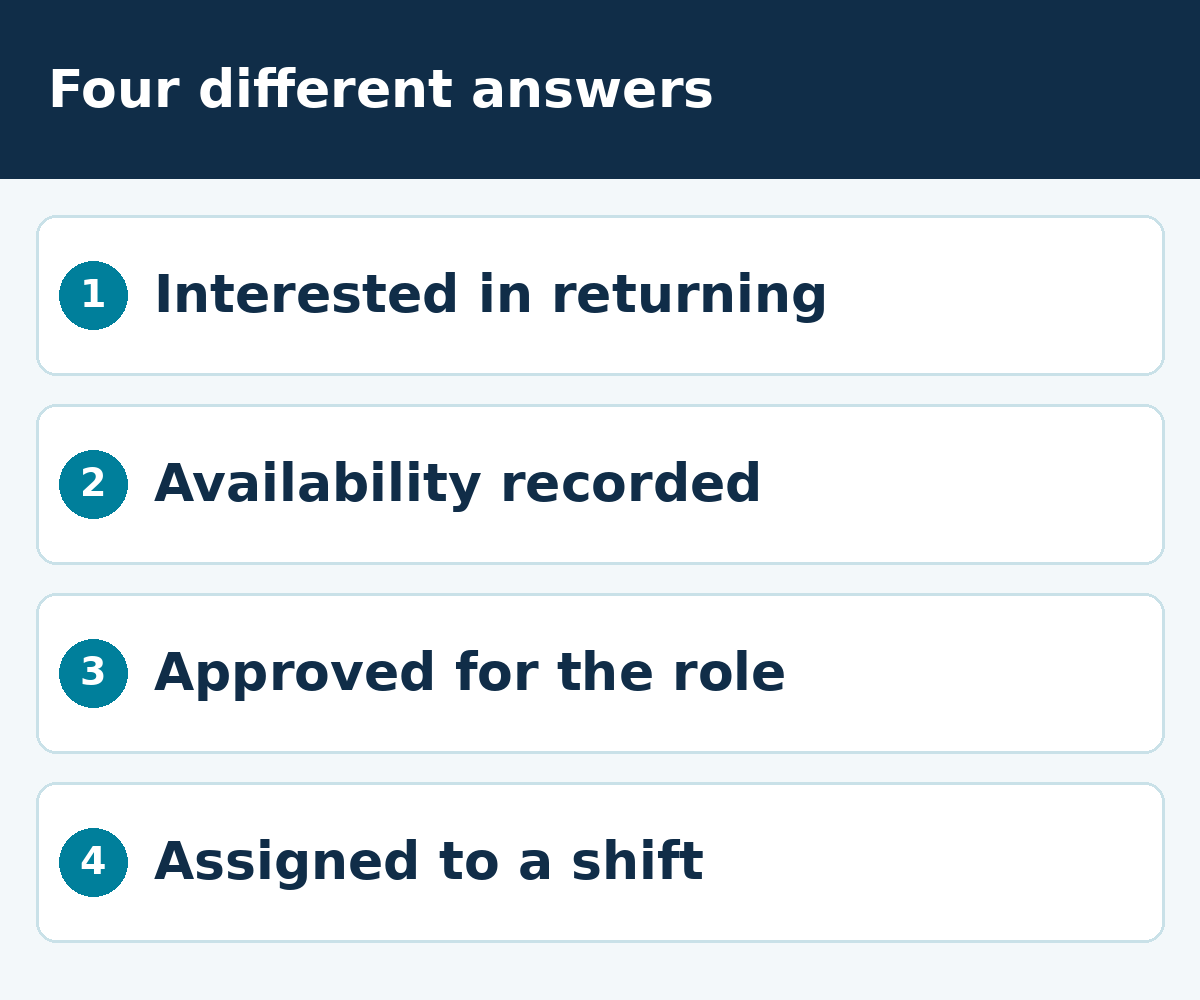
Start with interested: the person wants a further conversation. Next, record availability received: they have supplied dates or recurring windows, with uncertainties noted. Then record approved through the club's process where appropriate. Finally, record assigned when a particular agreed shift or responsibility has been set.
Keep a separate state for not returning and another for no response. Silence is not a reliable way to classify someone's plans. A manager can follow up, record that a response is still outstanding, and plan recruitment without inventing an answer on the person's behalf.
Write a return message that feels human
Try an opening such as: “We're starting next season's staffing plan and would like to know whether you're interested in returning. Please tell us the roles you'd like to discuss and any dates you already know you cannot work. It's fine if some plans are still undecided.”
Follow with the next step: who will review the response and when staff should expect an update. Give a named contact for questions. Keep the first request short enough that someone can answer on a phone without finding an old spreadsheet or interpreting a list of internal job codes.
Ask for necessary planning information through the approved channel. Do not request private explanations for every unavailable day in a general survey. If a personal circumstance needs a confidential discussion, provide the appropriate contact rather than leaving it in a roster shared with the whole team.
Build a coverage picture without overstating it
Group the club's needs into meaningful windows, such as weekday mornings, weekday evenings, and weekend opening. Use the actual operating plan for the club. Count people who have reported relevant availability, but label the result as planning information until the required checks and assignments are complete.
Watch for overlap. Three people may all be interested in the same role and unavailable for the same holiday weekend. A total headcount hides that problem. Review dates, roles, and limits together before telling the board that returning staff cover next season's needs.
Also review responsibilities that depend on one person. If only one returning employee knows the opening procedure, identify who else needs training and who can supervise it. Do not assume general availability solves a specific skill or responsibility gap. Give the manager a concrete action to arrange.
Work through a small planning example
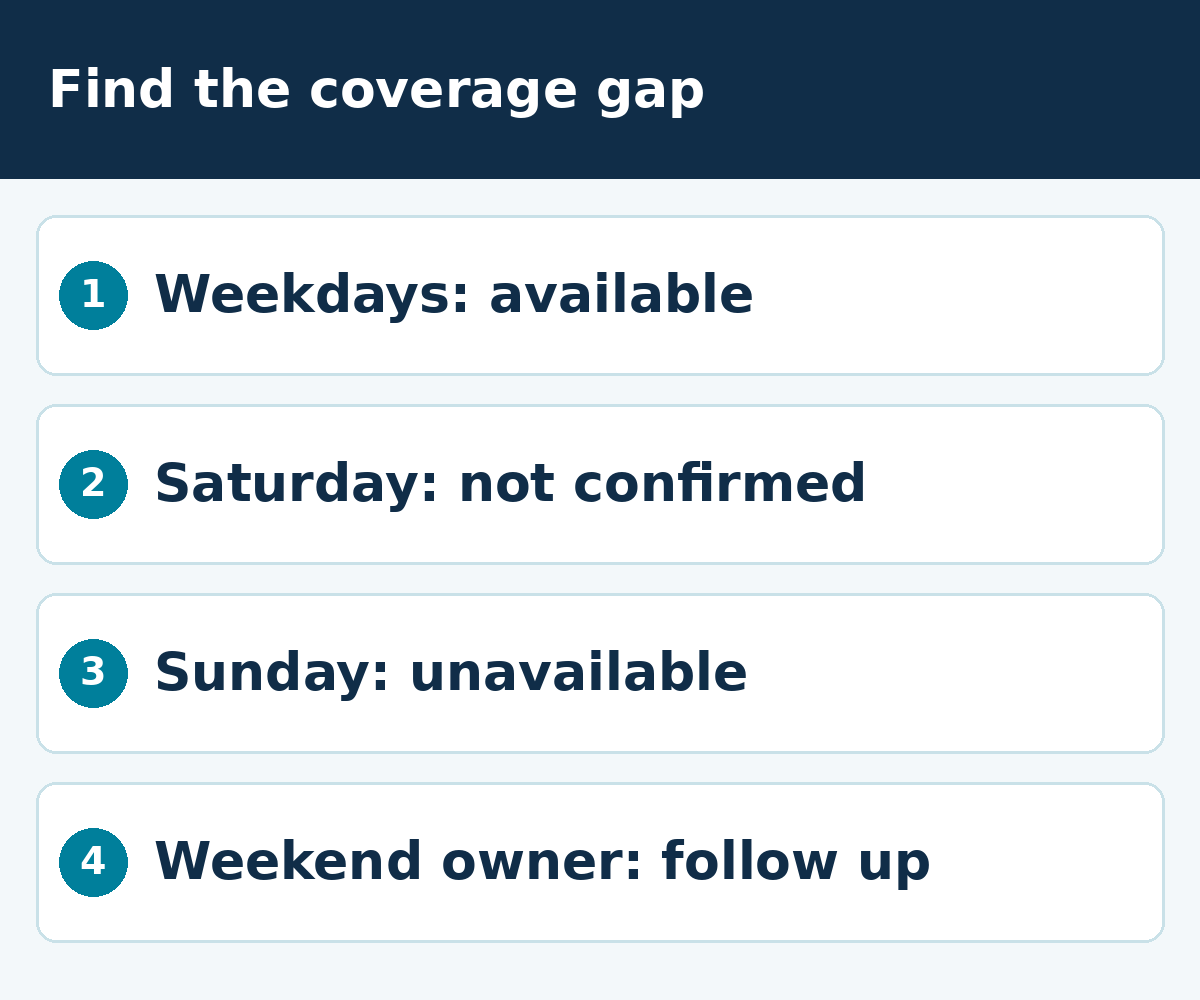
Say the club needs a desk supervisor for Saturday opening and Sunday closing. Three former supervisors express interest. One is available only on weekdays, one can consider Saturday mornings, and one has not confirmed their weekend commitments. The return list contains three names, but the two weekend needs are not yet covered.
The manager records a Saturday conversation with the second person, a follow-up date for the third, and an open Sunday requirement. The weekday-only response stays useful for another part of the plan. Nobody is counted as assigned simply because they replied positively to the first message.
That picture gives the board a practical decision. It can authorize recruitment for the unresolved need, discuss a different operating plan, or wait until a specific follow-up date. It does not need a prediction dressed up as a confirmed roster.
Use the same approach for programs. An instructor's interest in returning does not confirm the exact class times the club wants to advertise. Check those details before registration materials promise a particular schedule or person. Keep pending staffing decisions visible to whoever prepares the program announcement.
Give uncertainty an owner and a date
A note saying “ask again later” is easy to lose. Record the question, the person following up, and the next contact date. If someone expects their school schedule in March, schedule the conversation around that information instead of sending repeated requests they cannot answer yet.
Set a planning checkpoint for the club too. Decide when unresolved positions must move into recruitment or another approved response. That date should follow the club's actual hiring and preparation needs, not a generic deadline copied from another organization.
Keep old responses for context, but make the current answer unmistakable. If a person changes availability, update the planning view and note when the change was received. Check whether anyone was using the earlier answer to prepare program dates, training sessions, or a proposed rota.
Check the form before sending it to everyone
Ask a staff member to complete the return form using a practice response. Can they indicate an uncertain date, distinguish preferred roles from confirmed availability, and find the contact for questions? Watch where they hesitate instead of explaining every field before they try it.
NIST describes usability testing through representative people performing representative tasks, with observations such as completion, errors, and feedback. Apply that narrow principle to your form: see whether a staff member can give the answer you need. NIST's usability-testing overview .
If a field confuses the tester, revise it before distribution. “Available from” may mean the first date they can discuss work, the first training date, or the first day they can accept a shift. Use the wording that matches the question. Keep a date example near the field if it helps.
Keep the planning list separate from the published schedule
Use the return information to prepare staffing conversations. Do not expose tentative assignments as though they are final. People should know when a schedule is proposed, what they are being asked to confirm, and when the club considers the arrangement settled.
Before publishing a rota, run the club's required approval process. Check the role, date, hours, supervisor arrangements, and any outstanding preparation. Make sure the person preparing the schedule has the current availability response rather than a screenshot from an earlier conversation.
After publishing, use the established route for changes. A staff member updating general availability should not assume an already assigned shift has automatically disappeared. Explain how they raise a conflict and who confirms the result. Keep that instruction beside the schedule communication.
Give the board a staffing decision, not a personal dossier
Report the operating needs, the confirmed position of the plan, the unresolved gaps, and the decisions required. The board usually does not need every personal detail behind an availability restriction to decide whether recruitment should start or program hours should change.
Show uncertainty plainly. “Two opening supervisors approved; Sunday closer still under review” says more than “three supervisors returning.” Include the next checkpoint and the manager responsible for the open work. That makes the report easy to revisit at the following meeting.
Separate money and staffing assumptions. If a proposed budget assumes a certain role or service level, make that link visible. Have the people responsible for compensation and employment terms handle those decisions through the approved process. A return-interest survey should not create unreviewed pay or hours commitments.
Bring the staffing pattern into the platform conversation
PoolPulse's staff scheduling page describes scheduling, time capture, coverage management, and payroll handoff. Use it to frame a demonstration of your club's planning process, then confirm which availability and approval steps the current setup supports. Explore PoolPulse staff scheduling .
Bring one returning employee with a known date limit and one unresolved role. Ask how the manager keeps a proposed assignment separate from a published shift, how staff see the result, and how changes are reviewed. Follow the process using the access each person will actually have.
Keep payroll handoff separate from promises about payroll processing. Ask what is exported, who reviews time, and what the club's existing payroll arrangement needs. The staffing plan should lead to clear responsibilities throughout the season, without assuming that one feature name answers every employment or payment question.
Keep useful knowledge when someone does not return
Thank people for a clear answer even when they are moving on. Ask the manager which procedures need a handover, and arrange that through the club's normal process. Focus on the knowledge the next employee needs: where instructions live, which recurring task is awkward, and what should be explained during training.
Do not build continuity around continued access to a former employee's personal account. Use the club's approved record and access procedures. Connect the staffing review to the end-of-season debrief so changes of responsibility are handled deliberately.
Turn one useful observation into an improvement before the next intake. If several staff found the same closing task unclear, rewrite that instruction and have a new person try it. A return conversation can improve next season even when the person giving the feedback will not be there.
What to finish this week
- Confirm which operating needs are approved and which remain proposed.
- Send a short return-interest request with an owner and a next step.
- Record dates, role preferences, uncertainties, and the latest response date.
- Keep interest, availability, approval, and assignment distinct.
- Review gaps by role and time window, not just total names.
- Assign follow-ups and set the club's next staffing decision point.
- Test the form and the handoff before using them more widely.
Next season's staffing plan starts with better questions this season. Book a PoolPulse walkthrough and bring one coverage pattern your manager needs to plan, confirm, and keep current without chasing several versions of the same answer.

Before You Sell Guest Passes for 2027, Decide What They Actually Allow
Build a club guest pass policy staff can apply consistently, covering sponsors, limits, payment, exceptions, records, and opening-day testing.

Before You Approve Your 2027 Club Budget, Count the Work Between Your Systems
A practical way to expose the software, labor, handoff, and transition costs that ordinary budget lines miss.

The Repair Was Reported. Who Checked That It Was Finished?
Make repair handoffs clear with named owners, agreed completion evidence, recorded verification, and useful staff instructions.
Want to see if PoolPulse is a good fit for your club?
Book a walkthrough and we'll show you exactly how PoolPulse can help based on your club's needs, goals, and current processes.