

Shift Management for Swim Clubs: A Complete Guide
Learn how to manage shifts at your swim club more efficiently. From lifeguard scheduling to front desk coverage, here's what works in 2026.

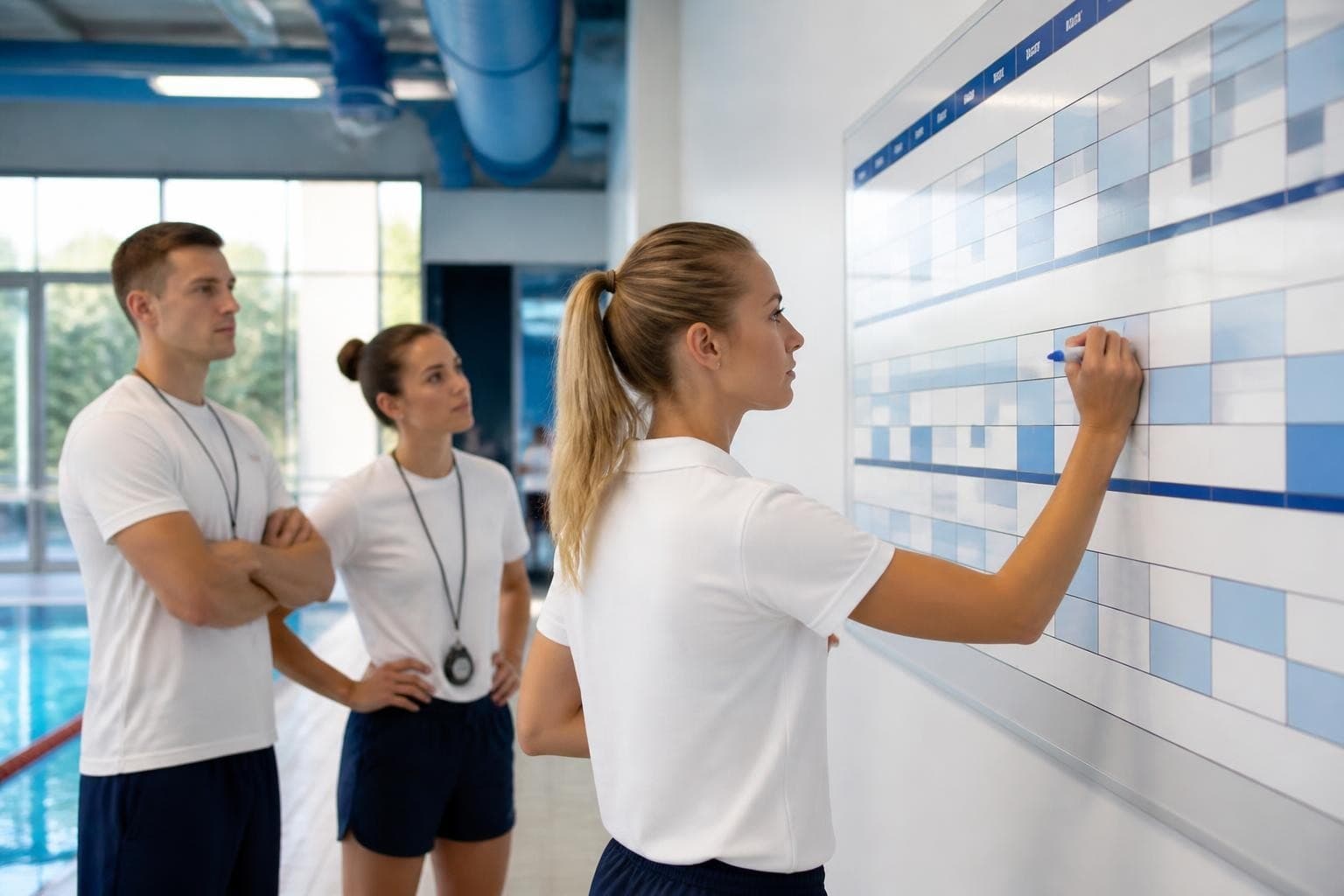
Running a swim club means juggling a lot of moving parts. You've got lifeguards who need to be on deck during every session, front desk staff checking members in, coaches running practice, and maintenance crews keeping everything clean and safe. When you're managing multiple shifts across all these roles, things can get complicated fast. That's where good shift management comes in. It's not just about filling time slots on a calendar. It's about making sure the right people are in the right places at the right times, keeping everyone safe, and running your facility without constant headaches.
What Shift Management Actually Means for Your Club
Shift management is the process of organizing your staff schedules so your facility runs smoothly. For swim clubs, this means coordinating lifeguards, coaches, front desk personnel, and sometimes maintenance staff across different days and times.
Think about a typical Saturday at your club. You might need three lifeguards from 6 AM to 8 AM for masters swim, two more from 8 AM to noon for open swim, four during the busy afternoon family session, and then a skeleton crew in the evening. Each of these shifts requires different people with different certifications.
Understanding shift management basics involves more than just creating a schedule. You're balancing labor costs, making sure you're not understaffed during peak hours, and keeping your team happy enough that they don't quit mid-season.
The Real Challenges You Face
Here's what makes shift management tough at swim clubs:
- Certification requirements: Not everyone can cover every shift. Your lifeguards need current certifications, and some positions require specific training.
- Seasonal variations: Summer means more shifts, more staff, and more chaos. Winter might be slower, but you still need coverage.
- Last-minute changes: Someone calls in sick at 5:30 AM, and you need to find coverage before the pool opens at 6.
- Overlapping responsibilities: Your head lifeguard might also teach lessons, so their shift needs to account for both roles.
- Member expectations: Your members expect the pool to be open when you say it will be, with qualified staff on duty.
The old way of handling this was a paper schedule on the office wall and a lot of frantic phone calls. That doesn't cut it anymore.
Building Your Staff Schedule From Scratch
Let's walk through how to actually create a workable schedule. This process looks different for every club, but the basic steps stay the same.
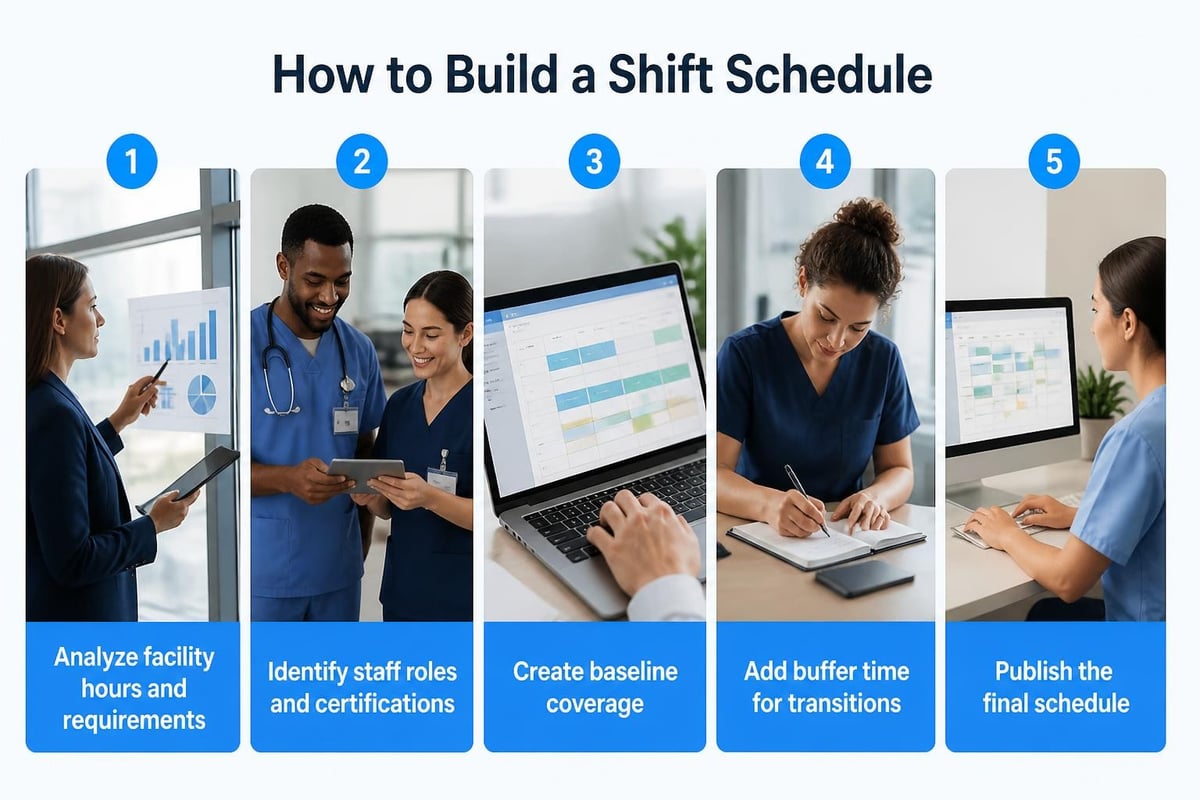
Step 1: Map Out Your Facility Hours
Start with the basics. When is your pool open? Break it down by day of the week because weekends probably look different from weekdays.
For example, your summer schedule might look like this:
| Day | Open | Close | Peak Hours |
|---|---|---|---|
| Monday-Friday | 5:30 AM | 9:00 PM | 3:00 PM - 7:00 PM |
| Saturday | 7:00 AM | 8:00 PM | 10:00 AM - 6:00 PM |
| Sunday | 8:00 AM | 7:00 PM | 12:00 PM - 5:00 PM |
Step 2: Figure Out Minimum Staffing Needs
Now determine how many people you need for each time block. This isn't arbitrary. Your insurance might require a certain lifeguard-to-swimmer ratio. Your state might have regulations about supervision.
Write down the minimum number of staff needed for each role during each shift. Don't forget about breaks. If you need two lifeguards on duty at all times, you actually need three people scheduled so they can rotate breaks.
Step 3: Account for Skills and Certifications
Not every staff member can work every shift. Create a simple matrix showing who's qualified for what. This saves you from scheduling someone who can't actually do the job.
Your front desk person might be cross-trained as a lifeguard, which gives you flexibility. Your senior lifeguard might be the only one certified to handle certain equipment. Track all of this somewhere you can reference easily when building schedules.
Step 4: Consider Staff Preferences When You Can
This is where effective shift management practices really matter for retention. Sure, you need coverage, but if you completely ignore what your staff wants, they'll find somewhere else to work.
Ask your team about their availability. Some people can only work mornings. Others are students who need evening shifts. College kids want maximum hours in summer and minimal hours during the school year. Build this into your planning.
You won't always be able to give everyone what they want, but showing that you tried goes a long way.
Managing Different Types of Shifts
Not all shifts are created equal. Your swim club probably runs several different types, each with its own quirks.
Opening Shifts
Someone has to get there first and make sure everything's ready. Opening shifts typically include:
- Unlocking the facility
- Testing pool chemistry
- Setting up equipment
- Preparing the front desk
- Checking that all safety equipment is in place
These shifts usually start 30-60 minutes before your official opening time. You need reliable people who won't oversleep or show up late. Members showing up to a locked facility at 6 AM is not a good look.
Peak Hour Shifts
This is when you need your full team. For most clubs, peak hours hit after school and on weekend mornings. You'll need:
- Maximum lifeguard coverage
- Front desk staff to handle check-ins
- Coaches if you're running lessons or practice
- Maybe extra hands just to manage the chaos
Peak shifts are tiring. The deck is loud, you're dealing with more members, and there's no downtime. Consider rotating staff through peak times so the same people aren't always stuck with the hardest shifts.
Closing Shifts
The last people out have a different job. They're securing the facility, doing final chemical checks, and making sure everything's ready for the next day.
Closing shifts need detail-oriented people who won't cut corners. A pool left improperly secured overnight can mean serious problems by morning.
Split Shifts and Partial Coverage
Sometimes you need someone for just two hours in the middle of the day, or you need to bring someone back for a second shift later. These can be hard to fill, but they're sometimes necessary to cover specific programs or odd hours.
Be careful with split shifts. They're convenient for you but annoying for staff who have to make two trips to work in one day. Use them sparingly or compensate appropriately.
Tools That Actually Help
Let's be honest-managing shifts with a whiteboard and a prayer isn't sustainable. You need systems that make this easier, not harder.
What to Look for in Scheduling Tools
The best shift management tools for swim clubs aren't necessarily the most expensive or feature-packed. Look for systems that:
- Let staff view schedules from their phones
- Send automatic reminders before shifts
- Allow shift swapping with manager approval
- Track certifications and expiration dates
- Show you coverage gaps at a glance
- Integrate with your other club management systems
Modern shift management software has come a long way. The question is whether it fits how you actually work.
Integration Matters More Than You Think
Here's something most clubs learn the hard way: if your shift management system doesn't talk to your member management system, you're creating double work.
When you're using swim club management software that handles everything from billing to check-ins, having shift management built in or deeply integrated saves massive amounts of time. You can see which staff members are scheduled when someone checks in. You can track labor costs against revenue by program. You can avoid scheduling conflicts with pool reservations.
Standalone scheduling tools work, but they create information silos. You end up maintaining data in multiple places, which means more chances for mistakes.
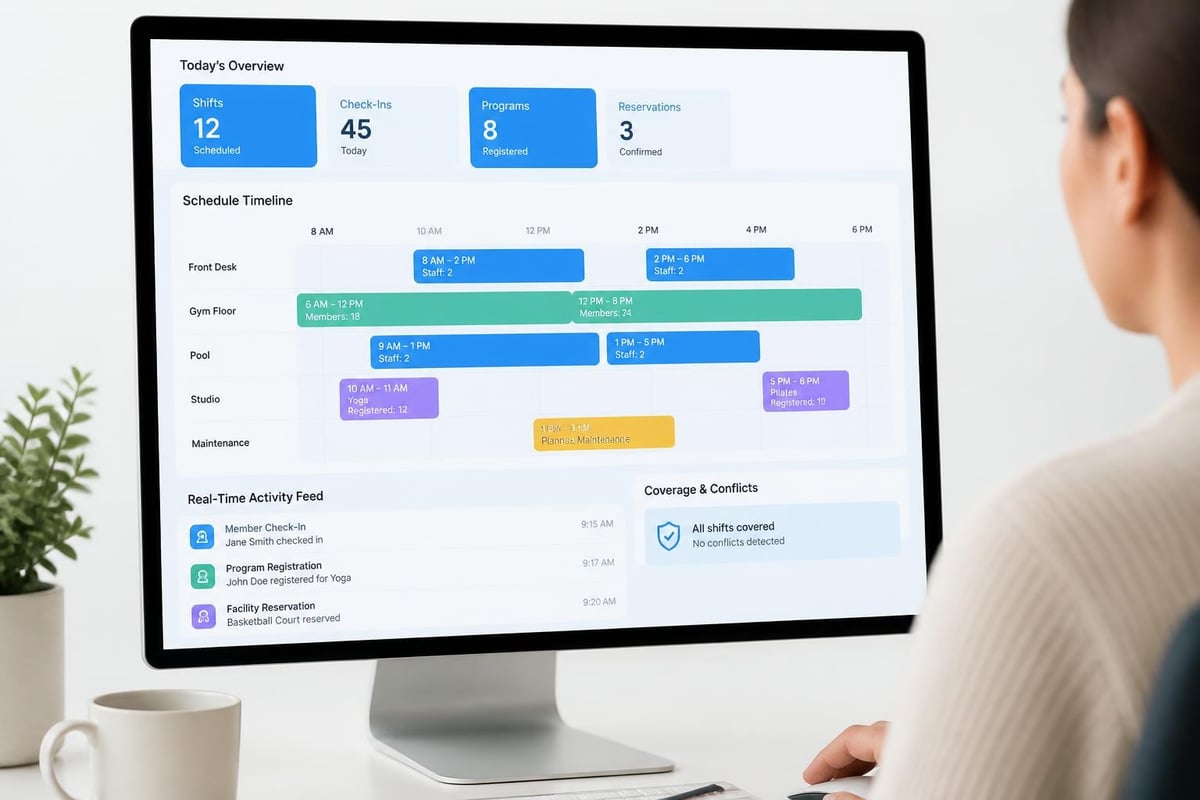
The Mobile Question
Your staff lives on their phones. If they can't check their schedule or request time off from their phone, you're going to get constant texts and calls instead. This might sound obvious, but plenty of clubs still use systems that barely work on mobile.
Make sure whatever tool you use has a legitimate mobile experience. Your lifeguards shouldn't need to zoom and pinch to read their schedule.
Handling the Common Problems
Even with great systems, shift management comes with predictable problems. Here's how to handle them.
The Last-Minute Callout
It's 5:45 AM. Your pool opens at 6. Your opening lifeguard just texted that they're sick and can't come in. What do you do?
First, have a backup list. Know who's willing to take emergency shifts and how to reach them quickly. Some clubs pay a premium for emergency callout shifts to incentivize people to have their phones on.
Second, cross-train your managers. If you absolutely can't find coverage, can you or another manager fill in temporarily? This shouldn't be your regular solution, but it beats closing unexpectedly.
Third, document everything. Chronic callouts are a pattern you need to address. Occasional emergencies happen to everyone, but someone who calls out every other week needs a conversation about reliability.
The Scheduling Conflict
You accidentally scheduled someone for overlapping shifts. Or you scheduled someone who requested that day off. Or two people thought they had the same shift off and both made plans.
Managing these scheduling conflicts starts with catching them before they become problems. Good software will flag conflicts automatically. Human review of schedules before you publish them catches what software misses.
When conflicts do happen, address them immediately. Don't let people find out about problems when they show up to work. The earlier you communicate, the more options everyone has.
The Popular vs. Unpopular Shifts
Everyone wants Saturday mornings off. Nobody wants to close on Friday nights. If you let the same people always grab the good shifts, the rest of your staff will resent it.
Rotate unpopular shifts fairly. One approach is to give people who work less desirable shifts first pick on future schedules. Another is to simply rotate so everyone does their share of early mornings, late nights, and holiday coverage.
Whatever system you use, make sure it's transparent. Staff need to understand why they got stuck with Sunday closing three weeks in a row and when their turn for better shifts comes up.
Understaffing vs. Overstaffing
Too few people means exhausted staff and safety risks. Too many means blown labor budgets and wasted money.
Track your actual traffic patterns. You might think you need four lifeguards on Tuesday afternoons, but if attendance data shows you rarely get more than 20 swimmers, you're probably overstaffed. Conversely, if Friday evenings are consistently packed, add coverage.
Use your data to right-size shifts. Most swim club management platforms track attendance by time of day, which gives you exactly the information you need to staff appropriately.
Staying Compliant and Safe
This isn't the fun part of shift management, but it's critical. Getting this wrong can get you sued, shut down, or both.
Labor Law Requirements
Different states have different rules about:
- Minimum rest time between shifts
- Maximum consecutive work hours
- Break requirements
- Overtime calculations
- Minor work restrictions
Know what applies to you. If you're not sure, talk to an HR professional or lawyer who specializes in your state's labor laws. The fine for violating labor laws is way more than the cost of getting advice upfront.
Your scheduling system should help enforce these rules automatically, but don't rely on it blindly. Double-check that you're actually compliant, especially when you're dealing with unusual situations like back-to-back swim meets or emergency coverage.
Certification Tracking
Every lifeguard certification expires. So do CPR certifications, first aid training, and whatever other credentials your staff needs.
Build certification tracking into your shift management process. You should get alerts when certifications are about to expire, and your system shouldn't let you schedule someone whose credentials have lapsed.
This is another area where integrated club management software beats standalone tools. When certification data lives in the same system as your schedule, you can't accidentally put someone on the schedule who shouldn't be working.
Fatigue Management
Tired staff make mistakes. In a pool environment, mistakes can be dangerous. Managing fatigue for shift workers isn't just about compliance-it's about keeping everyone safe.
Avoid scheduling patterns that lead to exhaustion:
- Don't schedule the same person for closing followed immediately by opening
- Give people adequate days off between busy stretches
- Watch for staff picking up extra shifts beyond what's healthy
- Build in longer breaks during marathon shifts like swim meets
Your experienced lifeguards might tell you they're fine working a double shift. They might even be right. But "fine" isn't the same as "fully alert and capable of reacting to an emergency." Err on the side of caution.
Seasonal Adjustments
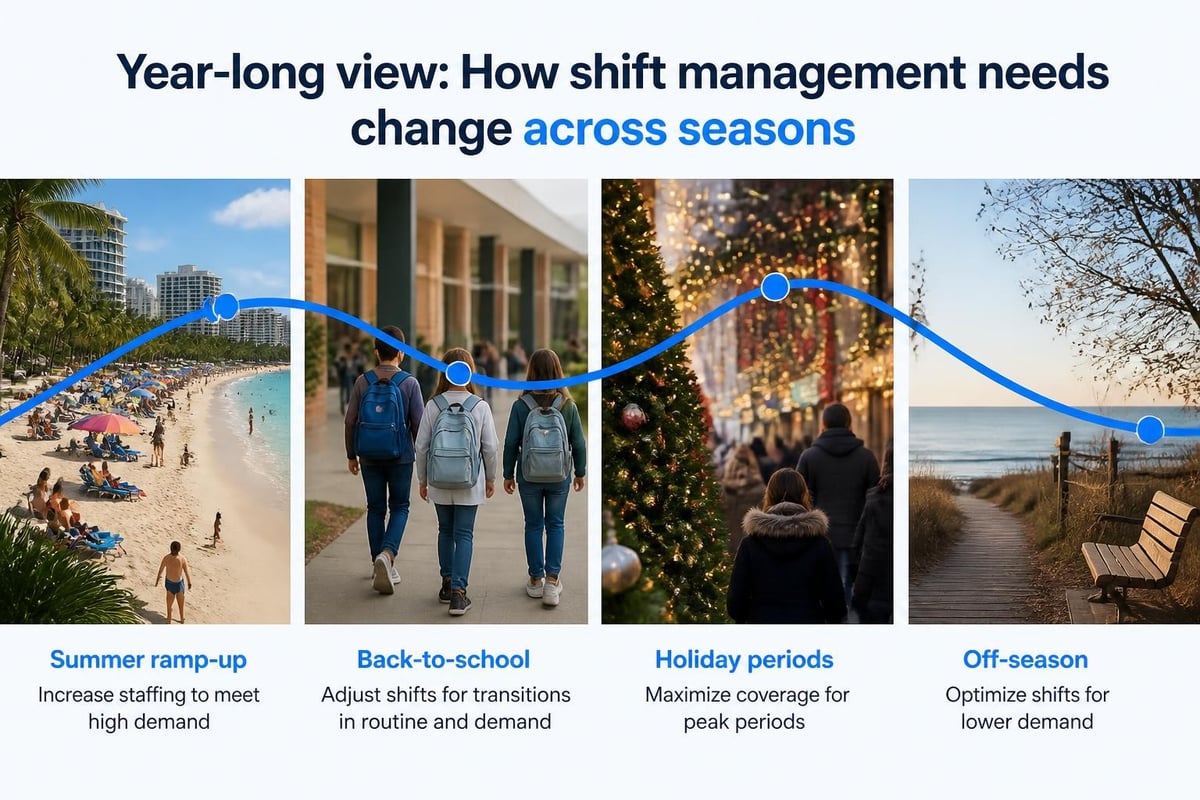
Your shift management needs change throughout the year. What works in July won't work in January.
Summer Ramp-Up
Summer is when everything gets more complicated. You've got:
- Extended hours
- More members using the facility
- Summer-only staff who are available full-time
- Swim team schedules overlapping with regular operations
- Special events and competitions
Start planning your summer schedule in early spring. Hire early enough that you can train new staff before the rush hits. Build in some extra coverage for the first few weeks of summer-things always take longer and go wrong more often when you're ramping up.
| Season | Typical Hours | Avg. Staff Needed | Main Challenges |
|---|---|---|---|
| Summer | 14+ hours/day | 12-20 staff | Peak volume, summer help turnover |
| School Year | 12 hours/day | 8-12 staff | After-school rush, limited available workers |
| Winter | 10 hours/day | 6-10 staff | Reduced programs, maintaining core team |
School Year Transitions
When school starts, your college students disappear, high school students become available only in evenings and weekends, and your adult members shift to different usage patterns.
Plan these transitions explicitly. Don't just let it happen and scramble to adjust. Know who's leaving for school, who's staying, and who's changing availability before the fall semester starts.
Holiday Coverage
Holidays are tricky. Some members expect you to be open. Others think you should give staff time off. You need to decide which holidays you'll close completely, which you'll run on reduced hours, and how to staff them fairly.
Post your holiday schedule early. Give staff as much notice as possible about expectations for holiday work. Many clubs rotate holiday duty or offer premium pay for working major holidays.
Communication Makes Everything Easier
Most shift management problems are actually communication problems in disguise.
Publishing Schedules Consistently
Pick a day and time when schedules get published, and stick to it. Every week, same time. This trains your staff to check schedules predictably instead of constantly asking.
Two weeks advance notice is generally good. More is better if you can manage it. Less than a week creates problems for people trying to plan their lives around work.
Making Changes Transparently
When you need to change the schedule after publishing, don't just update it and hope people notice. Actively notify affected staff immediately. Text, call, or use whatever communication method actually reaches them.
Document why changes happened. If it's because someone called out, say so. If it's because you realized you understaffed a shift, own it. People handle changes better when they understand the reasoning.
Setting Clear Expectations
Your staff should know:
- How far in advance schedules get published
- The deadline for requesting time off
- The process for swapping shifts
- What constitutes an acceptable reason to call out
- How much notice they should give when calling out
- Who to contact for different shift-related issues
Write this down. Include it in your employee handbook. Cover it during onboarding. Reference it when issues come up.
Using the Right Channels
Email for official schedule distribution. Text for urgent same-day stuff. A team chat app for shift swaps and questions. Voice calls for emergencies only.
Whatever channels you pick, be consistent. Don't randomly switch between email and text for the same types of communication. People need to know where to look for what.
Building a Better System Over Time
You won't get shift management perfect on your first try. That's fine. What matters is getting a little better every season.
Track What Actually Happens
Keep notes about problems that come up. When were you short-staffed? When did you have too many people standing around? Which shifts consistently have callouts? What patterns do you notice?
Review these notes before building your next schedule. Learn from what didn't work. Keep doing what did.
Ask Your Staff for Feedback
The people actually working the shifts know things you don't. They know which transitions between shifts don't leave enough time. They know when break schedules don't work. They know which combinations of staff work well together and which create friction.
Create a regular way to gather this feedback. It doesn't need to be formal. Even a quick "what's working and what's not?" conversation every month gives you valuable information.
Measure the Results
How's your labor cost as a percentage of revenue? Are you hitting that target or going over? How often are you scrambling for last-minute coverage? What's your staff turnover rate?
These metrics tell you whether your shift management is actually working. Effective swim club management means tracking this stuff and using it to make decisions.
Automate What You Can
Look for repetitive tasks in your scheduling process. Anything you do the same way every time is a candidate for automation.
Good software can auto-generate baseline schedules based on your rules, send reminders automatically, track hours, flag conflicts, and handle a lot of the tedious work. This frees you up to focus on the parts that actually need human judgment.
Modern platforms that include AI-powered features can even suggest optimal schedules based on your historical patterns and current needs. The technology is there-use it.
Making It Work at Multi-Site Operations
If you're running multiple pools or facilities, shift management gets exponentially more complex.
Standardize Where Possible
Use the same scheduling system across all locations. Use similar shift structures when facilities are similar. Train staff consistently so people can potentially work at multiple sites.
Standardization makes your life easier and creates more opportunities for staff to pick up extra shifts at different locations.
Allow for Local Flexibility
That said, each facility probably has unique needs. One pool might be busier on weekends. Another might have a huge summer camp program that changes everything.
Build a framework that works everywhere, then allow site managers to adjust for local realities. Centralize the systems, decentralize some of the decision-making.
Managing Float Staff
Some organizations keep a pool of float staff who can work at multiple locations as needed. This provides flexibility for coverage but requires careful coordination.
Float staff need to be trained on each location's specifics. They need to know where everything is, how each facility operates, and what the local expectations are. Don't just drop someone at a new site and assume they'll figure it out.
The Technology Question
Let's talk specifically about what kind of technology actually helps with shift management at swim clubs.
Standalone Scheduling Tools
These work if you're only solving the scheduling problem. They're usually cheaper and simpler than full club management systems. But you'll still need separate tools for member management, billing, check-ins, and everything else you do.
The constant switching between systems gets old. Information doesn't flow between them. You end up entering the same data in multiple places.
Integrated Club Management Platforms
This is where tools like PoolPulse make more sense. When shift management is part of a larger platform that handles your entire operation, everything works together.
You can see which staff are scheduled when a program is running. You can track labor costs against program revenue. You can prevent double-booking facilities and staff. You can tie check-in data to staffing levels to optimize future schedules.
The upfront cost might be higher than a standalone scheduling tool, but the time savings and reduced errors usually pay for themselves quickly.
What About Spreadsheets?
Look, plenty of clubs run their shifts in Google Sheets or Excel. It's free, it's flexible, and everyone knows how to use it.
The problem is that spreadsheets don't enforce rules, don't send reminders, don't flag conflicts, and don't integrate with anything else. They work until they don't, and when they fail, they fail spectacularly.
If spreadsheets are working for you today, fine. But plan your exit strategy before they stop working, because catching problems early is way easier than cleaning up a mess.
Real-World Scenarios
Let's look at how actual shift management decisions play out in realistic situations.
Scenario 1: The Summer Storm
It's mid-June. You're fully staffed for summer. Then a massive storm damages your outdoor pool, and it'll be closed for two weeks for repairs.
You've got staff scheduled for shifts that can't happen. Do you:
- Ask them to take unpaid time off?
- Move them to other duties?
- Have them help with repairs?
- Keep paying them even though they can't work?
There's no perfect answer, but having this conversation early and being clear about expectations helps. Some staff might appreciate unexpected time off. Others count on those paychecks. Know which is which.
Scenario 2: The Certification Lapse
You get to work Monday morning and realize one of your weekend lifeguards' certification expired on Friday. They worked both days this weekend. Now what?
First, figure out if your insurance is going to have issues. Contact them immediately. Be honest about what happened.
Second, get that person recertified ASAP or suspend them until they are.
Third, fix your system so this never happens again. If software didn't catch it, you need better software. If someone ignored the warnings, you need better processes.
Scenario 3: The Popular New Program
You added an early morning lap swim program, and it's way more popular than expected. You scheduled one lifeguard. You need at least two, maybe three.
Great problem to have, but you still need to solve it. Can you pull from other shifts? Do you need to hire? Can you temporarily adjust other programs to free up staff?
This is where flexible club management tools help. You can quickly see who's available, who's already maxed out on hours, and where you have room to adjust.
Good shift management makes running your swim club so much easier. It keeps your staff happy, your members safe, and your operations running smoothly without constant firefighting. The key is finding systems and processes that actually work for how you operate, not just copying what someone else does. If you're tired of juggling schedules across multiple spreadsheets and dealing with last-minute coverage problems, PoolPulse brings everything together in one platform built specifically for how swim clubs actually work. It handles shift scheduling alongside member management, billing, and check-ins so you can spend less time administrating and more time making your club better.

When Your Check-In Line Proves Software Is Too Slow
Discover how software timing affects your swim club's daily operations, from check-ins to billing, and why faster response times mean happier members.

What Your Billing and Invoices Are Telling You
Your swim club's billing and invoices reveal hidden patterns about late payments, refund requests, and cash flow. Here's how to read the signals.

The Swim Club Software Test Every Board Should Run
Run this simple test to see if your swim club software actually saves time or creates more work. Real scenarios, honest questions, better tools.
Want to see if PoolPulse is a good fit for your club?
Book a walkthrough and we'll show you exactly how PoolPulse can help based on your club's needs, goals, and current processes.