

System Management Tools for Swim Clubs (2026 Guide)
Discover how system management tools help swim clubs handle members, billing, and daily operations more efficiently in 2026.


Running a swim club means juggling a lot of moving parts. You've got members coming and going, billing cycles to track, facility access to manage, and staff schedules to coordinate. When you're handling all this with spreadsheets and different software programs that don't talk to each other, things fall through the cracks. That's where system management tools come in. These platforms help you keep everything in one place, so you're not constantly switching between programs or hunting for information when a parent calls with a question about their bill.
What System Management Tools Actually Do for Your Club
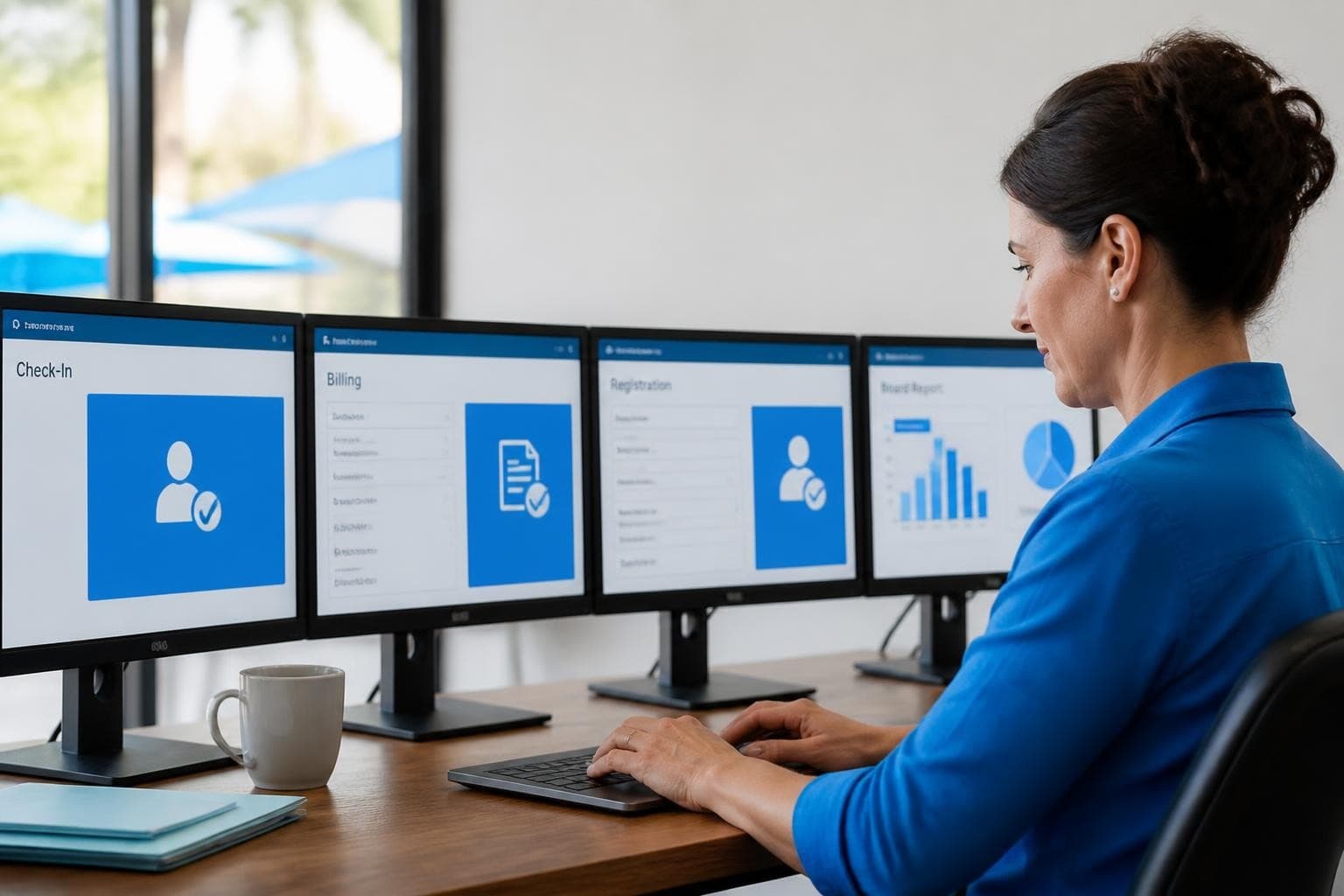
Think of system management tools as the central hub for everything happening at your facility. Instead of checking one program for memberships, another for billing, and a third for who's checked in today, you've got one place to see it all.
These tools handle the repetitive tasks that eat up your admin time. They send renewal reminders automatically. They track who's paid and who hasn't. They let members update their own contact information instead of calling you every time they move or change phone numbers.
The main things system management tools handle include:
- Member database and contact information
- Billing and payment processing
- Renewal tracking and automated reminders
- Facility access and check-in management
- Staff scheduling and communication
- Reporting on revenue and membership trends
When you're looking at choosing the right system management tools , you want something that actually fits how swim clubs operate, not just generic software built for any business.

Why Clubs Get Stuck with Manual Processes
Most swim clubs didn't start out planning to run everything manually. It happens gradually. You launch with a simple spreadsheet for your first 50 members. Then you add a separate document for billing. Maybe you use email filters to organize registration requests. Before you know it, you're managing five different systems that require manual updates every time something changes.
I've talked to club managers who spend three hours every Monday morning just updating spreadsheets with weekend registrations and payments. That's 150 hours a year on data entry alone.
The problem gets worse during peak season. When you're processing 30 new registrations in a week while also handling regular operations, manual systems break down. You forget to send a welcome email. Someone's payment doesn't get recorded. A family shows up for swim time, but they're not on the access list because nobody updated it yet.
Choosing Tools That Match Your Actual Needs
Not all system management tools work the same way. Some are built for enterprise companies with IT departments. Others are designed for specific industries like retail or healthcare. What you need is something that understands how membership-based facilities actually operate.
Key Features That Matter for Club Operations
When I evaluate management software, I look at whether it solves real problems we face every day. Can it handle family memberships where one account covers multiple swimmers? Does it track different membership tiers with different access levels? Will it automatically calculate prorated fees when someone joins mid-season?
Here's what actually makes a difference in daily operations:
| Feature | Why It Matters | Real Impact |
|---|---|---|
| Automated billing | Processes payments without manual intervention | Saves 10-15 hours per billing cycle |
| Member self-service | Let members update info and view accounts | Reduces admin calls by 40-50% |
| Access control integration | Syncs membership status with gate/door systems | Prevents unauthorized access automatically |
| Flexible membership types | Handles families, individuals, seasonal variations | Accommodates your actual membership structure |
The best swim club management software adapts to how you run things, rather than forcing you to change your processes to fit the software.
Integration Capabilities You Can't Ignore
Your management system doesn't exist in isolation. It needs to work with your payment processor, your website, your email system, and possibly your gate access hardware. When these systems don't talk to each other, you're back to manual data entry.
I learned this the hard way when we tried using separate systems for registration and billing. Every new member had to be entered twice. Every address change required updates in two places. And when the information didn't match, we couldn't figure out which system had the correct data.
Look for tools that connect directly with the other services you use. If you process payments through Stripe, does the management system integrate with it automatically? When someone fills out a registration form on your website, does it flow directly into your member database?
Common Pitfalls When Implementing New Systems
You've probably heard stories about clubs that bought expensive software and then went back to their old spreadsheets after six months. This happens more often than you'd think, and it's usually not because the software was bad. It's because the implementation went wrong.
The Migration Challenge Everyone Faces
Moving your existing data into a new system is where most implementations get stuck. You've got years of member history, payment records, and notes scattered across different files. Getting all that into a new platform feels overwhelming.
Here's the migration approach that actually works:
- Start with current active members only (not your entire historical database)
- Import essential information first (names, contact info, membership status)
- Add billing history for active accounts
- Bring in additional data gradually as needed
- Keep old records accessible for reference but don't try to migrate everything
A swim club software migration checklist helps you plan this process step by step instead of trying to do everything at once.
Training Your Team and Members
The best system management tools won't help if your staff doesn't know how to use them. And if your members can't figure out the self-service portal, they'll just call you anyway, defeating the purpose.
Plan for actual training time, not just "figure it out as you go." Schedule sessions where staff can practice common tasks like processing a new registration or handling a refund. Create simple guides for the tasks people do most often.
For members, the key is making the transition gradual. Maybe you start by having them view their account online but still handle payments your old way. Once they're comfortable logging in, you introduce online payments. Breaking it into steps prevents the "this is too complicated" resistance.

How Modern Tools Handle Different Club Models
Not every swim club operates the same way. Some are small neighborhood pools with 100 families. Others are competitive swim clubs with multiple teams and hundreds of members. Your management tools need to flex based on your specific setup.
Family Memberships and Complex Structures
Family memberships create complications that basic database software can't handle well. You need to track individual swimmers under a family account, bill one contact but grant access to multiple people, and send communications that reach the right person for different situations.
Good system management tools let you set up households with primary contacts for billing, emergency contacts for each child, and separate swimmer profiles that track things like team placement or lesson progress. When the Johnsons' credit card expires, you send one notification to the billing contact, not four separate emails to every family member.
Seasonal Operations and Varied Access Levels
If you run a seasonal facility, your system needs to handle membership types that change throughout the year. Summer memberships, year-round memberships, guest passes, and special event access all require different rules.
The same goes for facilities with multiple amenities. Maybe your members have pool access, but tennis courts cost extra. Or you've got different access hours for different membership tiers. Trying to manage this with manual tracking creates constant confusion about who should be allowed where and when.
HOA pool management software handles these variations automatically, adjusting access permissions based on membership type and season without requiring you to manually update access lists every time something changes.
Cost Considerations Beyond the Subscription Fee
When you're comparing system management tools, the monthly subscription cost is just the starting point. The real expense includes setup time, training, ongoing maintenance, and what it costs you to work around limitations in the software.
Hidden Costs That Add Up
Some platforms charge extra for features you assume would be included. You might pay a base fee but then discover that email communications, reporting tools, or integrations with other services all cost additional money each month. By the time you've added everything you actually need, that affordable-looking platform is suddenly expensive.
Transaction fees on payments are another surprise. Some systems take a percentage of every membership fee you process. When you're running thousands of dollars through the system monthly, those fees add up quickly.
Questions to ask before committing:
- What features are included in the base price?
- Are there transaction fees on payments?
- Do integrations with other services cost extra?
- What happens if you exceed your member count?
- Is support included or does it cost extra?
Calculating the Real Return on Investment
The flip side is understanding what you save by implementing good management tools. If they eliminate 15 hours of admin work per week, what's that worth? If they prevent billing errors that were costing you $500 a month in lost revenue, that's real money.
Think about the time you currently spend on tasks the system would automate. Sending renewal reminders manually. Updating spreadsheets when members pay. Responding to "what's my account balance" emails. Creating monthly reports. All those hours have a cost, whether you're paying staff or doing it yourself.
Most clubs find that proper system management tools pay for themselves within the first few months just by reducing admin time. The revenue recovery from better billing practices and fewer missed renewals adds even more value.
Data Security and Member Privacy
When you move to cloud-based system management tools, you're putting sensitive member information into someone else's hands. That makes security a critical consideration, not just a nice-to-have feature.
Your system contains names, addresses, phone numbers, email addresses, and payment information for every member. If that data gets breached or mishandled, you're dealing with angry members, potential legal issues, and damage to your club's reputation.
What to Look for in Security Features
Professional management platforms should use industry-standard encryption for data storage and transmission. They should have regular security audits. They should offer two-factor authentication for admin accounts. And they should be transparent about their security overview and practices.
Ask about data backups too. If something goes wrong with the system, can your member data be recovered? How often are backups performed? Where are they stored?
Payment processing deserves special attention. The platform should be PCI compliant, meaning it meets the security standards required for handling credit card information. Ideally, card data should never even pass through the management system but go directly to the payment processor.
Privacy Policies and Data Ownership
Read the privacy policy carefully. What can the software company do with your member data? Can they use it for marketing their services to your members? What happens to your data if you cancel the service?
You should own your data completely. That means you can export it at any time in a usable format. If you decide to switch platforms or go back to managing things another way, you need to be able to take your member information with you.

Making Your Current Systems Work Better Together
Maybe you're not ready to switch to a completely new platform yet. That's fine. You can still improve how your existing system management tools work together, even if they're not perfect.
Creating Better Workflows with What You Have
Start by mapping out your current processes. When a new member registers, what happens step by step? Where does information get entered multiple times? Where do things typically get stuck or forgotten?
Look for the biggest pain points and address those first. If manual billing is your biggest headache, maybe you can add a payment processing tool that integrates with your current member spreadsheet. If communication is the issue, you might implement an email platform that can pull contact information from your database.
Quick wins that improve efficiency:
- Set up templates for common emails (renewal reminders, welcome messages, payment confirmations)
- Use calendar automation for recurring tasks
- Create checklists for processes like new member onboarding
- Establish naming conventions for files and folders
- Schedule regular data review sessions to catch errors early
Understanding open-source systems management tools can also provide cost-effective options for connecting different systems you're already using.
Documentation That Actually Helps
Write down how things work. Not formal corporate documentation, just simple instructions that help someone figure out how to complete common tasks. When Sarah is out sick and someone needs to process refunds, they should be able to follow your notes and do it correctly.
This documentation becomes especially valuable during busy periods or transitions. New staff can get up to speed faster. Board members can understand how operations work. And you'll have a reference when you eventually do switch to new system management tools because you'll know exactly what processes the new system needs to handle.
Evaluating Tools for Multi-Facility Operations
If you manage multiple pools or clubs, or if you're part of an HOA with several amenities, your management needs get more complex. You need tools that handle multiple locations without creating separate databases for each one.
Centralized Management with Location-Specific Controls
The ideal setup lets you see everything across all your facilities from one dashboard while still maintaining separate operations for each location. You want to run a report showing total membership across all properties, but you also need to know which members have access to which specific pools.
Staff permissions matter here too. Your office manager might need access to everything, but the lifeguard supervisor at one location only needs to see data for that specific pool. The system should let you set these permissions without creating completely separate accounts.
| Management Approach | Pros | Cons |
|---|---|---|
| Separate systems per location | Simple setup, location independence | No consolidated reporting, duplicate work |
| Single shared database | Complete visibility, unified membership | Complex setup, potential access issues |
| Unified platform with location modules | Best of both approaches | Requires proper configuration |
For organizations running multiple facilities, multi-community amenity management capabilities make operations significantly smoother.
Reporting Across Locations
When you're presenting to your board or planning for next season, you need data that rolls up across all locations but can also break down by individual facility. Which pool has the highest renewal rate? Where are you seeing the most guest passes? Which location's revenue is trending up?
Good system management tools generate these reports automatically instead of forcing you to manually combine data from multiple sources. You can see patterns across your entire organization and identify which locations might need different approaches or additional support.
AI and Automation in Club Management
The newest system management tools are starting to incorporate AI features that go beyond basic automation. Instead of just sending the same renewal reminder to everyone, they can predict which members are most likely to not renew and suggest personalized approaches.
Practical AI Applications That Help Now
AI sounds fancy, but the useful applications are pretty straightforward. The system might notice that families who don't check in during the first two weeks of their membership rarely renew. It can flag these accounts so you can reach out personally and make sure they're getting value.
Or it might analyze your billing data and identify patterns you're missing. Maybe Wednesday is your worst day for payment failures, suggesting you should move your billing cycle. Perhaps certain zip codes have higher cancellation rates, pointing to a transportation or access issue you could address.
AI features that actually make a difference:
- Predicting which memberships are at risk of not renewing
- Identifying unusual patterns that might indicate problems
- Suggesting optimal times for communication based on response rates
- Flagging potential billing errors before they cause issues
- Recommending membership types based on usage patterns
The AI-powered insights available in modern platforms help you make better decisions without requiring you to become a data analyst.
Keeping the Human Touch
Here's the thing about automation and AI: they work best when they help you be more human, not less. Use automated renewal reminders so you have time for personal calls to long-time members. Let the system flag at-risk memberships so you can reach out before someone decides not to renew.
The goal isn't to remove personal interaction. It's to make sure those interactions happen at the right times with the right people, and that you're not too buried in administrative work to have meaningful conversations with your members.
Mobile Access and Remote Management
Being able to manage your club from anywhere isn't just convenient. It's becoming essential. Board members want to check membership numbers from home. You need to approve a refund while you're at your kid's soccer game. Your staff needs to look up member information from the pool deck.
What Mobile Capabilities Actually Mean
True mobile access means more than just viewing your desktop dashboard on a smaller screen. It means interfaces designed for phones and tablets, with the most common tasks easily accessible. It means offline capability for when WiFi is spotty at the pool. It means quick actions that don't require multiple screens and login steps.
For staff at the facility, mobile access to system management tools means they can check in members, verify account status, and handle basic questions without running to the office computer. For administrators, it means you can handle time-sensitive issues immediately instead of waiting until you're back at your desk.
Security Considerations for Remote Access
Mobile access increases convenience but also creates security risks. Make sure your system management tools require strong authentication for mobile users. Consider whether all staff need full access from mobile devices or whether limited permissions make more sense.
Lost phones are a real concern. Your platform should let you immediately revoke access from a specific device if someone's phone gets stolen. And mobile sessions should time out automatically, so someone can't pick up an unlocked phone and access member data.
Building Your Source of Truth
One of the biggest challenges with multiple system management tools is figuring out which one has the correct information. Is the email address in your billing system the right one, or is it the one in your access control database? Which membership end date is accurate?
Creating a source of truth in your management strategy means establishing one system as the definitive record. All other systems pull data from this source, not the other way around.
Why This Matters for Daily Operations
When a member calls to update their credit card, you should only need to update it in one place. When you change someone's membership type, that change should automatically flow to access control, billing, and communications. If you're making the same update in three different systems, you're wasting time and creating opportunities for errors.
The source of truth concept also matters for reporting. You can't make good decisions based on inconsistent data. If your billing system shows 450 active members but your access control system shows 475, which number do you trust? Having one definitive source eliminates this confusion.
Keeping Data Clean and Accurate
Even with a single source of truth, data quality requires ongoing attention. Set up regular checks for common issues like duplicate member records, incomplete contact information, or outdated membership statuses.
Good system management tools include data validation features that prevent obvious errors during entry. They might flag when someone enters a phone number with the wrong number of digits or when an email address is missing the @ symbol. These small catches prevent bigger problems later.
Customization vs. Configuration
Here's something that trips up a lot of clubs: the difference between customization and configuration. Both let you adjust the software to match your needs, but they work very differently and have different long-term implications.
Configuration Means Flexible Settings
Configuration means the software offers built-in options you can turn on and off or adjust to match your situation. You can configure different membership types, set your billing cycle, choose which automated emails to send, and adjust how member portals look. These changes happen within the software's existing framework.
The advantage of configuration is that you can make changes yourself without technical help, and software updates don't break your settings. When the platform adds new features, they integrate smoothly with your configured setup.
When Customization Becomes a Problem
Customization means actually changing the software's code to make it do something it wasn't designed to do. Sometimes this is necessary, but it creates ongoing complications. Custom code can break when the software updates. It requires technical expertise to maintain. It makes switching platforms later much harder because your custom features don't exist anywhere else.
Before you commit to heavy customization, ask whether you really need that specific feature or whether you could adjust your process slightly to use the software's built-in capabilities. Being highly configurable without requiring custom code gives you flexibility without the technical headaches.
Getting Buy-In from Your Board and Members
Even when you know new system management tools would make life easier, you still need to convince other people. Your board might worry about the cost. Members might resist change. Staff might be comfortable with current processes, even if they're inefficient.
Making the Case with Real Numbers
Boards respond to concrete information, not vague promises about efficiency. Show them the hours currently spent on manual tasks and what that costs in staff time. Point out revenue you're losing to missed renewals or billing errors. Demonstrate how other similar clubs have benefited from better management tools.
The make your case resources help you build a compelling argument based on your specific situation, not generic benefits.
Present the comparison clearly:
| Current Process | Time Cost | Error Rate | Proposed Solution | Expected Improvement |
|---|---|---|---|---|
| Manual renewal reminders | 6 hrs/month | ~15% missed | Automated reminders | 95% reduction in time, <5% missed |
| Spreadsheet billing | 12 hrs/month | ~8% errors | Integrated billing | 90% reduction in time, <2% errors |
| Phone/email inquiries | 20 hrs/month | N/A | Member self-service | 40% reduction in inquiries |
Addressing Member Concerns
Members worry about change because they're comfortable with how things work now, even if it's not ideal. They also worry about security when you're asking them to create online accounts with personal information.
Start by highlighting what stays the same. They'll still have the same membership, the same pool access, the same contact with staff. What changes is that they'll have more convenience and faster service. Frame it as addition, not replacement.
Offer support during the transition. Hold question-and-answer sessions. Create simple how-to guides. Make sure staff can help members who struggle with the new system. Most resistance fades once people see that it actually works.
Measuring Success After Implementation
After you've implemented new system management tools, how do you know if they're actually working? You need concrete ways to measure improvement, not just general feelings that things are better.
Metrics That Show Real Impact
Track the specific problems you were trying to solve. If manual data entry was eating up time, measure how much time you're now spending on it. If billing errors were costing you money, track error rates before and after. If member complaints about communication were common, monitor complaint frequency.
Key metrics to monitor:
- Staff hours spent on administrative tasks per week
- Number of member service inquiries received
- Billing error rate and associated costs
- Renewal rate percentage
- Time from registration to active membership
- System uptime and accessibility
Don't just track these metrics for the first month. Check them quarterly to see long-term trends. Some benefits take time to show up, like improved renewal rates from better member communication.
Adjusting Based on What You Learn
No system implementation goes perfectly. You'll discover that some features don't work quite how you expected. Members might struggle with aspects of the member portal you thought were obvious. Staff might find workarounds instead of using certain features the way they were designed.
Pay attention to these patterns and adjust accordingly. Maybe you need additional training on specific features. Perhaps you need to reconfigure certain settings. Sometimes you discover that a feature you thought would be valuable doesn't actually help with your real workflows.
The best system management tools give you flexibility to make these adjustments without starting over from scratch. Understanding Windows Server management tools and similar enterprise solutions can provide insights into professional-grade administration approaches, even if your club operates on a smaller scale.
Staying Current as Technology Evolves
Technology changes quickly. The system management tools you choose today will add new features, change interfaces, and evolve their capabilities. Your job is to keep up enough to take advantage of improvements without spending all your time learning new features.
Managing Updates and Changes
Most modern platforms update regularly, sometimes monthly. These updates usually add features or fix problems, but they can also change how things work. Good software companies communicate changes clearly and give you time to adjust before major changes take effect.
Set aside time quarterly to review what's new in your platform. You don't need to adopt every feature immediately, but you should know what's available. That new reporting tool they added might solve a problem you've been working around. The updated mobile app might make life easier for your staff.
When to Consider Switching Platforms
Sometimes the right answer is to switch to different system management tools. Maybe your club has grown beyond what your current platform can handle. Perhaps a competitor has developed features that address problems your current system can't solve. Or maybe your vendor has stopped innovating and you're stuck with outdated technology.
Before you switch, make sure the problems are with the software, not with how you're using it. Talk to your vendor about whether upcoming updates will address your concerns. Consider whether you could solve issues through better training or configuration before you go through another migration.
If you do decide to switch, the lessons you learned from your first implementation will make the second one smoother. You'll know what questions to ask, what data matters most, and how to train staff effectively.
System management tools aren't just about making technology work. They're about giving you back time to focus on running a great swim club instead of drowning in administrative tasks. When you choose the right platform and implement it thoughtfully, you create space for the work that actually matters: building a thriving community around your facility. PoolPulse brings together member management, billing, access control, and communications in one AI-powered platform specifically designed for swim clubs and membership facilities. Ready to see how much simpler club administration can be? Check out what PoolPulse can do for your operation.

What Your Billing and Invoices Are Telling You
Your swim club's billing and invoices reveal hidden patterns about late payments, refund requests, and cash flow. Here's how to read the signals.
The Swim Club Software Test Every Board Should Run
Run this simple test to see if your swim club software actually saves time or creates more work. Real scenarios, honest questions, better tools.

The Seven Signs You've Outgrown Your Club Operations
Your swim club is growing, but your tools aren't keeping up. These seven warning signs reveal when manual processes cost more than solutions.
Want to see if PoolPulse is a good fit for your club?
Book a walkthrough and we'll show you exactly how PoolPulse can help based on your club's needs, goals, and current processes.