

The Daily Health Check Every Swim Club Should Run
Learn how regular system checking prevents member complaints, billing errors, and front desk chaos at your swim club.


It's Saturday morning, and your front desk calls because three families can't get through the gate. Two members insist they paid their dues, but your records show they're past due. Another parent is upset because their child's swim lesson slot disappeared from the schedule. You're at home drinking coffee, and now you're troubleshooting problems that should never have happened. Sound familiar? These issues don't appear out of nowhere. They're symptoms of something deeper: your club isn't doing regular system checking to catch problems before members notice them.
What System Checking Actually Means for Your Club
System checking isn't about running software diagnostics or calling your IT person. It's the regular process of verifying that every part of your club's operation works the way it should, from member data to billing to access control. Think of it like checking your pool's chemical levels. You don't wait until the water turns green to test the chlorine. You check it daily because prevention beats crisis management every single time.
Most swim clubs treat their management system like a set-it-and-forget-it appliance. They enter member data, set up billing schedules, and assume everything will keep working perfectly. But data gets corrupted. Payment methods expire. Access codes stop syncing. Staff members create workarounds that break other processes. Without regular system checking, these small issues pile up until something breaks in front of a paying member.
The Real Cost of Skipping Regular Checks
Let me share what happened at a tennis and swim club in Virginia. They skipped their monthly system checking routine during their busy summer season. Three months later, they discovered that 47 families had been swimming without active memberships because a bulk import had incorrectly marked them as "paid through December." They lost over $18,000 in revenue that they could never recover. The board was furious. The manager nearly lost her job.
Here's what regular system checking prevents:
- Billing errors that cost you real money
- Access control failures that let non-members in or lock out paying families
- Data corruption that creates duplicate accounts or lost records
- Integration breakdowns between your website, gate system, and management platform
- Staff confusion from outdated procedures or conflicting information
The fundamental principles of system testing apply just as much to club operations as they do to software development. You need regular verification that your processes work as intended.

Building Your Weekly System Checking Routine
You don't need to spend hours on this. A solid system checking routine takes about 30 minutes per week if you know what to look for. The key is consistency. Pick the same day and time each week, put it on your calendar, and protect that time like you would a board meeting.
Monday Morning Member Data Check
Start your week by verifying your member database is clean and current. This catches weekend problems before they multiply.
Run these checks every Monday:
- Review all new registrations from the past week for completeness
- Check for duplicate member accounts (same email, similar names)
- Verify that family relationships are correctly linked
- Confirm emergency contact information exists for all active members
- Look for members with missing or expired payment methods
This takes about 10 minutes. You're not fixing every small issue. You're identifying patterns that signal bigger problems. If you see five new registrations with missing emergency contacts, that tells you something's wrong with your registration form or process.
Wednesday Payment System Verification
Mid-week is perfect for billing system checking because you can still fix issues before the weekend rush. Payment problems cause more member complaints than anything else, so this check pays for itself immediately.
| Check Item | What to Look For | Red Flag |
|---|---|---|
| Failed payments | Transactions from the past 7 days that didn't process | More than 5% failure rate |
| Pending invoices | Outstanding balances over 30 days | Same members appearing repeatedly |
| Payment method expiration | Credit cards expiring in next 60 days | No proactive member notification sent |
| Refund requests | Unprocessed refunds over 5 days old | Delayed processing pattern |
When you spot a red flag, dig deeper. A high failure rate might mean your payment processor has new fraud filters. Repeated late payers might need a different billing schedule. The point of system checking is catching these patterns before they become emergencies.
Modern swim club management software should make this verification process straightforward with built-in reporting and automated alerts.
Friday Access Control Audit
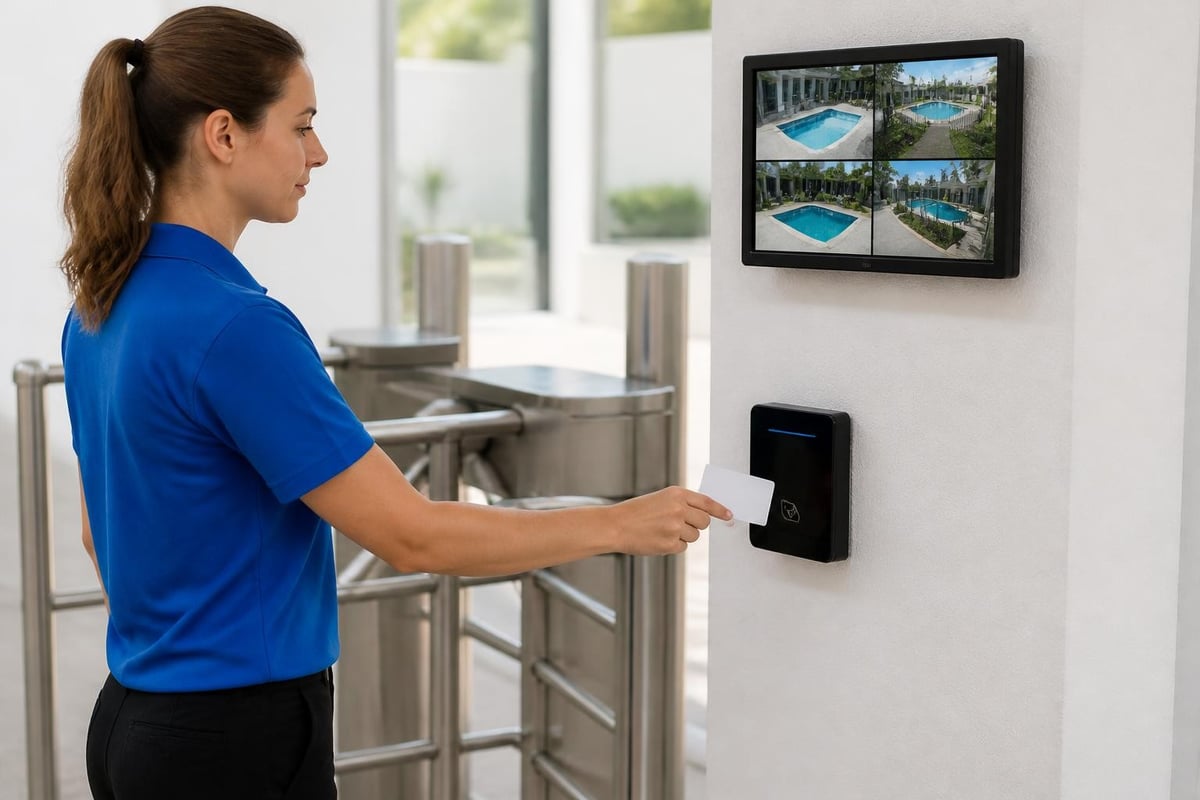
End your week by verifying that your physical access systems match your member database. Gate systems, door codes, key cards, and mobile app access all need regular checking to stay synchronized.
Friday checklist items:
- Compare active member list against gate system access list
- Remove access for expired or cancelled memberships
- Add access for new members from the past week
- Test a random sample of member credentials (ask the front desk to verify 5-10 cards)
- Check for system sync errors between your management platform and access hardware
One club I know runs this check religiously every Friday at 2 PM. They catch an average of three access mismatches per week. That's three potential weekend problems they prevent, every single week. The comprehensive approach to ensuring systems function correctly emphasizes this type of regular verification.
Monthly Deep Dive System Checking
Weekly checks catch operational problems. Monthly checks catch systemic issues. Set aside two hours on the first Monday of each month for a thorough review of everything your weekly checks don't cover.
Data Integrity and Relationship Verification
Your member database is only useful if the data inside it is accurate and properly connected. Over time, data degrades. People move, change phone numbers, update email addresses. Staff members create workarounds that break data relationships. Monthly system checking finds these issues while they're still manageable.
Start by running reports that highlight data quality problems:
- Members with no associated family or household
- Children listed without linked parent accounts
- Email addresses shared across multiple unrelated accounts
- Phone numbers that failed recent communication attempts
- Addresses flagged as undeliverable by postal verification
Then work through each category systematically. Don't try to fix everything in one session. Focus on the highest-priority issues: anything affecting billing, anything creating security risks, anything preventing member communication.
Financial Reconciliation Beyond Basic Billing
Your weekly payment checks verify transactions processed correctly. Your monthly review verifies your financial picture is complete and accurate. This is where you catch the sneaky problems that cost real money.
Monthly financial system checking tasks:
- Reconcile total monthly revenue against individual member payments
- Verify all discounts and promotions applied correctly
- Check for orphaned payments (money received with no associated member)
- Review refund totals and reasons for patterns
- Compare expected recurring revenue against actual collections
- Identify revenue leakage from failed renewals or billing errors
One HOA pool we work with discovered through monthly system checking that their "family discount" code was being applied twice on some accounts, cutting their revenue by 25% instead of the intended 15%. They'd been losing $400 monthly for six months before the check caught it. Revenue recovery becomes much harder when you don't catch problems quickly.
Integration and Automation Health Check
If your club uses multiple systems that talk to each other (website, payment processor, gate system, email platform), you need monthly verification that these integrations still work. APIs change. Software updates break connections. Systems that worked perfectly last month can fail silently, and you won't know until members complain.
Test each integration point:
- Submit a test registration through your website and verify it appears correctly in your management system
- Process a test payment and confirm it updates the member balance
- Create a new member account and verify access credentials sync to your gate system
- Send a test email campaign and check delivery rates and link functionality
- Update a member record and confirm changes propagate to all connected systems
This follows the best practices for end-to-end testing by verifying complete workflows rather than isolated components. When you find a broken integration, you know exactly where the problem is and can fix it before it affects operations.
Seasonal System Checking for Peak Times
Your regular weekly and monthly checks maintain steady-state operations. But swim clubs aren't steady-state businesses. You have intense seasonal fluctuations that require additional system checking before and during peak periods.
Pre-Season Preparation Checklist
Two weeks before your busy season starts (usually late April or early May), run a comprehensive system check that goes beyond your normal routine. You're about to ask your management system to handle three times the normal load. Now is not the time to discover problems.
Pre-season system checking priorities:
- Load test your registration system with simulated high traffic
- Verify your payment processor can handle increased transaction volume
- Check that automated renewal notices are queued and ready
- Confirm staff accounts have correct permissions for seasonal workers
- Review and update emergency procedures and contact information
- Test your backup and recovery procedures
- Verify mobile app functionality if members use it for access or registration
This intensive check takes about four hours, but it's worth every minute. One club manager told me she caught a critical database backup failure during her pre-season system checking. If she'd discovered it during the season after a data loss event, it would have been catastrophic.
Mid-Season Health Monitoring
June and July are your money months. You can't afford system failures when you're running at capacity. Switch from weekly system checking to twice-weekly during peak season. Focus on high-impact areas: billing, access control, and communication systems.
Create a simplified checklist you can run quickly:
| Check Area | Quick Verification | Time Required |
|---|---|---|
| Payment processing | Review past 3 days of transactions for failures | 5 minutes |
| Access control | Spot-check 10 random members at the gate | 10 minutes |
| Database performance | Check system response times and error logs | 5 minutes |
| Communication delivery | Verify recent emails weren't blocked or bounced | 5 minutes |
That's 25 minutes, twice a week. It's not comprehensive, but it catches urgent problems while they're still small. Save the deep analysis for your monthly check when you have more time.
The monitoring and diagnostics best practices from enterprise software apply equally to club management systems. Consistent monitoring prevents catastrophic failures.

System Checking for Multi-Location Operations
If you manage multiple pools, tennis facilities, or community amenities, your system checking needs scale up in complexity. You're not just verifying one location works correctly. You're ensuring data consistency across facilities, proper access control for different locations, and accurate financial reporting that separates revenue by site.
Cross-Location Data Consistency
Members who use multiple facilities expect seamless access. They don't want to register separately for the pool and the tennis courts. They don't want to manage different payment methods. They expect one account, one billing statement, one membership.
That means your system checking must verify:
- Member records sync correctly across all locations
- Access credentials work at appropriate facilities based on membership type
- Billing consolidates charges from multiple locations correctly
- Family relationships respect location-specific rules and restrictions
- Reservation systems show availability across all relevant facilities
Run this check monthly, or more frequently if you're actively experiencing cross-location issues. Start by selecting five member accounts that regularly use multiple facilities. Trace their complete journey through your system. Can they reserve courts and pool time through the same interface? Does their billing statement clearly show charges by location? Do their access credentials work at both facilities?
If you find problems with these five test cases, you likely have systematic issues affecting many members. That's valuable information for making your case for system improvements or upgrades.
Location-Specific Configuration Verification
Different facilities have different rules, hours, capacity limits, and pricing. Your system checking needs to verify these location-specific configurations remain correct and don't accidentally get overwritten or merged.
Check these configuration items:
- Operating hours and seasonal schedule changes
- Capacity limits for different areas or activities
- Pricing tiers and location-specific fees
- Age restrictions and safety rules
- Staff access permissions by location
- Local contact information and emergency procedures
Create a configuration baseline document for each location. During your monthly system checking, compare current settings against this baseline. Any discrepancy needs investigation. Sometimes changes are legitimate (you updated hours for summer). Sometimes they're errors (a staff member accidentally changed the wrong location's settings).
For HOA communities managing multiple community amenities , this configuration checking becomes even more critical as each community expects accurate, independent management.
Automation and AI in System Checking
Here's the good news: you don't have to do all this system checking manually. Modern club management platforms can automate significant portions of the verification process, freeing you to focus on analyzing results and fixing problems rather than hunting for them.
What You Can Safely Automate
Smart automation handles repetitive verification tasks that follow clear rules. Set up automated checks for:
Daily automated verification:
- New registrations completeness scan
- Payment processing failure alerts
- Access control sync status between systems
- Database backup completion confirmation
- Critical error log review
Weekly automated reporting:
- Member data quality summary (missing fields, duplicates, inconsistencies)
- Financial reconciliation dashboard
- Integration health status across all connected systems
- Unusual activity patterns flagged for review
Monthly automated analysis:
- Revenue trends and variance from projections
- Member retention and churn patterns
- System performance and capacity utilization
- Security audit and access review
The key is setting up these automated checks once, then reviewing their output regularly. Automation finds the problems. You still need to interpret what they mean and decide what to do about them. Understanding API monitoring best practices helps you configure effective automated checking.
Where Human Judgment Still Matters
Don't automate away your critical thinking. Some system checking requires human judgment that algorithms can't replicate:
- Evaluating whether a data inconsistency is an error or a legitimate edge case
- Deciding if a payment pattern represents fraud or a member in financial difficulty
- Determining if an access control issue needs immediate action or can wait
- Assessing whether system performance problems require infrastructure changes
- Judging if member feedback indicates a system problem or a process issue
AI-powered tools can surface patterns and anomalies that deserve your attention. The AI-powered insights in modern club management software identify issues you might otherwise miss. But the decision about what to do with that information remains yours.
Building a System Checking Culture
The hardest part of effective system checking isn't the technical work. It's building organizational discipline to actually do it consistently. Everyone agrees it's important, but it always seems less urgent than the crisis of the moment.
Getting Your Team On Board
Your front desk staff, program coordinators, and managers all play a role in system checking. They interact with the system daily and often notice problems first. But they won't report issues if they don't understand why it matters or don't have an easy way to do it.
Create a simple problem reporting process:
- Make it effortless: One-click or one-email reporting, not a complex form
- Close the loop: Tell staff what you did with their report, even if you couldn't fix it
- Recognize contributions: Thank people who catch problems early
- Share wins: When system checking prevents a disaster, tell the team about it
One club I know has a Slack channel called "system-health" where any team member can post concerns. The manager reviews it daily and responds to every post within 24 hours. This simple practice catches dozens of small issues before they become big problems.
Documentation That Actually Gets Used
You need documented system checking procedures, but let's be honest: nobody reads 20-page procedure manuals. Create documentation that's actually usable:
Checklist format: Step-by-step lists that people can follow without thinking Screenshots: Show exactly what they should see at each step Decision trees: "If you see X, do Y; if you see Z, do A instead" Expected timeframes: "This check should take 10 minutes; if it's taking longer, something's wrong"
Store these documents where people actually work. If your team uses your management platform daily, put the checklists there. If they work from a shared Google Drive, that's where procedures belong. The best documentation is the one that gets used.
Comprehensive testing best practices emphasize this same principle: processes must be practical enough for teams to follow consistently.
Common System Checking Mistakes to Avoid
Even clubs that commit to regular system checking often make preventable mistakes that undermine their efforts. Learning from others' errors saves you time and frustration.
Checking Too Much or Too Little
Some clubs try to verify everything in their system every week. They spend hours on exhaustive checks that find nothing important. They burn out and eventually stop checking altogether. Other clubs check only the most obvious items and miss systemic problems until they explode.
Find the right balance:
- Weekly: High-impact areas where problems occur frequently and affect members immediately
- Monthly: Systemic issues, data quality, and financial reconciliation
- Quarterly: Strategic reviews, capacity planning, and configuration audits
- Annually: Comprehensive system evaluation and vendor relationship review
Adjust this schedule based on your club's size and complexity. A 200-member pool needs less frequent checking than a 2,000-member multi-facility operation.
Checking Without Acting
Finding problems is pointless if you don't fix them. Yet many clubs run system checks, document issues, and then do nothing about them. The same problems appear in next month's check, and the month after that.
Create a simple issue tracking system:
| Issue Description | Priority | Responsible | Due Date | Status |
|---|---|---|---|---|
| 23 members missing emergency contacts | Medium | Sarah | March 15 | In Progress |
| Payment processor timeout errors | High | Manager | March 8 | Assigned |
| Tennis court #3 access code not syncing | Low | Front Desk | March 20 | Open |
Review this list during your weekly system checking. Move items forward or escalate them if they're stuck. Issues that persist for more than 30 days need either immediate action or formal acceptance that you're not going to fix them.
Checking in Isolation
Your system checking reveals insights about your club's operations. Share them with people who can use that information. Your board needs to understand financial patterns. Your program directors need to know about registration trends. Your facilities team needs access control data.
Create a monthly one-page system health report:
Key metrics worth sharing:
- Member growth or decline trend
- Revenue variance from budget
- Top three operational issues resolved
- Critical items requiring attention or investment
- System uptime and performance stats
This transparency builds trust and helps everyone make better decisions. When your board sees that system checking routinely catches revenue leakage, they're more likely to approve investments in better tools or additional staff training.
When to Upgrade Your System Checking Approach
Your club changes. Your member base grows. You add facilities or programs. Your system checking approach needs to evolve with these changes, or it becomes ineffective.
Signs You've Outgrown Manual Checking
Watch for these indicators that your current system checking process isn't scaling:
- Checks that used to take 30 minutes now take two hours
- You're consistently finding the same types of problems
- Staff can't keep up with verification tasks during busy seasons
- Issues slip through your regular checks and affect members
- You're using multiple spreadsheets to track system health
When you see these patterns, it's time to invest in better tools. Modern swim club management software with built-in monitoring and automated checks can handle the routine verification, letting you focus on analysis and improvement.
Evaluating System Checking Capabilities in New Software
If you're considering switching from your current system , evaluate how well potential replacements support effective system checking:
Essential features to look for:
- Automated data validation during entry, not after
- Built-in reporting for common verification tasks
- Alert configuration for critical errors or thresholds
- Audit logs showing who changed what and when
- API health monitoring for integrated systems
- Backup and recovery verification tools
Ask vendors specific questions: "How would I verify that all member access codes are correctly synced?" or "What reports help me reconcile monthly revenue?" Vague answers like "our system is very reliable" aren't good enough. You need concrete tools for verification.
Understanding the conformance checking techniques that enterprise systems use can inform your evaluation, even though club management operates at a different scale.
Planning Your System Checking Evolution
Don't try to transform your approach overnight. Evolve gradually, building on what works and fixing what doesn't.
Three-month improvement plan:
Month 1: Document your current system checking process exactly as you do it today. Measure how long each task takes and what value it provides.
Month 2: Identify the highest-value checks (those that catch expensive or disruptive problems) and the lowest-value checks (those that rarely find anything important). Automate or eliminate low-value checks. Increase frequency of high-value checks.
Month 3: Implement one significant improvement: either add automation for routine checks, create better documentation for your team, or establish new verification processes for areas you've been neglecting.
Then repeat the cycle. Continuous improvement beats revolutionary change every time.
Regular system checking transforms reactive crisis management into proactive operational excellence, saving you time, preventing revenue loss, and keeping your members happy. The investment is modest, about an hour weekly plus monthly deep dives, but the returns compound over time as you build a culture of catching problems early. If you're ready to move beyond manual tracking and spreadsheet chaos, PoolPulse provides the automated monitoring, intelligent alerts, and comprehensive reporting that makes system checking straightforward for swim clubs, tennis facilities, and HOA pools of any size.

When Your Check-In Line Proves Software Is Too Slow
Discover how software timing affects your swim club's daily operations, from check-ins to billing, and why faster response times mean happier members.

What Your Billing and Invoices Are Telling You
Your swim club's billing and invoices reveal hidden patterns about late payments, refund requests, and cash flow. Here's how to read the signals.

The Swim Club Software Test Every Board Should Run
Run this simple test to see if your swim club software actually saves time or creates more work. Real scenarios, honest questions, better tools.
Want to see if PoolPulse is a good fit for your club?
Book a walkthrough and we'll show you exactly how PoolPulse can help based on your club's needs, goals, and current processes.